

Can Green Companies Boost the Economy? Insights into Environmental Business and Economic Growth
The intersection of environmental responsibility and economic prosperity has become one of the most compelling debates in modern business and policy circles. Green companies—organizations that prioritize sustainability, carbon reduction, and ecological stewardship—are increasingly positioned as catalysts for economic transformation. But can these environmental enterprises genuinely boost economies while maintaining profitability and competitive advantage? The evidence suggests a nuanced answer that extends far beyond simple yes-or-no conclusions.
Over the past decade, the global green economy has expanded exponentially. According to research from the World Bank, the renewable energy sector alone generated over $300 billion in investments in 2023, creating millions of jobs across manufacturing, installation, maintenance, and related services. This growth trajectory raises critical questions about whether environmental companies can serve as genuine economic engines while addressing climate change and biodiversity loss.
The relationship between green companies and economic development is neither linear nor universally positive. Success depends on policy frameworks, technological maturity, consumer demand, and the ability of these companies to compete within existing market structures. Understanding this dynamic requires examining both the macroeconomic impacts and microeconomic realities of environmental businesses.
Economic Growth and Job Creation in the Green Sector
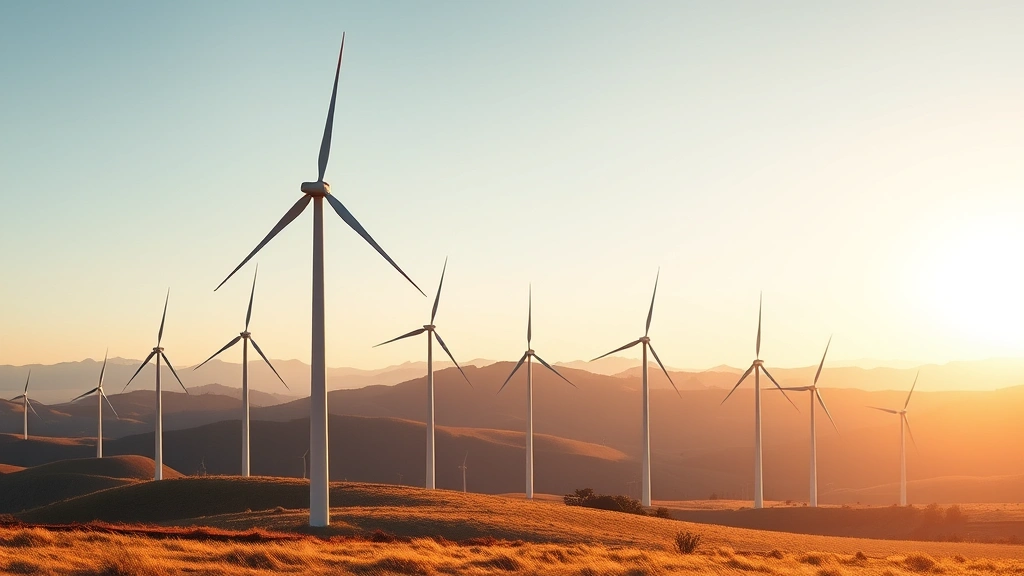
Green companies generate economic growth through multiple channels. The renewable energy industry exemplifies this dynamic. Solar and wind energy companies require extensive supply chains involving manufacturing, installation, grid integration, and maintenance. Unlike fossil fuel industries, which concentrate employment in extraction and processing, renewable energy distributes jobs across geographic regions and skill levels. A solar installation technician in rural areas represents direct employment that cannot be outsourced, creating localized economic multiplier effects.
Employment data reveals compelling patterns. The International Renewable Energy Agency (IRENA) reported that renewable energy employed 12.7 million people globally in 2022, a figure that continues to grow annually. These positions span engineering, manufacturing, construction, and administrative roles—many offering middle-class wages without requiring advanced degrees. Simultaneously, green companies drive innovation-driven employment in research, product development, and technology services.
The economic impact extends beyond direct employment. When renewable energy adoption increases, associated industries experience growth. Solar panel manufacturers require rare earth minerals, creating demand for specialized mining and processing. Battery manufacturers expand production capacity, spurring chemical and materials science advancement. Grid modernization necessitates software development and infrastructure investment. Each sector generates its own employment cascades and supply chain opportunities.
However, transition effects complicate this narrative. Coal miners and oil workers displaced by renewable energy adoption experience genuine economic hardship despite overall sector growth. Regional economies dependent on fossil fuel extraction face contraction. Effective green economic growth requires managed transition strategies, retraining programs, and regional economic diversification—factors often absent in rapid energy transitions. Without these supporting mechanisms, green company growth can simultaneously create and destroy economic value at different geographic and demographic scales.
Manufacturing capacity represents another growth vector. Companies producing electric vehicles, heat pumps, energy-efficient building materials, and sustainable agriculture equipment are establishing factories and research facilities worldwide. Germany’s renewable energy sector, for instance, supports approximately 310,000 jobs, with manufacturing comprising a substantial portion. These manufacturing hubs attract supplier networks, logistics companies, and service providers, creating economic ecosystems that generate sustained growth beyond the initial company investment.

Green Companies and Market Competitiveness
The fundamental question underlying green economic growth is whether environmental companies can compete effectively within market systems designed without ecological constraints. Cost competitiveness determines market penetration rates and economic viability. Solar photovoltaic costs have declined 90 percent over the past decade, making solar electricity cheaper than coal-fired power in most markets. This cost advantage represents genuine competitive superiority, not subsidy-dependent weakness.
Wind energy demonstrates similar trajectories. Onshore wind power costs have dropped 70 percent in real terms since 2010, achieving cost parity with fossil fuels across most developed nations. This competitive advantage drives market expansion without requiring permanent subsidy regimes. Companies can operate profitably through market mechanisms alone, suggesting genuine economic sustainability rather than artificial support structures.
Electric vehicle manufacturers illustrate more complex competitive dynamics. Tesla’s market valuation exceeds traditional automakers despite lower production volumes, reflecting investor confidence in future profitability and technological leadership. However, EV competitiveness remains dependent on battery costs, which continue declining but still represent substantial expense. As battery manufacturing scales and technology improves, EVs achieve price parity with internal combustion vehicles, expanding addressable markets and company profitability.
Competitiveness varies significantly across green sectors. Energy efficiency retrofitting, organic agriculture, and sustainable forestry face different competitive landscapes than renewable energy or EVs. Some environmental businesses operate in niche markets with limited scale potential. Others, like sustainable packaging and green building materials, address massive markets with growing demand. Understanding which green companies can achieve scale and profitability is essential for assessing genuine economic growth versus temporary market phenomena.
Brand value and consumer preference increasingly favor companies addressing human environment interaction responsibly. Millennials and Generation Z demonstrate willingness to pay premiums for sustainable products, creating market opportunities for green companies. This consumer preference translates into competitive advantages for companies effectively communicating environmental credentials. However, this dynamic remains geographically uneven, with developed nations showing stronger sustainability preferences than developing economies focused on cost and basic functionality.
Investment Flows and Capital Allocation
Green companies attract substantial investment capital, fundamentally reshaping global financial markets. Environmental, Social, and Governance (ESG) investing has become mainstream, with trillions of dollars allocated to companies meeting sustainability criteria. This capital reallocation represents economic growth opportunities for green enterprises while potentially constraining traditional industries.
Venture capital flows illustrate this shift. Clean technology startups received $60 billion in funding in 2022, according to BloombergNEF, demonstrating investor confidence in green company profitability. This investment supports innovation, product development, and market expansion. Successful green companies generate returns for investors while scaling sustainable solutions, creating positive feedback loops that accelerate economic growth in environmental sectors.
Public equity markets increasingly value green companies at premium valuations. Tesla’s stock performance, renewable energy company appreciation, and sustainable agriculture firm valuations exceed traditional sector multiples. This premium reflects expectations for superior future growth, suggesting markets believe green companies will drive economic value creation over coming decades. However, valuation bubbles occasionally form, particularly in speculative technologies without proven commercial viability.
Institutional investors, including pension funds and sovereign wealth funds, have committed to decarbonization strategies requiring massive capital reallocation. These long-term commitments ensure sustained investment in green companies across multiple business cycles. The United Nations Environment Programme estimates that transitioning to sustainable economies requires approximately $2.4 trillion annually in additional investment. This capital requirement creates enormous economic opportunities for green companies capable of deploying capital efficiently.
However, investment concentration poses risks. Capital flows toward proven technologies and established companies, potentially starving innovative startups and early-stage ventures. Green company success increasingly depends on accessing capital markets, creating barriers for smaller enterprises and developing nation companies. Geographic investment disparities mean wealthy nations capture disproportionate green economic benefits, potentially widening global inequality despite overall environmental sector growth.
Cost-Benefit Analysis of Environmental Business Models
Rigorous economic analysis requires examining total costs and benefits of green company operations. This assessment extends beyond financial performance to include externalities—costs and benefits affecting society beyond direct market transactions.
Traditional economic analysis of fossil fuels systematically undercounts true costs. Coal mining generates health impacts costing societies hundreds of billions annually through respiratory disease, water contamination, and ecosystem destruction. Oil extraction causes spills, habitat loss, and climate change damages. These externalities represent genuine economic costs borne by society rather than fossil fuel companies. Green companies operating without these externalities provide superior economic value when comprehensive cost accounting occurs.
Research from ecological economics scholars demonstrates that accounting for ecosystem services and environmental damages reveals renewable energy’s economic superiority. A study in Nature Energy calculated that renewable energy’s climate benefits alone justify transition investments, without considering air quality improvements, water resource protection, or biodiversity conservation. These additional benefits provide further economic justification for green company expansion.
Manufacturing green technologies generates its own environmental costs. Solar panel production requires energy and materials; battery manufacturing involves mining, chemical processing, and water consumption. Lifecycle analysis reveals that despite manufacturing impacts, renewable energy systems generate net environmental benefits within 1-4 years of operation, providing decades of clean generation afterward. Green companies that optimize manufacturing processes and material efficiency amplify economic benefits while reducing environmental footprints.
However, transition costs deserve serious consideration. Retiring functional infrastructure before reaching end-of-life generates economic waste. Stranded assets in fossil fuel industries represent real economic losses. Workers and communities dependent on declining industries face genuine hardship. Comprehensive economic analysis must acknowledge these costs alongside green company benefits, designing transition strategies that distribute burden-sharing equitably.
Policy Frameworks and Economic Incentives
Green company economic performance depends substantially on policy environments. Carbon pricing, renewable energy mandates, subsidies, and regulatory standards shape competitive dynamics and investment incentives. Understanding policy influence is essential for assessing whether green company growth represents genuine economic advantage or artificial support-dependent weakness.
Carbon pricing mechanisms—either carbon taxes or cap-and-trade systems—internalize environmental costs, improving green company competitiveness. When carbon pollution carries financial consequences, renewable energy becomes economically superior to fossil fuels. The World Bank’s carbon pricing dashboard tracks 68 carbon pricing initiatives covering approximately 23 percent of global emissions. These policies create sustained competitive advantages for green companies while improving overall economic efficiency by reflecting true environmental costs.
Renewable energy mandates requiring utilities to source specified percentages from clean sources guarantee market demand for green companies. Feed-in tariffs guaranteeing favorable prices for renewable electricity provide investment certainty. These policies accelerate green company growth beyond what market forces alone would generate. However, policy dependence creates vulnerability; policy reversals can devastate green industries lacking cost competitiveness.
Tax incentives for electric vehicles, building efficiency improvements, and renewable energy installation reduce consumer costs, expanding addressable markets for green companies. These incentives effectively subsidize green technology adoption, accelerating market transformation. The question remains whether green technologies require permanent subsidies or represent transitional support enabling cost reductions through scale economics.
Regulatory standards addressing effects of fast fashion on the environment and other industrial sectors create compliance costs for conventional companies while opening markets for sustainable alternatives. Extended producer responsibility requirements, plastic bans, and emissions standards force traditional companies to adapt or exit markets, benefiting green companies offering compliant solutions. These regulatory approaches represent policy-driven economic reallocation rather than subsidy-dependent support.
International climate agreements, including the Paris Accord, establish long-term policy certainty supporting green company investment. When nations commit to emissions reduction targets, investors gain confidence in sustained green technology demand. This policy certainty enables long-term planning and capital allocation that accelerates green company growth and economic development.
Challenges and Limitations of Green Economics
Despite compelling growth narratives, green companies face genuine economic constraints limiting their capacity to boost overall economic growth.
Intermittency challenges in renewable energy require grid modernization, energy storage, and backup capacity—infrastructure costs sometimes exceeding renewable generation equipment expense. While technological solutions exist, deployment requires massive capital investment and policy coordination. These infrastructure costs reduce net economic benefits of renewable energy expansion compared to simplistic cost comparisons of generation equipment alone.
Material constraints affect green company scaling. Lithium, cobalt, nickel, and rare earth minerals required for batteries and renewable energy systems have limited supply. Mining expansion creates environmental and social costs potentially offsetting green benefits. Price volatility in critical minerals threatens green company profitability and supply chain stability. Circular economy approaches and material substitution can mitigate constraints, but require technological innovation and system redesign.
Geographic concentration of green company benefits creates regional inequality. Manufacturing capacity clusters in specific locations, creating growth concentrations while other regions decline. Energy transition benefits concentrate in regions with renewable resources, while transition costs concentrate in fossil fuel-dependent communities. Without deliberate geographic diversification strategies, green economic growth may exacerbate regional inequality despite overall growth.
Skills mismatches represent significant economic friction. Green company jobs require different training than displaced fossil fuel employment. Workers lack immediate transferability of skills, creating unemployment periods and wage losses. Retraining programs require substantial investment and don’t guarantee successful career transitions. This human capital friction reduces net economic benefits of green company expansion.
Developing nation constraints limit green company growth in low-income countries. Lack of capital, technical expertise, and infrastructure prevent green technology deployment despite enormous potential. Green company benefits concentrate in wealthy nations with capital, technology, and policy frameworks supporting deployment. This dynamic perpetuates global inequality despite green economy expansion.
Rebound effects—where efficiency improvements increase consumption—potentially offset environmental benefits. When renewable energy becomes cheaper, electricity consumption increases, reducing net emissions reductions. Similarly, more efficient vehicles may encourage additional driving. These behavioral responses limit environmental and potentially economic benefits of green company innovations. Understanding and managing rebound effects requires policy interventions beyond company-level strategies.
Finally, green company profitability sometimes depends on optimistic assumptions about future technology costs and market expansion. If battery costs don’t decline as projected or renewable energy adoption plateaus, company valuations may collapse, destroying investor capital. This risk represents real economic vulnerability in green company investment thesis.
FAQ
Do green companies genuinely create more jobs than fossil fuel industries?
Green sectors create more jobs per unit of energy produced than fossil fuels. However, total employment depends on sector scale. Renewable energy currently employs more people than coal globally, but fossil fuels collectively employ more. As renewable deployment accelerates, green company employment growth significantly exceeds fossil fuel job losses, though geographic and skill mismatches create transition challenges.
Can green companies achieve profitability without subsidies?
Many green companies already operate profitably without subsidies. Renewable energy, electric vehicles, and energy efficiency increasingly compete on cost alone. However, some emerging technologies require continued support. Long-term policy certainty matters more than permanent subsidies; companies need confidence in sustained demand enabling cost reductions through scale economics.
How do green companies affect inflation and consumer costs?
Green company growth can reduce long-term consumer costs by lowering renewable energy and EV prices through scale economies. However, transition periods may increase costs as new infrastructure develops. The net effect depends on policy design and transition speed. Properly managed transitions distribute costs while capturing benefits.
What role do green companies play in developing nations’ economic growth?
Green companies offer developing nations leapfrogging opportunities, deploying modern renewable energy without fossil fuel infrastructure investment. However, capital constraints, technical expertise gaps, and policy weaknesses limit deployment. International support through technology transfer and financing mechanisms can accelerate green company economic contributions in developing nations.
Can green companies address inequality while boosting economies?
Green company growth can reduce inequality through localized job creation and technology democratization, but requires deliberate policy design. Without intentional geographic diversification and workforce development, green company benefits concentrate among wealthy regions and skilled workers. Inclusive green economy development requires targeted policies addressing distributional concerns alongside growth objectives.
How do green companies compare to traditional businesses in long-term profitability?
Green companies increasingly demonstrate superior long-term profitability as technologies mature and costs decline. However, profitability depends on specific sectors, competitive positioning, and policy environments. Some green companies achieve exceptional returns; others fail to reach viability. Individual company analysis matters more than sector generalizations.
For deeper exploration of sustainability topics, visit the Ecorise Daily Blog for comprehensive environmental insights. Learn about how to reduce carbon footprint through practical strategies, explore sustainable fashion brands reshaping consumer industries, and understand the broader economic implications of environmental responsibility.