Can Electronic Environments Boost GDP? An Economist’s Perspective
The relationship between digital infrastructure and economic growth has become one of the most compelling questions in modern economics. Electronic environments—encompassing digital platforms, smart technologies, cloud computing systems, and networked infrastructure—represent a fundamental shift in how economies operate, innovate, and generate value. Unlike traditional economic drivers, these digital ecosystems create intangible assets that can scale globally at minimal marginal cost, potentially unlocking unprecedented GDP growth trajectories.
From an economist’s viewpoint, electronic environments function as both direct economic engines and force multipliers for existing sectors. The question isn’t whether they can boost GDP, but rather how to optimize their contribution while managing the complex trade-offs between economic expansion and ecological sustainability. This analysis examines the empirical evidence, theoretical frameworks, and practical implications of digital infrastructure investment on gross domestic product across different economic contexts.

How Electronic Environments Drive Economic Growth
Electronic environments create economic value through multiple channels that traditional GDP accounting frameworks are only beginning to capture adequately. The primary mechanism involves transaction cost reduction—digital platforms dramatically lower the friction costs associated with matching buyers and sellers, coordinating supply chains, and accessing information. When a business migrates operations to cloud infrastructure, it eliminates capital expenditures on physical servers while gaining scalability that would previously require massive upfront investment.
The World Bank has documented that countries with robust digital infrastructure experience 2-3% higher annual GDP growth rates compared to those with limited connectivity. This relationship holds across income levels, though the mechanisms differ. In developed economies, electronic environments enhance productivity within existing sectors and enable new business models. In developing regions, they can bypass entire technological generations—a phenomenon known as leapfrogging that fundamentally alters growth trajectories.
Consider the telecommunications sector as a case study. When electronic environments expanded mobile coverage in Sub-Saharan Africa, GDP contributions from mobile money services alone generated an estimated $32 billion in economic value by 2021. This wasn’t replacement of existing economic activity; it was the creation of entirely new value chains. Similarly, e-commerce platforms have created markets that didn’t previously exist, allowing micro-entrepreneurs to reach customers across geographic boundaries.
The network effects embedded in electronic environments amplify their economic impact. Each additional user increases the platform’s value for all existing users—a dynamic absent in traditional economic sectors. This creates what economists call increasing returns to scale, where marginal costs decline as volume increases. Amazon’s logistics network becomes more efficient with each additional seller and customer. Airbnb’s platform becomes more valuable as both supply and demand expand. These dynamics can generate GDP growth that accelerates rather than decelerates with scale.

Digital Infrastructure Investment and GDP Multipliers
Economic multipliers measure how initial investment translates into broader economic activity. Research from the World Bank indicates that digital infrastructure investments generate multipliers of 1.5 to 2.5x their initial cost—meaning a $1 billion investment in broadband infrastructure can generate $1.5-2.5 billion in total economic activity. This substantially exceeds multipliers for traditional infrastructure (roads, ports) which typically range from 1.2-1.8x.
Why do electronic environments generate superior multipliers? First, they reduce production costs across all sectors simultaneously. A manufacturer, retailer, healthcare provider, and educational institution all benefit from improved connectivity and digital tools. Second, they enable business model innovation that creates entirely new revenue streams. Third, they reduce barriers to entry, allowing more entrepreneurs to compete and innovate.
The United Nations Environment Programme has analyzed how digital tools enable circular economy transitions that simultaneously boost economic activity and reduce resource consumption. Smart inventory management systems reduce waste while lowering costs. Predictive maintenance powered by IoT sensors extends asset lifespans while improving operational efficiency. These dual benefits—economic and ecological—challenge the traditional assumption that GDP growth requires proportional environmental degradation.
However, multiplier effects depend critically on complementary investments. Broadband infrastructure alone doesn’t generate growth; it must be paired with digital literacy programs, regulatory frameworks that encourage innovation, and workforce development. Countries that invested in fiber-optic networks without supporting human capital development saw significantly lower returns than those implementing comprehensive digital ecosystems. The optimal approach involves coordinated investment across infrastructure, education, and institutional capacity.
Productivity Gains Through Digitalization
Productivity growth—output per unit of input—represents the fundamental driver of long-term GDP expansion. Electronic environments enhance productivity through automation, optimization, and knowledge dissemination. Manufacturing facilities equipped with IoT sensors and AI-powered analytics can reduce downtime, optimize energy consumption, and improve quality control simultaneously. McKinsey research suggests digital transformation increases manufacturing productivity by 20-25% on average.
But productivity gains extend far beyond manufacturing. In healthcare, electronic environments enable telemedicine and diagnostic AI that expand service capacity without proportional increases in physician numbers or facility costs. In education, digital platforms reach students in remote areas, reducing per-student educational delivery costs by 60-80% while improving learning outcomes. In agriculture—critical for developing economies—precision agriculture technologies powered by electronic environments increase yields by 15-30% while reducing water and fertilizer inputs.
The relationship between how humans affect the environment and economic productivity becomes more complex when electronic environments are considered. Traditional productivity improvements often increased resource consumption. A more efficient factory might produce more widgets but consume more energy. Digital productivity, however, frequently involves dematerialization—producing more value with fewer physical resources. Software replaces paper. Digital communication replaces travel. Cloud computing consolidates server farms into highly efficient mega-data-centers.
Labor productivity improvements warrant particular attention. Electronic environments automate routine cognitive and manual tasks, theoretically freeing human workers for higher-value activities. This creates what economists call a “productivity paradox” scenario: GDP can grow substantially even as employment in traditional roles declines, provided that new economic opportunities emerge faster than old ones disappear. Countries managing this transition effectively see accelerated GDP growth; those that don’t often experience stagnation despite technological investment.
The Environmental Paradox of Economic Expansion
Here emerges a critical tension for economists analyzing electronic environments: they can simultaneously boost GDP and reduce ecological impact, or they can generate growth that perpetuates unsustainable extraction patterns. The outcome depends entirely on how digital tools are deployed.
The optimistic scenario involves what researchers call “absolute decoupling”—economic growth that occurs without proportional increases in resource consumption or emissions. Electronic environments facilitate this through demand optimization, supply chain transparency, and circular economy transitions. When urbanization effects on the environment are mediated through smart city technologies, density can generate economic agglomeration benefits while reducing per-capita resource consumption. Digital demand-response systems allow electricity grids to balance renewable energy integration, making clean energy economically competitive with fossil fuels.
The pessimistic scenario involves “relative decoupling” or even “rebound effects”—where efficiency improvements generate cost savings that consumers redirect toward increased consumption. Lower energy costs from efficiency improvements might simply enable more energy consumption elsewhere. This pattern has historically characterized technological transitions. The critical factor becomes policy design: whether electronic environments operate within regulatory frameworks that internalize environmental costs or within systems that allow ecological externalities to remain unpriced.
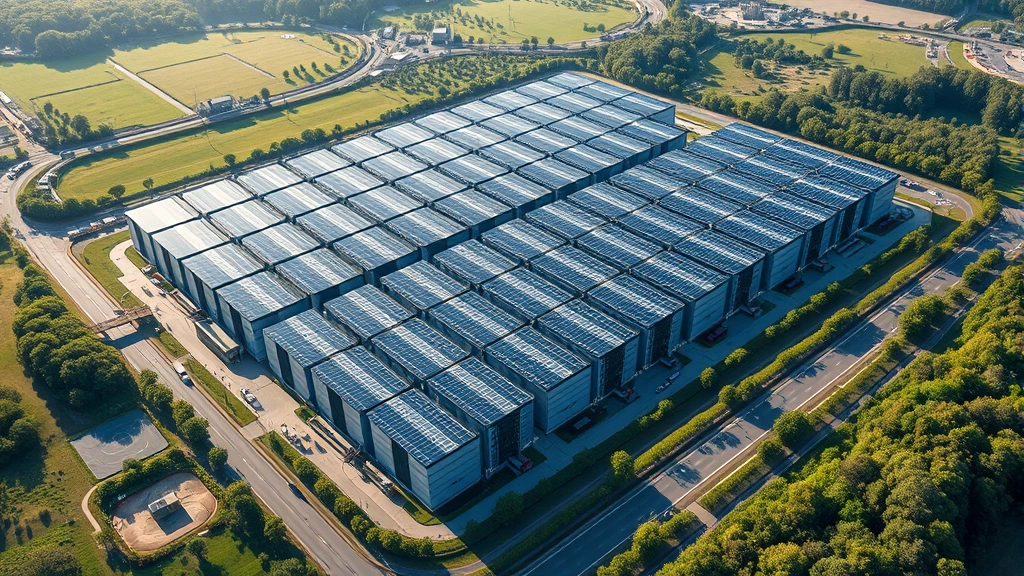
Research from ecological economics journals indicates that electronic environments themselves carry substantial environmental costs. Data center operations consume approximately 1-2% of global electricity, with cooling requirements being particularly energy-intensive. Cryptocurrency and blockchain applications dramatically exceed these figures. Manufacturing of devices requires rare earth minerals and generates e-waste. These costs must be subtracted from gross GDP figures to determine true net economic welfare—a metric economists increasingly recognize as more relevant than traditional GDP for assessing genuine prosperity.
Sectoral Impacts and Employment Transformation
Electronic environments don’t boost GDP uniformly across sectors. They create winners and losers, with profound implications for employment and regional development. High-growth sectors include software development, digital marketing, cybersecurity, data analytics, and platform-based services. These sectors often concentrate in major metropolitan areas and require specialized education, creating geographic inequality.
Traditional sectors experience disruption. Retail employment has declined as e-commerce expanded, though total employment in logistics and delivery services has grown. Taxi services face pressure from ride-sharing platforms. Travel agencies have largely disappeared. These transitions create measurable GDP growth in aggregate (new sectors grow faster than old sectors shrink) but generate significant localized pain as workers in declining sectors must retrain.
The relationship between human environment interaction patterns and employment becomes increasingly mediated by electronic environments. Remote work enabled by digital tools allows decentralization of economic activity, potentially reducing the effects deforestation has on the environment by reducing pressure for urban expansion. Conversely, the energy demands of maintaining always-on connectivity and data processing create new environmental pressures.
Employment growth in electronic environment sectors tends toward polarization: high-skill, high-wage positions in software engineering and data science, and low-skill, low-wage positions in gig economy work and data labeling. This creates what economists call “hollowing out” of the middle class. GDP grows, but income distribution becomes more unequal. Countries managing this transition effectively implement education and retraining programs; those that don’t experience social instability despite economic growth.
Emerging Markets and Digital Leapfrogging
Emerging market economies present the most compelling case for GDP growth through electronic environments. These regions often lack legacy infrastructure and institutional constraints that slow digital adoption in developed countries. Mobile money systems in Kenya, e-commerce platforms in India, and digital payment systems across Southeast Asia bypass traditional financial infrastructure entirely, creating economic opportunities that wouldn’t exist through conventional development paths.
The UNEP Emissions Gap Report documents how electronic environments enable emerging markets to pursue decarbonized growth paths. Solar power combined with smart grid technology allows electrification without fossil fuel infrastructure. Digital agriculture enables productivity growth without chemical-intensive industrial farming. These pathways generate GDP growth while reducing the environmental intensity that characterized development in currently-wealthy nations.
However, leapfrogging requires specific conditions. Governments must invest in digital literacy and basic infrastructure. Regulatory frameworks must encourage innovation while protecting consumers and workers. Educational systems must produce workers capable of operating in digital environments. Countries like Rwanda and Bangladesh have demonstrated that these conditions can be met, achieving 7-9% annual GDP growth with expanding digital sectors. Others have invested in infrastructure without supporting institutions, resulting in infrastructure that remains underutilized.
The question of ecosystem versus environment distinctions becomes particularly relevant in emerging markets. Digital tools can monitor ecosystem health, manage protected areas more effectively, and coordinate conservation efforts. They can also accelerate resource extraction if not properly governed. The GDP boost from electronic environments in emerging markets depends critically on governance quality and the strength of environmental institutions.
Measuring Digital Economy Contributions
A fundamental challenge in assessing whether electronic environments boost GDP involves measurement. Traditional GDP accounting captures marketed transactions but struggles with digital economy characteristics: free services funded by advertising, network effects that create value unmeasured in transactions, and rapid quality improvements in digital services.
When Google provides free search, traditional GDP accounting captures advertising revenue but not the consumer surplus—the value users receive beyond what they pay. A study in the American Economic Review estimated that free digital services represent 10-15% of actual consumer welfare gains in developed economies but appear negligible in GDP figures. This suggests official GDP statistics understate the economic value of electronic environments by substantial margins.
Conversely, GDP accounting may overstate value creation if it doesn’t deduct environmental costs. A data center that generates $100 million in economic value while consuming electricity equivalent to a city of 200,000 people creates a net economic contribution only if that electricity comes from renewable sources. Under current accounting practices, the environmental cost remains externalized.
Satellite national accounting—supplementary measures that adjust GDP for environmental factors—provides more complete pictures. Countries implementing these frameworks (Norway, Germany) find that conventional GDP growth overstates true welfare improvements by 1-3 percentage points annually when environmental degradation is properly valued.
The most rigorous economic analysis of electronic environments requires hybrid accounting: measuring traditional GDP contributions, adding consumer surplus from free digital services, subtracting environmental and social costs, and adjusting for income distribution effects. By these measures, electronic environments boost GDP in wealthy nations with strong institutions and environmental protections, but may reduce genuine welfare in regions where digital infrastructure enables resource extraction without environmental governance.
FAQ
What percentage of GDP growth in developed economies comes from digital sectors?
Digital sectors directly contribute 5-8% of GDP in developed economies, but indirect contributions through productivity improvements in other sectors add another 1-3 percentage points annually. The McKinsey Global Institute estimates total digital economy contributions at 15-20% of GDP growth in advanced economies.
Do electronic environments reduce or increase environmental impact?
Electronic environments are tools whose environmental impact depends on deployment. They enable absolute decoupling of GDP from resource consumption when coupled with strong environmental governance, but enable accelerated resource extraction when deployed in weak regulatory contexts. The net effect varies by region and policy framework.
Which countries have achieved the highest GDP growth from digital transformation?
Singapore, South Korea, and Estonia achieved 1-2% annual GDP growth premiums from comprehensive digital transformation. India and Bangladesh are emerging leaders in digital-enabled growth among developing nations. These successes involved coordinated investment in infrastructure, education, and regulatory frameworks.
How long does digital infrastructure investment take to generate returns?
Broadband infrastructure typically generates measurable GDP returns within 3-5 years as businesses and individuals adopt digital tools. Maximum returns emerge after 10-15 years as entire sectors reorganize around digital capabilities. This longer timeline than traditional infrastructure reflects the need for institutional and behavioral adaptation.
Can electronic environments boost GDP without increasing inequality?
Digital growth can increase or decrease inequality depending on education policy and labor market regulation. Countries investing heavily in digital literacy programs (South Korea, Singapore) see broad-based income gains. Those allowing unregulated digital labor markets (some gig economy implementations) see increased inequality despite GDP growth.
What is the relationship between electronic environments and ecological economics research?
Ecological economics increasingly analyzes how digital tools can achieve decoupling of economic growth from resource consumption. Research explores how electronic environments enable circular economy transitions, optimize resource allocation, and facilitate environmental monitoring—while also documenting the energy costs of digital infrastructure itself.


