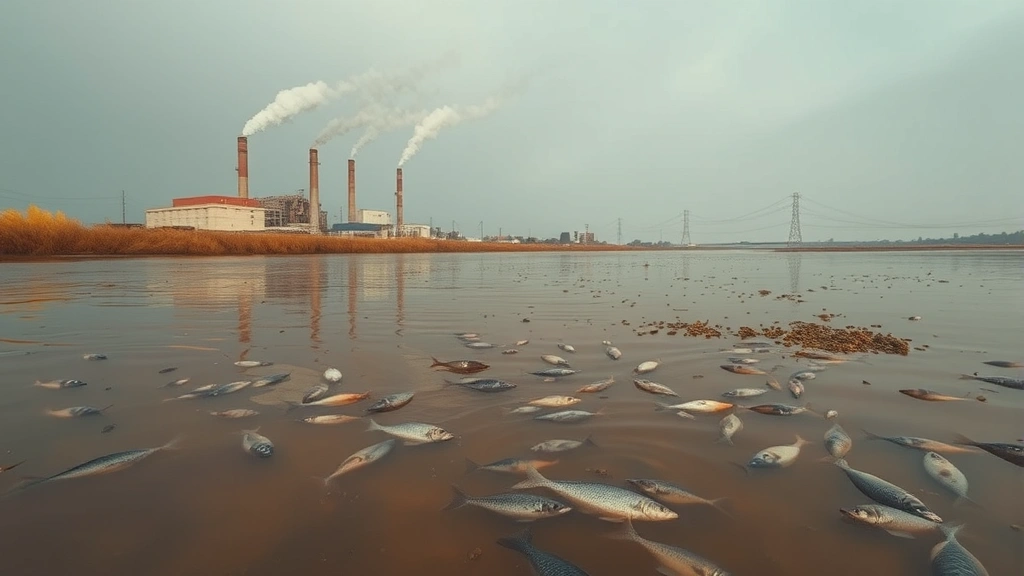
Water Economics: Insights from EKI Environment
Water represents one of the most critical yet undervalued economic resources in the global marketplace. As freshwater scarcity intensifies across continents, organizations like EKI Environment & Water Inc. have emerged as pivotal players in understanding the intricate relationship between water systems and economic sustainability. The economics of water extends far beyond simple supply-and-demand curves; it encompasses ecological valuation, infrastructure investment, policy frameworks, and the complex interdependencies between human prosperity and watershed health.
The conventional economic models treating water as an infinite resource have proven catastrophically inadequate. Today’s water economists recognize that pricing mechanisms, allocation policies, and investment decisions must reflect the true environmental costs of extraction, treatment, and distribution. This analytical framework has transformed how governments, corporations, and communities approach water security and environmental stewardship.
The Economics of Water Scarcity
Water scarcity represents an emerging economic crisis that transcends traditional resource constraints. Unlike oil or minerals, water cycles through ecosystems continuously, yet its availability in specific locations and timeframes creates genuine scarcity economics. The World Bank estimates that by 2050, approximately 5.7 billion people could experience water scarcity for at least one month annually.
The economic implications of this projection are staggering. Agricultural productivity, which depends on reliable water access for irrigation, faces unprecedented challenges. Manufacturing industries reliant on water for cooling and processing must invest in alternative supply mechanisms. Hydroelectric power generation—a cornerstone of renewable energy infrastructure—becomes increasingly unpredictable. These cascading economic impacts force a fundamental reconsideration of how societies value and allocate water resources.
Organizations studying water economics emphasize that scarcity isn’t merely a physical phenomenon but an economic one. A region with abundant rainfall but inadequate distribution infrastructure experiences functional scarcity. Conversely, efficient systems in water-limited areas can maintain relative abundance. This distinction proves crucial for understanding how environmental sustainability solutions must integrate economic efficiency with ecological preservation.
The opportunity cost of water use has become increasingly apparent. When agricultural sectors consume 70% of global freshwater withdrawals while contributing only 4% of global GDP, economists question whether current allocation patterns reflect rational resource management. These inefficiencies compound when considering that agricultural water use often generates significant water pollution affecting downstream ecosystems, creating negative externalities that traditional markets fail to price.
Valuing Ecosystem Services in Water Systems
Ecological economics represents a paradigm shift in how water’s true value gets calculated. Rather than viewing water merely as an input factor in production functions, this approach recognizes water’s role in maintaining ecosystem services worth trillions annually. Wetlands purify water naturally; forests regulate precipitation and groundwater recharge; healthy aquatic ecosystems support fisheries and biodiversity.
The challenge lies in monetizing these services for economic decision-making. Contingent valuation methods, hedonic pricing models, and ecosystem service accounting frameworks attempt to quantify benefits previously considered priceless. When a wetland worth $50,000 annually in water purification services faces conversion to agricultural land generating $100,000 in revenue, the accounting becomes apparent—but only if the purification value enters calculations.
Water-dependent ecosystems provide numerous quantifiable economic benefits. Mangrove forests protect coastal communities from storms while supporting fisheries. Riparian zones filter agricultural runoff, reducing treatment costs for downstream water users. Aquifer recharge zones maintain water availability during drought periods. Yet these services remain economically invisible in conventional accounting unless explicitly valued and integrated into policy frameworks.
Environmental economics research increasingly documents how ecosystem degradation creates hidden economic costs. Damaged watersheds require expensive treatment to render water potable. Lost fisheries eliminate protein sources for vulnerable populations. Reduced water availability forces agricultural abandonment and rural economic collapse. By contrast, investing in watershed protection often yields economic returns exceeding costs by substantial margins—returns that accrue across decades and benefit multiple stakeholders.
Infrastructure Investment and Economic Returns
Water infrastructure represents one of the largest capital investments societies undertake, yet underinvestment remains endemic globally. The United Nations Environment Programme estimates that developing nations require $900 billion annually to meet water and sanitation targets. This substantial investment requirement reflects both the scale of need and the genuine economic returns such infrastructure generates.
Cost-benefit analysis of water infrastructure projects reveals compelling economic justifications. Every dollar invested in water supply and sanitation yields approximately four to five dollars in economic returns through reduced disease burden, increased productivity, and agricultural output. These calculations often exclude broader ecosystem benefits, suggesting true returns substantially exceed conventional estimates.
Infrastructure economics must account for lifecycle costs extending across decades. A treatment plant built today requires maintenance, energy inputs, and eventual replacement. Climate change introduces additional uncertainty; infrastructure designed for historical precipitation patterns may prove inadequate as rainfall patterns shift. Water-efficient technologies, leak detection systems, and distributed treatment networks represent alternative investment strategies with different economic profiles.
Public-private partnerships have emerged as a significant mechanism for funding water infrastructure, though with contested economic outcomes. Private operators often achieve efficiency improvements and cost reductions; conversely, profit incentives can drive price increases affecting low-income populations. The economic trade-offs between efficiency and equity remain politically contentious and economically complex.

Water Pricing Models and Market Mechanisms
Water pricing represents perhaps the most contentious intersection of economics and environmental policy. Traditional pricing models treated water as a public good, subsidizing consumption to ensure universal access. This approach generated genuine social benefits but created perverse incentives encouraging wasteful use. Modern water economics explores mechanisms that balance affordability with conservation incentives.
Tiered pricing structures charge increasing rates for consumption above baseline levels, protecting essential use while discouraging excess. This approach generates revenue for infrastructure maintenance while maintaining affordability for subsistence needs. Seasonal pricing reflects supply variations, encouraging conservation during scarcity periods. Time-of-use pricing, common in electricity markets, remains underdeveloped in water but offers significant conservation potential.
Market-based mechanisms including water trading and pollution permits introduce economic efficiency into allocation decisions. Where water rights become tradable, resources flow toward highest-value uses through voluntary exchange. Agricultural regions in Australia and the western United States have developed sophisticated water markets enabling efficient allocation despite physical scarcity. These markets generate price signals reflecting true water scarcity, informing investment and consumption decisions.
Environmental economics research documents how water pricing affects consumption patterns. In arid regions implementing conservation pricing, residential consumption declined 15-30% while industrial users shifted toward water-efficient technologies. However, pricing alone proves insufficient; complementary policies including infrastructure investment, technology subsidies, and behavioral interventions enhance effectiveness.
The economic debate over water privatization remains unresolved. Private operators often achieve cost reductions and service improvements; however, affordability concerns and equity considerations complicate cost-benefit analysis. Public ownership maintains democratic accountability but may suffer from political interference and underinvestment. Hybrid models combining public oversight with private operational efficiency represent emerging compromise approaches.
Policy Frameworks and Regulatory Economics
Water policy operates across multiple governance levels—international agreements, national legislation, regional authorities, and local management—creating complex regulatory economics. The economic efficiency of any framework depends on how effectively it aligns incentives, internalizes externalities, and enables adaptive management.
Integrated water resource management (IWRM) represents a holistic policy approach recognizing interconnections between surface water, groundwater, agriculture, industry, and ecosystem needs. Economically, IWRM reduces conflicts through collaborative allocation mechanisms and early identification of competing demands. The challenge lies in implementing IWRM across political boundaries where upstream and downstream communities face conflicting interests.
Environmental regulations controlling water pollution impose costs on industrial and agricultural users but generate benefits through improved water quality and ecosystem health. Economic analysis of how human activities affect water systems informs optimal regulatory stringency. Overly stringent regulations impose excessive costs; insufficiently stringent regulations fail to prevent harmful degradation. Finding the economically optimal balance requires sophisticated environmental valuation and cost assessment.
Water allocation policies reflect fundamental economic and ethical choices. Prioritizing agricultural irrigation supports rural economies and food security; prioritizing urban supply supports industrial productivity and urban populations. Maintaining environmental flows preserves ecosystem services; allocating that water to human use generates immediate economic returns. These trade-offs admit no objectively correct answer; policy frameworks must explicitly acknowledge and address the underlying economic choices.
The United Nations Environment Programme increasingly emphasizes nature-based solutions in water policy, recognizing that ecosystem restoration often provides cost-effective alternatives to engineered infrastructure. Restoring wetlands, protecting forests, and rehabilitating degraded waterways generate water security benefits at lower cost than conventional treatment and storage infrastructure.
Case Studies in Water Economic Management
Real-world water economics demonstrates both successes and failures in applying economic principles to resource management. The Netherlands represents a sophisticated water management economy, integrating flood protection, agricultural irrigation, industrial supply, and ecosystem preservation through coordinated policy and infrastructure investment. Dutch water boards charge users proportional to consumption and pollution generation, creating price signals that drive conservation and pollution prevention.
Australia’s Murray-Darling Basin illustrates water market economics at scale. Facing chronic overallocation, Australia implemented tradeable water rights enabling efficient reallocation toward high-value uses. Economic analysis shows the market mechanism increased agricultural productivity while reducing water consumption—a seemingly contradictory outcome explained by reallocation toward efficient users and technology adoption incentivized by scarcity pricing. However, environmental flows remain contested, with ecosystem damage from insufficient water availability offsetting efficiency gains.
India’s groundwater crisis reflects the failure of conventional water economics. Subsidized electricity enabled unlimited groundwater pumping for irrigation, generating short-term agricultural productivity gains while depleting aquifers at unsustainable rates. The economic costs—eventual agricultural collapse, increased pumping expenses, ecosystem damage—far exceed the short-term benefits. Correcting this requires eliminating electricity subsidies and implementing alternative irrigation technologies, economically disruptive changes that political systems have struggled to implement.
South Africa’s post-apartheid water policy attempted to balance multiple objectives: providing universal access to essential water, supporting agricultural development, protecting ecosystems, and enabling industrial growth. Economic analysis of this framework reveals inherent tensions; simultaneously achieving all objectives proves impossible given physical water constraints. The policy framework explicitly prioritizes basic human needs, then environmental protection, then competing economic uses—a transparent hierarchy reflecting underlying values.
The World Bank’s water economics research documents how effective institutions and pricing mechanisms improve outcomes across diverse contexts. Successful water economies share characteristics: transparent governance, stakeholder participation, scientifically-informed allocation, price signals reflecting scarcity, and investment in efficiency-enhancing infrastructure.
Future Trends in Water Economics
Climate change introduces unprecedented uncertainty into water economic planning. Historical hydrological patterns informing infrastructure design and allocation policies no longer represent reliable predictors. Precipitation patterns shift regionally; snowpack declines in mountain regions; drought duration and intensity increase in many areas. Water economists must incorporate climate projections into long-term planning despite substantial model uncertainty.
Water reuse and recycling technologies expand economic options previously unavailable. Wastewater treatment enabling potable reuse, greywater systems reducing demand, and industrial water recycling reduce freshwater requirements. Economic analysis shows these technologies increasingly cost-competitive with conventional supplies, particularly in water-scarce regions. However, public acceptance remains limited, requiring education and confidence-building before large-scale adoption.

Desalination technology offers another supply-side option, though with significant energy requirements and economic costs. Renewable energy integration could transform desalination economics, enabling water production in coastal regions at costs approaching conventional supplies. However, brine disposal creates environmental challenges requiring economic valuation and mitigation investment.
Groundwater depletion represents a critical economic issue receiving insufficient policy attention. Aquifers represent natural capital stocks accumulated over millennia; current extraction rates exceed natural recharge in many regions, constituting resource mining rather than sustainable use. Water economics increasingly emphasizes groundwater sustainability, recognizing that depleted aquifers impose genuine scarcity on future generations with severe economic consequences.
The intersection of water economics and climate adaptation has become central to development policy. Water security underpins food security, energy generation, industrial productivity, and human health. Climate-driven water stress threatens these foundations, requiring massive adaptation investments. Economic analysis of adaptation costs versus climate mitigation investments influences policy decisions, with implications for global development trajectories.
Digital technologies including remote sensing, artificial intelligence, and real-time monitoring enable more sophisticated water management. Smart irrigation systems optimize agricultural water use; leak detection reduces distribution losses; demand forecasting improves allocation efficiency. These technologies generate economic returns through reduced water consumption and infrastructure optimization, though requiring initial investment and technical capacity.
Water and energy nexus economics receives increasing attention as renewable energy requires substantial water (hydropower, cooling) while water systems depend on energy-intensive treatment and distribution. Optimizing this nexus requires integrated planning recognizing that water scarcity affects energy availability and energy costs affect water affordability. The economic trade-offs between water and energy security demand sophisticated analysis and policy coordination.
FAQ
What makes water economics different from traditional resource economics?
Water presents unique economic characteristics: it cycles continuously through ecosystems, cannot be substituted, and provides essential ecosystem services beyond direct human use. Traditional resource economics often treats commodities as static stocks; water economics must account for dynamic flows, ecosystem dependencies, and the impossibility of functioning human societies without water access. Additionally, water’s public good characteristics and ethical dimensions complicate purely market-based approaches.
How do economists value water’s ecosystem services?
Environmental economists employ multiple valuation approaches: replacement cost methods estimate expenses for engineered alternatives to ecosystem services; contingent valuation surveys ask stakeholders’ willingness to pay for environmental protection; hedonic pricing examines property value premiums for water access; and ecosystem accounting frameworks quantify services in biophysical and monetary units. Each method involves assumptions and limitations; most economists employ multiple approaches to triangulate values.
Why do many water systems remain underpriced despite scarcity?
Political considerations dominate water pricing in many regions. Treating water as a public good and subsidizing access reflects equity values prioritizing universal access regardless of ability to pay. Additionally, agricultural constituencies wielding political power resist pricing reforms that would increase production costs. Institutional inertia and historical precedent perpetuate underpricing even as scarcity increases. Correcting underpricing requires political will to overcome opposition from beneficiaries of current arrangements.
Can market mechanisms solve water scarcity problems?
Markets excel at efficient allocation among competing uses but cannot create water where physical scarcity exists. Tradeable water rights improve allocation efficiency but cannot increase total availability. Markets also raise equity concerns; wealthier users outbid poorer ones for limited supplies. Successful water economics combines market mechanisms with regulatory protections ensuring environmental sustainability and basic human needs satisfaction.
How does climate change affect water economic planning?
Climate change increases hydrological uncertainty, complicating infrastructure design and allocation policy decisions. Historical patterns become unreliable predictors; models incorporate climate projections despite uncertainty. Adaptation requires either building excess capacity (expensive) or accepting increased scarcity risk (socially problematic). Water economists increasingly incorporate climate scenarios into planning, though optimal responses remain contested among policymakers and analysts.
What role does technology play in addressing water economics challenges?
Technology offers multiple approaches: efficiency improvements reduce demand; alternative supplies (recycling, desalination) reduce freshwater dependence; monitoring systems optimize allocation; renewable energy integration improves desalination economics. However, technology alone proves insufficient; social and institutional changes including pricing reform, behavior modification, and governance improvements remain essential. The most effective water economics strategies combine technological innovation with policy reform.