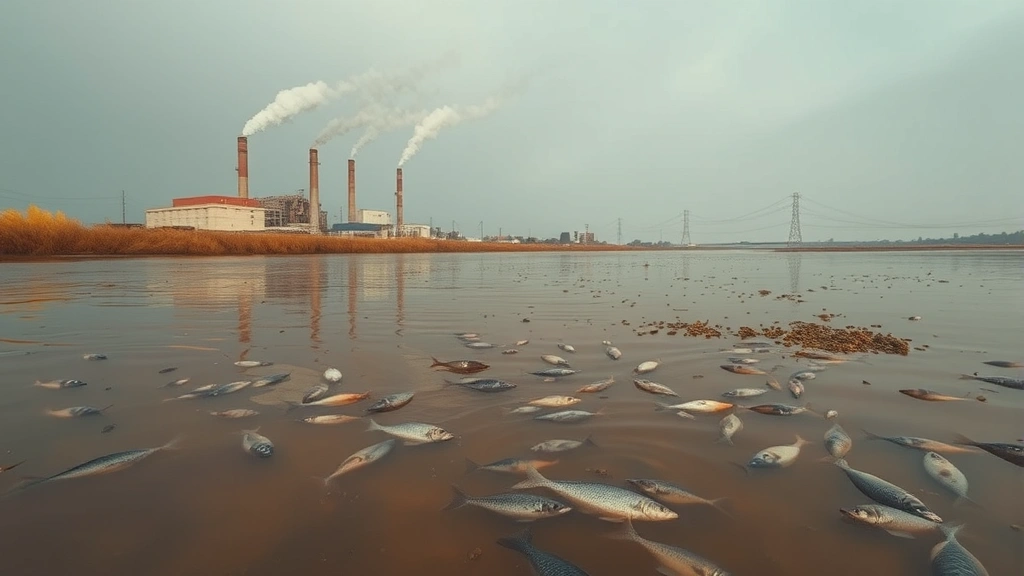
Water Pollution’s Ecosystem Impact: Scientific Insights
Water pollution represents one of the most pressing environmental challenges of our time, affecting freshwater and marine ecosystems across the globe. The effects of water pollution on environment extend far beyond visible contamination, triggering cascading ecological disruptions that threaten biodiversity, human health, and economic stability. Scientific research increasingly demonstrates that water pollution operates as a systemic threat multiplier, interacting with climate change, habitat loss, and resource depletion to accelerate ecosystem degradation.
Understanding the mechanisms through which pollutants degrade aquatic ecosystems requires examining the intricate relationships between chemical contaminants, biological processes, and physical systems. From nutrient-induced eutrophication to persistent organic pollutants and microplastic accumulation, water pollution manifests through multiple pathways that compromise ecosystem services worth trillions of dollars annually. This comprehensive analysis synthesizes current scientific evidence to illuminate how water pollution fundamentally alters ecosystem function and what interventions offer the most promising solutions.
Primary Pollutants and Their Ecological Pathways
Water pollution encompasses a diverse array of contaminants originating from agricultural, industrial, municipal, and atmospheric sources. How humans affect the environment through water pollution reflects the scale and complexity of modern economic activity. Point source pollution from industrial facilities and municipal wastewater treatment plants represents approximately 20% of aquatic contamination, while non-point source pollution from agricultural runoff, urban stormwater, and atmospheric deposition accounts for the remaining 80% of freshwater degradation.
Nutrient pollution, primarily nitrogen and phosphorus compounds, constitutes the most widespread category of aquatic contaminants globally. Agricultural fertilizer application represents the dominant source, with approximately 110 million metric tons of nitrogen fertilizers applied annually worldwide. These nutrients enter waterways through surface runoff, groundwater infiltration, and atmospheric deposition, fundamentally altering nutrient cycling processes that evolved over millennia. The ecological consequences manifest through disrupted trophic structures, altered species composition, and compromised ecosystem resilience.
Chemical contaminants including pesticides, pharmaceuticals, and industrial compounds introduce toxins that disrupt fundamental biological processes. Endocrine-disrupting chemicals affect reproductive systems across multiple species, while neurotoxic compounds impair neural development and cognitive function. The complexity intensifies because many pollutants interact synergistically, producing effects greater than individual exposures would predict. Understanding these ecological pathways requires integrating toxicology, biogeochemistry, and ecosystem dynamics.
Eutrophication and Hypoxic Dead Zones
Eutrophication represents the most quantifiable and widespread consequence of water pollution, affecting an estimated 405 oceanic dead zones and thousands of freshwater systems. This process initiates when excess nutrients stimulate rapid algal and aquatic plant growth, subsequently triggering oxygen depletion as microbial decomposition consumes dissolved oxygen faster than atmospheric reaeration replenishes it. The resulting hypoxic conditions (dissolved oxygen below 2 mg/L) create uninhabitable environments for most aerobic organisms, effectively creating biological deserts within previously productive ecosystems.
The Gulf of Mexico dead zone exemplifies this phenomenon at scale, encompassing approximately 6,000-7,000 square kilometers annually during peak hypoxia. Nutrient loading from the Mississippi River basin, driven by agricultural intensification across 31 states, directly causes this ecological collapse. Similar patterns emerge in the Black Sea, Baltic Sea, and Chesapeake Bay, where eutrophication-driven hypoxia eliminates commercial fisheries and disrupts entire food webs. Economic analyses estimate that hypoxic dead zones generate annual losses exceeding $2.2 billion in ecosystem services and fishery productivity.
The ecological mechanisms driving eutrophication involve fundamental shifts in primary production dynamics and microbial metabolism. Nitrogen and phosphorus enrichment favors r-selected species (rapid-growing algae and cyanobacteria) over K-selected species (slower-growing vascular plants and established communities). This compositional shift reduces structural complexity, decreases genetic diversity, and compromises ecosystem stability. Cyanobacterial blooms, facilitated by eutrophication, produce neurotoxins and hepatotoxins that poison aquatic organisms and contaminate human water supplies.
Addressing eutrophication requires understanding the human environment interaction examples that generate nutrient loading. Agricultural best management practices, constructed wetlands for nutrient removal, and policy interventions targeting fertilizer application represent evidence-based solutions. The World Bank estimates that nutrient pollution costs societies $260 billion annually in lost ecosystem services, creating compelling economic justification for investment in remediation infrastructure.

” alt=”Satellite imagery showing eutrophic waterway with green algal bloom and surrounding riparian vegetation”>
Heavy Metals and Bioaccumulation Mechanisms
Heavy metal contamination represents a persistent threat to aquatic ecosystems through bioaccumulation and biomagnification processes. Mercury, lead, cadmium, and chromium enter aquatic systems through industrial discharge, mining operations, atmospheric deposition, and agricultural runoff. Unlike organic contaminants susceptible to biodegradation, heavy metals persist indefinitely, accumulating in sediments and organisms over decades or centuries.
Bioaccumulation mechanisms operate through multiple pathways. Aquatic organisms accumulate metals through direct uptake from water and ingestion of contaminated food. Methylmercury, the organic form of mercury, demonstrates particularly severe bioaccumulation, concentrating 10,000-fold from water to apex predators. This process explains why piscivorous fish species and marine mammals exhibit toxin concentrations sufficient to cause neurological damage and reproductive failure. Research demonstrates that mercury contamination impairs cognitive development in children consuming predatory fish species, creating intergenerational health consequences.
The ecological consequences extend beyond individual toxicity to population-level effects. Heavy metal exposure reduces reproductive success, impairs immune function, and increases disease susceptibility across aquatic species. Fish populations in contaminated systems exhibit higher parasite loads, reduced growth rates, and lower genetic diversity. These population-level impacts cascade through food webs, ultimately compromising ecosystem productivity and resilience. The definition of environment science encompasses understanding these complex toxicological and ecological interactions.
Remediation of heavy metal contamination requires source control and ecosystem restoration. Phytoremediation using aquatic plants, sediment dredging, and wetland construction represent established technologies for reducing bioavailable metal concentrations. However, long-term monitoring reveals that recovery timescales often extend 20-50 years following remediation initiation, reflecting the persistence of metals in ecosystem compartments. Economic analyses indicate that preventing heavy metal pollution through industrial controls costs substantially less than post-contamination remediation.
Persistent Organic Pollutants and Ecosystem Toxicity
Persistent organic pollutants (POPs) including polychlorinated biphenyls (PCBs), dichlorodiphenyltrichloroethane (DDT), and polycyclic aromatic hydrocarbons (PAHs) represent legacy contaminants that continue degrading aquatic ecosystems despite decades of restrictions. These compounds resist biodegradation, accumulate in lipid tissues, and biomagnify through food webs to reach concentrations lethal to apex predators. The Stockholm Convention on Persistent Organic Pollutants, ratified by 186 parties, recognizes POPs as globally significant threats requiring coordinated international response.
Endocrine disruption represents a primary mechanism through which POPs damage aquatic organisms. Xenoestrogens including bisphenol A (BPA) and phthalates disrupt sexual development, reduce fertility, and feminize males at exposure levels previously considered toxicologically insignificant. Populations of fish species in contaminated systems exhibit skewed sex ratios, reduced gonadal development, and altered mating behaviors, ultimately compromising reproductive success. These effects occur at concentrations measured in parts per billion, suggesting that traditional toxicological thresholds underestimate actual ecological risks.
The ecological consequences of POP contamination manifest through altered trophic interactions and compromised ecosystem services. Declining raptor populations resulted from DDT-induced eggshell thinning, demonstrating how chemical contamination can drive species toward extinction. Contemporary research reveals that POP exposure impairs immune function in marine mammals, increasing susceptibility to infectious disease. Killer whale populations in the Pacific Northwest exhibit POP concentrations sufficient to suppress immune responses, contributing to population declines despite prey abundance.
Recovery from POP contamination proceeds slowly because these compounds persist in sediments, continue leaching into overlying water columns, and resist environmental degradation. Active remediation technologies including photochemical oxidation and sediment capping show promise but require substantial investment. The positive impacts on the environment by humans include successful POP phase-outs, which demonstrate that coordinated policy intervention can reduce environmental contamination.
Microplastics as Emerging Contaminants
Microplastics represent an emerging class of aquatic contaminants that have only recently received scientific attention despite decades of plastic pollution accumulation. These particles, defined as plastics smaller than 5 millimeters, originate from fragmentation of larger plastic debris, degradation of microbeads in personal care products, and direct emission from synthetic textiles and tire wear. Microplastic concentrations in aquatic environments now reach 100,000 particles per cubic kilometer of surface water, with some estuarine systems exceeding 100,000 particles per liter.
The ecological impacts of microplastic ingestion extend across multiple trophic levels. Zooplankton, larval fish, and filter-feeding organisms preferentially consume microplastics, mistaking them for food particles. Ingestion reduces feeding efficiency, causes intestinal blockage, and introduces plastic-associated chemicals including additives and adsorbed pollutants into organisms. Trophic transfer concentrates microplastics in apex predators, with seabirds, marine mammals, and fish showing evidence of gastrointestinal microplastic accumulation. Recent research demonstrates that microplastic ingestion reduces growth rates and reproductive success in multiple fish species.
Beyond direct physical impacts, microplastics serve as vectors for persistent organic pollutants and heavy metals. Plastic surfaces absorb hydrophobic contaminants including PCBs and DDT, concentrating these toxins 100-1,000-fold higher than surrounding water. Ingestion of microplastics therefore simultaneously exposes organisms to multiple contaminant classes, complicating toxicological assessment. The synergistic effects of microplastic ingestion combined with chemical contamination remain poorly understood but likely exceed additive predictions.
Remediation of microplastic pollution requires source control rather than ecosystem-based removal. Banning microbeads in personal care products, implementing textile fiber capture technologies, and reducing plastic consumption represent primary intervention strategies. However, existing microplastic accumulation will persist for decades to centuries, as plastic degradation proceeds extremely slowly in aquatic environments. The transition to biodegradable alternatives and circular economy models offers the most promising long-term solutions.
Impacts on Freshwater Biodiversity
Freshwater ecosystems support approximately 10% of global species despite occupying only 0.8% of Earth’s surface area. Water pollution directly threatens this disproportionate biodiversity through habitat degradation, oxygen depletion, and toxicological stress. Freshwater fish populations have declined 76% since 1970, primarily driven by pollution, habitat fragmentation, and overexploitation. Rivers and streams represent the most threatened ecosystems on Earth, with biodiversity loss rates exceeding terrestrial systems.
Pollution-driven species composition shifts favor generalist, pollution-tolerant taxa over specialized species requiring high water quality. Mayflies, stoneflies, and caddisflies, which require dissolved oxygen concentrations above 5 mg/L, disappear from moderately polluted systems. Conversely, oligochaete worms, chironomid midges, and certain fish species tolerant of low oxygen and high nutrient concentrations proliferate. These compositional shifts reduce functional diversity and compromise ecosystem resilience, as specialized species often provide unique ecosystem functions irreplaceable by generalists.
Freshwater mussel populations have experienced the most severe declines among aquatic organisms, with 40% of species globally threatened with extinction. Mussels serve as ecosystem engineers, filtering massive volumes of water daily and removing suspended particles and phytoplankton. Pollution-driven mussel declines reduce water clarity, alter nutrient cycling, and compromise ecosystem services. Additionally, mussel populations accumulate heavy metals and persistent organic pollutants, serving as sentinel indicators of ecosystem contamination.
Fish spawning migrations represent critical life-history events vulnerable to pollution impacts. Migrating salmon experience olfactory impairment from chemical pollutants, impairing their ability to locate natal streams. Pesticide exposure reduces immune function, increasing susceptibility to parasites and pathogens. Cumulative pollution stressors reduce spawning success and recruitment, causing population declines despite habitat restoration efforts. The ecological consequences cascade through entire food webs, affecting terrestrial predators including bears, eagles, and humans dependent on salmon populations.
Marine Ecosystem Degradation
Marine ecosystems receive cumulative pollution from terrestrial sources, atmospheric deposition, and direct ocean disposal. Coastal dead zones expand annually, with 2022 research documenting 405 oceanic hypoxic systems covering approximately 245,000 square kilometers. These systems eliminate habitat for demersal fish species, reduce recruitment success, and compromise fishery productivity. The economic losses from marine hypoxia exceed $3 billion annually when accounting for reduced fishery yields and ecosystem service degradation.
Coral reef ecosystems demonstrate extreme vulnerability to pollution impacts combined with climate warming. Nutrient pollution shifts coral reef communities toward algal dominance, reducing coral growth rates and increasing disease susceptibility. Sedimentation from terrestrial erosion smothers coral colonies and reduces light availability for zooxanthellae photosynthesis. Heavy metal accumulation in reef organisms reduces reproductive success and increases disease prevalence. Combined with bleaching from thermal stress, pollution represents a compound threat driving coral ecosystem collapse.
Kelp forest ecosystems in coastal regions experience productivity collapse following pollution-driven herbivore population explosions. Sea urchin populations, released from predation pressure by fishing and pollution-stressed predators, graze kelp forests to bare rock, creating urchin barrens devoid of kelp or other macroalgae. These ecosystem state shifts prove remarkably resistant to reversal, persisting for decades despite removal of initial stressors. The functional loss of kelp forests eliminates habitat for hundreds of species and reduces coastal productivity by orders of magnitude.
Open ocean pollution impacts extend to the most remote marine ecosystems through persistent organic pollutant transport and microplastic distribution. Deep-sea organisms accumulate POPs and heavy metals despite inhabiting environments isolated from direct pollution sources. Microplastics reach the deepest ocean trenches, with recent research documenting microplastic concentrations in hadal zone sediments. These findings demonstrate that pollution impacts penetrate global aquatic systems comprehensively, affecting ecosystems previously considered pristine.

” alt=”Underwater view of coral reef ecosystem with fish schools and healthy polyps in clear blue water”>
Socioeconomic Consequences and Ecosystem Services Loss
Water pollution generates substantial economic costs through ecosystem services degradation that extend far beyond visible environmental damage. The United Nations Environment Programme estimates that water pollution costs societies $260 billion annually through lost ecosystem services, compromised human health, and reduced economic productivity. This figure represents only monetized costs; unmeasured ecological losses and human suffering likely exceed these estimates substantially.
Fishery productivity declines represent the most quantifiable economic consequence of water pollution. Approximately 3 billion people depend on fish species for essential protein and micronutrients. Pollution-driven fishery collapses disproportionately impact developing nations and indigenous communities dependent on subsistence fishing. The Baltic Sea fishery collapse from eutrophication-driven hypoxia eliminated 100,000 jobs and reduced regional economic productivity by billions of dollars. Similar trajectories emerge globally, with pollution-compromised fisheries contributing to food insecurity affecting hundreds of millions of people.
Water treatment costs escalate substantially when source water quality declines from pollution. Municipal water systems treating eutrophic source water incur 2-3 times higher treatment costs compared to systems utilizing clean water. These increased costs disproportionately burden low-income communities, exacerbating environmental justice disparities. Additionally, water-related diseases resulting from inadequate treatment of contaminated water cause 1.6 million annual deaths and result in 39 million disability-adjusted life years lost globally.
Tourism and recreational economy impacts from water pollution extend beyond direct water contact. Polluted waterways reduce property values, discourage tourism investment, and undermine regional economic development. Mediterranean coastal communities experiencing eutrophication-driven algal blooms lost approximately €900 million annually during peak pollution years. These economic losses ripple through regional economies, affecting hospitality, transportation, and service sectors dependent on tourism revenue.
The Ecorise Daily Blog documents contemporary research on ecosystem economics and pollution impacts. Academic research from institutions including the International Water Management Institute and World Bank water resources programs quantifies these economic consequences, providing evidence-based justification for pollution prevention investments.
Remediation Technologies and Ecological Recovery
Addressing water pollution requires integrated approaches combining source control, treatment technologies, and ecosystem restoration. Point source pollution reduction through industrial process optimization and wastewater treatment infrastructure represents the most cost-effective initial intervention. Advanced treatment technologies including membrane filtration, activated carbon adsorption, and ultraviolet oxidation remove dissolved contaminants with efficiencies exceeding 95%. However, these technologies require substantial capital investment and ongoing operational costs, limiting implementation in resource-constrained regions.
Non-point source pollution control requires landscape-scale interventions including riparian buffer establishment, constructed wetlands, and agricultural best management practices. Riparian forests filter nutrient-laden runoff, reducing nitrogen and phosphorus reaching waterways by 50-80%. Constructed wetlands provide multiple ecosystem services including wastewater treatment, carbon sequestration, and habitat provision, while generating economic returns through wetland products and ecosystem services valuation. These nature-based solutions offer cost advantages over conventional treatment infrastructure while providing co-benefits including biodiversity support and climate resilience.
Sediment remediation technologies address legacy contamination persisting in ecosystem compartments. Sediment dredging physically removes contaminated material but risks remobilizing contaminants during handling. In-situ capping involves placing clean sediment or activated carbon over contaminated deposits, reducing bioavailability of buried contaminants. Phytoremediation using aquatic plants extracts metals and accumulates organic contaminants, gradually reducing ecosystem contamination. However, these technologies operate slowly, requiring 20-50 years for substantial ecosystem recovery.
Ecosystem recovery following pollution remediation proceeds through predictable successional pathways, though timescales vary substantially depending on contamination severity and environmental conditions. Macroinvertebrate communities recover within 3-5 years following nutrient loading reduction in most systems. Fish community recovery requires 5-10 years as reproductive success improves and populations rebuild. However, recovery of specialized species and ecosystem complexity often requires 10-20+ years, reflecting the time required for ecosystem reorganization and trophic reestablishment. Long-term monitoring reveals that complete recovery rarely occurs within human observation timescales, emphasizing pollution prevention rather than remediation.
Policy interventions targeting pollution prevention prove substantially more cost-effective than remediation. The United Nations Environment Programme water pollution initiatives promote integrated water resource management and pollution prevention frameworks. Research from Ecological Economics journal documents that preventing one unit of pollution costs 2-10 times less than remediating equivalent contamination. International agreements including the Clean Water Directive and Marine Strategy Framework Directive establish binding pollution reduction targets supported by scientific evidence.
Emerging technologies including advanced oxidation processes, electrochemical treatment, and nanotechnology-based remediation offer promise for treating previously intractable contaminants. However, these technologies remain expensive and require substantial research investment before widespread implementation becomes feasible. The most pragmatic approach combines conventional treatment, nature-based solutions, and policy-driven pollution prevention, addressing contamination across source-to-ecosystem pathways.
FAQ
What are the primary sources of water pollution affecting ecosystems?
Water pollution originates from multiple sources including agricultural runoff (nutrient and pesticide pollution), industrial discharge (heavy metals and organic compounds), municipal wastewater (nutrients and pharmaceuticals), atmospheric deposition (mercury and nitrogen), and urban stormwater (sediments, metals, and hydrocarbons). Non-point source pollution from agriculture and urban areas represents approximately 80% of aquatic contamination globally, while point sources account for the remaining 20%.
How does water pollution affect fish populations?
Water pollution impacts fish populations through multiple mechanisms including oxygen depletion from eutrophication, toxicological stress from chemical contaminants, olfactory impairment reducing migration success, reduced reproductive success from endocrine disruption, and habitat degradation from sedimentation and algal overgrowth. Population-level impacts cascade through food webs, affecting predators and compromising fishery productivity.
What is the economic value of ecosystem services lost to water pollution?
The United Nations Environment Programme estimates that water pollution costs societies $260 billion annually through ecosystem services loss, compromised human health, and reduced economic productivity. This figure encompasses fishery productivity declines, water treatment cost increases, tourism revenue loss, and disease-related economic impacts. Unmeasured ecological losses likely exceed these monetary estimates substantially.
How long does ecosystem recovery require following pollution remediation?
Ecosystem recovery timescales vary substantially depending on contamination severity, pollution type, and environmental conditions. Macroinvertebrate communities typically recover within 3-5 years following nutrient loading reduction. Fish populations require 5-10 years for substantial recovery as reproductive success improves. Complete recovery of specialized species and ecosystem complexity often requires 10-20+ years, reflecting the time required for ecosystem reorganization and trophic reestablishment.
What remediation technologies most effectively address water pollution?
The most effective approaches combine source control, treatment technologies, and ecosystem restoration. Point source pollution reduction through industrial optimization and wastewater treatment removes 95%+ of dissolved contaminants. Non-point source pollution control requires landscape-scale interventions including riparian buffers and constructed wetlands. Nature-based solutions offer cost advantages while providing co-benefits including biodiversity support and carbon sequestration compared to conventional treatment infrastructure.
How do persistent organic pollutants impact aquatic organisms?
Persistent organic pollutants accumulate in lipid tissues and biomagnify through food webs, reaching lethal concentrations in apex predators. These compounds disrupt endocrine systems at concentrations measured in parts per billion, causing reproductive failure, feminization of males, and altered sexual development. POPs also impair immune function, increasing disease susceptibility and population-level population declines despite prey abundance.
What is eutrophication and why does it create dead zones?
Eutrophication occurs when excess nutrients stimulate rapid algal growth that subsequently decomposes, consuming dissolved oxygen faster than atmospheric reaeration replenishes it. The resulting hypoxic conditions eliminate habitat for aerobic organisms, creating biological deserts. Approximately 405 oceanic dead zones covering 245,000 square kilometers result from eutrophication, with the Gulf of Mexico dead zone serving as the most prominent example.