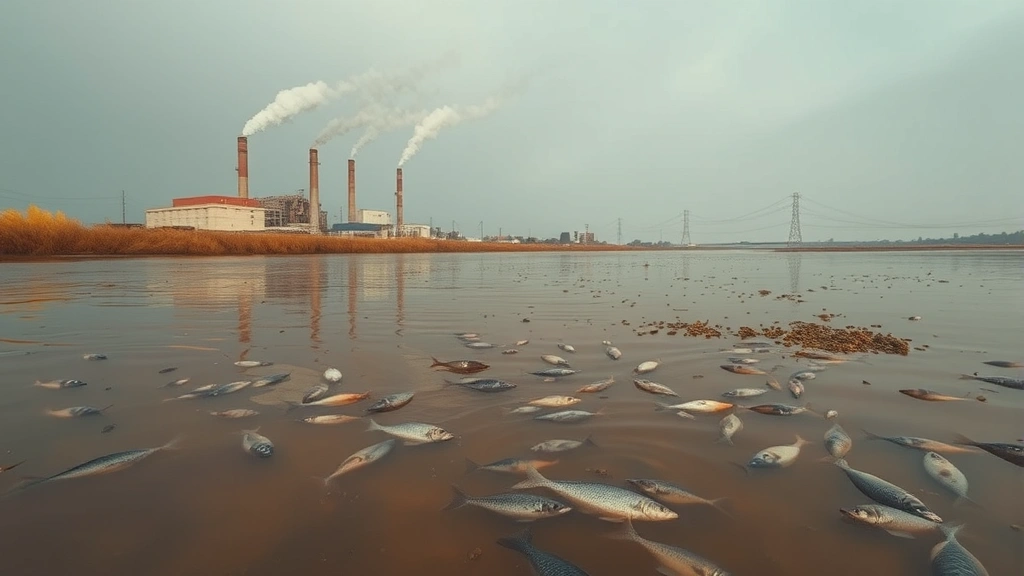
Water Pollution’s Impact: Environmental Scientist Insight
Water pollution represents one of the most pressing environmental challenges of our time, affecting billions of people worldwide and degrading critical ecosystems that sustain life. As an environmental scientist, I’ve witnessed firsthand how contaminated water systems disrupt natural processes, compromise human health, and destabilize economic systems that depend on clean water resources. The effects of water pollution on the environment extend far beyond visible surface contamination, penetrating deep into soil systems, groundwater reserves, and the biological tissues of organisms throughout aquatic food chains.
Understanding the comprehensive impacts of water pollution requires examining multiple dimensions: chemical contamination, biological pollution, thermal changes, and sediment accumulation. Each of these pollution types interacts with aquatic environments in distinct ways, creating cascading effects that ripple through ecosystems for decades. This analysis draws from recent research in ecological economics and environmental science to illuminate how water pollution undermines both natural capital and human wellbeing simultaneously.

Chemical Contamination and Aquatic Ecosystems
Chemical pollution fundamentally alters aquatic environments through persistent organic pollutants, heavy metals, and agricultural runoff. When industrial facilities discharge untreated wastewater containing heavy metals like mercury, lead, and cadmium, these toxins bioaccumulate in aquatic organisms, becoming increasingly concentrated at higher trophic levels. This process creates dangerous situations where top predators—fish, birds, and mammals—accumulate lethal concentrations of toxins despite relatively low environmental concentrations.
Nitrogen and phosphorus from agricultural runoff trigger eutrophication, a process where excess nutrients cause explosive algal blooms that subsequently die and decompose. During decomposition, bacterial respiration consumes dissolved oxygen, creating hypoxic dead zones where aquatic life cannot survive. The Gulf of Mexico’s dead zone, spanning approximately 6,000 to 7,000 square miles annually, exemplifies how agricultural chemical runoff translates into ecological collapse. Research from the World Bank indicates that nutrient pollution costs approximately $2.2 trillion globally in ecosystem services annually.
Synthetic organic chemicals including pesticides, pharmaceuticals, and industrial compounds persist in water systems for years or decades. These endocrine-disrupting chemicals interfere with reproductive and developmental processes in aquatic organisms at concentrations as low as parts per trillion. Studies document feminization of male fish populations in heavily polluted rivers, reduced reproductive success in amphibians, and altered behavior patterns in aquatic invertebrates—all indicators of profound ecosystem dysfunction.
The relationship between water pollution and broader human impacts on the environment becomes evident when examining how chemical pollution undermines ecosystem services. Contaminated water systems lose capacity for natural filtration, nutrient cycling, and habitat provision. This degradation represents a fundamental loss of natural capital that economists increasingly recognize as essential to long-term economic stability.

Biological Impacts and Food Web Disruption
Pathogenic bacteria, viruses, and parasites introduced through inadequate sewage treatment create biological pollution that devastates aquatic communities. Cholera, typhoid, and cryptosporidium outbreaks linked to contaminated water sources kill approximately 485,000 people annually according to the United Nations Environment Programme. Beyond direct human health impacts, biological contaminants alter aquatic ecosystem composition by selectively eliminating sensitive species while favoring pollution-tolerant organisms.
This selective pressure transforms biodiversity patterns, replacing diverse native communities with depauperate assemblages dominated by few hardy species. Indicator organisms like certain midge larvae and tubifex worms thrive in polluted conditions, while sensitive mayfly nymphs and stoneflies disappear. This transformation has cascading consequences: specialized predators that depend on these sensitive prey species decline or vanish entirely, unraveling food web complexity that took millennia to develop.
Invasive species often exploit polluted conditions, outcompeting native organisms adapted to cleaner water. Asian carp in North American waterways, zebra mussels in the Great Lakes, and water hyacinth in tropical systems all demonstrate how pollution-stressed ecosystems become vulnerable to biological invasion. These invaders further degrade ecosystem function, reduce native biodiversity, and create economic costs through disrupted fisheries and clogged water infrastructure.
The concept of different environment types becomes relevant here, as freshwater, marine, and estuarine systems respond differently to biological pollution based on their inherent characteristics. Oligotrophic (nutrient-poor) lakes experience more dramatic shifts when contaminated, while eutrophic systems show greater resilience but worse long-term consequences when pushed toward anoxia.
Economic Consequences of Water Degradation
Water pollution generates substantial economic costs through multiple pathways: treatment expenses, lost productivity, health care burdens, and degraded ecosystem services. The economic framework for understanding water pollution emphasizes that clean water represents critical natural capital whose depletion imposes costs on current and future generations. When factories externalize pollution costs onto downstream communities, standard economic analysis reveals market failure requiring regulatory intervention.
Fisheries worldwide lose productivity worth billions annually due to water contamination. In Southeast Asia, aquaculture operations face increasing costs from water quality monitoring and treatment as upstream agricultural and industrial pollution intensifies. Bangladesh’s shrimp farming industry, worth approximately $2 billion annually, faces existential threats from saltwater intrusion and chemical pollution in coastal aquifers. These economic losses concentrate disproportionately on developing nations whose populations depend most directly on aquatic resources.
Treatment costs for contaminated drinking water escalate dramatically with pollution severity. Communities relying on groundwater contaminated with agricultural chemicals or industrial waste face expensive remediation requiring activated carbon filtration, reverse osmosis, or complete system replacement. Small municipalities in the American Midwest spend millions annually treating nitrate pollution from agricultural runoff—costs ultimately borne by local residents despite pollution originating from distant agricultural operations.
Tourism industries dependent on water quality suffer substantial losses when pollution degrades aquatic environments. Mediterranean beach tourism declined measurably during periods of increased coastal eutrophication and microbial pollution. Recreational fishing, diving, and water sports generate trillions in global economic value annually, all vulnerable to water quality degradation. Research from ecological economics journals demonstrates that willingness-to-pay for water quality improvements far exceeds treatment costs, indicating substantial economic value in pollution prevention.
Understanding these economic dimensions connects to broader questions about human-environment interactions, where economic systems depend fundamentally on ecosystem health. Water pollution exemplifies how environmental degradation generates economic losses that conventional GDP accounting often ignores, creating policy blind spots where destructive activities appear economically beneficial.
Human Health and Water Security
Water pollution creates direct health threats through contaminated drinking water and indirect effects through degraded food systems. Approximately 2 billion people lack access to safely managed drinking water, making waterborne diseases among the leading causes of mortality in developing regions. Cholera, typhoid, dysentery, and hepatitis A all spread through contaminated water, killing vulnerable populations including children under five whose developing immune systems cannot combat these pathogens.
Chemical contaminants in drinking water cause chronic health effects including cancer, neurological damage, and reproductive harm. Arsenic in groundwater affects millions in South Asia, Bangladesh, and other regions where natural geological sources combine with industrial pollution to create dangerous concentrations. Lead contamination, exemplified by the Flint water crisis, causes permanent cognitive damage in children and hypertension in adults—effects persisting throughout lifespans.
Emerging contaminants including microplastics and per- and polyfluoroalkyl substances (PFAS) pervade water systems globally, with health consequences still being documented. PFAS chemicals, used in non-stick cookware and firefighting foam, accumulate in human tissues and have been linked to immune suppression, thyroid disease, and cancer. These contaminants resist degradation, persisting in water systems indefinitely—the definition of persistent pollution with intergenerational consequences.
Seafood contamination from mercury and other bioaccumulative toxins poses particular risks to populations consuming large quantities of fish. In developing nations where fish provides primary protein sources, mercury and pesticide accumulation creates impossible choices between nutritional needs and toxin exposure. Pregnant women and nursing mothers face especially acute dilemmas when local water and food systems are contaminated.
The intersection of water pollution and human health connects directly to discussions about environmental science definitions, where human wellbeing cannot be separated from ecosystem integrity. Public health fundamentally depends on clean water access—a resource increasingly threatened by pollution.
Remediation and Recovery Strategies
Effective water pollution remediation requires integrated approaches addressing pollution sources, treatment technologies, and ecosystem restoration. Source reduction—preventing pollution generation—proves more cost-effective than treating contaminated water. Transitioning agricultural systems toward regenerative practices reduces nutrient runoff while improving soil health and carbon sequestration. Industrial process modifications, pollution prevention protocols, and circular economy approaches minimize waste generation requiring water treatment.
Advanced treatment technologies including ultraviolet disinfection, activated carbon filtration, and nanofiltration remove specific contaminants from drinking water and wastewater. However, treatment alone cannot restore degraded ecosystems; recovery requires allowing recovery time and habitat restoration. Wetland restoration projects in regions like the Everglades demonstrate how recreating natural water filtration systems provides both ecological and economic benefits exceeding conventional treatment infrastructure costs.
Regulatory frameworks establishing water quality standards, pollution discharge limits, and enforcement mechanisms prove essential for pollution control. The United Nations Environment Programme has documented that nations with strong environmental regulations achieve better water quality outcomes than those relying on voluntary compliance. However, enforcement remains challenging in developing regions with limited institutional capacity and competing development pressures.
Ecosystem-based adaptation strategies including mangrove restoration, riparian buffer establishment, and floodplain reconnection enhance natural water purification while providing additional ecosystem services including carbon storage, biodiversity habitat, and flood mitigation. These nature-based solutions often cost less than engineered infrastructure while generating multiple co-benefits. Investment in green infrastructure—constructed wetlands, bioswales, and permeable pavements—reduces stormwater pollution while managing flood risk.
International cooperation becomes critical for transboundary water pollution, where upstream nations’ pollution decisions affect downstream communities across political boundaries. The Danube River Commission, Great Lakes Agreement, and emerging frameworks for shared aquifer management demonstrate how cooperative governance can address water pollution affecting multiple nations. Major environmental disasters like Chernobyl revealed how transboundary pollution requires coordinated response mechanisms transcending national interests.
Community engagement and environmental justice considerations prove essential for effective remediation. Historically, water pollution concentrates in low-income and marginalized communities lacking political power to resist polluting industries. Equitable remediation requires centering affected communities’ voices in solution development, ensuring that cleanup efforts address their specific needs and vulnerabilities. This connects to broader principles of environmental justice recognizing that pollution burdens and benefits distribute unequally across social groups.
FAQ
What are the primary sources of water pollution?
Water pollution originates from point sources (factories, sewage treatment plants, mining operations) and nonpoint sources (agricultural runoff, stormwater from urban areas, atmospheric deposition). Industrial discharge, inadequate wastewater treatment, agricultural chemical use, and plastic waste represent the largest pollution contributors globally. Developing regions often lack treatment infrastructure, making sewage a dominant pollution source.
How does water pollution affect aquatic organisms?
Water pollution affects aquatic life through multiple mechanisms: direct toxicity from chemical contaminants, oxygen depletion from eutrophication, habitat degradation, bioaccumulation of persistent toxins, and introduction of pathogens. Sensitive species disappear first, while pollution-tolerant organisms proliferate, fundamentally altering ecosystem composition and function. Reproductive failure, behavioral changes, and immune suppression occur even at low contaminant concentrations.
Can polluted water systems recover naturally?
Some recovery occurs naturally through dilution, sedimentation, and biodegradation processes, but recovery rates depend on pollution type, system size, and continued input. Persistent chemicals degrade extremely slowly or not at all, while biodegradable pollutants may recover over years or decades if pollution sources cease. Most degraded systems require active restoration combining source reduction, treatment, and habitat restoration.
What economic value does clean water provide?
Clean water provides immense economic value through drinking water supply, agricultural irrigation, industrial processes, fisheries, recreation, and ecosystem services including flood mitigation and water purification. Economic valuation studies estimate freshwater ecosystem services worth $100 trillion annually globally. Protecting water quality prevents treatment costs while maintaining these diverse economic benefits.
How does water pollution impact climate change?
Water pollution and climate change interact through multiple pathways. Warming waters reduce oxygen solubility, exacerbating dead zones in polluted systems. Altered precipitation patterns change dilution ratios affecting pollution concentrations. Conversely, some water pollutants (methane from anaerobic decomposition) contribute to climate forcing. Wetland and mangrove destruction through pollution removes carbon sinks while releasing stored carbon.
What individual actions reduce water pollution?
Reducing personal water pollution contributions involves: using environmentally-safe cleaning products, proper medication disposal, reducing pesticide use, supporting sustainable agriculture, minimizing plastic consumption, and advocating for stronger water protection policies. While individual actions matter, systemic change through industrial regulation and infrastructure investment proves more impactful for addressing large-scale pollution.
Related reading: Ecorise Daily Blog for comprehensive environment and sustainability coverage.


