How Economies Impact Ecosystems: A Study Review
The relationship between economic systems and ecological health represents one of the most critical intersections in contemporary environmental science. As global economies expand and intensify resource extraction, the cascading effects on natural ecosystems have become increasingly evident and quantifiable. This comprehensive review examines the mechanisms through which economic activities degrade, transform, and sometimes regenerate ecosystems, drawing on recent empirical research and theoretical frameworks from ecological economics.
Understanding these connections requires moving beyond traditional economic models that treat nature as an infinite resource pool. Modern ecological economics integrates biophysical limits with economic theory, revealing how extraction rates, pollution patterns, and land-use changes directly correspond to ecosystem degradation. The stakes are extraordinarily high: approximately 1 million species face extinction due to economic-driven habitat loss, while ecosystem services valued at trillions of dollars annually are deteriorating at accelerating rates.

Economic Growth and Biodiversity Loss
The conventional economic paradigm measures progress through Gross Domestic Product (GDP) growth, yet this metric systematically undervalues or ignores natural capital depletion. Research from the World Bank’s environmental division demonstrates that countries experiencing rapid GDP expansion frequently show simultaneous declines in biodiversity indices and ecosystem integrity. This paradox emerges because economic growth, as traditionally measured, prioritizes resource extraction and consumption over regeneration and preservation.
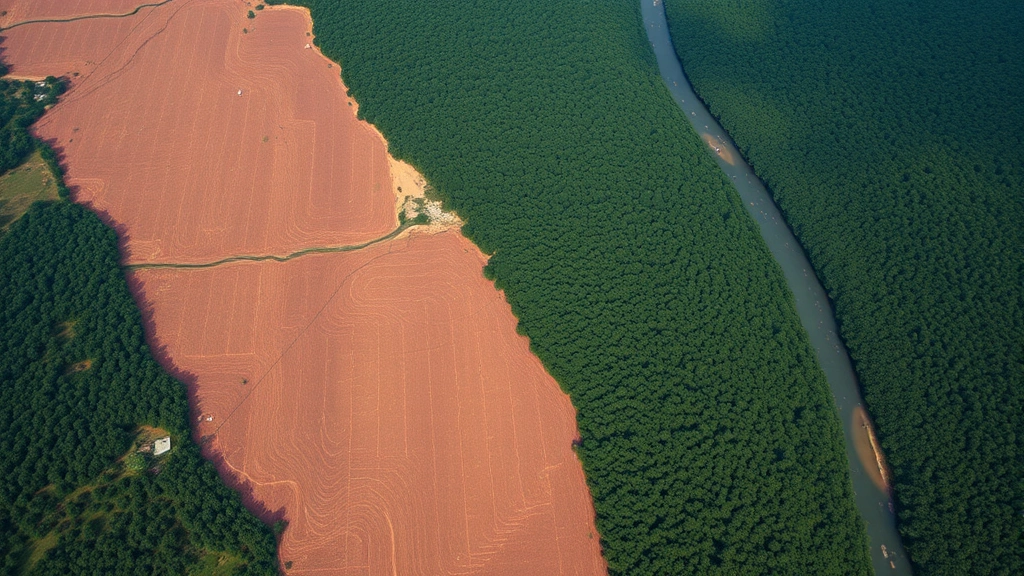
Habitat destruction represents the primary mechanism linking economic expansion to biodiversity loss. Agricultural expansion, urban development, and resource extraction collectively consume approximately 10 million hectares of natural habitat annually. The economic incentives driving this conversion are straightforward: converting forest to pasture or cropland generates immediate revenue, while the ecosystem services provided by intact forests—carbon sequestration, water filtration, pollination—remain economically invisible in standard accounting frameworks.
The biodiversity-economy nexus operates through multiple pathways. Human-environment interaction intensifies as economic systems expand, creating what economists term “ecological overshoot.” Nations now collectively demand the renewable resources of 1.7 Earths annually, a fundamental imbalance that manifests through species extinction, soil degradation, and freshwater depletion. The relationship proves non-linear: ecosystem collapse accelerates as degradation approaches critical thresholds, making early intervention economically rational despite short-term costs.
Industrial Agriculture’s Ecological Footprint
Agricultural systems represent the economic sector with perhaps the most profound ecosystem impacts, occupying roughly 40% of terrestrial land while driving approximately 80% of deforestation. Industrial agriculture’s ecological costs extend far beyond land conversion, encompassing nutrient cycling disruption, pollinator decline, and aquatic ecosystem eutrophication. Yet agricultural commodities remain systematically underpriced relative to their true ecological costs.
The economic structure of industrial agriculture creates perverse incentives for environmental degradation. Farmers face pressure to maximize short-term yields through intensive chemical inputs, monoculture cultivation, and soil mining—practices that deplete natural capital while appearing profitable on annual balance sheets. Nitrogen and phosphorus runoff from fertilizer application costs downstream economies an estimated $200-300 billion annually in water treatment, fishery losses, and ecosystem restoration, yet these costs remain externalized, borne by society rather than producers.
Pesticide use exemplifies agricultural economics’ ecological blindness. Global pesticide expenditures exceed $60 billion annually, yet assessments of pollinator decline, non-target organism mortality, and soil microbial community disruption suggest true ecological costs exceed economic benefits by substantial margins. The economic system that drives pesticide adoption fails to account for the ecosystem services—pollination, natural pest control, soil formation—that pesticides simultaneously destroy.
Understanding the full scope of agricultural impacts requires examining the complete supply chain. Livestock production, which drives much deforestation, generates significant methane emissions while consuming vast quantities of feed crops. The economic separation between livestock producers, feed growers, and those experiencing climate impacts obscures these connections, allowing each economic actor to optimize individually while collectively generating ecological catastrophe.
Fossil Fuel Economies and Climate Disruption
The global economy’s dependence on fossil fuels represents perhaps the most consequential economic-ecosystem relationship. Approximately 80% of global energy derives from coal, oil, and natural gas—a system that generates $5+ trillion in annual economic activity while simultaneously destabilizing the climate system that all ecosystems depend upon. This represents an extraordinary example of economic externality: climate damages now exceed $280 billion annually and accelerate exponentially.
The economic logic of fossil fuel dominance reflects historical path dependencies and infrastructure investments rather than rational optimization. Coal, oil, and gas remain economically competitive only because carbon emissions impose no direct costs on producers. Reducing carbon footprint requires economic restructuring, yet the concentrated benefits of fossil fuel extraction contrast sharply with diffuse climate costs, creating political-economic resistance to transition.
Climate disruption cascades through ecosystems via multiple mechanisms. Rising temperatures shift species ranges, disrupt phenological timing, and exceed thermal tolerance thresholds. Ocean acidification—a direct consequence of fossil fuel combustion—threatens calcifying organisms and restructures marine food webs. Extreme weather events, intensified by climate change, destroy ecosystems faster than they can regenerate. The economic system driving climate change simultaneously undermines the ecological resilience necessary for adaptation.
Renewable energy transition economics reveal critical insights about economic-ecosystem relationships. Solar and wind technologies now cost less than fossil fuels in most markets, yet transition remains slow due to incumbent economic power, infrastructure lock-in, and short-term investment horizons. Renewable energy for homes adoption demonstrates that technological solutions exist, yet economic structures inhibit rapid deployment.
Pollution as Economic Externality
Pollution represents the classic economic externality: costs imposed on third parties and ecosystems receive no compensation. Industrial production generates enormous value for producers and consumers while shifting environmental costs to communities, future generations, and non-human species. This fundamental misallocation of costs ensures pollution persists despite causing substantial ecological damage.
Water pollution exemplifies externality economics. Manufacturing industries discharge pollutants into waterways, degrading aquatic ecosystems and contaminating drinking water for downstream communities. The economic calculus appears simple: pollution control costs money, while dumping is free. Consequently, firms pollute until regulatory pressure forces investment in treatment. Yet the ecological costs—aquatic species loss, bioaccumulation in food webs, disrupted nutrient cycling—far exceed the industrial savings from pollution.
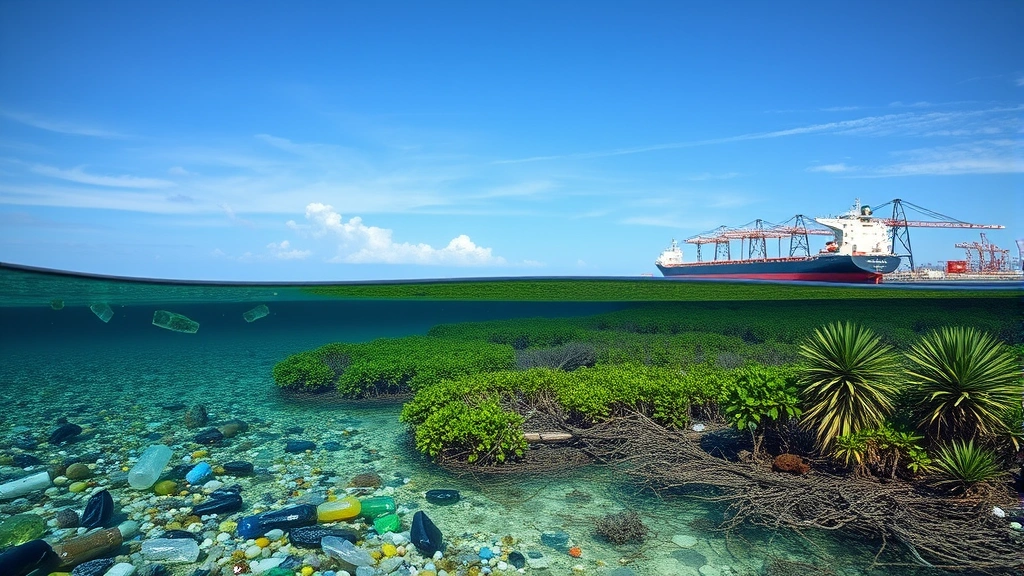
Microplastics pollution illustrates how modern economic systems generate novel ecological problems. Plastic production serves genuine economic purposes, yet the system’s failure to internalize end-of-life costs ensures persistent pollution. Microplastics now permeate marine ecosystems, freshwater systems, and even the atmosphere. The economic benefits of plastic—convenience, durability, cost—accrue to consumers and producers, while ecological costs distribute across the biosphere.
Heavy metal pollution from mining and industrial processes demonstrates long-term ecological consequences of externalized costs. Lead contamination persists for centuries, accumulating in soils and bioaccumulating through food chains. Mercury emissions from coal combustion deposit globally, concentrating in aquatic food webs and threatening wildlife and human health. The economic systems generating these pollutants operated profitably for decades while imposing permanent ecological damage.
Market Mechanisms and Conservation
Recognition of economic-ecosystem linkages has generated market-based conservation mechanisms, yet their effectiveness remains contested. Payment for ecosystem services (PES) programs attempt to monetize nature’s contributions to human welfare, creating economic incentives for conservation. Carbon markets, biodiversity offsets, and water quality trading represent attempts to internalize ecological values within market systems.
The theoretical appeal of market mechanisms is substantial: by assigning monetary values to ecosystem services, these approaches allegedly align profit motives with conservation. A farmer protecting wetlands receives payment for water filtration services; a forest owner maintains carbon stocks to access carbon credit revenues; a manufacturer purchases biodiversity offsets to compensate for development impacts. These mechanisms harness market forces rather than requiring regulatory prohibition or moral suasion.
However, empirical assessments reveal significant limitations. Carbon markets have generated substantial volumes of questionable credits, with verification and additionality problems undermining environmental integrity. Biodiversity offsets frequently fail to achieve ecological equivalence, creating net biodiversity loss despite offsetting claims. PES programs often reward activities that would occur regardless, generating economic transfers without additional conservation. The fundamental challenge: assigning monetary values to complex, irreplaceable ecosystems inevitably undervalues them relative to their actual ecological importance.
Market-based conservation mechanisms work best as complements to regulatory approaches, not substitutes. Direct regulation preventing ecosystem destruction remains necessary; market mechanisms can enhance efficiency within regulatory constraints. Yet the political appeal of market solutions often reflects preference for avoiding structural economic change, allowing continued growth within slightly revised accounting frameworks.
Pathways to Ecological Economic Integration
Reconciling economic systems with ecological limits requires fundamental restructuring of how economies value nature and measure progress. Environmental science definitions increasingly emphasize ecosystem services and natural capital, yet economic decision-making remains dominated by GDP and profit metrics that ignore ecological constraints.
Natural capital accounting represents one promising approach. By measuring ecosystem assets—forests, fisheries, mineral deposits, water resources—alongside financial and human capital, nations gain comprehensive pictures of total wealth. Research from the United Nations Environment Programme demonstrates that many countries experiencing apparent economic growth actually experience declining total wealth when natural capital depletion is included. This reframing reveals that conventional development strategies often represent capital liquidation rather than genuine economic progress.
Circular economy frameworks attempt to decouple economic activity from resource extraction and waste generation. By designing products for longevity, repairability, and material recovery, circular approaches reduce ecosystem impacts per unit of economic output. Yet circular economies require substantial infrastructure investment and consumer behavior change; their implementation remains limited despite theoretical advantages.
Regenerative agriculture offers pathways toward positive ecological-economic integration. By building soil health, enhancing biodiversity, and sequestering carbon, regenerative practices can simultaneously improve farm economics and ecosystem condition. Sustainable fashion brands increasingly source from regenerative agricultural systems, demonstrating market demand for ecologically positive production.
Ultimately, integrating ecological limits into economic systems requires acknowledging that infinite growth remains impossible on a finite planet. Steady-state economics, doughnut economics, and degrowth frameworks propose alternatives to perpetual expansion. These approaches emphasize optimization around ecological boundaries rather than endless accumulation, prioritizing human wellbeing and ecosystem health over GDP expansion.
The transition toward ecological economic integration faces formidable political-economic barriers. Incumbent industries benefit from current arrangements; powerful actors resist reforms threatening their positions. Yet accelerating ecological degradation increasingly demonstrates that current economic systems prove fundamentally unsustainable. The question becomes whether transition occurs through deliberate reform or ecological collapse-driven contraction.
Recent research from ecological economics journals increasingly emphasizes urgency and feasibility of transformation. Renewable energy costs have collapsed; regenerative agriculture demonstrates profitability; natural capital accounting becomes standard practice. The economic tools for sustainability exist; implementation requires political will to restructure systems benefiting entrenched interests.
FAQ
How do economic systems directly damage ecosystems?
Economic activities damage ecosystems through habitat destruction for resource extraction and development, pollution from industrial processes and agriculture, greenhouse gas emissions from fossil fuel combustion, and overexploitation of renewable resources. These impacts reflect economic incentive structures that fail to account for ecological costs, creating systematic undervaluation of nature.
Why don’t market mechanisms solve environmental problems?
Market mechanisms struggle with environmental problems because ecosystem values resist monetization, information asymmetries prevent accurate pricing, and profit motives often conflict with conservation. Additionally, markets require property rights that don’t apply to commons like atmosphere and oceans, and short-term financial returns dominate long-term ecological sustainability in investment decisions.
Can economic growth occur without ecological degradation?
Absolute decoupling—economic growth without resource extraction or emission increases—remains theoretically possible but practically elusive. Some wealthy nations show declining resource extraction while maintaining economic output, yet this often reflects outsourcing extraction to poorer nations rather than genuine decoupling. Global decoupling at required scales remains unachieved despite decades of sustainability efforts.
What economic policies best protect ecosystems?
Most effective approaches combine regulatory protection (preventing ecosystem destruction), economic instruments (carbon pricing, resource taxes), natural capital accounting (measuring ecosystem assets), and investment in regenerative practices. Integrated approaches outperform single-policy solutions; political feasibility requires building coalitions supporting transition despite short-term adjustment costs.
How does the blog home address economic-ecological relationships?
Our platform explores interconnections between economic systems and environmental outcomes, examining how consumption patterns, production methods, and economic policies generate ecological consequences. We emphasize data-driven analysis, interdisciplinary perspectives, and practical pathways toward sustainable economic-ecological integration.


