
Can Nature-Based Solutions Boost Economy? Study Shows Compelling Evidence
The intersection of ecological restoration and economic development has long been viewed as a tension rather than a synergy. However, emerging research challenges this outdated paradigm, demonstrating that nature-based solutions (NBS) can simultaneously regenerate ecosystems and generate substantial economic returns. Recent comprehensive studies from leading environmental economics institutions reveal that investing in natural capital produces measurable GDP contributions, employment opportunities, and long-term financial resilience.
Nature-based solutions encompass strategies like wetland restoration, reforestation, mangrove conservation, and urban green infrastructure that harness ecological processes to address environmental challenges while delivering tangible economic benefits. These approaches are no longer peripheral to development agendas—they represent a fundamental shift toward understanding that environmental science and economic prosperity are inseparable. The evidence is mounting: a single hectare of restored wetland can generate $15,000 in annual ecosystem services, while creating local employment in restoration, management, and ecotourism sectors.
The Economic Case for Nature-Based Solutions
Recent analysis from the World Bank demonstrates that nature-based solutions deliver economic returns that rival or exceed traditional infrastructure investments. A landmark 2023 study quantified that every dollar invested in ecosystem restoration generates between $7 and $30 in economic benefits through avoided climate damages, improved water security, enhanced agricultural productivity, and reduced disaster recovery costs.
The economic mechanisms underlying NBS success are multifaceted. When forests are restored, they sequester carbon (reducing future climate liability), stabilize soil (preventing agricultural losses), regulate water cycles (ensuring crop and municipal water security), and provide timber and non-timber forest products. This bundled value creation distinguishes NBS from single-purpose infrastructure projects. A coastal mangrove restoration project simultaneously protects communities from storm surge, supports fisheries, sequesters carbon, and creates tourism revenue streams.
Developing nations with limited capital face particularly acute infrastructure deficits. Traditional gray infrastructure—dams, seawalls, treatment plants—requires massive upfront investment and ongoing maintenance. Nature-based alternatives often cost 30-50% less while providing superior long-term performance. A green infrastructure stormwater system costs approximately $4.50 per square meter annually, compared to $8-15 for conventional piped systems, while delivering superior water quality and recreational amenities.
The United Nations Environment Programme estimates that scaling NBS globally could generate $125 billion annually in ecosystem services by 2050, while simultaneously creating millions of green jobs. This represents an extraordinary opportunity for countries seeking to reconcile development aspirations with environmental stewardship.

Employment and Livelihood Creation
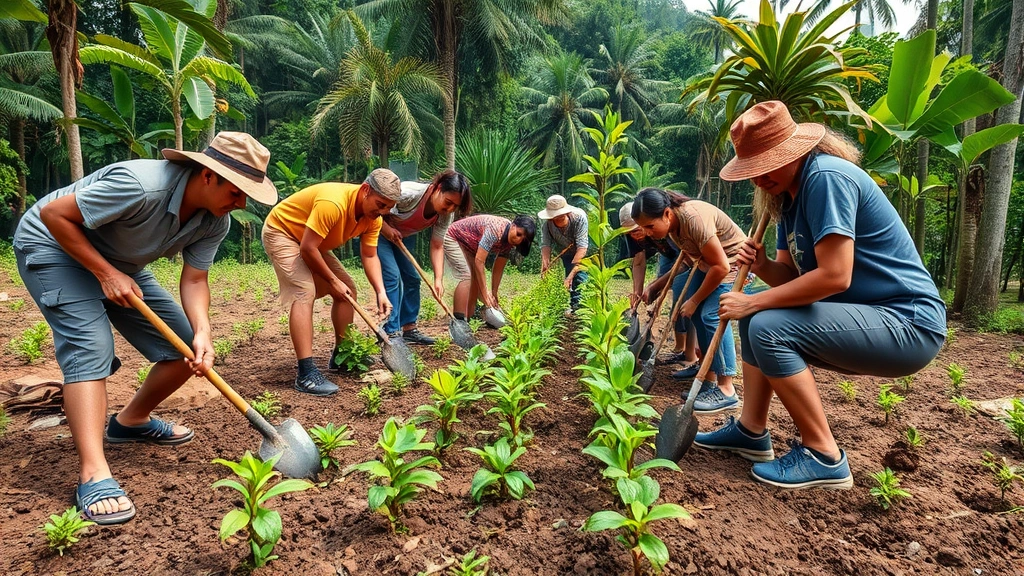
Nature-based solutions function as powerful employment generators across multiple skill levels and sectors. Restoration ecology requires skilled scientists and technicians, but also creates substantial demand for laborers in planting, maintenance, monitoring, and harvesting activities. A wetland restoration project employing 100 workers generates not only direct employment but also indirect jobs in equipment supply, food services, and local transportation.
The employment multiplier effect is particularly pronounced in rural economies where alternative opportunities are limited. In sub-Saharan Africa, mangrove restoration initiatives have created over 50,000 direct jobs while simultaneously rebuilding fisheries that support millions of livelihoods. Women comprise 35-40% of restoration workforces in many regions, providing critical income diversification for households.
Ecotourism represents another substantial employment pathway enabled by ecosystem restoration. Pristine wetlands, forests, and coral reefs attract international visitors willing to pay premium prices. Costa Rica generates $4 billion annually from ecotourism—approximately 3% of GDP—built entirely on natural capital restoration and protection. Local communities receive employment as guides, lodge operators, artisans, and transportation providers, creating incentives for long-term ecosystem stewardship.
Green enterprise development extends employment impacts further. Human-environment interaction in restoration contexts generates opportunities for social enterprises producing sustainable products—agroforestry crops, natural dyes, medicinal plants, and craft materials—that generate income while maintaining ecosystem integrity. These value-addition activities capture greater economic surplus at local levels compared to raw resource extraction.
Climate Mitigation and Financial Resilience
Climate change imposes catastrophic economic costs on developing nations—the World Bank projects climate damages could reduce developing country GDP by 10-23% by 2100 without mitigation. Nature-based solutions provide cost-effective adaptation and mitigation simultaneously, building financial resilience while reducing future liabilities.
Mangrove forests sequester carbon at rates 10 times higher than terrestrial forests, while simultaneously protecting coastal communities from rising sea levels and storm surge. Bangladesh’s mangrove belt protects 30 million people from cyclones while storing 3.02 billion tons of carbon. Restoration of degraded mangroves represents simultaneous investment in climate mitigation, disaster risk reduction, and fisheries productivity.
Peatland restoration exemplifies NBS climate economics. Peatlands cover only 3% of Earth’s land surface but store twice as much carbon as all forests combined. Drained peatlands release 2 gigatons of CO2 annually—more than the entire aviation sector. Restoration costs $500-2,000 per hectare but prevents $5,000-15,000 in annual carbon damages, achieving payback within 1-3 years while restoring biodiversity and water regulation services.
Urban green infrastructure provides climate adaptation benefits critical for developing megacities. Green roofs reduce building energy consumption 20-30%, lower urban heat island temperatures 2-8°C, manage stormwater, improve air quality, and enhance mental health—generating economic returns through reduced healthcare and energy costs. Cities like Singapore and Curitiba have capitalized on green infrastructure to reduce climate vulnerability while improving quality of life.
Scaling NBS in Developing Economies
Despite compelling economics, nature-based solutions remain underfunded relative to traditional infrastructure. Developing countries receive approximately $30 billion annually in climate finance, yet allocate less than 5% to nature-based approaches. Scaling requires addressing financing barriers, building institutional capacity, and integrating NBS into national development planning.
Blended finance mechanisms—combining concessional public capital with commercial investment—are catalyzing NBS scaling. The Green Climate Fund, bilateral development banks, and impact investors increasingly structure deals where ecosystem restoration generates carbon credits, water quality improvements, or agricultural productivity gains that create revenue streams enabling debt service on commercial capital. A reforestation project generating $500/hectare annually in carbon credit revenue can service commercial debt while delivering biodiversity and watershed benefits.
Payment for ecosystem services (PES) schemes internalize the economic value of natural capital, creating direct incentives for stewardship. Costa Rica’s PES program has protected 2.4 million hectares while providing $50 million annually to landowners, reversing deforestation while maintaining rural livelihoods. Similar programs in Mexico, Indonesia, and Uganda demonstrate scalability across diverse contexts.
Developing institutional capacity remains critical. Countries require training in ecosystem monitoring, restoration technology, and financial management to effectively deploy NBS investments. Partnerships between universities, NGOs, and government agencies are building human capital essential for long-term success. Carbon footprint reduction strategies increasingly incorporate ecosystem restoration as a core component, expanding opportunities for developing countries to participate in global carbon markets.
Policy Frameworks and Investment Models
Effective NBS scaling requires policy environments that recognize and reward ecosystem service provision. National accounting systems must integrate natural capital depreciation into GDP calculations—currently, countries celebrate GDP growth from logging forests or draining wetlands while ignoring the capital depletion. Adjusted net savings metrics that account for natural capital changes provide more accurate development indicators.
Subsidy reform represents an underutilized policy lever. Governments spend approximately $500 billion annually subsidizing activities that degrade ecosystems—fossil fuels, industrial agriculture, overfishing. Redirecting even 10% of these subsidies toward NBS would catalyze massive scaling. Vietnam’s mangrove restoration was accelerated by eliminating shrimp farming subsidies that had driven coastal habitat conversion.
Regulatory frameworks must establish baseline ecosystem protection while creating market opportunities for restoration entrepreneurs. Land-use planning should designate areas for ecosystem restoration, watershed protection, and biodiversity corridors, then enable private capital to compete for restoration contracts. Payment for ecosystem services regulations should establish transparent valuation methodologies and monitoring protocols, reducing transaction costs and enabling market development.
Integration of NBS into national climate commitments and development plans is essential. Countries submitting updated Nationally Determined Contributions under the Paris Agreement increasingly feature nature-based solutions, recognizing that ecosystem restoration provides cost-effective climate mitigation while advancing sustainable development goals. Sustainable development approaches increasingly recognize that economic development and ecological restoration are complementary rather than competing objectives.
Research from ecological economics journals demonstrates that traditional cost-benefit analysis systematically undervalues ecosystem services by failing to account for non-market benefits, irreversibility of ecosystem collapse, and distributional impacts on vulnerable populations. Revised evaluation frameworks that incorporate ecosystem service valuation, option values, and equity considerations support more robust NBS investment decisions.
Real-World Success Stories
Ethiopia’s Community-Based Watershed Management Initiative has restored 5 million hectares of degraded land while generating $1 billion in agricultural productivity gains. The program employs 50,000 workers annually in soil conservation, tree planting, and water harvesting, creating rural employment while rebuilding natural capital. Grain yields increased 50-100% on restored watersheds, demonstrating that ecosystem restoration and agricultural productivity are mutually reinforcing.
Indonesia’s mangrove restoration program has regenerated 600,000 hectares while creating 100,000 jobs and supporting 2 million fisher livelihoods. Fish catches increased 30-50% in restored mangrove areas due to improved nursery habitat, directly increasing household incomes. Carbon sequestration in restored mangroves generates additional revenue through carbon credit sales, creating multiple revenue streams from single ecosystem investments.
Rwanda’s reforestation initiative has increased forest cover from 18% to 28% of land area while generating employment for 10,000 workers annually. Restored forests improve water security for Kigali’s 1 million residents, reducing municipal water treatment costs while enhancing reliability. Tourism revenue from forest ecosystems increased 40% as restoration enhanced wildlife habitat and scenic value.
Mexico’s Payment for Hydrological Services program has protected 2.3 million hectares while providing $65 million annually to landowners. Water quality improvements in protected watersheds reduced municipal water treatment costs in Mexico City by $1 billion cumulatively. The program demonstrates how ecosystem protection generates economic returns far exceeding conservation costs.
India’s wetland restoration programs have regenerated 500,000 hectares while supporting 5 million livelihoods dependent on wetland resources. Fish production from restored wetlands increased 200%, improving food security and income. Wetland carbon sequestration contributes to India’s climate commitments while generating co-benefits in water security, biodiversity, and livelihood resilience.
The emerging evidence base unequivocally demonstrates that nature-based solutions represent superior development investments compared to conventional alternatives. When ecosystems are restored, economic productivity increases across multiple dimensions—agricultural yields, water security, fisheries, carbon sequestration, disaster risk reduction, and tourism. Renewable energy integration with ecosystem restoration creates additional synergies, as restored ecosystems enhance water availability for hydropower and provide carbon offsets complementing renewable energy deployment.
The transition toward nature-based development represents not sacrifice of economic growth but rather the pursuit of more resilient, inclusive, and sustainable growth trajectories. Developing nations with abundant natural capital possess competitive advantages in the emerging green economy. By integrating ecosystem restoration into development planning and investment frameworks, countries can simultaneously address climate change, biodiversity loss, poverty, and infrastructure deficits—transforming environmental protection from a constraint on development into its primary enabler.
FAQ
What are nature-based solutions exactly?
Nature-based solutions are strategies that harness ecological processes to address environmental and development challenges. Examples include wetland restoration for water management, mangrove protection for coastal defense, reforestation for carbon sequestration, and urban green infrastructure for stormwater management. These approaches simultaneously deliver environmental and economic benefits.
How much do nature-based solutions cost compared to traditional infrastructure?
Nature-based solutions typically cost 30-50% less than gray infrastructure alternatives while providing superior long-term performance and multiple co-benefits. A green stormwater system costs $4.50 per square meter annually versus $8-15 for conventional piped systems, while providing water quality improvements and recreational amenities gray infrastructure cannot.
Can nature-based solutions really generate employment at scale?
Yes. Ethiopia’s watershed restoration employs 50,000 workers annually; Indonesia’s mangrove program created 100,000 direct jobs; Rwanda’s reforestation employs 10,000 annually. These direct employment figures multiply through indirect employment in supply chains and induced employment from worker spending, creating substantial livelihood impacts.
How do ecosystem services generate economic returns?
Restored ecosystems provide marketable services: carbon credits from reforestation; water quality improvements reducing treatment costs; fisheries productivity from mangrove restoration; agricultural yield increases from watershed protection; tourism revenue from biodiversity; and avoided disaster costs from ecosystem-based adaptation. These revenue streams enable debt service on restoration investments.
Which developing countries are leading in nature-based solutions?
Costa Rica, Mexico, Indonesia, Ethiopia, Rwanda, Bangladesh, and India have implemented large-scale nature-based solution programs generating measurable economic and environmental returns. Costa Rica generates $4 billion annually from ecotourism built on ecosystem restoration; Mexico’s payment for hydrological services protects 2.3 million hectares; Ethiopia’s watershed restoration increased grain yields 50-100%.
How can countries finance nature-based solutions?
Financing mechanisms include: payment for ecosystem services schemes; carbon credit markets; blended finance combining concessional and commercial capital; green bonds; bilateral development assistance; multilateral climate funds; and subsidy reform redirecting harmful agricultural and energy subsidies toward restoration. Integration into national development banks’ lending portfolios is expanding access to capital.
Do nature-based solutions conflict with food security?
No—ecosystem restoration typically enhances food security. Watershed protection increases agricultural yields; agroforestry integrates food production with ecosystem services; wetland restoration supports fisheries; mangrove protection maintains nursery habitat for commercially important fish species. Ethiopia’s restoration increased grain yields 50-100% while rebuilding natural capital.


