The Impact of Economy on Ecosystems: Study Insights
The relationship between economic activity and ecological health has become one of the most pressing concerns of our time. As global economies expand and industrial processes intensify, the degradation of natural ecosystems accelerates at unprecedented rates. Recent research demonstrates that economic systems and environmental outcomes are inextricably linked, with financial incentives, production models, and consumption patterns directly shaping the health of our planet’s biodiversity, soil quality, water resources, and atmospheric composition.
Understanding this complex interdependence requires examining how market mechanisms, corporate behavior, and macroeconomic policies translate into tangible environmental consequences. From deforestation driven by agricultural commodities to ocean acidification caused by industrial emissions, the economic footprint of human activity leaves deep marks on Earth’s ecological systems. This comprehensive analysis explores the multifaceted ways economies impact ecosystems, synthesizes recent scientific findings, and examines pathways toward more sustainable economic models that can support both human prosperity and ecological regeneration.
Economic Growth and Ecosystem Degradation: The Core Paradox
The conventional economic model assumes that increased gross domestic product (GDP) correlates with societal wellbeing, yet this assumption increasingly conflicts with ecological reality. Since the mid-20th century, global economic output has multiplied nearly tenfold, while simultaneously, we’ve witnessed a 68% decline in wildlife populations, according to the World Wildlife Fund. This paradox reveals a fundamental flaw in how we measure economic success.
Traditional GDP accounting treats natural capital as an infinite, non-depreciating resource. When a forest is clearcut for timber profits, only the harvested timber appears as economic gain in national accounts. The lost carbon sequestration capacity, eliminated habitat, degraded watershed functions, and reduced soil fertility—collectively worth far more than the timber—register as zero in economic ledgers. This systematic undervaluation of ecosystem services creates perverse incentives where destruction appears profitable on balance sheets while regeneration appears as an economic cost.
Research from the World Bank on genuine progress indicators demonstrates that when environmental depreciation is properly accounted for, many developing nations show negative net savings rates. This means their economies are not growing but shrinking when natural capital depletion is considered. The implications are staggering: nations that appear economically successful are actually liquidating their most essential assets.
The definition of environment science encompasses the study of these complex relationships between human economic systems and natural processes. Understanding this intersection requires integrating economics, ecology, thermodynamics, and systems thinking to comprehend how industrial activities cascade through ecosystems.

Market Failures and Environmental Externalities
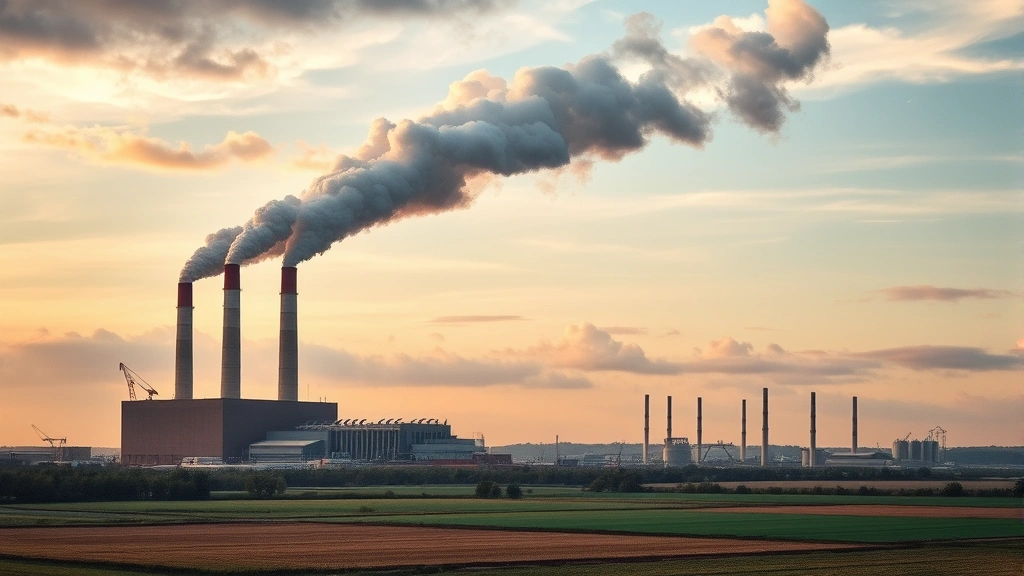
At the heart of economic-ecological conflict lies the concept of externalities—costs or benefits not reflected in market prices. When a coal power plant burns fuel to generate electricity sold at market prices, the resulting air pollution, respiratory health impacts, and climate change contributions remain external to the transaction. These external costs are borne by society and ecosystems rather than incorporated into the product’s price.
Environmental externalities represent perhaps the largest market failure in human history. The United Nations Environment Programme estimates that environmental externalities from economic activity cost the global economy approximately $125 trillion annually—equivalent to 150% of global GDP. This staggering figure encompasses air and water pollution, soil degradation, biodiversity loss, climate change impacts, and resource depletion.
The tragedy of the commons amplifies these externalities. When resources like fisheries, forests, or atmospheric carbon are unowned or poorly regulated, individual economic actors lack incentives to conserve them. Each fisher gains the full benefit of catching additional fish while the cost of depletion is shared across all fishers. This dynamic has driven numerous fisheries to collapse, from Atlantic cod to bluefin tuna, demonstrating how rational economic behavior at the individual level produces irrational outcomes at the systemic level.
Human environment interaction through market mechanisms often creates tragedy scenarios. Addressing this requires mechanisms that internalize environmental costs—carbon pricing, pollution taxes, tradable permits, or regulatory standards—to align private incentives with ecological sustainability.
Sectoral Impacts on Natural Systems
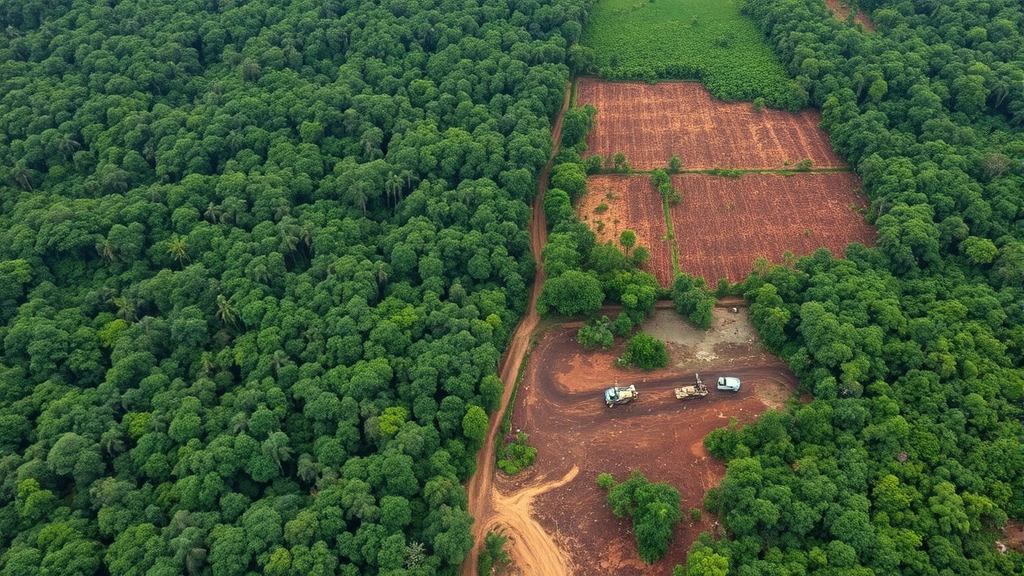
Different economic sectors impose distinct ecological pressures. Agriculture, accounting for approximately 10% of global GDP and employing over 1 billion people, drives roughly 80% of deforestation. The expansion of commodity crops—particularly cattle ranching, soy cultivation, and palm oil production—represents the primary driver of tropical forest loss. A single hamburger may require clearing 200 square meters of rainforest, with profound implications for carbon storage, species habitat, and indigenous communities.
The industrial fishing sector, valued at approximately $150 billion annually, has depleted roughly 90% of large predatory fish stocks. Bottom trawling—a fishing method that drags weighted nets across the ocean floor—destroys benthic ecosystems that took centuries to develop, releasing carbon sequestered in deep-sea sediments while capturing mostly discarded bycatch.
Manufacturing and energy production generate approximately 25% of global greenhouse gas emissions while consuming vast quantities of freshwater and generating toxic waste streams. The electronics industry alone requires extraction of rare earth minerals from environmentally destructive mines, often in developing nations where environmental regulations remain weak. 10 human activities that affect the environment are substantially economic in nature, driven by profit motives and consumption patterns.
Tourism, often promoted as a sustainable alternative to extractive industries, paradoxically drives habitat destruction, water depletion, and carbon emissions. The construction of resort infrastructure in biodiverse regions, combined with increased human presence, disrupts ecosystems even as it generates economic value. Yet these sectors remain economically rational given current price signals that fail to capture environmental costs.
Biodiversity Loss and Economic Valuation
Biodiversity loss represents both an ecological and economic crisis. Species extinction rates currently exceed background rates by 100-1000 fold, driven primarily by habitat loss stemming from economic expansion. The economic value of biodiversity—through pollination, pest control, genetic resources, and cultural services—has been estimated at $125 trillion globally, yet this value remains largely invisible in economic decision-making.
Pollinators, primarily bees, provide approximately $15-20 billion in annual pollination services to global agriculture. Yet honeybee populations have declined 50% since the 1960s due to pesticide use, habitat loss, and monoculture agriculture. If pollinator populations collapse, agricultural productivity would decline catastrophically, creating cascading economic disruption. This scenario illustrates how ecological thresholds create discontinuous economic impacts—small incremental biodiversity losses eventually trigger disproportionate economic consequences.
The relationship between economic activity and biodiversity loss operates through multiple pathways: habitat destruction (the primary driver), pollution, climate change, overexploitation, and invasive species introduction. Each pathway has distinct economic origins. Deforestation effects on the environment exemplify how economic incentives—profit from timber, agricultural land, or mining—override ecological value, even when long-term economic analysis would suggest conservation.
Emerging research in ecological economics proposes alternative valuation frameworks. Rather than treating biodiversity as a resource to exploit, these frameworks recognize ecosystems as complex adaptive systems that provide multiple services simultaneously. A hectare of forest provides not just timber but carbon sequestration, water filtration, erosion control, wildlife habitat, and cultural value. When all services are valued, conservation often emerges as economically superior to conversion, yet market mechanisms fail to capture these values.
Climate Economics and Ecosystem Tipping Points
Climate change, fundamentally an economic phenomenon driven by the energy intensity of modern economies, represents the ultimate ecosystem impact. Greenhouse gas emissions from fossil fuel combustion, cement production, and agriculture have increased atmospheric CO2 concentrations 50% since industrialization. This economic activity has warmed the planet approximately 1.1°C above pre-industrial levels, with impacts already visible in ecosystem disruption: coral bleaching, permafrost thaw, shifting migration patterns, and altered precipitation regimes.
The economic analysis of climate change reveals profound discounting problems. Current economic models often discount future climate damages at 3-5% annually, implying that impacts occurring in 50 years have only 10% of the present value. This mathematical approach, standard in financial analysis, produces absurd results when applied to existential risks. It suggests that investing $1 today to prevent $100 in climate damages 75 years hence is economically irrational, even though our descendants will face those damages with certainty.
Ecosystem tipping points—threshold phenomena where systems shift abruptly to alternative stable states—create non-linear economic risks. The Amazon rainforest, currently a carbon sink, may transition to a carbon source if deforestation exceeds 20-25% of the total area. Such a transition would trigger massive carbon release, accelerating global warming and potentially triggering additional tipping points in other systems. The economic cost of triggering multiple tipping points could exceed $100 trillion, yet current economic models struggle to incorporate these tail risks.
Transitioning away from fossil fuel dependence represents the most significant economic restructuring in history, yet how to reduce carbon footprint at the systemic level requires transforming energy infrastructure, transportation systems, agricultural practices, and consumption patterns. The economic feasibility of this transition has improved dramatically as renewable energy costs have declined 90% for solar and 70% for wind over the past decade, yet political economy barriers remain substantial.
Transitioning to Circular and Regenerative Economies
Moving beyond the extractive, linear economic model that characterizes industrial economies requires fundamental restructuring toward circular and regenerative systems. Circular economy principles minimize waste by designing products for longevity, repairability, and material recovery. Rather than extracting virgin materials, producing goods, and discarding waste, circular systems recover materials repeatedly, dramatically reducing resource extraction pressures.
Implementation of circular principles in manufacturing has demonstrated 20-30% cost reductions through material efficiency while simultaneously reducing environmental impact. Companies like Interface, the carpet manufacturer, have adopted circular production models, reducing virgin material inputs while maintaining profitability. Yet circular economy adoption remains limited to innovative pioneers; mainstream industrial production continues extractive patterns.
Regenerative economics extends beyond sustainability—merely maintaining current conditions—toward actively improving ecosystem health. Regenerative agriculture practices, including cover cropping, reduced tillage, and integrated livestock management, can rebuild soil carbon while maintaining or increasing productivity. Research indicates regenerative agriculture could sequester 0.4-0.8 gigatons of carbon annually while enhancing water retention and biodiversity.
Valuing sustainable fashion brands and other regenerative enterprises requires accounting frameworks that capture positive environmental externalities. Current GDP accounting penalizes regenerative activities by counting resource inputs but ignoring ecological restoration. Transitioning to inclusive wealth accounting, which values natural and human capital alongside manufactured capital, would reveal regenerative enterprises as economically superior to extractive alternatives.
Policy mechanisms supporting economic transformation include carbon pricing (which internalizes climate costs), biodiversity offsetting (which requires compensating for ecological damage), natural capital accounting (which tracks environmental assets), and subsidy reform (which removes perverse incentives favoring extraction). The United Nations Sustainable Development Goals provide a framework for aligning economic activity with ecological and social objectives, though implementation remains inconsistent across nations.
International economic institutions increasingly recognize that business-as-usual trajectories are incompatible with ecological stability. The International Monetary Fund has begun integrating climate risk into financial stability assessments, while central banks worldwide are stress-testing financial systems for climate impacts. These institutional shifts suggest growing recognition that ecological collapse represents a systemic economic risk requiring urgent policy response.
FAQ
How do economists measure the economic value of ecosystems?
Ecosystem services valuation employs multiple methodologies: replacement cost analysis (estimating costs to replace services with technology), hedonic pricing (inferring value from property prices), contingent valuation (surveying willingness to pay), and benefit transfer (applying values from similar contexts). Each method has limitations, yet collectively they demonstrate that ecosystem services typically exceed market values of extracted resources by 10-100 fold. The challenge lies in incorporating these valuations into policy and market mechanisms.
What is the relationship between inequality and environmental degradation?
Research demonstrates strong correlations between economic inequality and environmental degradation. Unequal societies tend to have weaker environmental protections, as wealthy interests dominate policy-making and externalize costs onto poorer populations. Additionally, consumption patterns in wealthy nations drive disproportionate resource extraction from developing countries. Addressing ecological sustainability requires simultaneously addressing economic inequality through progressive taxation, strengthened labor rights, and democratic participation in environmental governance.
Can capitalism be compatible with ecological sustainability?
This question divides scholars and practitioners. Some argue that properly regulated capitalism, with full environmental cost internalization, can align profit motives with ecological sustainability through mechanisms like carbon pricing and biodiversity credits. Others contend that capitalism’s inherent growth imperative makes infinite expansion on a finite planet impossible, requiring post-capitalist economic models. Most likely, transitioning to sustainability requires both reforming capitalism’s incentive structures and developing hybrid economic models combining market mechanisms with commons-based and solidarity economy principles.
What role do individual consumer choices play in ecosystem protection?
While individual consumption choices matter—reducing meat consumption, avoiding single-use plastics, choosing sustainable products—systemic change requires policy transformation rather than relying on consumer virtue. The vast majority of environmental impacts stem from production and energy systems, not consumer choice. Sustainable consumption patterns are necessary but insufficient without transforming industrial infrastructure, energy systems, and agricultural practices. Individual choices gain significance primarily through their role in building political constituencies supporting systemic transformation.
How do ecosystem services support economic productivity?
Ecosystems provide foundational services enabling all economic activity: water purification (valued at $2-5 trillion annually), pollination ($15-20 billion annually), climate regulation, nutrient cycling, pest control, and erosion prevention. Agriculture depends entirely on these services, yet farmers typically pay nothing for them. Disrupting ecosystem services disrupts economic productivity; fishery collapse eliminates economic activity, droughts reduce agricultural output, and flooding damages infrastructure. Maintaining ecosystem services represents the most cost-effective investment in long-term economic security.


