
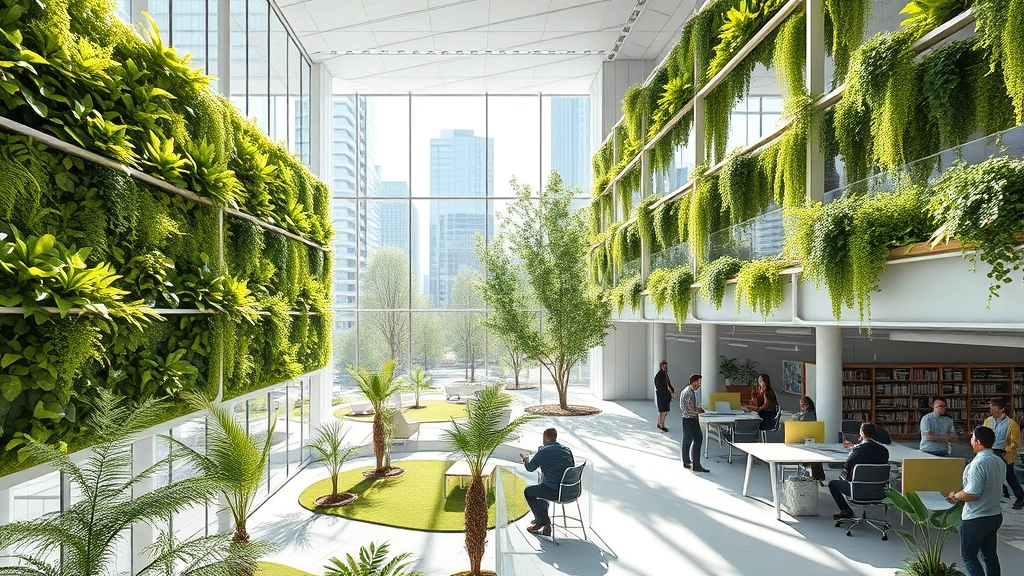
Impact of Designed Environments on Economy: A Comprehensive Study
Designed environments—the intentionally created physical spaces that shape human activity, from urban infrastructure to architectural layouts—represent one of the most significant yet underappreciated drivers of economic performance globally. These environments encompass everything from smart city infrastructure and commercial real estate to workplace design and public spaces, each exerting measurable influence on productivity, innovation, health outcomes, and economic growth. The relationship between environmental design and economic systems has evolved from peripheral consideration to central focus in contemporary policy discussions, particularly as organizations recognize that the spaces we inhabit directly influence financial performance and resource efficiency.
Recent interdisciplinary research demonstrates that designed environments generate substantial economic multiplier effects across multiple sectors. A study by the World Bank found that strategic environmental design investments yield returns ranging from 4:1 to 6:1 in urban development contexts, while workplace design improvements correlate with 15-25% productivity gains in knowledge-intensive industries. These findings challenge traditional economic frameworks that treat the built environment as merely a passive backdrop to economic activity, revealing instead an active mechanism through which capital allocation, labor productivity, and innovation capacity are fundamentally transformed.
Economic Framework: Understanding Designed Environments
Designed environments operate within a complex economic system where spatial organization directly influences transaction costs, information flow, and resource allocation efficiency. The concept extends beyond aesthetic considerations to encompass functional relationships between infrastructure, human behavior, and economic outcomes. environmental science perspectives increasingly integrate economic analysis to understand how physical design shapes resource consumption patterns and waste generation.
From an ecological economics standpoint, designed environments represent embedded capital investments that generate returns through operational efficiency, reduced environmental externalities, and enhanced human capital productivity. The United Nations Environment Programme estimates that optimal environmental design in urban areas can reduce operational costs by 20-30% while simultaneously improving occupant well-being and environmental performance. This convergence of economic and ecological objectives creates powerful incentives for redesigning our built spaces.
The economic valuation of designed environments requires accounting for both direct costs (construction, maintenance, infrastructure) and indirect benefits (productivity gains, health improvements, reduced environmental damage). Traditional accounting frameworks often fail to capture these relationships, leading to systematic underinvestment in design quality. When properly quantified, however, environmental design emerges as one of the highest-return investment categories available to organizations and governments.

Productivity and Labor Economics
The relationship between workspace design and labor productivity constitutes one of the most extensively documented economic impacts of environmental design. Research from leading institutions demonstrates that thoughtfully designed work environments increase output per worker by 15-25% on average, with variations depending on industry, task complexity, and implementation quality. These gains derive from multiple mechanisms: reduced cognitive load through ergonomic optimization, decreased interruption frequency via acoustic design, improved lighting that enhances alertness and circadian rhythm alignment, and social facilitation through strategic spatial organization.
Office environments incorporating natural light exposure show employees with 15% higher cognitive function scores and 63% fewer headaches compared to standard environments. Temperature control optimization reduces sick leave by 8-12% annually. Access to green spaces within workplace design correlates with 10-20% improvement in mental health metrics and corresponding reductions in healthcare costs. When aggregated across large organizations, these individual improvements compound into substantial economic gains.
The economic mechanism operates through multiple channels. Enhanced cognitive function directly increases task completion speed and quality. Reduced illness decreases absenteeism and healthcare expenditure. Improved mood and satisfaction lower voluntary turnover, reducing recruitment and training costs that typically represent 150-300% of annual salary for knowledge workers. These productivity effects persist across industries, from manufacturing facilities to technology companies, though magnitudes vary with work type.
Human-environment interaction patterns shaped by design fundamentally alter labor economics. When employees spend eight hours daily in environments that either support or hinder their cognitive and physical functioning, cumulative effects on lifetime earnings and organizational competitiveness prove substantial. Forward-thinking firms increasingly recognize that workspace design represents not a cost center but a productivity investment with measurable returns.
Real Estate Markets and Capital Allocation
Designed environments fundamentally reshape real estate markets and capital allocation patterns. Buildings incorporating advanced environmental design command 5-15% rental premiums in most metropolitan markets, reflecting investor recognition of superior economic performance. The mechanism operates through multiple channels: tenants willingly pay more for spaces that reduce their operational costs and enhance worker productivity; investors recognize that well-designed buildings attract premium tenants and generate more stable cash flows; and financial markets increasingly price environmental performance into asset valuations.
Commercial real estate markets now explicitly value environmental design metrics. Leadership in Energy and Environmental Design (LEED) certified buildings demonstrate 3-5% higher occupancy rates, 2-4% higher rental rates, and 26% lower energy consumption compared to conventional buildings. These financial advantages compound over decades, creating substantial differences in net present value between environmentally optimized and conventionally designed properties. Institutional investors managing trillions in assets increasingly demand environmental performance standards, fundamentally reshaping capital allocation patterns.
The real estate market reflects broader economic principles: scarcity, information asymmetry, and capital productivity. As environmental design quality becomes more visible through standardized metrics, capital flows increasingly toward higher-performing assets. This creates powerful incentives for developers and building operators to invest in design excellence. Over time, this capital reallocation effect drives systematic upgrading of built environment quality, with significant implications for competitiveness, health outcomes, and resource efficiency.
Residential real estate markets similarly respond to environmental design. Homes incorporating passive solar design, efficient thermal envelopes, and healthy indoor air quality command 5-10% price premiums while generating 20-30% lower operating costs. For homeowners financing properties over 30-year mortgages, these economic advantages accumulate into hundreds of thousands of dollars in lifetime savings. The growing recognition of these financial benefits explains accelerating residential investment in environmental design improvements.
Innovation Ecosystems and Clustering Effects
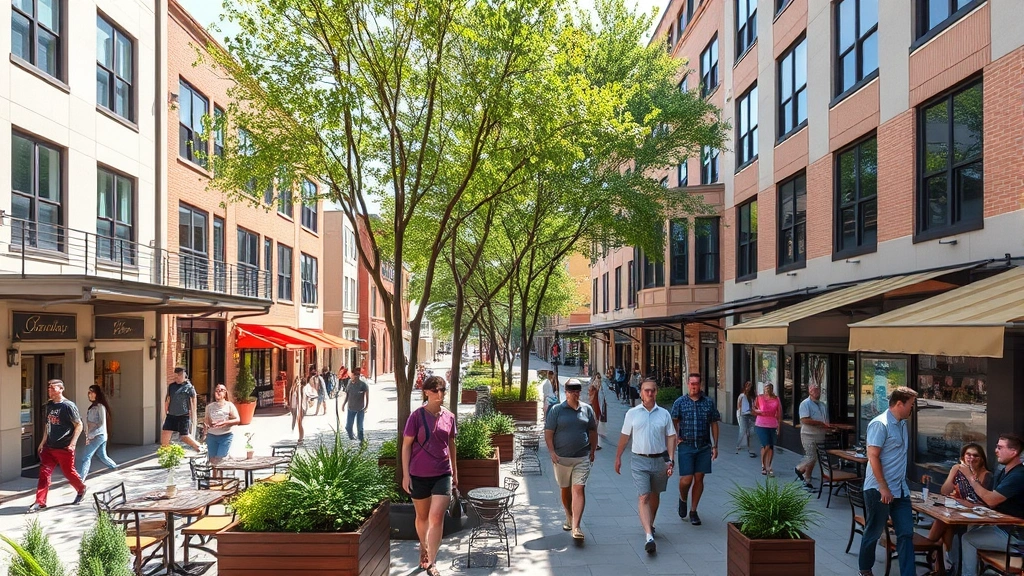
Designed environments create powerful clustering effects that concentrate innovation, talent, and capital in specific locations. The economic benefits of spatial proximity—reduced transaction costs, knowledge spillovers, network effects, and collaborative innovation—depend critically on environmental design quality. Cities and regions that invest in attractive, functional, well-integrated designed environments attract disproportionate shares of creative talent and high-value economic activity.
Silicon Valley’s economic dominance partially reflects not merely technology or capital availability but the designed environment facilitating spontaneous interaction, collaboration, and idea exchange. Similarly, successful innovation hubs from Cambridge to Singapore demonstrate that environmental design quality directly influences the economic productivity of agglomeration effects. The National Bureau of Economic Research documents that regions investing in public space quality, walkability, mixed-use development, and aesthetic appeal attract and retain significantly more high-skilled workers and innovative firms.
The economic mechanism operates through labor market dynamics and information economics. Creative, high-value workers increasingly have geographic flexibility and choose locations based on quality-of-life factors heavily influenced by environmental design. Firms seeking to attract such talent must locate in regions offering superior designed environments. This creates virtuous cycles where investment in environmental quality attracts talent and firms, generating tax revenue that funds further environmental improvements, consolidating competitive advantage.
Recent analysis demonstrates that designed environments supporting walkability, public transit integration, and mixed-use development generate 20-40% higher economic growth rates compared to sprawling, car-dependent alternatives. These environments reduce transportation costs for residents and businesses, facilitate informal knowledge exchange, and create conditions for entrepreneurship and innovation. The economic benefits extend beyond productivity to include reduced infrastructure costs, improved public health, and enhanced tax base stability.
Health Economics and Hidden Costs
The economic impact of designed environments through health pathways represents one of the largest yet most underappreciated channels. Poor environmental design generates substantial hidden costs through disease prevalence, mental health deterioration, and reduced life expectancy. Conversely, optimized designed environments deliver powerful health improvements with dramatic economic implications.
Indoor air quality represents a critical design parameter with profound economic consequences. Poor ventilation and indoor air pollution cost global economies approximately $6 trillion annually in lost productivity and healthcare expenditure according to World Health Organization estimates. Buildings designed for optimal air quality reduce respiratory disease prevalence by 30-50%, cognitive function impairment by 15-25%, and associated absenteeism by 10-20%. For organizations employing hundreds or thousands of workers, these health improvements translate into millions in annual economic benefits.
Light exposure patterns shaped by architectural design influence circadian rhythm regulation, sleep quality, mental health, and metabolic function. Workplaces and residences incorporating daylighting and circadian-aligned lighting systems show employees and residents with 10-15% better sleep quality, 20-30% reduction in depression and anxiety symptoms, and corresponding improvements in productivity and healthcare outcomes. The economic value of these health improvements compounds across populations and time periods.
Access to green space—a designed environment feature increasingly recognized as essential—demonstrates remarkable economic returns through health pathways. Proximity to parks and green infrastructure correlates with 5-10% lower cardiovascular disease prevalence, 15-20% better mental health outcomes, and 8-12% lower obesity rates. Environmental design supporting active transportation and recreation generates multiplicative health benefits while reducing carbon emissions, creating convergent economic and environmental benefits.
Sustainability Integration and Long-term Value
Designed environments incorporating sustainability principles—renewable energy systems, water efficiency, material optimization, waste reduction—generate long-term economic value through operational cost reduction and risk mitigation. Over 30-50 year building lifecycles, sustainable design typically generates 20-40% total cost savings despite higher initial capital requirements, yielding exceptional long-term returns.
Energy efficiency represents the most directly quantifiable sustainability benefit. Buildings incorporating passive solar design, efficient HVAC systems, LED lighting, and smart controls reduce energy consumption by 30-60% compared to conventional buildings. For commercial buildings consuming $2-5 per square foot annually in energy costs, these reductions generate $0.60-3 per square foot annual savings—substantial returns on efficiency investments typically recovering costs within 5-10 years.
Water efficiency through designed features—low-flow fixtures, rainwater harvesting, landscape optimization—reduces water consumption by 20-50% while decreasing wastewater treatment costs and reducing vulnerability to water scarcity. In water-stressed regions, these benefits prove particularly valuable. Material optimization through circular economy principles embedded in design reduces embodied carbon by 20-40% while lowering material costs through waste reduction and recycled content utilization.
Renewable energy integration in designed environments increasingly provides economic benefits as technology costs decline. Rooftop solar, geothermal systems, and wind integration reduce energy costs while hedging against future energy price volatility. Organizations with on-site renewable generation demonstrate 15-30% lower energy cost exposure compared to grid-dependent facilities, creating valuable optionality in uncertain energy markets.
The economic case for sustainability integration strengthens as climate risks and resource constraints intensify. Investors and lenders increasingly demand climate resilience and sustainability performance, incorporating these factors into cost-of-capital calculations. Properties and organizations demonstrating superior sustainability performance access capital at lower costs, creating financial advantages that compound over decades.
Policy Implications and Future Directions
Understanding the economic impact of designed environments necessitates policy reforms aligning financial incentives with optimal design practices. Current regulatory frameworks often impose minimum standards without capturing the substantial economic benefits of exceeding baseline requirements. Policies should facilitate rather than restrict investment in environmental design excellence.
Building codes and zoning regulations frequently constrain optimal design by imposing rigid standards that prevent innovation and contextual adaptation. Forward-thinking jurisdictions increasingly adopt performance-based codes allowing flexibility in achieving outcomes while encouraging superior environmental design. Such approaches recognize that designed environments represent complex systems where multiple pathways can achieve superior economic and environmental performance.
Tax policy significantly influences environmental design investment incentives. Accelerated depreciation schedules for energy efficiency and renewable energy investments, property tax reductions for buildings meeting sustainability standards, and tax credits for green building certification create powerful financial incentives for design excellence. These policies recognize that private investment in environmental design generates substantial public benefits through health improvement, reduced environmental damage, and enhanced productivity.
Public investment in designed environments—parks, public transit, pedestrian infrastructure, civic spaces—generates substantial economic returns through increased property values, business activity, and health outcomes. Yet public budgets often underfund such investments, creating a systematic underinvestment in public environmental quality. Economic analysis demonstrating 4:1 to 10:1 return ratios should prompt increased public investment in designed environment quality.
The research agenda should prioritize longitudinal studies linking designed environment characteristics to economic outcomes across diverse contexts. Current evidence demonstrates relationships but often lacks sufficient granularity to guide specific design decisions. Investment in data collection, standardized measurement protocols, and rigorous econometric analysis would dramatically improve design decision-making.
International development institutions should increasingly integrate designed environment quality into development frameworks. Evidence suggests that environmental design investment generates superior returns compared to many conventional development interventions, yet receives disproportionately limited funding. Redirecting development finance toward environmental design improvements could accelerate progress toward sustainable development objectives while generating superior economic returns.
FAQ
How much does optimal environmental design cost compared to conventional design?
Initial capital costs for environmentally optimized design typically range from 5-15% higher than conventional construction, depending on design sophistication and local conditions. However, these additional costs recover through operational savings within 5-15 years, after which buildings generate superior returns throughout their lifecycle. Over 30-50 year periods, total cost of ownership typically favors optimized design by 20-40%.
Can environmental design improvements be retrofitted into existing buildings?
Yes, though retrofitting costs exceed new construction expenses. Retrofits typically cost 1.5-3 times more than incorporating equivalent features during new construction. Despite higher retrofit costs, many improvements generate sufficient returns to justify investment. Lighting upgrades, HVAC optimization, insulation improvements, and renewable energy installation commonly achieve 5-10 year payback periods in existing buildings.
What metrics best measure economic impact of designed environments?
Comprehensive assessment requires multiple metrics: energy consumption (kWh/sqft), water usage (gallons/sqft), occupant productivity (output/worker), employee retention rates, real estate value premiums, healthcare cost reduction, and innovation metrics. Organizations should track baseline performance, implement design improvements, and measure changes across these dimensions to quantify returns.
How do designed environments influence real estate investment returns?
Superior environmental design typically increases property values 5-15%, reduces operating costs 15-30%, increases occupancy rates 3-5%, and attracts premium tenants willing to pay higher rents. These benefits compound across decades, substantially increasing total returns on real estate investments. Institutional investors increasingly demand environmental performance metrics before allocating capital.
What role should governments play in promoting environmental design?
Governments should align regulatory frameworks and financial incentives with optimal design practices. This includes performance-based building codes, tax incentives for design excellence, public investment in high-quality designed environments, and integration of environmental design into development frameworks. Evidence-based policy can accelerate private and public investment in environmental design quality.
How does sustainable design differ from conventional environmental optimization?
Sustainable design integrates circular economy principles, lifecycle assessment, and social equity alongside environmental and economic optimization. While conventional environmental design focuses on operational efficiency, sustainable design considers embodied impacts, material sourcing, end-of-life management, and broader stakeholder benefits. Both approaches generate economic returns but through different mechanisms and timeframes.