Economy vs Ecosystem: Balance or Conflict? A Comprehensive Analysis
The tension between economic growth and ecological preservation represents one of the defining challenges of our era. For decades, policymakers and economists operated under the assumption that these two objectives were fundamentally incompatible—that pursuing prosperity necessarily meant degrading natural systems. However, emerging research in ecological economics, coupled with real-world case studies, reveals a more nuanced reality: the economy and ecosystem are not adversaries but deeply interdependent systems. Understanding this relationship requires examining how economic activity shapes environmental outcomes, and conversely, how ecosystem health directly influences long-term economic viability.
The false dichotomy between economy and ecology has persisted because traditional economic models externalize environmental costs. When a factory pollutes a river, that damage doesn’t appear on balance sheets. When fisheries collapse from overharvesting, the immediate profits remain recorded as growth. This accounting failure has created decades of misalignment between measured economic success and actual societal wellbeing. Today’s leading economists and environmental scientists increasingly recognize that sustainable prosperity demands integration—not compromise—between economic and ecological objectives.
The Historical Separation of Economy and Ecology
The industrial revolution established a paradigm where economic progress was measured primarily through extraction and production. This model treated natural resources as infinite inputs and the atmosphere and waterways as free waste repositories. Classical economics largely ignored the finite nature of planetary boundaries, operating instead on assumptions of perpetual expansion. The result was a century-plus of policies that systematically undervalued nature while overvaluing resource extraction.
This separation deepened with the rise of GDP as the primary measure of national success. GDP captures economic transactions but remains silent on whether those transactions depleted irreplaceable resources or degraded essential ecosystems. A nation could simultaneously experience rising GDP and collapsing fisheries, deforested landscapes, and contaminated aquifers—all registered as economic gains. This measurement failure created perverse incentives that continue shaping policy today.
The definition of human environment interaction has evolved considerably, moving beyond simple extraction toward understanding reciprocal relationships. Modern ecological economics recognizes that human environment interaction examples reveal both destructive and regenerative pathways. The choice between these pathways isn’t predetermined by economic logic—it reflects policy choices and value systems.
Ecosystem Services and Economic Value
Perhaps the most significant intellectual shift in recent decades involves quantifying ecosystem services—the benefits humans derive from natural systems. According to World Bank research, ecosystem services globally provide economic value exceeding $125 trillion annually. This staggering figure encompasses pollination, water filtration, climate regulation, soil formation, and countless other processes that would require massive capital investments if humans had to replace them technologically.
Wetlands filter water at a fraction of the cost of industrial treatment plants. Forests sequester carbon while providing timber and wildlife habitat. Coral reefs protect coastlines from storms while supporting fisheries that feed hundreds of millions. When these services are properly valued and incorporated into economic analysis, the case for conservation becomes economically compelling, not merely moral.
Yet ecosystem service valuation remains contentious. How do we price the intrinsic value of a species? What’s the monetary equivalent of a stable climate? These questions reveal the limitations of market-based thinking when applied to nature. Nevertheless, even conservative valuations demonstrate that the economic benefits of ecosystem preservation dramatically exceed the costs of protection. A forest’s standing value—through carbon sequestration, water provision, and biodiversity—typically exceeds its timber value when harvested.
The imperative to reduce carbon footprint increasingly drives economic restructuring. Recognizing carbon’s climate value has catalyzed investment in renewable energy, efficient technologies, and regenerative practices. This represents economy-ecology integration in action: environmental necessity becomes economic opportunity.
Case Studies in Economic-Ecological Integration
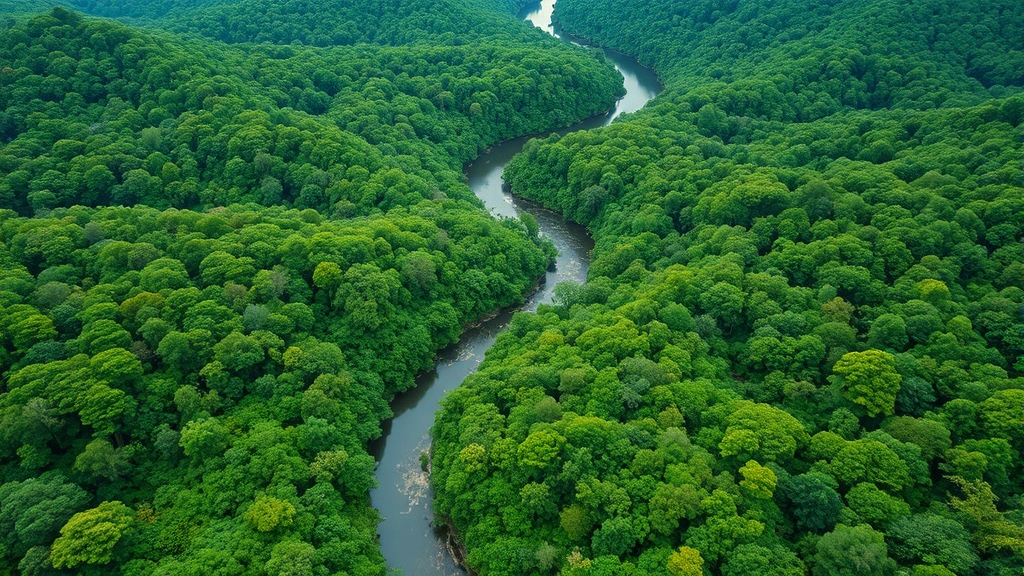
Costa Rica provides perhaps the most compelling modern example of balancing economic and ecological interests. In the 1980s, the country faced severe deforestation driven by cattle ranching and agricultural expansion. Rather than accepting this as inevitable development, Costa Rica implemented payment for ecosystem services programs, offering landowners compensation for forest conservation. Simultaneously, the nation invested in ecotourism and renewable energy, creating alternative economic engines.
The results vindicate the integration approach: forest coverage recovered from 21% in 1987 to over 50% today. Meanwhile, Costa Rica’s per-capita GDP grew substantially, and the nation now derives significant revenue from ecotourism—an industry that requires intact ecosystems. Economic growth and ecological restoration proceeded simultaneously, contradicting the false choice between prosperity and preservation.
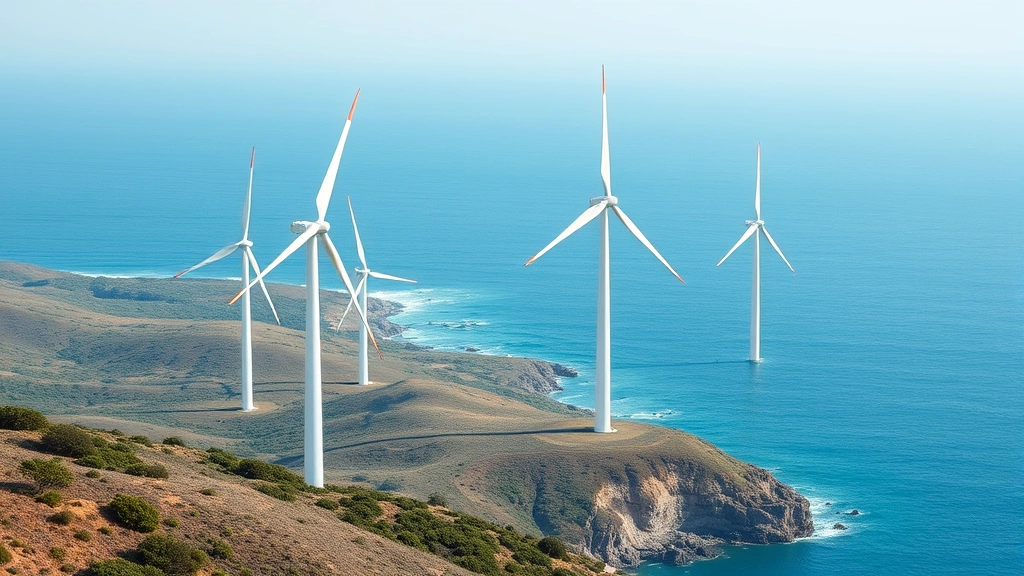
Germany’s Energiewende (energy transition) demonstrates similar integration at industrial scale. Facing climate imperatives and nuclear safety concerns, Germany committed to renewable energy transition while maintaining manufacturing competitiveness. Though the transition encountered challenges, Germany now generates over 50% of electricity from renewables while remaining Europe’s largest economy. The renewable sector created hundreds of thousands of jobs, proving that ecological transition can drive economic dynamism rather than stifle it.
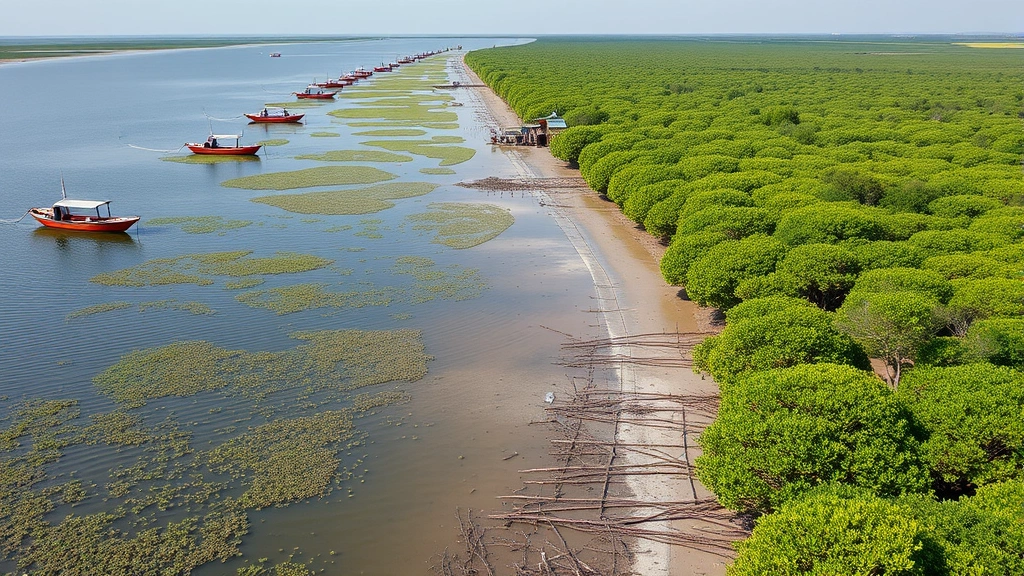
Bangladesh’s mangrove restoration in the Sundarbans region illustrates how ecosystem recovery provides direct economic benefits to vulnerable populations. Mangrove forests protect against cyclones, support fisheries, and provide timber—all critical to coastal communities. By protecting and expanding mangrove areas, Bangladesh simultaneously enhanced storm protection, food security, and economic resilience for millions of people. Ecological restoration became development strategy.
These cases share common elements: long-term vision, policy alignment, investment in alternatives, and recognition that ecosystem health underpins economic stability. They demonstrate that the economy-ecology dichotomy reflects outdated thinking rather than inherent reality.
The Role of Policy and Market Mechanisms
Achieving balance requires policy frameworks that internalize environmental costs. Carbon pricing—whether through taxes or cap-and-trade systems—represents the most prominent mechanism for making ecological impacts visible in economic decisions. When carbon has a price, renewable energy becomes cost-competitive, efficiency improvements generate returns, and conservation strategies become profitable.
The European Union’s Emissions Trading System, despite imperfections, has reduced emissions while maintaining economic growth across member states. This demonstrates that environmental regulation need not stifle economic activity when properly designed. The key is creating level playing fields where all producers face the same environmental costs, preventing competitive disadvantage for ecological leaders.
Beyond carbon, other mechanisms address ecosystem degradation: marine protected areas that restore fisheries productivity, agricultural subsidies reform that eliminates perverse incentives for monoculture, and biodiversity offset requirements that compensate for unavoidable habitat loss. The United Nations Environment Programme documents how these mechanisms, when implemented coherently, generate positive economic and ecological outcomes.
However, market mechanisms alone prove insufficient. Some ecosystem values resist monetization, and markets frequently fail to account for non-market stakeholders—future generations, non-human species, marginalized communities. Effective policy combines market mechanisms with regulatory standards, investment in public goods, and democratic deliberation about values and priorities. The ideal work environment for sustainable economics integrates rigorous analysis with inclusive governance and long-term thinking.
Measuring True Economic Progress
Fundamental to economy-ecology balance lies measurement reform. GDP’s dominance as a progress indicator distorts priorities and obscures reality. Alternative frameworks attempt to capture what matters: genuine progress indicators, adjusted net national income, and environmental accounts that track natural capital alongside financial assets.
New Zealand and Bhutan have pioneered wellbeing-focused national accounting, explicitly incorporating environmental and social metrics alongside economic indicators. Scotland’s National Performance Framework similarly tracks progress across environmental, social, and economic dimensions. These approaches reveal uncomfortable truths: many wealthy nations are experiencing declining wellbeing despite rising GDP, often because environmental degradation and social fragmentation offset material gains.
European Environment Agency research demonstrates that decoupling—achieving economic growth while reducing environmental impact—is technically feasible and increasingly achieved in developed economies. However, global decoupling remains elusive when consumption patterns are considered. Wealthy nations have reduced domestic environmental impact partly by outsourcing production to countries with weaker regulations.
True economic progress requires absolute decoupling at global scale: economic growth that reduces overall environmental impact worldwide, not merely shifts it geographically. Achieving this demands fundamental restructuring toward circular economics, regenerative agriculture, and production systems that operate within planetary boundaries.
The transition toward renewable energy for homes and businesses represents this restructuring in practice. As renewable costs have plummeted below fossil fuels in most markets, the transition from economic burden to economic opportunity has accelerated. Similar transitions are underway in sustainable fashion brands and regenerative agriculture, where ecological practices increasingly outcompete extractive alternatives economically.
Building Resilient Systems for the Future
The deepest insight from ecological economics is that economy and ecosystem aren’t separate domains requiring balance—they’re nested systems where the economy operates within ecological constraints. A healthy ecosystem can support diverse economies; a degraded ecosystem constrains all economic possibilities. This hierarchy inverts conventional thinking but reflects biophysical reality.
Building resilient systems requires several interconnected strategies. First, investing in natural capital restoration—wetland reconstruction, forest regeneration, soil rebuilding—generates immediate employment while creating long-term productive assets. These investments typically yield returns exceeding conventional infrastructure spending while providing ecosystem co-benefits.
Second, restructuring production toward circular systems where waste becomes input, eliminating the linear extraction-production-disposal model. Industrial ecology demonstrates that waste reduction, material recycling, and symbiotic production relationships can simultaneously reduce environmental impact and improve profitability through efficiency gains and material cost reduction.
Third, supporting economic diversification in communities dependent on extractive industries. When regions transition from mining or logging to renewable energy, ecotourism, regenerative agriculture, and knowledge-based sectors, they typically experience economic benefits alongside ecological recovery. Exploring environmental and economic integration through contemporary analysis reveals numerous successful transition models.
Fourth, ensuring just transitions where workers and communities dependent on extractive industries receive support, retraining, and new opportunities. Economic-ecological integration fails if it concentrates costs on vulnerable populations while benefits accrue to wealthy consumers. Equity must be embedded in transition design.
Finally, supporting indigenous and local communities whose land stewardship practices often align economic and ecological interests. Research increasingly demonstrates that territories managed by indigenous peoples experience better conservation outcomes than many protected areas, while supporting community livelihoods. Recognizing indigenous rights and knowledge represents both justice and pragmatic environmental policy.
The transition toward integrated economy-ecology systems accelerates as climate impacts intensify and ecosystem degradation becomes economically consequential. Insurance companies raising premiums for flood-prone areas, farmers experiencing yield collapses from soil degradation, and coastal businesses facing inundation all experience visceral lessons that ecology constrains economics. The question isn’t whether to balance these systems but how rapidly and justly we can restructure toward integration.
FAQ
Is economic growth fundamentally incompatible with ecological sustainability?
No. While historical growth has been environmentally destructive, decoupling—achieving growth while reducing environmental impact—is technically feasible and increasingly demonstrated. However, this requires fundamental restructuring toward renewable energy, circular production, and regenerative practices. Additionally, wellbeing-focused growth differs from consumption-focused growth; the former can increase indefinitely while the latter faces planetary limits.
How do we value ecosystem services economically?
Multiple approaches exist: market-based valuation (replacement costs, hedonic pricing), contingent valuation (surveys about willingness to pay), and benefit transfer (applying valuations from similar ecosystems). While imperfect, these methods demonstrate that ecosystem preservation typically yields greater economic value than extraction. Importantly, some values resist monetization; economic valuation complements rather than replaces ethical and precautionary approaches.
Can developing nations achieve prosperity without environmental degradation?
Yes, though it requires different pathways than historical industrialization. Leapfrogging directly to renewable energy, sustainable agriculture, and circular production can achieve development while avoiding extractive phases. Costa Rica and Bangladesh demonstrate this possibility, though they require international support and technology access to succeed fully.
What’s the role of individual choices in economy-ecology integration?
Individual consumption choices matter but prove insufficient for systemic change. While reducing personal carbon footprints and supporting sustainable businesses help, the majority of environmental impact derives from production and energy systems requiring policy-level restructuring. Individual and systemic action must proceed simultaneously.
How do we handle trade-offs between economic and ecological interests?
When genuine trade-offs exist, decisions should reflect democratic deliberation about values, transparent accounting of costs and benefits, and prioritization of long-term sustainability over short-term profits. However, most apparent trade-offs dissolve under proper analysis—ecosystem preservation typically serves long-term economic interests. Where conflicts persist, precautionary approaches prioritize ecosystem resilience since economic systems depend upon ecological foundations.


