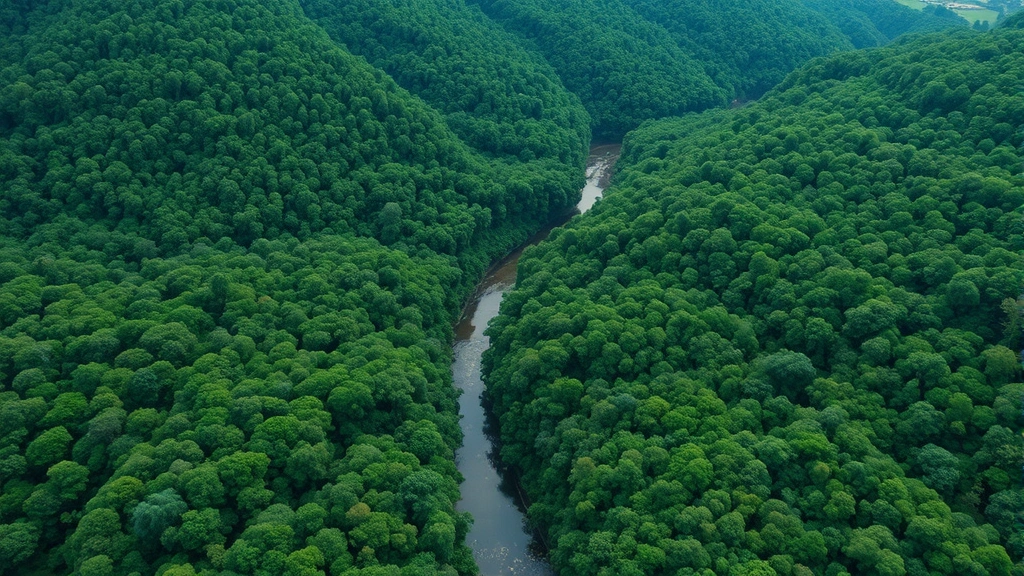
Why Environment Shapes Economies: A Study on Environmental Science and Economic Systems
The relationship between environmental systems and economic performance represents one of the most critical intersections in modern policy discourse. Far from existing in separate spheres, the environment and economy are fundamentally interconnected through complex feedback loops that determine long-term prosperity, resource availability, and societal stability. Environmental science—the integrative study of physical, chemical, and biological processes operating within natural systems—provides the empirical foundation for understanding how ecological degradation directly translates into economic costs, lost productivity, and systemic instability.
This comprehensive analysis examines how environmental conditions shape economic outcomes across multiple scales, from local resource-dependent communities to global financial systems. By integrating principles from ecological economics, environmental science, and empirical economic research, we demonstrate that environmental stewardship is not merely an ethical imperative but an economic necessity. The degradation of natural capital—encompassing forests, fisheries, freshwater systems, and atmospheric stability—represents a hidden tax on economic growth that conventional accounting systems systematically undervalue.
Understanding the mechanisms through which environmental science defines economic constraints and opportunities requires examining both the biophysical limits to economic expansion and the valuation frameworks that translate ecological integrity into monetary terms. This study synthesizes current research to demonstrate that economies ignoring environmental boundaries face accelerating costs, supply chain disruptions, and reduced competitiveness in an increasingly resource-constrained world.
Defining Environment and Environmental Science
The term “environment” encompasses the totality of biotic and abiotic components that constitute Earth’s life-support systems. This includes living organisms (flora, fauna, microorganisms), physical elements (atmosphere, hydrosphere, lithosphere), chemical processes, and the complex interactions between these components. The environment operates as an integrated system where changes in one domain cascade through others—atmospheric composition affects ocean chemistry, which impacts marine ecosystems, which influences human food security and economic productivity.
Environmental science represents the integrative study of these interconnected systems, drawing methodologies from ecology, chemistry, physics, geology, biology, and increasingly, economics and social sciences. Rather than examining environmental components in isolation, environmental science investigates how these elements interact, how human activities alter these interactions, and what consequences emerge from such alterations. This interdisciplinary approach has become essential for understanding why human environment interaction fundamentally shapes economic possibilities.
Environmental science differs fundamentally from traditional natural sciences by incorporating temporal and spatial scales that match economic decision-making horizons. While a chemist might study molecular reactions occurring in microseconds, environmental scientists examine processes operating across decades or centuries—timeframes directly relevant to investment decisions, infrastructure planning, and economic policy. This alignment makes environmental science increasingly valuable for economists attempting to incorporate long-term ecological constraints into growth models.
The scientific definition of environment emphasizes systems thinking—understanding how energy flows through ecosystems, how nutrients cycle between living and non-living components, and how biodiversity maintains ecosystem stability. These biophysical realities establish the non-negotiable constraints within which all economic activity must operate. An economy cannot sustainably extract resources faster than ecosystems regenerate them, nor can it absorb waste beyond the environment’s assimilative capacity without degrading the systems that support human wellbeing.
Natural Capital and Economic Foundations
Environmental science reveals that all economic activity depends on flows of natural capital—the stock of environmental assets that generate ecosystem services. Unlike manufactured capital (factories, equipment, infrastructure), natural capital regenerates itself through biological and geochemical processes, provided these systems remain within functional boundaries. Forests represent natural capital that provides timber, carbon sequestration, water filtration, and habitat; fisheries represent natural capital that sustains protein supplies and livelihoods; freshwater aquifers represent natural capital accumulated over millennia that supports agriculture and urban consumption.
The economic significance of natural capital becomes apparent when examining the costs of replacing or restoring degraded systems. Wetland destruction eliminates water purification services that would cost billions to replicate through artificial infrastructure. Deforestation removes carbon storage capacity that would require massive investments in carbon capture technology to replace. Soil degradation reduces agricultural productivity in ways that synthetic inputs cannot fully compensate. These examples illustrate that environmental science provides the empirical basis for understanding why natural capital depletion represents a genuine economic loss, not merely an environmental concern.
Contemporary economics increasingly recognizes that conventional GDP measurements systematically overstate economic progress by ignoring natural capital depreciation. When a nation harvests old-growth forests, standard accounting treats this as income rather than capital depletion—equivalent to counting the sale of factory equipment as profit rather than asset reduction. Environmental science enables more accurate economic accounting by quantifying natural capital stocks and their regeneration rates, allowing economists to calculate genuine savings that reflect whether economies are actually accumulating or depleting wealth.
Research by the World Bank’s sustainability initiatives demonstrates that nations with high natural capital depreciation rates show declining genuine savings despite positive GDP growth—indicating economies consuming their productive base rather than investing in sustainable development. This finding has profound implications for long-term economic prospects, as nations depleting natural capital face inevitable productivity declines once resources become scarce.
Ecosystem Services and Economic Valuation
Environmental science has enabled economists to quantify ecosystem services—the flows of benefits that natural systems provide to human economies. These services encompass provisioning services (food, water, materials), regulating services (climate regulation, water purification, pollination), supporting services (nutrient cycling, soil formation, primary production), and cultural services (recreation, spiritual value, aesthetic appreciation). The economic value of these services often exceeds the value of extracting the ecosystem itself.
Pollination services provide a quantifiable example of ecosystem service valuation. Environmental science documents that wild pollinators—bees, butterflies, birds, bats—provide pollination services valued at $15-20 billion annually in agriculture alone, yet conventional economic accounting assigns zero value to these services until pollinator populations collapse and farmers must resort to expensive artificial pollination or reduced yields. This hidden subsidy from nature masks the true profitability of agricultural systems that depend on ecosystem functions.
Water purification represents another critical ecosystem service with enormous economic value. Forests, wetlands, and riparian zones filter water, removing contaminants through biological and chemical processes. New York City found that protecting watershed ecosystems cost $1-1.5 billion but generated $6-8 billion in benefits by eliminating the need for water treatment infrastructure. This calculation reveals that awareness about the environment and its economic value can drive rational investment decisions favoring conservation over extraction.
Environmental economics research quantifies that global ecosystem services are worth approximately $125-145 trillion annually—exceeding global GDP of $100 trillion. This valuation reveals the economic absurdity of policies that sacrifice ecosystem integrity for extractive industries generating far smaller economic returns. When environmental science demonstrates that ecosystem service values exceed development values, economic rationality demands conservation-focused policy.
Environmental Degradation as Economic Loss
Environmental science provides empirical evidence that degradation of environmental systems generates measurable economic costs. These costs manifest through multiple mechanisms: reduced productivity of natural systems, increased expenses for remediation and replacement of ecosystem functions, health costs from pollution exposure, and reduced resilience to environmental shocks.
Deforestation illustrates these cost mechanisms comprehensively. Environmental science documents that forest loss reduces carbon sequestration capacity (climate regulation service), eliminates habitat for species with pharmaceutical potential (future provisioning service), increases flood risk through reduced water infiltration (regulating service), and reduces rainfall in downwind agricultural regions through altered atmospheric moisture cycles. The global economic cost of forest loss—encompassing timber extraction, ecosystem service loss, carbon emission costs, and agricultural productivity decline—exceeds $2-5 trillion annually, vastly exceeding the economic value of timber harvested.
Water degradation generates similarly massive economic costs. Environmental science reveals that freshwater pollution from industrial discharge, agricultural runoff, and untreated sewage costs economies approximately $260 billion annually in health expenses, lost productivity, and ecosystem restoration. These costs fall disproportionately on poor populations lacking access to alternative water sources, creating both equity and efficiency arguments for environmental protection.
Soil degradation reduces agricultural productivity while increasing input costs for fertilizers and pesticides. Environmental science demonstrates that global soil loss costs approximately $400 billion annually in lost agricultural productivity. Paradoxically, conventional accounting treats soil-depleting agricultural practices as profitable because they ignore the capital depreciation occurring beneath the surface.
Air pollution generates health costs exceeding $5 trillion annually globally when accounting for premature mortality, respiratory disease, cognitive impairment, and lost productivity. Environmental science has documented the specific mechanisms through which particulate matter, nitrogen oxides, and ozone damage human health, enabling economists to quantify the true costs of fossil fuel combustion and industrial activity. These health costs represent genuine economic losses equivalent to GDP reductions of 4-6% in severely polluted regions.
Climate Systems and Economic Stability
Climate science—a core component of environmental science—reveals that atmospheric carbon accumulation represents the most consequential environmental-economic interaction of our era. Environmental science documents that carbon dioxide concentration has increased from 280 to 420 parts per million since industrialization, with direct attribution to fossil fuel combustion and land-use change. This atmospheric change alters planetary radiation balance, driving temperature increases that cascade through economic systems via multiple mechanisms.
Climate-driven economic impacts include agricultural productivity shifts, increased frequency of extreme weather events (hurricanes, floods, droughts), sea-level rise threatening coastal infrastructure and ports, altered water availability affecting hydropower and irrigation, and ecosystem disruption affecting fisheries and forestry. Environmental science enables quantification of these impacts, revealing that unmitigated climate change could reduce global GDP by 10-23% by 2100 while increasing inequality and resource conflicts.
The economic logic for climate action becomes compelling when environmental science is integrated into economic models. The cost of emissions reductions through renewable energy deployment, energy efficiency, and forest conservation ranges from $50-200 per ton of CO2 avoided—far below the economic damage costs of $100-300+ per ton of CO2 emitted. This cost-benefit analysis demonstrates that climate action represents economically rational investment in avoiding far larger future losses.
UNEP’s research on climate economics demonstrates that investments in renewable energy and ecosystem protection generate economic returns through avoided climate damages, job creation in clean energy sectors, and improved public health. Nations treating climate action as economic opportunity rather than burden achieve faster economic growth, greater energy security, and improved competitiveness in emerging clean technology markets.
Resource Scarcity and Market Dynamics
Environmental science establishes that many critical resources face depletion trajectories incompatible with indefinite economic expansion at historical consumption rates. Fossil fuel reserves, rare earth minerals, phosphorus for fertilizers, and productive land all face scarcity constraints documented through environmental science research. These scarcities have profound economic implications for pricing, investment allocation, and industrial competitiveness.
Peak oil theory, grounded in environmental science analysis of petroleum geology, demonstrated that global oil production would eventually peak and decline despite technological improvements. Environmental science data shows that conventional crude oil production has plateaued despite decades of investment, with further expansion requiring increasingly expensive extraction from marginal sources (deep-water, arctic, tar sands). This resource constraint drives energy prices higher, increasing costs throughout economies dependent on petroleum.
Phosphorus scarcity represents a critical but underappreciated resource constraint. Environmental science documents that phosphorus—essential for fertilizers and irreplaceable in agriculture—is being depleted from finite rock deposits at rates exceeding regeneration. Global phosphorus reserves will face severe depletion within 50-100 years at current consumption rates, creating future agricultural constraints with profound economic implications for food security and commodity prices.
Water scarcity, documented through environmental science analysis of aquifer depletion and precipitation patterns, affects 2 billion people and threatens agricultural productivity across major grain-producing regions. The Ogallala Aquifer underlying American agricultural regions is being depleted 10 times faster than natural recharge rates, creating an inevitable agricultural transition. Environmental science reveals these constraints decades in advance, providing time for economic adaptation through efficiency improvements, technological innovation, and production system changes.
Rare earth minerals required for renewable energy technology, electric vehicles, and electronics face supply constraints documented through environmental science and geological analysis. Concentrated in a few nations, rare earth mineral availability affects industrial competitiveness and energy transition feasibility. Environmental science reveals that transitioning to renewable energy requires massive mineral inputs, creating new resource constraints that must be addressed through efficiency, recycling, and substitution.
These resource constraints drive market dynamics favoring efficiency and circular economy models. Environmental science demonstrates that recycling rare earth minerals from electronics and batteries can satisfy 25-50% of future demand, reducing dependence on primary extraction. Economies investing in circular systems—where products are designed for disassembly, remanufacturing, and material recovery—gain competitive advantages as primary resource costs escalate.
Policy Integration and Economic Resilience
Environmental science informs policy frameworks that align economic incentives with ecological constraints. Carbon pricing mechanisms, water use fees, pollution taxes, and biodiversity offsets translate environmental science findings into economic signals that guide investment and consumption decisions toward sustainability. These policies work by internalizing environmental costs into prices, making sustainable choices economically rational.
Research from World Bank environmental economics divisions demonstrates that carbon pricing at $50-100 per ton CO2 equivalent accelerates renewable energy deployment, energy efficiency investment, and industrial decarbonization. The economic mechanism is straightforward: when fossil fuels face carbon taxes reflecting their environmental costs, renewable alternatives become price-competitive without subsidies. Environmental science quantifies the appropriate carbon price by estimating the economic damages avoided through emissions reduction.
Natural capital accounting, grounded in environmental science measurement of ecosystem stocks and flows, enables governments to track whether economic development is sustainable. Nations implementing natural capital accounting discover that conventional economic indicators mask asset depletion, revealing the necessity for policy corrections. Costa Rica’s natural capital accounting revealed that environmental degradation was consuming 4.5% of GDP annually—a loss far exceeding conventional environmental spending.
Biodiversity protection policies informed by environmental science generate economic benefits through ecosystem service preservation, genetic resource protection for pharmaceuticals and agriculture, and reduced pandemic risk through maintained ecosystem integrity. Environmental science documents that ecosystem disruption increases zoonotic disease spillover risk—the mechanism underlying COVID-19 and other emerging diseases. The economic cost of pandemic prevention through ecosystem protection is trivial compared to pandemic response costs.
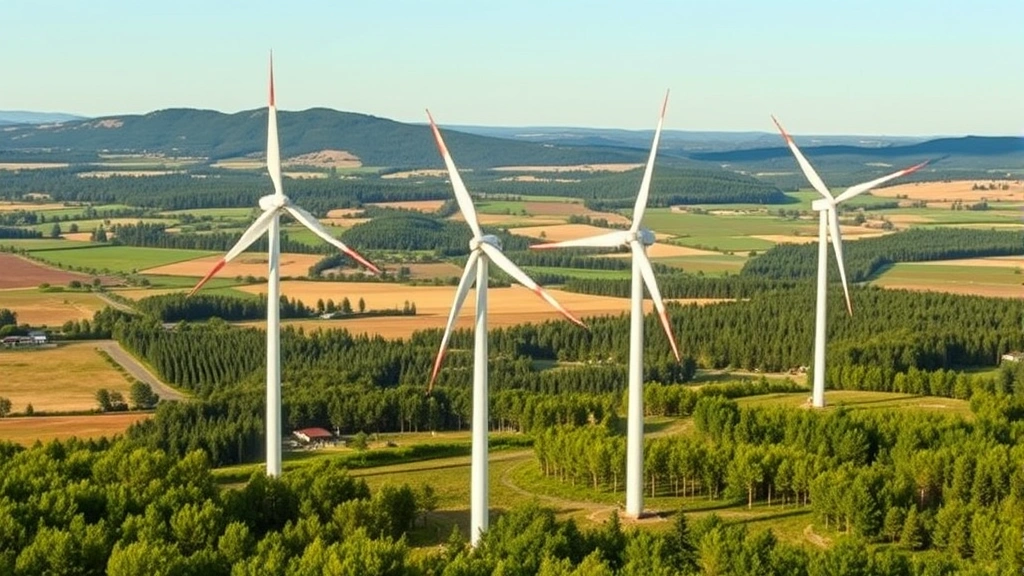
Renewable energy transition, accelerated by understanding environmental science constraints on fossil fuels and climate impacts, creates economic opportunities in manufacturing, installation, maintenance, and grid modernization. Nations leading renewable energy deployment (Denmark, Costa Rica, Uruguay) achieve energy independence, reduced fuel costs, and industrial competitiveness. Environmental science reveals that renewable energy is now cheaper than fossil fuel electricity in most markets, making environmental protection and economic rationality convergent.
Regenerative agriculture, informed by environmental science understanding of soil health, water cycles, and biodiversity, increases farmer profitability while restoring ecosystem functions. Practices including crop rotation, cover cropping, and reduced tillage increase soil carbon, improve water retention, reduce input costs, and enhance resilience to climate variability. Environmental science documents that regenerative systems outperform conventional agriculture economically over 5-10 year horizons while building natural capital.
The economic case for environmental protection strengthens as environmental science reveals costs of degradation and benefits of restoration. Investments in forest protection, wetland restoration, fisheries management, and pollution reduction generate returns through ecosystem service preservation and avoided damage costs. Economies integrating environmental science into economic planning achieve greater resilience, competitiveness, and long-term prosperity than those treating environment and economy as separate domains.
Environmental science demonstrates that economic systems operate within ecological boundaries that cannot be transgressed without triggering systemic collapse. Recognizing these boundaries—through understanding energy flows, nutrient cycles, regeneration rates, and assimilative capacity—enables designing economic systems that generate prosperity while maintaining the natural capital stocks and ecosystem functions on which all human wellbeing ultimately depends. The transition to environmentally integrated economics represents not a constraint on human flourishing but the foundation for sustainable prosperity.
For deeper understanding of how individual choices impact these systems, explore strategies for how to reduce carbon footprint and consider supporting sustainable fashion brands. Additionally, transitioning to renewable energy for homes demonstrates how environmental science principles translate into household economic decisions.
FAQ
How does environmental science differ from environmentalism?
Environmental science represents objective study of natural systems using scientific methods—measurement, observation, hypothesis testing, and peer review. Environmentalism represents advocacy for environmental protection based on values and ethics. While distinct, environmental science provides the empirical foundation for informed environmentalism by quantifying environmental changes and their consequences. Scientists can document that carbon dioxide concentrations are rising and correlate with temperature increases without advocating for particular policy responses; that advocacy emerges from value judgments about acceptable risk and intergenerational equity.
What is natural capital and why does it matter economically?
Natural capital encompasses environmental assets—forests, fisheries, aquifers, mineral deposits, atmospheric stability—that generate economic flows (timber, fish, water, energy, climate stability). It matters economically because all production ultimately depends on natural capital inputs, yet conventional accounting ignores natural capital depletion. When a nation harvests forests faster than regeneration, it’s depleting capital while treating harvest as income. Environmental science enables accurate accounting of whether economies are genuinely prospering or consuming their productive base.
How much is ecosystem service loss costing global economies?
Research estimates global ecosystem service loss at $4-20 trillion annually depending on valuation methodology. This encompasses forest loss (carbon storage, habitat, water regulation), wetland destruction (water purification, flood buffering), fishery depletion (food provision, livelihoods), pollinator decline (crop pollination), and water degradation (drinking water, irrigation). These costs are real economic losses equivalent to GDP reductions, yet remain invisible in conventional accounting because ecosystem services lack market prices.
Can economies grow indefinitely or do environmental limits constrain growth?
Environmental science reveals that physical growth (material throughput, energy consumption) faces biophysical limits established by ecosystem regeneration rates and waste absorption capacity. However, economic growth (value creation per unit of material input) can continue indefinitely through efficiency improvements, technological innovation, and transition to service economies. Wealthy nations are achieving decoupling where GDP grows while material consumption and emissions decline, demonstrating that environmental constraints drive innovation toward sustainable prosperity rather than economic stagnation.
How do carbon pricing and environmental taxes improve economic outcomes?
Carbon pricing and environmental taxes internalize external costs into prices, making the true cost of environmental degradation visible to consumers and producers. When fossil fuels face carbon taxes, renewable alternatives become price-competitive. When water faces scarcity pricing, efficiency improvements become economically rational. These policies align economic incentives with environmental constraints, guiding market forces toward sustainability rather than requiring command-and-control regulation. Environmental science quantifies appropriate price levels by estimating the economic damages that pollution and resource depletion cause.
What role does biodiversity play in economic resilience?
Biodiversity maintains ecosystem stability and productivity through functional redundancy—multiple species performing similar functions, so that species loss doesn’t immediately collapse ecosystem services. Simplified ecosystems (monocultures) are more fragile and more vulnerable to pests, diseases, and climate variability. Environmental science demonstrates that biodiverse agricultural and forest systems outperform simplified systems over medium-term horizons through improved resilience, reduced input requirements, and maintained productivity despite environmental stress. Economically, biodiversity represents insurance against environmental uncertainty.


