
Can Local Economies Thrive Sustainably? Study Insights
The tension between economic growth and environmental preservation has long dominated policy debates, yet emerging research suggests a compelling alternative: local economies can achieve robust sustainability when designed with intentional ecological and social frameworks. Recent studies from leading economic research institutions reveal that communities implementing integrated approaches to production, consumption, and resource management demonstrate measurable improvements in both economic resilience and ecosystem health. This paradigm shift challenges the conventional wisdom that sustainability requires economic sacrifice, instead demonstrating that localized systems create multiplier effects strengthening regional wealth while reducing ecological footprints.
Understanding whether local economies can thrive sustainably requires examining the interconnected systems of human-environment interaction and the economic structures that either support or undermine ecological balance. The evidence increasingly points toward a nuanced answer: sustainability at the local level is achievable but demands systemic transformation across production methods, supply chains, and consumer behaviors. This article synthesizes recent research findings, explores practical mechanisms enabling sustainable local prosperity, and examines the barriers communities face when attempting to transition toward regenerative economic models.
Understanding Local Economic Sustainability
Local economic sustainability represents a fundamental restructuring of how communities produce goods, deliver services, and distribute resources. Unlike traditional economic models emphasizing scale and global optimization, sustainable local economies prioritize regenerative practices, circular resource flows, and community-centered decision-making. The concept integrates principles from ecological economics—examining how economic activity functions within planetary boundaries—with practical business models that generate employment and capital locally.
The theoretical foundation rests on understanding that types of environment include interconnected social, economic, and natural systems. When these systems operate in isolation from one another, externalities emerge: pollution, resource depletion, economic inequality, and social fragmentation. Conversely, when local economies deliberately design for integration across these domains, they create synergies where environmental restoration generates economic opportunity, social cohesion strengthens economic networks, and economic prosperity funds environmental stewardship.
Research from the World Bank demonstrates that communities investing in local food systems, renewable energy infrastructure, and sustainable manufacturing generate higher returns on investment compared to extractive models, when accounting for environmental and social costs. The shift requires reconceptualizing economic success beyond GDP growth to include metrics like natural capital preservation, income equality, and community wellbeing.
Key Research Findings on Sustainable Communities
Recent comprehensive studies examining sustainable local economies reveal several consistent patterns across diverse geographic and cultural contexts. A major finding involves the employment multiplier effect: every dollar spent in local sustainable businesses generates 1.5 to 2 times the economic activity compared to imported goods and services. This occurs because locally-owned enterprises reinvest profits within communities, purchase supplies from neighboring businesses, and employ local workers who spend wages locally.
Research published in leading ecological economics journals shows that communities with strong local food systems experience 23-31% lower food costs for residents, improved public health outcomes, and enhanced farmer profitability compared to regions dependent on industrial agricultural imports. These benefits extend beyond economics: local food networks strengthen social connections, reduce transportation emissions, and build resilience against supply chain disruptions—as demonstrated during recent global crises.
Energy systems provide another compelling case study. Communities transitioning to renewable energy cooperatives report 18-25% reductions in energy costs alongside job creation in installation, maintenance, and manufacturing. Importantly, these local renewable systems prove more resilient than centralized grids during extreme weather events, protecting economic continuity when external infrastructure fails.
Studies examining how to reduce carbon footprint through local economic transitions document that communities with circular economy initiatives—where waste from one process becomes input for another—achieve 35-45% reductions in resource consumption while maintaining or increasing economic output. Manufacturing sectors implementing closed-loop production create new service industries around product recovery, refurbishment, and recycling.
Mechanisms for Local Economic Resilience
Sustainable local economies employ specific mechanisms that simultaneously strengthen economic performance and environmental health. Understanding these mechanisms clarifies how sustainability becomes economically advantageous rather than costly.
Diversified Production Networks: Communities developing multiple economic sectors reduce vulnerability to single-industry decline. A region with agriculture, light manufacturing, tourism, education, and services can weather disruptions affecting any single sector. Diversification also enables symbiotic relationships: agricultural waste becomes feedstock for bioenergy production, which powers food processing facilities, creating employment across sectors.
Cooperative Business Structures: Cooperatives—democratically-controlled businesses owned by members—consistently outperform traditional enterprises in sustainability metrics. Worker cooperatives show 30% lower turnover, stronger wage stability, and greater investment in employee development. Consumer cooperatives reduce packaging through bulk purchasing and direct producer relationships. Producer cooperatives aggregate small-scale farmers’ output, achieving economies of scale while preserving independent ownership.
Regional Supply Chains: Shortening supply chains from thousands of miles to hundreds reduces transportation emissions by 40-60% while improving product quality and enabling rapid adaptation to market changes. Regional supply networks create interdependence between communities, strengthening political stability and reducing conflicts over resource access.
Skill Development and Knowledge Networks: Sustainable local economies invest heavily in workforce development, apprenticeships, and knowledge-sharing networks. These investments reduce unemployment, increase wages, and create pathways for underemployed workers to access skilled positions. Knowledge networks facilitate innovation diffusion, allowing successful practices from one community to scale rapidly across regions.
Environmental Integration in Local Systems
The environmental dimension of sustainable local economies extends beyond carbon reduction to encompass comprehensive ecosystem health. This integration occurs through several interconnected pathways.
Regenerative Agriculture and Soil Carbon: Communities transitioning from extractive agriculture to regenerative practices sequester atmospheric carbon in soil while improving water retention, reducing erosion, and enhancing productivity. Research demonstrates that regenerative farms achieve yields comparable to conventional agriculture within 3-5 years while requiring 40% less external inputs and storing 2-4 tons of additional carbon annually per hectare.
Water Resource Management: Local economies implementing watershed-scale water management create multiple benefits: restored wetlands improve water quality while providing habitat; rainwater harvesting reduces demand on groundwater; constructed wetlands treat wastewater naturally while creating amenity spaces. These systems reduce infrastructure costs while improving ecosystem services.
Biodiversity as Economic Asset: Communities recognizing biodiversity’s economic value—through ecosystem services, agricultural resilience, and nature-based tourism—invest in habitat restoration. Research from the United Nations Environment Programme shows that every dollar invested in ecosystem restoration generates $4-15 in economic returns through improved water quality, pollination services, climate regulation, and recreational value.
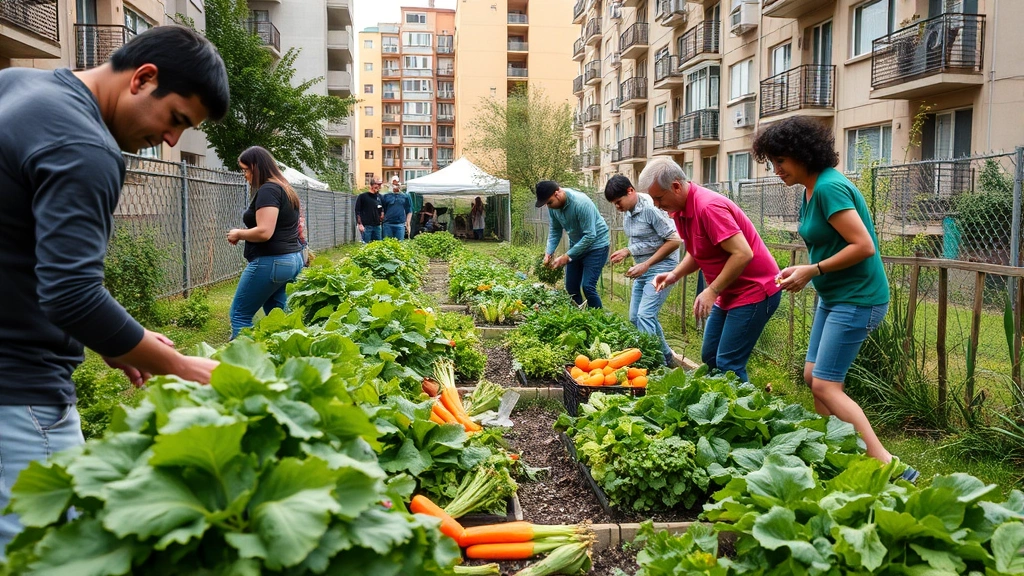
” alt=”Community garden with diverse crops and residents harvesting vegetables, demonstrating local food production and ecosystem integration in sustainable economies”/>
Understanding the definition of environment science reveals that sustainable local economies operate as applied environmental science. Communities function as experimental laboratories where ecological principles translate into economic and social structures. Monitoring biodiversity, water quality, soil health, and carbon storage becomes integrated into business operations rather than external compliance burden.
Challenges and Barriers to Implementation
Despite compelling evidence supporting sustainable local economies, significant barriers prevent rapid transition from incumbent systems. Understanding these obstacles enables more effective policy design and investment strategies.
Capital Access and Financial Infrastructure: Sustainable local enterprises often require upfront capital investments in renewable energy, regenerative agriculture conversion, or cooperative infrastructure. Traditional financial institutions hesitant to fund unfamiliar business models create funding gaps. Community development financial institutions and green banks are emerging to address this challenge, but remain insufficient to meet demand across most regions.
Incumbent System Lock-in: Existing infrastructure, regulations, and subsidies favor conventional large-scale systems. Agricultural subsidies supporting commodity crops rather than diverse local production, zoning regulations preventing mixed-use development, and tax structures favoring corporate consolidation create structural advantages for unsustainable systems. Changing these requires political will often opposed by beneficiaries of existing arrangements.
Knowledge and Skill Gaps: Transitioning to sustainable local production requires different skills than conventional systems. Farmers need training in regenerative practices, manufacturers need circular design expertise, and communities need governance capacity for cooperative management. Educational institutions historically focused on conventional production haven’t adapted curricula rapidly enough.
Market Barriers and Consumer Behavior: Sustainable products often cost more initially despite lower lifecycle costs, creating adoption barriers for price-sensitive consumers. Consumer purchasing patterns reflect habit, convenience, and limited sustainability awareness rather than rational cost-benefit analysis. Marketing sustainable products effectively requires resources many local enterprises lack.
Scale and Global Competition: Local enterprises compete against multinational corporations benefiting from scale economies, international supply networks, and massive marketing budgets. While local systems offer resilience and quality advantages, these benefits may not overcome price differentials for price-conscious consumers or price-driven procurement.
Case Studies: Successful Sustainable Transitions
Examining communities successfully implementing sustainable local economies reveals practical pathways and demonstrates feasibility across diverse contexts.
Organic Valley Cooperative (Wisconsin, USA): Beginning with seven farmers in 1988, Organic Valley grew to over 1,800 member-farmers across the United States through cooperative structure emphasizing shared values over profit maximization. The cooperative achieved premium pricing for organic products, enabling farmer profitability while building consumer loyalty. By maintaining local processing and distribution, Organic Valley captured value chain benefits that typically flow to external processors, returning wealth to farming communities.
Transition Towns Movement (Multiple Countries): Starting in Totnes, England, the Transition Towns framework guides communities through comprehensive sustainability transitions. The movement emphasizes community engagement, local resilience-building, and addressing psychological barriers to change. Transition Towns have successfully launched hundreds of local projects including food networks, energy cooperatives, and skill-sharing initiatives. The model demonstrates that sustainability requires cultural change alongside economic restructuring.
Mondragon Corporation (Basque Region, Spain): Demonstrating that cooperative enterprises can scale successfully, Mondragon operates over 80,000 workers across diverse sectors from manufacturing to retail. The cooperative structure maintains democratic governance, limits wage inequality (highest-paid executives earn maximum 9 times average worker wages), and reinvests profits in community development. Mondragon proves that cooperative economics can compete effectively while maintaining social and environmental commitments.
Costa Rica’s Sustainable Development Model: Costa Rica transitioned from extractive agriculture to sustainable practices while achieving higher per-capita income than many developed nations. Payment for ecosystem services programs compensate landowners for forest preservation, creating economic incentives aligned with environmental protection. The country generates 99% of electricity from renewables and has become a global ecotourism destination, demonstrating that sustainability can drive economic growth.
These examples share common elements: strong community engagement, institutional structures aligning incentives with sustainability, long-term commitment despite initial challenges, and integration across economic, social, and environmental domains. Success required 10-20 years of consistent effort, demonstrating that sustainable transitions follow gradual pathways rather than revolutionary change.
The broader implications suggest that local economies can thrive sustainably when communities deliberately design systems for integration. However, this requires complementary changes in policy, investment, and consumer behavior. Individual community efforts, while important, achieve limited impact without supportive regional and national policies. Research from the International Society for Ecological Economics emphasizes that transitioning economic systems requires coordinated action across multiple scales simultaneously.
Sustainable fashion provides instructive parallels; examining sustainable fashion brands reveals that individual company efforts succeed when supported by consumer demand, regulatory frameworks, and supply chain transformation. Similarly, sustainable local economies require ecosystem support extending beyond individual communities.
FAQ
What defines a sustainable local economy?
A sustainable local economy integrates economic prosperity with environmental regeneration and social equity through localized production, consumption, and decision-making. It prioritizes meeting community needs within ecological limits while building resilience against external shocks. Key characteristics include diverse economic sectors, renewable energy, circular resource flows, cooperative ownership structures, and community governance participation.
How much does transitioning to sustainable local economies cost?
Initial transition costs vary significantly by community context, existing infrastructure, and transition pace. However, research demonstrates that lifecycle costs—including environmental remediation, health impacts, and resource replacement—typically favor sustainable systems. Many communities finance transitions through green bonds, community investment funds, and government grants. The World Bank estimates that sustainable infrastructure investments generate 2-4 times returns through reduced operating costs, improved productivity, and avoided environmental damage.
Can local economies compete with global corporations?
Local economies compete effectively in specific market segments where quality, customization, freshness, or community connection provide competitive advantages. Local food systems, artisanal manufacturing, eco-tourism, and professional services demonstrate strong local viability. However, commoditized products face price competition from global producers. Successful communities develop hybrid strategies combining local production for differentiated markets with strategic engagement in regional and global supply chains.
How long does sustainable transition typically require?
Successful sustainable transitions generally span 10-25 years depending on starting conditions, investment levels, and community commitment. Early phases (1-5 years) focus on building institutions, developing skills, and demonstrating initial projects. Scaling phases (5-15 years) expand successful models across sectors and communities. Maturation phases involve system-wide integration and continuous improvement. This extended timeline reflects the need for cultural change, infrastructure development, and institutional adaptation alongside economic restructuring.
What policies most effectively support sustainable local economies?
Effective policies include: redirecting agricultural subsidies toward sustainable practices, reforming tax structures to favor local ownership and cooperative enterprises, establishing green procurement standards for government purchasing, investing in sustainable infrastructure, supporting workforce development in emerging sectors, and implementing carbon pricing that reflects true environmental costs. UNEP research demonstrates that integrated policy packages addressing multiple barriers simultaneously achieve faster transitions than isolated policies.
How do sustainable local economies address inequality?
Sustainable local economies intentionally address inequality through cooperative ownership ensuring broad wealth distribution, local living wage standards, universal access to skill development, and inclusive governance structures. Evidence shows that cooperative enterprises reduce wage inequality by 30-40% compared to conventional businesses while maintaining productivity. Community-controlled institutions ensure that economic benefits distribute broadly rather than concentrating with external investors or corporate shareholders.


