Controlled Environments: Economists Weigh In on Agricultural Innovation and Economic Value Creation
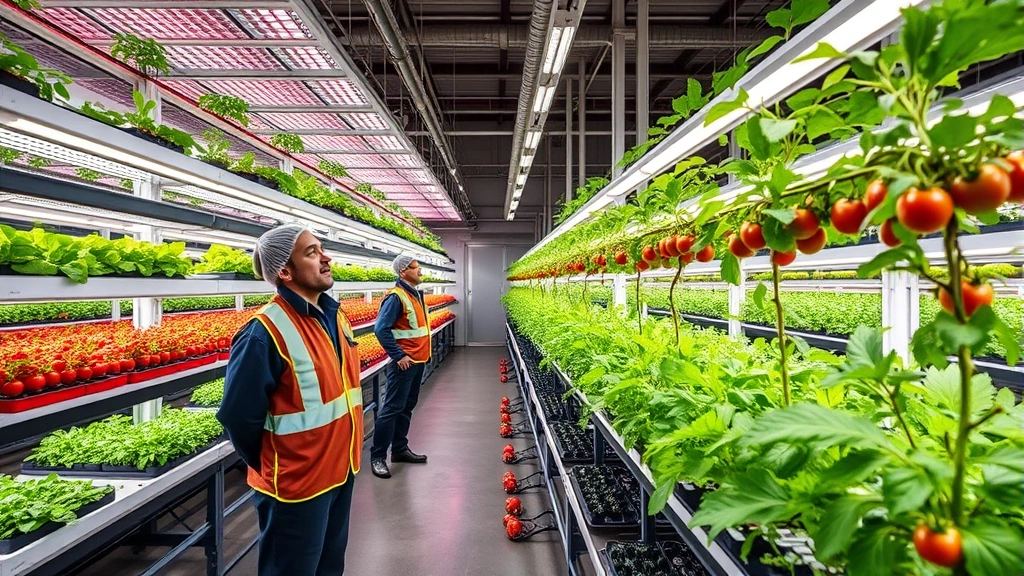
The global food system faces unprecedented pressure. With nearly 10 billion people projected by 2050 and climate volatility increasing, traditional agriculture struggles to meet demand sustainably. Enter controlled environment agriculture (CEA)—a paradigm shift that economists are now scrutinizing with unprecedented rigor. This sector encompasses greenhouses, vertical farms, and hydroponic systems that regulate temperature, humidity, light, and nutrient delivery with technological precision. What was once dismissed as niche luxury production has transformed into a compelling case study in economic efficiency, resource optimization, and systemic sustainability.
Economists recognize controlled environments as more than horticultural innovation; they represent a fundamental restructuring of production economics. By decoupling agriculture from weather patterns and geographic constraints, CEA systems promise reduced input costs, increased yields per square meter, and dramatically shortened supply chains. Yet the financial reality proves more complex. Capital intensity, energy consumption, and market dynamics create economic trade-offs that warrant serious analytical attention. This article examines how leading economic research frames controlled environments within broader sustainability frameworks, explores the quantifiable returns on investment, and assesses whether this agricultural model can scale to meaningful global impact.

The Economic Case for Controlled Environment Agriculture
Economists increasingly recognize that controlled environments fundamentally alter production economics. Traditional agriculture operates within ecological constraints—seasons, precipitation patterns, soil quality—that create inherent variability and risk. Controlled environment systems eliminate this variability through technological mediation. This shift has profound economic implications that extend beyond simple yield calculations.
The primary economic argument centers on yield density and land productivity. A single vertical farm covering 2,000 square meters can produce what requires 10-20 hectares of conventional farmland, depending on crop type and regional conditions. This translates directly into lower land costs per unit output. In high-value real estate markets—urban areas where food security concerns are most acute—this advantage compounds significantly. Research from agricultural economics departments worldwide demonstrates that for leafy greens and herbs, vertical farming achieves 30-40 crop cycles annually compared to 2-4 cycles in field agriculture.
Beyond yield multiplication, economists emphasize the supply chain compression benefits. Traditional agricultural products traverse extensive distribution networks. A tomato grown in one region may travel thousands of kilometers before reaching consumers, incurring transportation costs, cold chain expenses, and spoilage losses estimated at 20-30% globally. Urban vertical farms positioned near consumption centers reduce these intermediary costs substantially. Economic modeling suggests that reduced logistics can lower final product costs by 15-25% even when accounting for higher production-phase expenses.
The predictability advantage deserves particular economic attention. Conventional farming faces weather risk, pest pressure, and disease—all creating yield volatility that increases production costs through insurance, hedging, and working capital requirements. Controlled environments minimize these risks, reducing the economic uncertainty premium that lenders and investors demand. This translates into lower capital costs and more stable cash flow projections, fundamentally improving financial attractiveness.

Capital Requirements and Financial Barriers
However, the economic analysis becomes sobering when examining capital intensity. Establishing a commercial vertical farm requires $5-15 million per facility, with sophisticated operations reaching $20-30 million. This represents 50-100 times the capital per hectare of conventional farming. For context, traditional agriculture requires approximately $2,000-5,000 per hectare in developed regions; controlled environments demand $2.5-7.5 million per hectare of productive growing area.
This capital intensity creates a fundamental economic barrier. Most agricultural enterprises operate on 3-5% profit margins; servicing debt on such capital-intensive operations requires either premium pricing, exceptional yields, or both. Economists have documented that controlled environment operations typically require 7-10 year payback periods under optimistic assumptions, compared to 3-5 years for conventional agricultural infrastructure. This extended payback horizon creates financing challenges that constrain sector expansion.
The capital structure problem intersects with technological obsolescence risk. Agricultural technology evolves rapidly; LED lighting efficiency improves 10-15% annually, climate control systems become more sophisticated, and automation capabilities expand. A $20 million facility designed with current-generation technology faces potential obsolescence as superior systems emerge. Traditional agriculture avoids this risk largely because plowing a field with 20-year-old equipment remains viable. Controlled environments require continuous reinvestment to maintain competitive efficiency.
Economists also identify the working capital intensity problem. Controlled environment operations demand constant inputs—electricity, nutrients, seeds, labor—on predictable schedules. Conventional farms can defer expenses seasonally or adjust input timing based on market conditions. CEA operators cannot; the controlled environment requires consistent resource provision regardless of market price fluctuations. This creates working capital demands that further strain financial viability for smaller operations.
Recent research from World Bank agricultural divisions highlights that controlled environment viability depends critically on access to cheap capital. Regions with capital costs below 5% can support CEA expansion; those facing 10-15% borrowing rates struggle to achieve acceptable returns. This creates a perverse dynamic where controlled environments flourish in wealthy regions with capital abundance while remaining inaccessible in developing regions where food security concerns are most acute.
Resource Efficiency and Input Cost Reduction
Despite capital challenges, economists emphasize the remarkable resource efficiency of controlled environments. This efficiency addresses both economic and environmental dimensions simultaneously. Water consumption provides the clearest example: hydroponic and aquaponic systems use 90-95% less water than conventional agriculture. For regions facing water scarcity—which increasingly includes major agricultural zones—this efficiency advantage translates into genuine economic value.
The economic mathematics become compelling in water-stressed regions. Where irrigation water costs $0.50-2.00 per thousand liters, reducing water consumption from 2,000 cubic meters to 200 cubic meters per hectare-year generates savings exceeding $3,000-6,000 annually per hectare. Over a 20-year facility lifetime, this represents $60,000-120,000 in cumulative water cost reductions. For crops with high water demands—tomatoes, cucumbers, peppers—these savings justify significant capital investment.
Pesticide and fungicide elimination represents another economic efficiency gain. Conventional agriculture applies agrochemicals worth 5-15% of production costs. Controlled environments, with physical isolation and environmental control, reduce chemical requirements by 80-95%. This creates multiple economic benefits: lower input costs, reduced labor exposure risks, eliminated regulatory compliance expenses, and premium market positioning. Consumers increasingly value pesticide-free production; controlled environments command 20-40% price premiums in premium markets, directly offsetting higher production costs.
Labor economics present more ambiguous benefits. While controlled environments reduce outdoor labor requirements, they demand different skill sets—technical expertise in climate systems, hydroponic management, and data monitoring. Wage requirements for these positions often exceed agricultural labor rates. Economic analyses suggest labor cost per unit output may actually increase in controlled environments, though labor as a percentage of total costs decreases due to higher yields. This creates a skills and training burden that developing regions find particularly challenging.
Nutrient efficiency offers another quantifiable advantage. Conventional agriculture loses 20-40% of applied nutrients through leaching and runoff; controlled environments recover 85-95% of applied nutrients through recirculation systems. This reduces fertilizer requirements significantly. With nitrogen fertilizer costs volatile and environmental regulations increasing, nutrient recovery generates both cost savings and regulatory compliance benefits. Economic modeling suggests nutrient cost reductions of $2,000-4,000 per hectare annually in intensive operations.
Market Dynamics and Pricing Pressures
Economic viability ultimately depends on market conditions. Economists have identified a critical tension: controlled environment production economics work best for premium crops, yet market saturation threatens price premiums. Leafy greens, herbs, and specialty vegetables command higher prices than commodity crops like corn, wheat, and soybeans. Controlled environments excel at growing high-value crops; economic analysis shows these systems achieve positive returns primarily for lettuce, basil, microgreens, and similar specialty produces.
However, market expansion creates a paradox. As multiple controlled environment producers enter the same market, competition intensifies. Price premiums compress from 40-50% above conventional production to 10-20%. When margins compress, the capital intensity becomes economically unsustainable. Economists observe that controlled environment sectors often experience boom-bust cycles: initial high profitability attracts capital, oversupply develops, prices collapse, and many operators fail. This pattern has repeated in various markets over the past decade.
The commodity crop problem deserves particular attention. Controlled environments cannot economically produce commodity crops—corn, wheat, soybeans—at prices competitive with conventional agriculture. These crops require large land areas, tolerate weather variability, and benefit from seasonal production patterns. Attempting to grow commodity crops in controlled environments produces unit costs 3-5 times higher than field agriculture. This means controlled environments cannot displace conventional agriculture at global scale; they represent a complementary system for specific product categories and geographic contexts.
Understanding the scientific definition of environment becomes economically relevant here. The controlled environment is not a natural ecosystem but an engineered economic system. Its viability depends on market willingness to pay for the characteristics it provides—pesticide-free production, year-round availability, local sourcing. If consumers prioritize price over these attributes, controlled environment economics collapse. Conversely, if markets value sustainability and food security, premiums persist and economics improve.
Scalability and Economic Viability
Economists debate whether controlled environments can scale to meaningful global significance. Current global controlled environment production represents less than 0.1% of total vegetable production. Achieving 5-10% global market share would require exponential expansion, yet economic constraints suggest this may prove impossible without fundamental technological breakthroughs or dramatic capital cost reductions.
The scalability challenge intersects with energy economics. Controlled environments demand 15-25 kilowatt-hours of electricity per kilogram of leafy greens produced, depending on climate, system design, and lighting technology. This energy intensity creates profound economic and environmental implications. In regions relying on fossil fuels for electricity, energy costs represent 30-50% of total production expenses. As energy prices increase—as carbon pricing mechanisms expand—controlled environment economics become increasingly strained unless renewable energy integration accelerates.
Renewable energy integration offers a pathway to improved economics. Solar-powered vertical farms achieve dramatically better lifecycle economics than grid-powered operations. However, this requires capital for renewable infrastructure that further increases initial investment. Economic modeling suggests that solar-integrated controlled environment facilities require 40-50% more initial capital but achieve 30-40% lower operating costs. This creates a capital-intensive pathway that only wealthy regions and well-capitalized operators can pursue.
Related to broader sustainability goals, renewable energy integration becomes economically essential for long-term viability. Economists increasingly argue that controlled environment agriculture without renewable energy represents an economic dead-end—shifting resource consumption burdens rather than reducing them fundamentally. This requirement for renewable energy integration creates an additional scalability barrier that limits geographic expansion to regions with renewable resource abundance and manufacturing capacity.
The automation frontier offers potential for future economic improvement. Robotic harvesting, autonomous environmental monitoring, and AI-driven optimization could reduce labor costs and improve yields. However, these technologies require significant capital investment and remain in early deployment stages. Economic projections suggest that full automation could improve controlled environment economics by 20-30%, but this remains speculative rather than proven at commercial scale.
Environmental Economics Perspective
Environmental economists approach controlled environments differently than conventional agricultural economists. Rather than focusing primarily on financial returns, environmental economics incorporates externalities—environmental costs not reflected in market prices. From this perspective, controlled environments often demonstrate superior economics when environmental costs are properly valued.
Water scarcity imposes genuine economic costs. In many regions, agricultural water extraction degrades aquifers, reduces ecosystem services, and creates conflict costs. Environmental economists estimate groundwater depletion costs at $0.10-0.50 per cubic meter in many regions. Controlled environments reducing water consumption by 95% generate environmental benefits worth $1,000-5,000 annually per hectare in water-stressed regions. These benefits don’t appear in conventional financial analysis but represent genuine economic value.
Pesticide externalities similarly exceed market prices. Conventional agriculture’s pesticide use creates health costs, ecosystem damage, and regulatory burdens estimated at $5-15 billion annually in developed regions alone. Controlled environments eliminating most pesticide use generate environmental benefits worth hundreds to thousands of dollars per hectare. UNEP research on environmental externalities demonstrates that properly valuing pesticide reduction substantially improves controlled environment economic attractiveness.
Carbon intensity presents a more complex environmental economic analysis. If powered by renewable electricity, controlled environments generate minimal carbon emissions. If powered by fossil fuel electricity, they may generate higher lifecycle carbon than conventional agriculture due to energy intensity. This creates a critical threshold: controlled environments become environmentally superior only with renewable energy integration. Economists emphasize that evaluating controlled environment sustainability requires examining regional electricity grids and energy sources, not merely production methods.
Transport and supply chain externalities deserve emphasis. Conventional agriculture’s extended supply chains create carbon emissions, food waste, and ecosystem disruption. Environmental economists quantify these externalities at $0.50-2.00 per kilogram for many vegetables. Urban controlled environments eliminating long-distance transport generate environmental benefits exceeding $500-2,000 per hectare annually through reduced logistics emissions alone. When combined with water and pesticide benefits, total environmental benefits often exceed $5,000-10,000 per hectare in urban contexts.
The environmental economics framework suggests that controlled environments represent economically rational responses to environmental scarcity. As water becomes scarcer, pesticide regulation tightens, and carbon pricing expands, controlled environment economics improve relative to conventional agriculture. This creates a dynamic where environmental and economic interests increasingly align, though capital constraints remain the binding constraint on expansion.
Learning more about environment and environmental science definitions illuminates why economists increasingly treat environmental degradation as an economic problem requiring economic solutions. Controlled environments represent one technological pathway to reducing agricultural environmental intensity while maintaining productivity. Their economic viability depends on properly valuing environmental benefits and securing capital for infrastructure investment.
Policy Frameworks and Economic Support Mechanisms
Economists increasingly argue that controlled environment agriculture requires policy support to achieve economically viable scaling. Market failures—inability to capture environmental benefits, capital market imperfections, and positive externalities—justify government intervention. Several policy mechanisms show economic promise.
Carbon pricing mechanisms directly improve controlled environment economics. As carbon prices rise, renewable-powered controlled environments become increasingly competitive with conventional agriculture. Economists estimate that $50-100 per ton carbon pricing creates sufficient economic advantage to support controlled environment expansion in many contexts. Several developed regions are implementing carbon pricing that reaches these levels, potentially triggering controlled environment scaling.
Subsidized capital programs specifically targeting controlled environment infrastructure could overcome capital constraints. Economists note that many governments subsidize conventional agricultural infrastructure through loan guarantees, grants, and tax preferences. Extending similar support to controlled environments would dramatically improve financial viability. Countries including the Netherlands and Israel have implemented such programs, demonstrating economic effectiveness.
Water pricing reform represents another critical policy lever. Most agricultural regions price water below true scarcity value, creating economic incentives for water-intensive conventional agriculture. Raising water prices to reflect environmental costs would immediately improve controlled environment economics in water-stressed regions. Economists estimate that water pricing reform could make controlled environments economically competitive in 30-40% of global vegetable markets within a decade.
Research and development support accelerates technological improvement that enhances economics. Government funding for LED efficiency, climate control optimization, and automation development could reduce capital requirements and operating costs by 20-30% over 10-15 years. Many economists argue this represents high-return public investment that justifies sustained funding.
Recognizing the intersection with broader sustainability, carbon footprint reduction strategies increasingly incorporate controlled environment agriculture as a component. Policy frameworks that integrate controlled environment support with broader climate and sustainability goals create more comprehensive economic justifications for public investment.
Regional Economic Contexts and Viability
Economists emphasize that controlled environment viability varies dramatically across regions based on economic, environmental, and technological contexts. No single global assessment applies universally; regional analysis proves essential for realistic economic evaluation.
Northern European regions—Netherlands, Denmark, Belgium—demonstrate strong controlled environment economics. These regions combine cheap capital, high electricity efficiency (renewable-powered), expensive land, high labor costs favoring automation, and strong market demand for pesticide-free produce. Controlled environments capture 15-25% of vegetable markets in these regions, representing economically mature sectors.
Water-stressed regions including the Middle East, North Africa, and parts of Asia show improving controlled environment economics. Water scarcity creates powerful economic incentives for water-efficient production. As water prices rise and scarcity costs increase, controlled environment economics improve substantially. Economists project that controlled environments could capture 10-15% of vegetable markets in these regions within 15-20 years as water scarcity deepens.
Regions with abundant cheap land and low labor costs—much of Sub-Saharan Africa, parts of South America—show weak controlled environment economics currently. These regions benefit from conventional agriculture’s low capital requirements and labor intensity. Economists note that controlled environments remain economically irrational in these contexts unless environmental scarcity increases substantially or capital costs decline dramatically.
Urban regions worldwide show emerging controlled environment viability. As urbanization concentrates populations and distances from agricultural production increase, urban vertical farming becomes increasingly economically attractive. Economists project that urban-focused controlled environment expansion could support 5-10% growth annually in developed regions, with slower growth in developing countries as urban populations expand and food security concerns intensify.
Future Economic Trajectories and Technological Innovation
Economists offer cautious optimism regarding controlled environment economic futures, contingent on technological progress and policy support. Several emerging developments could substantially improve economics.
Artificial intelligence and data analytics applied to controlled environments promise yield improvements and cost reductions. Predictive climate management, automated disease detection, and optimization algorithms could improve resource efficiency by 15-30%. If realized, these improvements would substantially enhance economic viability. However, these technologies require capital investment in monitoring infrastructure and expertise development, creating additional barriers for developing regions.
Alternative lighting technologies—including engineered photosynthetic systems and novel LED designs—could reduce energy consumption by 20-40% over the next decade. This improvement would dramatically enhance controlled environment economics, particularly in regions with renewable electricity. Economists tracking this research trajectory project that energy costs could decline from 30-50% of production costs to 15-25%, substantially improving overall profitability.
Modular design innovations promise to reduce capital requirements by 30-40% through standardization and prefabrication. Companies developing standardized, scalable controlled environment systems report that mass production could reduce capital costs from $10-15 million to $5-7 million per facility. If achieved at scale, this breakthrough would fundamentally improve economic viability and accelerate sector expansion.
Biological innovation including selective breeding and genetic improvement of crops specifically for controlled environments could improve yields and reduce input requirements. Crops optimized for controlled environment conditions—bred for LED light efficiency, simplified nutrient requirements, and pest resistance—could improve economics by 20-30%. This represents a frontier research area with potential for substantial economic impact.
The integration of controlled environments with broader sustainable production systems creates additional economic value through circular economy principles. Controlled environment facilities integrated with waste processing, energy generation, and other productive activities could achieve superior overall economics. Economists increasingly view controlled environments not as isolated production systems but as components of integrated sustainable infrastructure.
FAQ
What is the primary economic advantage of controlled environment agriculture?
The primary economic advantage is yield density per unit land area. Vertical farms produce 10-20 times more output per square meter than conventional agriculture, dramatically reducing land costs per unit production. Combined with supply chain compression from localized production, these factors create compelling economic advantages for high-value crops in expensive real estate markets.
Why does controlled environment agriculture remain limited globally despite apparent advantages?
Capital intensity represents the binding constraint. Controlled environments require $5-15 million per facility compared to $2,000-5,000 per hectare for conventional farming. This 1,000-fold capital intensity differential creates financing barriers that prevent expansion in capital-scarce regions. Additionally, commodity crop economics remain unfavorable for controlled environments, limiting expansion to specialty vegetable markets.
How does energy consumption affect controlled environment economics?
Energy intensity of 15-25 kilowatt-hours per kilogram of produce makes energy costs 30-50% of production expenses in fossil fuel-powered operations. This creates powerful economic incentives for renewable energy integration. Solar-powered controlled environments achieve dramatically superior long-term economics but require additional capital investment. Energy costs represent the primary variable determining whether controlled environments achieve economic viability in specific regions.
Can controlled environment agriculture scale to replace conventional agriculture?
Economists agree this is impossible. Controlled environments cannot economically produce commodity crops and cannot displace conventional agriculture at global scale. Instead, they represent a complementary system for specific crops and geographic contexts. Maximum realistic global penetration is estimated at 5-10% of vegetable production, concentrated in high-value specialty crops and urban markets.
What policy interventions would most improve controlled environment economics?
Economists identify carbon pricing, water pricing reform, subsidized capital programs, and research funding as highest-impact policy interventions. Carbon pricing improves renewable-powered controlled environment competitiveness; water pricing reform captures environmental scarcity value; subsidized capital overcomes financing barriers; research funding reduces technological costs. Regional policy combinations tailored to specific economic contexts would prove most effective.
How do environmental benefits affect economic analysis of controlled environments?
When environmental externalities are properly valued—water scarcity costs, pesticide health impacts, transport emissions—controlled environments demonstrate superior economics compared to conventional agriculture in many contexts. Environmental economists argue that controlled environments represent rational economic responses to environmental scarcity, though conventional financial analysis often overlooks these benefits.
Which regions show strongest controlled environment economic viability?
Northern Europe (Netherlands, Denmark, Belgium) shows mature, economically viable controlled environment sectors. Water-stressed regions (Middle East, North Africa) show improving economics as water scarcity intensifies. Urban areas globally show emerging viability as distance from production increases. Capital-scarce, land-abundant regions show weak current economics but improving prospects as environmental scarcity increases.


