
Is GDP Growth Sustainable? Economist Insights on Economic Models and Ecological Limits
For decades, policymakers and economists have treated Gross Domestic Product (GDP) growth as the primary indicator of national success and societal progress. However, a growing body of research challenges this assumption, questioning whether perpetual GDP expansion is compatible with planetary boundaries and long-term human wellbeing. This article explores the tension between traditional economic growth paradigms and ecological sustainability, examining what leading economists propose as alternatives to our current measurement systems.
The debate over GDP sustainability touches on fundamental questions: Can economies grow indefinitely on a finite planet? Does increased economic activity necessarily improve quality of life? What environmental costs are we ignoring by focusing solely on monetary output? These questions have moved from academic margins to mainstream policy discussions, particularly as climate change, biodiversity loss, and resource depletion accelerate globally.
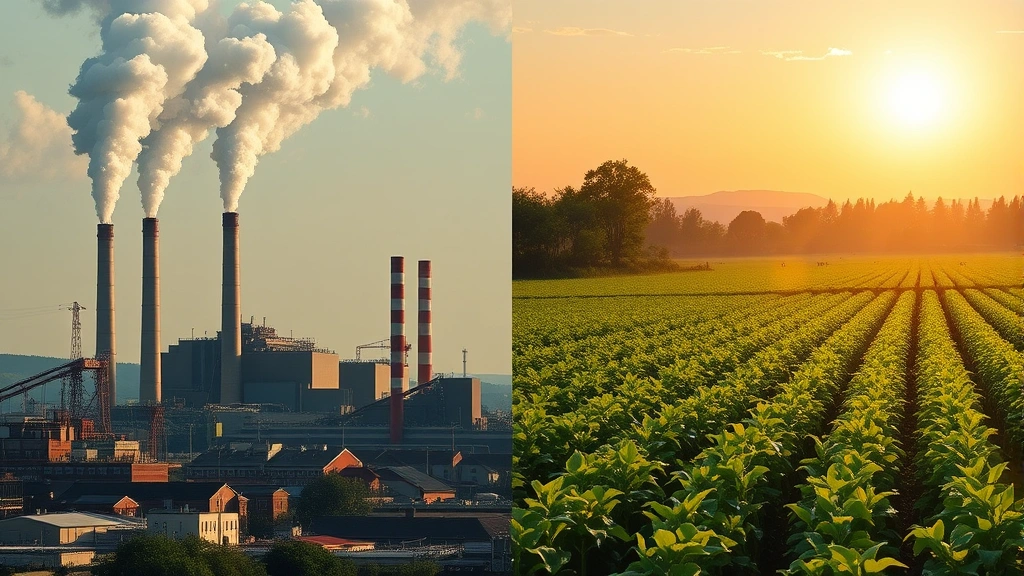
The GDP Growth Paradigm: Historical Context and Assumptions
Gross Domestic Product emerged as the dominant economic metric during the post-World War II era, championed by economist Simon Kuznets and adopted by the United Nations as a standardized measure of national prosperity. The metric aggregates the monetary value of all goods and services produced within a nation’s borders annually. Its elegance lies in simplicity: more production equals more wealth equals greater societal benefit.
However, this framework contains critical blind spots. GDP counts environmental destruction as economic gain. When a forest is logged, the timber sale boosts GDP, but the loss of carbon sequestration, biodiversity, and ecosystem services disappears from accounting ledgers. Similarly, a car accident that injures people and damages vehicles increases GDP through medical treatment and vehicle repairs. Cigarette sales contribute positively to GDP despite documented health harms.
Economists like Herman Daly and Robert Costanza have spent careers documenting these paradoxes. Their research demonstrates that beyond a certain threshold of material consumption, additional GDP growth correlates poorly with measures of genuine wellbeing such as life satisfaction, health outcomes, and social cohesion. In wealthy nations, this threshold appears to have been reached or exceeded decades ago.
The assumption underlying perpetual growth is thermodynamically problematic. Growth in a linear “take-make-dispose” economy requires ever-increasing resource extraction and waste generation. On a finite planet with regenerative and absorption limits, this trajectory is mathematically unsustainable. Understanding human environment interaction becomes essential when examining how economic systems interface with natural systems.
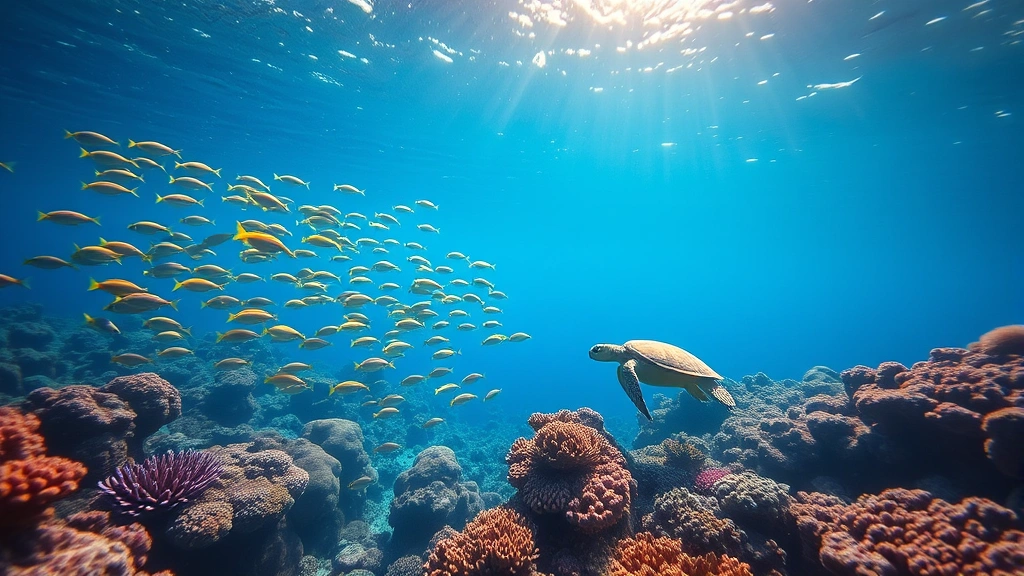
Ecological Limits and Planetary Boundaries
In 2009, a team of Earth system scientists led by Johan Rockström identified nine critical planetary boundaries: climate change, biodiversity loss, land-system change, freshwater depletion, biogeochemical flows, ocean acidification, atmospheric aerosol loading, ozone depletion, and chemical pollution. Their research revealed that humanity has already transgressed safe operating limits in at least six of these categories.
Current GDP growth trajectories push us further beyond these boundaries annually. Global resource extraction has tripled since 1970, while ecosystem services have declined by roughly 40% over the same period. The World Bank estimates that natural capital depreciation—environmental degradation and resource depletion—costs developing countries 4-9% of their annual income. Yet this massive loss rarely appears in GDP calculations or policy discussions.
Climate change exemplifies the GDP-sustainability paradox. Burning fossil fuels generates enormous economic value (energy production, transportation, manufacturing), yet the climate externality—estimated at $51 per ton of CO2 by the U.S. government—remains external to market prices and GDP accounting. Adapting to climate impacts will require massive expenditures that will boost GDP, even as they represent responses to deteriorating conditions.
The connection between economic activity and biotic environment examples reveals how growth in certain sectors directly undermines ecological health. Industrial agriculture, fishing, and logging generate GDP while simultaneously collapsing food webs and reducing biodiversity at alarming rates.
Decoupling—the theory that economic growth can be separated from resource consumption and environmental impact—remains largely aspirational. While some wealthy nations achieved relative decoupling (slower environmental impact growth than GDP growth) through outsourcing production, absolute decoupling remains elusive globally. Consumption-based accounting that includes imported goods reveals that decoupling claims often merely shift environmental damage to other nations.
Environmental Accounting and True Cost Economics
Progressive economists increasingly advocate for environmental accounting frameworks that internalize ecological costs into economic measurements. Natural capital accounting assigns monetary values to ecosystem services: carbon sequestration, water purification, pollination, soil formation, and others. The Millennium Ecosystem Assessment valued global ecosystem services at approximately $125 trillion annually—roughly 1.5 times global GDP.
The Genuine Progress Indicator (GPI) adjusts GDP by accounting for environmental degradation, resource depletion, income inequality, and non-market factors like leisure time and household work. Countries tracking GPI alongside GDP reveal startling divergences. While many nations’ GDP has doubled or tripled since 1990, their GPI has stagnated or declined, indicating that growth has come at the expense of genuine wellbeing.
New Zealand and Scotland have pioneered wellbeing economy frameworks, adopting policy metrics that prioritize citizen wellbeing and environmental health alongside economic productivity. This represents a paradigm shift: instead of asking “how much did we produce?”, policymakers ask “are people and ecosystems thriving?”
The European Union’s Circular Economy Action Plan attempts to redesign production systems to eliminate waste and maintain material value through reuse and recycling. Rather than pursuing growth in extraction and consumption, circular models target growth in efficiency and longevity. This framework acknowledges that infinite growth within planetary boundaries requires fundamental system redesign.
To understand how these accounting changes affect real-world decisions, explore how how to reduce carbon footprint connects to individual consumption patterns that GDP currently celebrates rather than critiques.
Alternative Economic Indicators and Models
Degrowth and post-growth economics represent radical departures from GDP-maximization frameworks. Rather than seeking indefinite expansion, these models prioritize sufficiency, equity, and ecological regeneration. Degrowth doesn’t necessarily mean economic contraction in wealthy nations but rather deliberate downsizing of resource-intensive sectors while expanding care work, education, and ecological restoration.
The Doughnut Economics model, developed by Kate Raworth, visualizes a safe and just operating space: the inner ring represents minimum wellbeing needs (food, health, education, income), while the outer ring represents ecological ceilings (carbon, land use, water, biodiversity). Sustainable economies operate within this doughnut, meeting human needs without exceeding planetary boundaries. Amsterdam and Brussels have adopted doughnut frameworks for municipal planning.
Ecological economics, distinct from environmental economics, treats the economy as embedded within Earth’s ecosystems rather than as a separate system exploiting nature. This perspective recognizes biophysical limits as non-negotiable constraints rather than externalities to be priced and managed. Leading ecological economists advocate for steady-state economics—stable material throughput at sustainable levels with continued qualitative improvement.
The Human Development Index (HDI), created by the United Nations, measures life expectancy, education, and income rather than GDP alone. Nations with high HDI but moderate GDP demonstrate that wellbeing doesn’t require endless growth. Costa Rica, for example, achieves HDI scores comparable to wealthy nations while maintaining substantially lower per-capita resource consumption and carbon emissions.
Blockchain-based environmental accounting systems and regenerative economy models are emerging as technological frameworks for tracking true costs. These systems aim to make environmental damage and ecosystem restoration economically visible and financially rewarded.
Corporate and National Case Studies
Several organizations have pioneered sustainable economic models that prioritize ecological health alongside financial performance. Patagonia, the outdoor apparel company, has implemented circular production systems, carbon accounting, and profit-sharing models that generate modest but stable returns while maintaining environmental standards. The company demonstrates that lower growth rates compatible with ecological limits can sustain profitable operations.
Costa Rica provides a compelling national case study. Since 1987, the nation has expanded forest coverage from 25% to nearly 50% while maintaining steady economic growth. By prioritizing ecosystem services payments, renewable energy (now providing 99% of electricity), and ecotourism, Costa Rica has decoupled economic development from deforestation—a rare achievement among tropical nations.
Bhutan famously enshrined Gross National Happiness (GNH) as its primary development metric in 1972, prioritizing psychological wellbeing, cultural preservation, environmental conservation, and good governance over GDP growth. While Bhutan remains economically modest by global standards, it maintains the world’s highest carbon-negative status and ranks among the happiest populations globally.
The Nordic countries have integrated environmental accounting into national statistics and policy frameworks more thoroughly than most nations. Sweden’s natural capital accounting system, for instance, tracks forest value, mineral stocks, and ecosystem health alongside traditional economic metrics, informing investment and regulatory decisions.
For comprehensive understanding of sustainable alternatives, examine renewable energy for homes as a microcosm of how individuals and communities transition from growth-dependent to regenerative economic models.
Policy Pathways Toward Sustainable Economies
Transitioning from growth-dependent to sustainable economic models requires coordinated policy interventions across multiple domains. Carbon pricing—whether through carbon taxes or cap-and-trade systems—represents one mechanism for internalizing climate externalities. However, economists debate whether pricing alone suffices or whether regulations and investment in alternatives are necessary.
Governments are implementing circular economy policies that mandate extended producer responsibility, ban single-use plastics, and incentivize product longevity. The EU’s Right to Repair initiatives require manufacturers to support product maintenance, extending useful life and reducing resource extraction pressure.
Wealth redistribution mechanisms become increasingly important in post-growth frameworks. As material consumption stabilizes, equity concerns intensify. Universal basic income, wealth taxes, and progressive taxation can ensure that transition benefits distribute broadly rather than concentrating among wealthy populations.
Investment redirection away from extractive industries toward regenerative sectors—ecosystem restoration, renewable energy, sustainable agriculture, education, healthcare, and arts—represents another critical pathway. Central banks increasingly recognize climate risk as financial risk, with implications for capital allocation and regulatory frameworks.
International cooperation through frameworks like the United Nations Environment Programme establishes binding agreements on resource extraction, emissions, and biodiversity protection. The World Bank has begun conditioning development financing on environmental safeguards, though critics argue these measures remain insufficient.
Understanding the broader blog home context and exploring sustainable fashion brands reveals how consumer choices and business models are adapting to sustainability imperatives.
Educational transformation represents a foundational requirement. Economics curricula must incorporate ecological limits, biophysical accounting, and alternative models rather than exclusively teaching growth-maximization frameworks. Interdisciplinary approaches combining economics with ecology, psychology, and systems thinking prepare policymakers for navigating complexity.
FAQ
Can economies exist without growth?
Yes. Steady-state and post-growth economies maintain stable material throughput while allowing qualitative improvements in technology, culture, and wellbeing. Many pre-industrial economies functioned without growth imperatives for centuries. Contemporary examples like Costa Rica and Bhutan demonstrate that development goals can be pursued within ecological limits.
Wouldn’t abandoning growth cause unemployment and poverty?
Transition requires deliberate policy design. Redirecting investment toward care, education, and ecosystem restoration creates employment in different sectors. Shorter work weeks, universal basic income, and skills training can manage employment transitions. Historical precedent shows that work reorganization doesn’t require GDP growth—post-WWII Western nations reduced work hours substantially while maintaining prosperity.
How do we measure progress without GDP?
Multiple frameworks exist: Genuine Progress Indicator, Human Development Index, Gross National Happiness, Wellbeing Economy metrics, and natural capital accounting. Different contexts may prioritize different indicators. Integrated dashboards combining multiple metrics provide more comprehensive progress assessment than single-metric systems.
Is degrowth economically feasible?
Economic feasibility depends on political will and policy design. Wealthy nations with high per-capita resource consumption could reduce material throughput substantially while maintaining or improving wellbeing. Developing nations require continued investment in basic infrastructure and services, suggesting differentiated transition timelines.
What role do markets play in sustainable economies?
Markets can facilitate efficient resource allocation when prices reflect true costs. However, markets alone cannot solve sustainability challenges because many ecosystem services lack market mechanisms and powerful interests profit from externality-shifting. Hybrid approaches combining market mechanisms, regulations, and democratic planning appear most promising.
How long until current GDP growth becomes impossible?
Biophysical constraints are already binding in resource-constrained regions. Climate tipping points, biodiversity collapse, and freshwater depletion will increasingly force contraction regardless of policy choices. Proactive transition to sustainable models offers more equitable outcomes than crisis-driven collapse.


