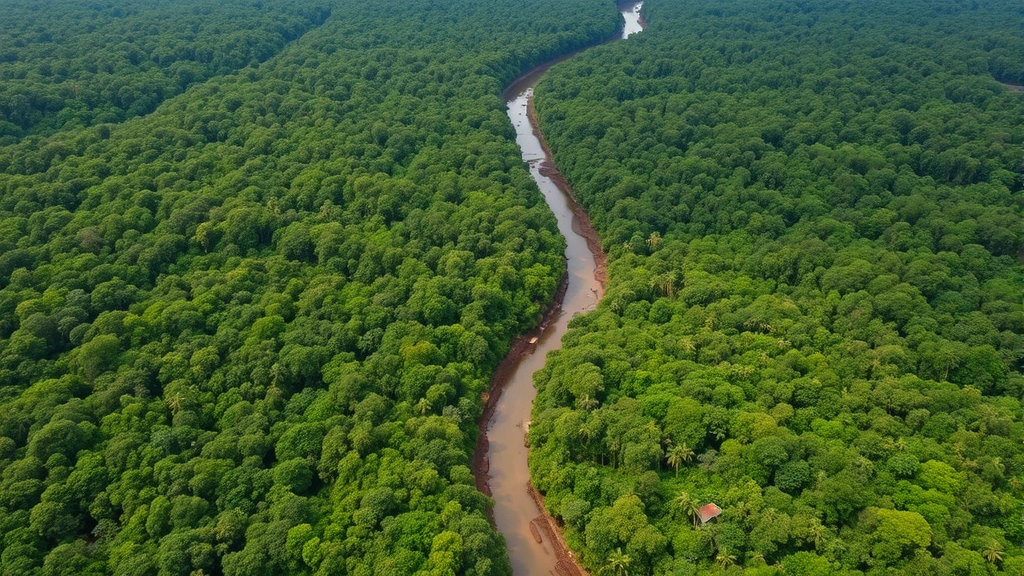
Can Economies Thrive Without Ecosystems? Study Shows the Critical Interdependence
The relationship between economic systems and natural ecosystems represents one of the most pressing questions of our time. For decades, conventional economic theory treated the environment as an external factor—a resource to be exploited rather than a foundational system upon which all economic activity depends. However, emerging research fundamentally challenges this paradigm, revealing that economies cannot sustainably thrive without healthy, functioning ecosystems. This comprehensive analysis explores the scientific evidence demonstrating that ecological collapse and economic prosperity are incompatible trajectories.
A growing body of interdisciplinary research from ecological economics, environmental science, and systems biology reveals an uncomfortable truth: our current economic models operate under a dangerous illusion of independence from nature. When we examine the definition of environment and environmental science, we recognize that ecosystems provide far more than aesthetic value—they constitute the biological and chemical infrastructure upon which all human economic activity rests. Without pollination services, water filtration, climate regulation, and nutrient cycling, modern economies would collapse within years, not decades.
The Economic Value of Ecosystem Services
Ecosystem services—the tangible benefits humans derive from natural systems—represent trillions of dollars in annual economic value. The World Bank has systematically documented these services, calculating that global ecosystem services are valued at approximately $125 trillion annually. This figure encompasses pollination ($15-20 billion annually in agriculture alone), water purification ($1-3 trillion annually), carbon sequestration, climate regulation, and soil formation.
Consider pollination services: approximately 75% of global food crops depend at least partially on animal pollination, primarily by bees and other insects. The economic value of pollination in agriculture exceeds $15 billion annually in the United States alone. Yet bee populations have declined by 25-45% over the past two decades due to habitat loss, pesticide exposure, and climate disruption. This represents a direct threat to food security and agricultural revenue streams that economists are only beginning to quantify in traditional GDP calculations.
Water filtration services provide another critical example. Natural wetlands and forests filter water at a cost that would be prohibitively expensive to replicate through technological means. New York City discovered this reality when facing water contamination in the 1980s. Rather than constructing a $6-8 billion water treatment facility, the city invested $1.5 billion in ecosystem restoration in the Catskill Mountains watershed. The ecosystem provided superior water quality at one-fifth the cost of technological alternatives—a powerful demonstration of economic efficiency embedded within natural systems.
Biodiversity Loss and Economic Consequences
The relationship between human environment interaction and economic stability has become increasingly quantifiable. The World Economic Forum’s 2023 Global Risk Report identifies biodiversity loss as among the top five risks facing the global economy over the next decade. The Intergovernmental Science-Policy Platform on Biodiversity and Ecosystem Services (IPBES) estimates that we are losing species at rates 100 to 1,000 times faster than baseline extinction rates.
This biodiversity collapse has direct economic implications. Genetic diversity in crop species provides insurance against disease and climate variability. When we lose wild relatives of domesticated crops—which serve as genetic repositories for disease resistance and climate adaptation traits—we reduce the adaptive capacity of our food systems. The Irish Potato Famine of 1845-1852 killed approximately one million people and forced another million to emigrate, demonstrating how monoculture agriculture (which sacrifices biodiversity for short-term yield) creates systemic economic vulnerability.
Agricultural productivity depends on maintaining genetic diversity within crop species and preserving wild plant and animal communities that support agricultural systems. Insect pollinator declines alone could reduce global crop production by 5-8% and eliminate crops worth $5.7 billion annually. These are not hypothetical future losses—they represent current economic damage accumulating across global food systems.
Pharmaceutical development similarly depends on biodiversity. Approximately 25% of modern pharmaceutical drugs contain compounds derived from rainforest plants, yet we have tested less than 1% of tropical plants for medicinal properties. The economic value of undiscovered pharmaceutical compounds in remaining biodiverse ecosystems is estimated at $4.9 trillion. Destroying these ecosystems before we develop this knowledge represents an incalculable economic loss.

Climate Systems and Long-Term Growth Projections
Climate regulation—perhaps the most critical ecosystem service—demonstrates the impossibility of economic growth divorced from ecological stability. The Stern Review on the Economics of Climate Change, commissioned by the UK government, concluded that climate change could reduce global GDP by 5-20% permanently, with poor countries suffering disproportionately. This represents the most comprehensive economic analysis of climate impacts, and its conclusions are unambiguous: economic systems cannot sustain growth in the face of climate destabilization.
Natural carbon sinks—forests, wetlands, mangroves, and ocean ecosystems—sequester approximately 9.5 billion metric tons of carbon annually. Destruction of these ecosystems not only eliminates this carbon sequestration capacity but releases stored carbon, accelerating climate change. Tropical deforestation alone accounts for 10-15% of global greenhouse gas emissions. The economic cost of unmitigated climate change—including increased disaster recovery costs, agricultural losses, infrastructure damage, and health impacts—vastly exceeds the short-term profits from ecosystem destruction.
UNEP research demonstrates that every dollar invested in ecosystem restoration generates $7-30 in economic benefits through enhanced ecosystem services. Mangrove restoration, for example, provides storm surge protection, fish nursery habitat, and carbon sequestration, delivering 10 times the economic value of shrimp aquaculture that typically replaces these ecosystems.
Long-term economic projections that ignore climate impacts are fundamentally unreliable. The Network for Greening the Financial System (NGFS) has established that climate risks represent financial risks, with implications for asset valuations, insurance costs, and macroeconomic stability. Insurance companies—which price risk better than any other economic sector—have already begun withdrawing from climate-vulnerable regions, signaling that markets recognize the incompatibility of economic growth with ecosystem destruction.
Case Studies: Regional Economic Collapse
Historical and contemporary case studies provide concrete evidence that economies cannot sustain themselves without ecosystem integrity. The Aral Sea ecological disaster offers a cautionary example. Soviet-era irrigation projects diverted 90% of water from the Aral Sea to irrigate cotton monocultures. The sea shrunk to 10% of its original volume, destroying the fishery that supported 60,000 jobs and generating $1 billion in annual economic value. The exposed seabed released toxic chemicals, creating a public health crisis. The short-term economic gains from cotton production—approximately $100 million annually—were vastly outweighed by losses in fishery income, health costs, and environmental remediation expenses now exceeding $10 billion.
The Mediterranean region provides another instructive example. Overfishing has depleted commercial fish stocks by 90% since 1950. The fishing industry, which once generated billions in annual revenue, now operates at a fraction of historical capacity. Ecosystem restoration efforts initiated in the 2010s have begun rebuilding fish populations and economic productivity, but the transition period involved significant economic hardship for fishing communities. Early intervention would have preserved both ecological function and economic prosperity.
Coastal economies worldwide depend on healthy coral reef ecosystems that support $375 billion in annual economic activity through fisheries, tourism, and coastal protection. Yet 50% of coral reefs are already degraded, with projections suggesting 90% will be lost by 2050 if current warming trends continue. This represents not future economic loss but current economic contraction masked by accounting systems that fail to depreciate natural capital.
The collapse of North Atlantic cod fisheries in the 1990s eliminated 40,000 jobs and required $2 billion in government assistance to affected communities. The fishery had generated annual revenues of $1 billion at its peak. Ecological overharvesting created an economic collapse that decades of recovery efforts have failed to fully remedy. Yet this preventable disaster receives minimal attention in economic policy discussions.
Transitioning to Regenerative Economic Models
The evidence that economies require functional ecosystems demands fundamental restructuring of economic systems and metrics. Traditional GDP measures fail to account for natural capital depletion, treating ecosystem destruction as economic gain. A forest logged for timber appears as positive economic activity, while the loss of water filtration, carbon sequestration, and biodiversity appears nowhere in GDP calculations.
Ecological economics—a rapidly expanding field integrating ecology, systems biology, and economic theory—proposes alternative frameworks that recognize biophysical limits to economic growth. Research in ecological economics journals demonstrates that sustainable economies must operate within planetary boundaries, maintaining ecosystem integrity as a foundational constraint rather than an externality.
Natural capital accounting represents one practical transition mechanism. Costa Rica implemented natural capital accounting in the 1990s, revealing that ecosystem services contributed 25% of the nation’s economic value. This accounting framework enabled more rational policy decisions, including payments for ecosystem services that incentivized forest conservation. Costa Rica has recovered 25% of deforested land since implementing this approach, while maintaining economic growth and becoming a global leader in renewable energy adoption.
Transitioning to regenerative economic models requires policies that align financial incentives with ecosystem health. Reducing carbon footprint at systemic levels demands carbon pricing, renewable energy investment, and ecosystem restoration funding. Similarly, sustainable fashion brands and regenerative agriculture demonstrate that profitable business models can operate within ecological constraints.
Renewable energy transition represents another critical component of ecosystem-compatible economic systems. Solar and wind technologies generate electricity without depleting natural capital or degrading ecosystems. The economic case for renewable energy has strengthened dramatically, with costs declining 89% for solar and 70% for wind since 2010, making renewables cost-competitive with fossil fuels in most markets.
Circular economy principles—which minimize waste and maintain materials in productive use—reduce pressure on ecosystems while creating economic value. Companies implementing circular design have discovered cost savings alongside environmental benefits. Interface, a carpet manufacturer, achieved 96% waste reduction and $450 million in cumulative savings through circular design principles.
Agricultural regeneration offers perhaps the most significant opportunity for ecosystem-economy alignment. Regenerative agriculture—which rebuilds soil health, increases biodiversity, and enhances carbon sequestration—produces comparable yields to conventional agriculture while improving ecosystem function. Research from the Rodale Institute demonstrates that regenerative systems generate higher long-term profitability than conventional agriculture, particularly when ecosystem service values are included in economic analysis.

The transition to ecosystem-compatible economies will require policy innovation, technological investment, and cultural reorientation. However, the alternative—continuing to treat ecosystems as externalities while pursuing economic growth disconnected from biophysical reality—guarantees eventual economic collapse. The question is not whether economies will adapt to ecological constraints, but whether adaptation will occur through intentional policy design or through crisis-driven contraction.
FAQ
Can technology replace ecosystem services?
Technology can partially substitute for some ecosystem services but cannot fully replace integrated ecosystem function. Water filtration can be technologically replicated but at 5-10 times the cost of natural filtration. Pollination cannot be technologically replicated at scale. Most critically, technology cannot replace the integrated, self-regulating nature of healthy ecosystems. Technological solutions also require energy and material inputs, creating additional environmental burdens.
Don’t economies grow by increasing resource extraction?
Historical economic growth relied on increasing resource extraction, but this relationship is decoupling in advanced economies. Wealthy nations are achieving economic growth with declining material throughput through efficiency improvements and service-based economies. However, global resource extraction continues accelerating, driven by developing nation consumption growth. Sustainable economic models must achieve prosperity through efficiency and circular design rather than expansion of resource extraction.
How do we measure ecosystem service value accurately?
Economists employ several valuation methods: market prices (for ecosystem products sold commercially), replacement cost (cost of technological substitutes), contingent valuation (surveying willingness to pay), and benefit transfer (applying valuations from studied ecosystems to similar unstudied systems). Each method has limitations, but they consistently demonstrate that ecosystem services are worth trillions annually—vastly exceeding the value of economic activity that destroys them.
What is the economic timeline for ecosystem collapse?
Ecosystem degradation follows non-linear patterns; systems can appear stable until reaching tipping points where collapse accelerates rapidly. The Amazon rainforest may reach a tipping point within 20-30 years if deforestation continues. Fisheries can collapse within 5-10 years of overharvesting. Soil degradation accumulates over decades but accelerates exponentially. Economic disruption typically lags ecological disruption by 5-15 years, creating false confidence in unsustainable systems.
Can developing nations afford ecosystem protection?
Developing nations cannot afford ecosystem destruction. The economic costs of lost ecosystem services—through agricultural decline, water scarcity, and climate impacts—vastly exceed conservation costs. International climate finance and payments for ecosystem services represent mechanisms through which developed nations can support conservation in biodiversity-rich developing nations. Costa Rica demonstrates that conservation can be economically profitable when properly valued.
How does ecosystem health relate to economic inequality?
Ecosystem degradation disproportionately harms poor communities that depend directly on ecosystem services and lack resources to purchase substitutes. Wealthy individuals can import water, food, and resources from distant locations, insulating themselves from local ecosystem decline. Conversely, ecosystem restoration creates employment opportunities and improves quality of life in poor communities. Economic justice and ecological restoration are fundamentally interconnected.


