How Companies Impact Ecosystems: Expert Insights
Corporate operations represent one of the most significant anthropogenic forces shaping global ecosystems today. From extraction of raw materials to manufacturing processes, distribution networks, and waste generation, companies fundamentally alter the environmental systems upon which all life depends. Understanding how companies impact ecosystems requires examining the complex interplay between business operations, ecological degradation, and systemic environmental change across multiple scales—from local watershed disruption to planetary climate destabilization.
The relationship between corporate activity and environmental degradation is neither uniform nor inevitable. Different industries, business models, and operational practices create vastly different ecological footprints. Some companies have begun implementing regenerative practices that actively restore ecosystems, while others continue extraction-based models that deplete natural capital at unsustainable rates. This comprehensive analysis explores the mechanisms through which corporations influence ecosystems, the scientific evidence documenting these impacts, and emerging pathways toward more sustainable business practices grounded in ecological principles.
Direct Ecosystem Degradation Mechanisms
Corporate operations create direct ecosystem impacts through land conversion, water extraction, and habitat destruction. When companies establish manufacturing facilities, agricultural operations, or extraction sites, they fundamentally transform ecological landscapes. Different types of environments exhibit varying resilience capacities when subjected to industrial development, with tropical rainforests and wetlands demonstrating particularly high vulnerability to conversion.
The primary mechanism of direct degradation involves habitat loss through land-use conversion. Agricultural corporations clearing forests for commodity production eliminate critical ecosystem services including carbon sequestration, water filtration, and biodiversity support. Manufacturing facilities occupy land previously serving ecological functions, replacing complex biotic communities with simplified industrial landscapes. Research from the World Bank’s environmental division demonstrates that corporate land conversion represents approximately 15-20% of global habitat loss, with significantly higher percentages in biodiverse regions of Southeast Asia, Central Africa, and the Amazon basin.
Water extraction represents another critical direct impact mechanism. Industrial operations require enormous quantities of freshwater for cooling systems, processing, and product manufacturing. Companies operating in water-scarce regions create cascading ecological consequences: reduced streamflow diminishes aquatic habitat quality, lowering dissolved oxygen and fragmenting fish populations; groundwater depletion lowers water tables, causing ecosystem-dependent vegetation to experience water stress; and altered hydrological regimes disrupt the seasonal flood pulses that many floodplain ecosystems depend upon for nutrient cycling and reproduction cycles.
Soil degradation from industrial agriculture and manufacturing compounds direct ecosystem impacts. Heavy machinery compacts soil structures, reducing porosity and microbial habitat capacity. Chemical inputs alter soil chemistry, disrupting mycorrhizal networks that facilitate nutrient exchange between plants and fungi. Corporate monoculture agriculture eliminates the polyculture systems that support soil biodiversity and resilience. The cumulative effect manifests as reduced soil carbon storage capacity, increased erosion vulnerability, and diminished ecosystem productivity across affected landscapes.
Supply Chain and Resource Extraction Impacts
Corporate environmental impacts extend far beyond direct operational footprints through complex global supply chains. Human environment interaction intensifies when supply chain networks fragment ecosystem connectivity and concentrate extraction pressures in biodiverse regions. Mining operations, logging concessions, and agricultural suppliers often operate in areas of exceptional ecological value, creating cumulative impacts that individual corporate actors may not fully account for in sustainability metrics.
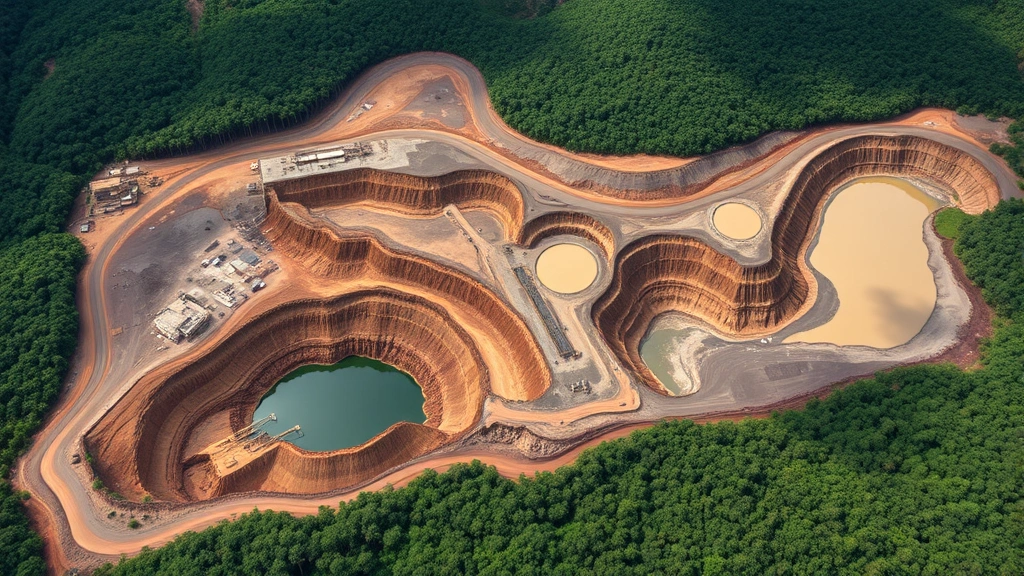
Mining represents one of the most ecologically destructive supply chain components. Extraction of minerals, metals, and fossil fuels requires removing overburden layers, creating massive open pits that obliterate surface ecosystems. Processing operations generate tailings containing heavy metals and sulfuric acid that contaminate waterways across vast downstream areas. A single copper mine can generate environmental liabilities affecting hundreds of square kilometers, persisting for decades or centuries after operational closure. The United Nations Environment Programme estimates that mineral extraction affects approximately 25% of global terrestrial ecosystems, with concentrations in tropical regions harboring disproportionate biodiversity.
Timber and palm oil supply chains exemplify how commodity demand drives tropical deforestation. Corporate purchasing decisions in distant consumer markets translate into landscape-scale forest conversion in producer nations. Between 2000 and 2020, corporate-driven deforestation in Indonesia, Malaysia, and Brazil eliminated forest habitat supporting orangutans, jaguars, and countless undiscovered species. Supply chain fragmentation obscures these connections—consumers purchasing products containing palm oil may be unaware their purchasing decisions incentivize ecosystem destruction thousands of kilometers away.
Agricultural supply chains concentrate production pressures on vulnerable ecosystems. Industrial coffee, cocoa, and banana production in tropical regions requires clearing shade-grown forest systems that supported high biodiversity. Replacing biodiverse agroforestry with monoculture plantations reduces bird species richness by 60-70% and eliminates critical habitat corridors for wide-ranging species. Pesticide and fertilizer applications from agricultural suppliers contaminate soils and waterways, creating dead zones in coastal ecosystems where nutrient runoff triggers algal blooms that deplete oxygen.
Pollution Pathways and Bioaccumulation
Corporate pollution creates ecosystem damage through multiple interconnected pathways, with bioaccumulation processes amplifying toxic effects through food webs. Industrial discharge of persistent organic pollutants (POPs), heavy metals, and synthetic chemicals initiates cascading ecological consequences that persist long after pollution sources are remediated.
Heavy metals released from manufacturing facilities, mining operations, and waste streams accumulate in aquatic sediments and biota. Mercury from coal combustion and industrial chlor-alkali processes methylates in anaerobic sediments, converting to neurotoxic methylmercury that accumulates in fish tissues. Apex predators consuming contaminated prey experience biomagnification, with mercury concentrations increasing 1,000-fold from water to predatory fish to fish-eating birds and mammals. This process explains why top predators exhibit reproductive failure and neurological dysfunction decades after initial pollution events.
Plastic pollution from corporate manufacturing and consumer product waste represents an emerging ecosystem crisis. Microplastics pervade marine ecosystems, freshwater systems, and terrestrial environments, entering food webs at multiple trophic levels. Synthetic polymers persist for centuries, fragmenting into smaller particles that organisms mistake for food. Plastic additives including phthalates, bisphenol A, and flame retardants leach into tissues, disrupting endocrine systems and reproductive development across diverse animal taxa.
Nutrient pollution from agricultural and industrial operations creates oxygen-depleted dead zones in coastal ecosystems. Nitrogen and phosphorus runoff triggers eutrophication—excessive algal growth that consumes dissolved oxygen when decomposing. These hypoxic zones eliminate habitat for fish, crustaceans, and benthic communities across thousands of square kilometers. The Gulf of Mexico dead zone, driven primarily by agricultural runoff from corporate farming operations across the Mississippi River basin, eliminates commercial fisheries productivity across an area equivalent to New Jersey.
Persistent organic pollutants including DDT, PCBs, and dioxins undergo long-range atmospheric transport, accumulating in ecosystems far from emission sources. Corporate pesticide manufacturing and legacy industrial operations released compounds that now contaminate Arctic ice, deepwater sediments, and remote mountain ecosystems. These chemicals disrupt hormone systems, suppress immune function, and reduce reproductive success across wildlife populations at concentrations measured in parts per trillion.
Climate Change and Carbon Economics
Corporate greenhouse gas emissions represent the primary anthropogenic driver of planetary climate destabilization, with cascading consequences for ecosystem structure and function. How humans affect the environment through carbon emissions fundamentally alters the physical and biological parameters within which ecosystems operate. Rising temperatures, shifting precipitation patterns, and increasing extreme weather frequency disrupt ecological communities adapted to historical climate regimes.
Fossil fuel extraction and combustion by energy corporations, transportation companies, and manufacturing facilities drives anthropogenic climate change. Coal mining and oil extraction represent the foundation of carbon-intensive global economies, with extraction rates accelerating despite climate science indicating the need for rapid decarbonization. Corporate lobbying against climate policy, documented through investigative journalism and academic research, has delayed climate action by decades, effectively extending the timeline for ecosystem disruption.
Climate change disrupts ecosystem function through multiple mechanisms operating simultaneously. Temperature shifts alter species phenology—the timing of life cycle events including migration, breeding, and flowering. Mismatches between predator and prey emergence, or between flowering plants and pollinator activity, cascade through food webs, reducing reproductive success and population viability. Range shifts as species migrate toward cooler regions create novel species assemblages lacking co-evolutionary history, disrupting established ecological relationships.
Extreme weather intensification from climate change increases ecosystem disturbance frequency beyond natural recovery capacity. Intense hurricanes damage coral reef structures that require decades to recover; severe droughts trigger widespread forest mortality; unprecedented rainfall events cause erosion and habitat degradation. When disturbance frequency exceeds ecosystem resilience thresholds, systems may shift to alternative stable states—coral reefs transitioning to algal-dominated rubble, forests converting to grasslands, or freshwater lakes shifting to saline conditions.
Ocean acidification from corporate CO2 emissions impairs calcification processes in marine organisms. Pteropods, pteropod-consuming fish, and other calcifying species experience shell dissolution and impaired growth in acidified waters. The dissolution of pteropod shells in the North Pacific demonstrates that this process is already underway, with ecosystem consequences propagating through marine food webs dependent on these foundational species.
Biodiversity Loss and Habitat Fragmentation
Corporate activities drive biodiversity loss through habitat destruction, fragmentation, and degradation operating across multiple spatial scales. The current extinction rate, estimated at 100-1,000 times background rates, reflects primarily corporate-driven land conversion and ecosystem disruption. Species extinction represents irreversible loss of evolutionary heritage and ecosystem functionality, with cascading consequences for ecosystem resilience and service provision.
Habitat fragmentation from corporate development creates isolated ecosystem patches incapable of supporting viable populations of wide-ranging species. Road networks built for corporate resource extraction and agricultural expansion fracture habitat connectivity, preventing gene flow between populations and increasing extinction risk through demographic stochasticity. Large carnivores including jaguars, tigers, and African wild dogs require vast territories; habitat fragmentation from corporate land conversion confines populations to reserves too small to maintain genetic diversity and demographic stability.
Invasive species introductions through corporate supply chains and operations disrupt native communities and reduce biodiversity. Agricultural corporations inadvertently transport invasive seeds and pathogens; shipping operations introduce ballast water organisms into novel ecosystems; forestry operations facilitate spread of pests and diseases. Invasive species often lack natural predators, allowing population explosions that outcompete native species and fundamentally restructure ecosystem composition.
Pollinator decline from corporate agricultural pesticide application threatens ecosystem productivity and global food security. Neonicotinoid insecticides, widely applied in corporate agriculture, impair bee navigation, reduce queen production, and increase colony mortality at sublethal exposure levels. Bee population collapse cascades through ecosystems dependent on pollination services, reducing seed production in wild plants and compromising reproductive success across flowering plant communities.
Corporate Environmental Accountability Frameworks
Emerging accountability frameworks attempt to align corporate activities with ecological sustainability, though implementation remains inconsistent. Environmental impact assessments, corporate sustainability reporting, and environmental management systems represent institutional mechanisms for identifying and mitigating ecological damage. However, environment and natural resources management effectiveness depends on regulatory enforcement, corporate commitment, and stakeholder engagement—factors often inadequate in practice.
Life cycle assessment (LCA) methodologies quantify environmental impacts across product lifecycles, from raw material extraction through manufacturing, distribution, use, and disposal. LCA reveals that apparent improvements in one impact category often transfer burdens to others—electric vehicle batteries reduce operational emissions but require energy-intensive mineral extraction; biofuels reduce fossil fuel dependence but drive agricultural expansion into biodiverse ecosystems. Comprehensive LCA prevents burden-shifting while identifying genuinely sustainable alternatives.
Extended producer responsibility (EPR) frameworks assign manufacturers responsibility for end-of-life product management, incentivizing design for recyclability and reduced material throughput. EPR implementation in Europe and Asia demonstrates that when corporations bear waste management costs, they innovate toward circular economy principles reducing virgin resource extraction. However, EPR effectiveness depends on rigorous enforcement and prevention of waste export to developing nations lacking environmental regulations.
Natural capital accounting frameworks attempt to assign monetary values to ecosystem services, integrating environmental costs into corporate financial decision-making. If corporations were required to account for ecosystem service degradation—water purification, pollination, carbon sequestration, flood regulation—in their financial statements, many currently profitable operations would prove economically unviable. The United Nations Sustainable Development Goals framework promotes natural capital integration, though implementation remains limited.
Certification systems including Forest Stewardship Council (FSC), Marine Stewardship Council (MSC), and Rainforest Alliance attempt to distinguish sustainably-managed products from destructively-produced alternatives. Certification effectiveness varies significantly; rigorous standards with independent verification reduce environmental impacts, while weaker standards provide greenwashing cover for business-as-usual practices. Consumer demand for certified products creates market incentives, though certification remains optional and financially accessible primarily to large corporate producers.
Emerging Regenerative Business Models
Forward-thinking corporations increasingly recognize that long-term business viability depends on ecosystem health and resilience. Regenerative business models go beyond sustainability—avoiding harm—toward actively restoring ecosystem function and increasing natural capital stocks. These emerging approaches demonstrate that profitable operations and ecological restoration are compatible objectives when properly designed.
Regenerative agriculture represents a paradigm shift from extraction-based commodity production toward ecosystem-enhancing food systems. Companies implementing regenerative practices—cover cropping, reduced tillage, rotational grazing, polyculture integration—increase soil carbon stocks, enhance water infiltration, and support pollinator populations. Patagonia’s commitment to regenerative agriculture across its supply chain demonstrates that premium markets reward environmental stewardship, creating economic incentives for ecological restoration.
Circular economy principles minimize resource throughput by designing products for durability, repairability, and material recovery. Interface Corporation’s commitment to carpet tile circularity—collecting used tiles for fiber recovery and remanufacturing—reduces virgin material extraction while creating revenue from recovered materials. When extended across sectors, circular design principles could reduce raw material extraction by 50-75%, dramatically decreasing ecosystem impacts from mining, forestry, and agriculture.
Ecosystem restoration enterprises create business value from restoring degraded lands. Companies managing mangrove restoration, wetland reconstruction, and forest regeneration simultaneously sequester carbon, restore habitat, and provide employment in communities dependent on ecosystem services. As carbon pricing mechanisms mature and natural capital valuation improves, restoration businesses become increasingly economically competitive with extraction-based enterprises.
Benefit corporation legal structures and B-Corp certification create accountability for social and environmental performance alongside financial returns. These frameworks legally obligate corporate leadership to consider stakeholder interests beyond shareholder profit maximization. While representing a minority of corporate structures, benefit corporations demonstrate that legal innovation can align business incentives with ecological sustainability.
Corporate biodiversity commitments represent emerging accountability mechanisms. Companies including Microsoft, Google, and Unilever have committed to achieving net-zero biodiversity impact by specific dates, requiring systematic measurement and mitigation of impacts across operations and supply chains. These commitments remain preliminary and require rigorous verification, but signal recognition that biodiversity loss poses systemic business risks.

FAQ
What are the primary ways companies damage ecosystems?
Companies damage ecosystems through habitat conversion and destruction, water extraction and pollution, greenhouse gas emissions, toxic chemical releases, supply chain resource extraction, and introduction of invasive species. These impacts operate through direct operational footprints and extended supply chain networks affecting ecosystems thousands of kilometers away. Cumulative effects from multiple stressors often exceed ecosystem resilience thresholds, triggering ecosystem collapse or regime shifts.
How do supply chains contribute to ecosystem degradation?
Supply chains concentrate extraction pressures in biodiverse regions, with mining operations, logging, and agricultural production creating landscape-scale ecosystem impacts. Corporate supply chain networks fragment ecosystem connectivity and distribute pollution across multiple jurisdictions, obscuring accountability for cumulative environmental damage. Supply chain fragmentation allows corporations to distance themselves from environmental consequences of their purchasing decisions.
Can companies operate profitably while restoring ecosystems?
Yes, emerging regenerative business models demonstrate that ecosystem restoration and profitability are compatible. Regenerative agriculture, circular economy design, ecosystem restoration enterprises, and sustainable forestry create profitable operations while increasing natural capital stocks. Market premiums for sustainably-produced goods, carbon pricing mechanisms, and natural capital valuation create economic incentives for ecological restoration when properly implemented.
What regulatory mechanisms hold companies accountable for ecosystem damage?
Environmental impact assessments, pollution discharge permits, endangered species protection laws, and natural resource extraction regulations represent primary accountability mechanisms. However, enforcement varies dramatically across jurisdictions, with developing nations often lacking capacity or political will to enforce environmental regulations. International trade agreements sometimes prioritize corporate profits over environmental protection, undermining regulatory effectiveness.
How does climate change from corporate emissions affect ecosystems?
Corporate greenhouse gas emissions drive climate change, disrupting ecosystems through temperature shifts, altered precipitation patterns, extreme weather intensification, and ocean acidification. These physical changes disrupt species phenology, trigger range shifts, increase disturbance frequency beyond recovery capacity, and impair calcification in marine organisms. Climate impacts cascade through food webs and ecosystem networks, reducing productivity and resilience across biomes.
What role do consumers play in corporate ecosystem impacts?
Consumer purchasing decisions create market demand that incentivizes corporate resource extraction and ecosystem degradation. Consumers purchasing sustainably-certified products, supporting regenerative companies, and reducing consumption volumes create market signals rewarding ecological stewardship. Consumer pressure for corporate transparency and accountability has catalyzed sustainability initiatives, though individual consumer action alone cannot address systemic corporate ecosystem impacts requiring regulatory intervention.


