Impact of Economy on Ecosystems: Expert Opinion
The relationship between economic systems and ecological health represents one of the most critical intersections in contemporary global challenges. As economies expand and industrial activities intensify, the degradation of natural ecosystems accelerates at unprecedented rates. Expert consensus indicates that without fundamental restructuring of economic incentives and accounting frameworks, the planetary boundaries that sustain human civilization will continue to erode.
This comprehensive analysis examines how economic growth models, resource extraction, and market failures drive ecosystem collapse while exploring evidence-based pathways toward ecological-economic integration. Drawing on research from leading environmental economists, we investigate the mechanisms through which financial systems externalize environmental costs and the emerging frameworks for true cost accounting that could reorient economies toward sustainability.
Economic Growth and Ecosystem Degradation
The decoupling of economic growth from environmental impact remains largely theoretical rather than practical at global scales. While some developed nations have reduced domestic carbon emissions, they have simultaneously increased consumption of imported goods produced under less stringent environmental standards elsewhere. This human environment interaction pattern reflects a fundamental flaw in how modern economies measure prosperity.
Gross Domestic Product (GDP) functions as an economic metric that inherently ignores natural capital depletion. When a nation harvests its last old-growth forest or depletes aquifers that took millennia to accumulate, GDP registers these activities as income rather than asset liquidation. Leading ecological economists argue that this accounting method represents a catastrophic misrepresentation of economic health. The World Bank’s environmental economics division has begun developing satellite accounts that measure genuine progress by subtracting environmental degradation from traditional GDP figures.
Research published in Ecological Economics demonstrates that when natural capital depreciation is properly accounted for, many nations show negative genuine savings rates, indicating they are actually becoming poorer despite rising GDP figures. This distinction proves critical for understanding why ecosystem collapse accelerates even as economies appear robust.
The expansion of industrial agriculture exemplifies this dynamic. While agricultural output contributes positively to GDP, the associated soil degradation, water pollution, and biodiversity loss remain externalized. A single hectare of intensively farmed land may generate annual income, but the underlying ecological capital diminishes irreversibly. Experts estimate that global agriculture loses approximately 24 billion tons of fertile soil annually, representing an unaccounted economic liability.
Market Failures and Environmental Externalities
Externalities represent the gap between private costs and social costs in economic transactions. When a coal power plant produces electricity, the company bears the operational expenses but society absorbs the health costs from air pollution, the economic damages from climate change, and the ecosystem services lost to acid rain. This systematic failure to price environmental damage into market transactions creates perverse incentives that accelerate ecosystem destruction.
The concept of definition of environment science includes understanding these market mechanisms that drive ecological outcomes. Fossil fuel prices, for instance, reflect only extraction and processing costs, not the climate damages that economic modeling values at $51-$186 per ton of CO2 emitted. This underpricing of carbon represents perhaps the largest market failure in human history, with cumulative damages potentially exceeding $2 quadrillion by century’s end.
Economists from the United Nations Environment Programme emphasize that correcting these price signals through carbon pricing, resource taxes, and ecosystem service valuation could fundamentally reorient economic activity toward sustainability. However, political resistance from incumbent industries that profit from current arrangements has prevented implementation of comprehensive externality pricing in most jurisdictions.
Water represents another critical domain where market failures drive ecosystem collapse. In agricultural regions worldwide, groundwater is treated as a free resource despite its finite nature. The Ogallala Aquifer in North America, which supplies irrigation for 27% of U.S. agricultural land, is being depleted at rates that exceed natural recharge by factors of 10 to 40 times. Yet farmers pay extraction costs only, not replacement costs, creating incentives for unsustainable depletion.
- Tragedy of the Commons: Shared resources without property rights or regulatory limits face inevitable overexploitation as individual actors maximize personal gains while distributing costs across society
- Information Asymmetries: Consumers lack knowledge about environmental impacts of products, preventing market signals from reflecting true ecological costs
- Temporal Discounting: Economic models systematically undervalue future environmental damages, prioritizing short-term profits over long-term sustainability
- Regulatory Capture: Industries influence environmental policies to their advantage, preventing effective internalization of externalities
Resource Extraction and Biodiversity Loss
Global biodiversity loss accelerates in direct proportion to economic demand for natural resources. The conversion of biodiverse ecosystems into monoculture plantations, mining operations, and infrastructure projects represents the largest driver of species extinction since the Cretaceous-Paleogene boundary 66 million years ago. Current extinction rates exceed background rates by factors of 100 to 1,000, with economic activity responsible for approximately 80% of remaining habitat loss.
Tropical rainforests, containing more than half of Earth’s terrestrial species, face clearance primarily for cattle ranching and soy cultivation. The economic value generated by converting one hectare of Amazon rainforest into pasture approximates $200-500 annually, while the ecosystem services lost—carbon sequestration, water cycle regulation, pharmaceutical compounds, climate stabilization—exceed $2,000-5,000 per hectare annually when properly valued. This economic miscalculation, repeated across millions of hectares, represents rational decision-making within a fundamentally distorted market framework.
Mining operations exemplify how economic extraction divorced from ecological accounting generates catastrophic environmental damage. The extraction of one ton of copper produces approximately 99 tons of waste rock and tailings. These tailings frequently contain sulfide minerals that oxidize when exposed to air and water, generating sulfuric acid that contaminates waterways for decades. The economic benefit accrues to mining companies and consuming nations, while affected communities and ecosystems bear permanent degradation costs.
Understanding what is the built environment reveals how economic infrastructure development transforms ecosystems. Urban expansion, road networks, dams, and industrial facilities fragment habitats, interrupt migration corridors, and alter hydrological cycles. These changes generate economic value through property development and resource access while destroying the ecological functions that ultimately support all economic activity.
Climate Economics and Systemic Risk
Climate change represents the ultimate ecosystem impact of economic systems organized around carbon-intensive energy. The atmospheric concentration of CO2 has increased from 280 parts per million in 1800 to 421 ppm today, a rate of change unprecedented in at least 800,000 years. This rapid atmospheric modification generates cascading ecosystem disruptions: altered precipitation patterns, temperature extremes, ocean acidification, and phenological mismatches between species that have coevolved.
The economic damages from climate change accumulate through multiple pathways. Agricultural productivity declines as optimal growing conditions shift geographically and weather becomes more erratic. Coastal infrastructure faces inundation from sea-level rise and intensified storms. Freshwater supplies diminish as snowpack declines and glaciers disappear. Disease vectors expand their ranges, increasing human health burdens. Economic modeling by leading climate economics institutes suggests that unmitigated warming could reduce global GDP by 10-23% by 2100, with disproportionate impacts on tropical and subtropical regions already containing the world’s poorest populations.
The economic system’s failure to account for climate damages in real-time pricing creates a temporal externality of massive scale. Current emissions impose costs on future generations who cannot participate in markets or vote on policies that determine their exposure to climate hazards. This intergenerational injustice reflects a fundamental market failure: future people cannot bid up present prices for carbon-intensive goods to reflect their willingness to avoid climate damages.
Transition risks compound climate damages as economies belatedly shift away from fossil fuels. Assets valued on assumptions of continued carbon-intensive energy generation—coal reserves, oil fields, gas infrastructure—face rapid devaluation. The International Monetary Fund identifies climate change as a systemic financial risk that could trigger cascading economic disruptions if not addressed through orderly transition mechanisms.
Transition to Circular Economies
Circular economy frameworks represent an emerging paradigm that redesigns economic activity to eliminate the concept of waste. Rather than linear extraction-production-disposal models, circular approaches emphasize material recovery, product redesign for durability and repairability, and biological decomposition of organic materials. This structural transformation could decouple economic activity from resource depletion and ecosystem destruction.
Leading manufacturers demonstrate that circular design generates competitive advantages. Companies that engineer products for disassembly and material recovery reduce raw material costs while capturing secondary material value. Extended producer responsibility policies, which require manufacturers to manage end-of-life products, create economic incentives for designing durability and recyclability into products from inception.
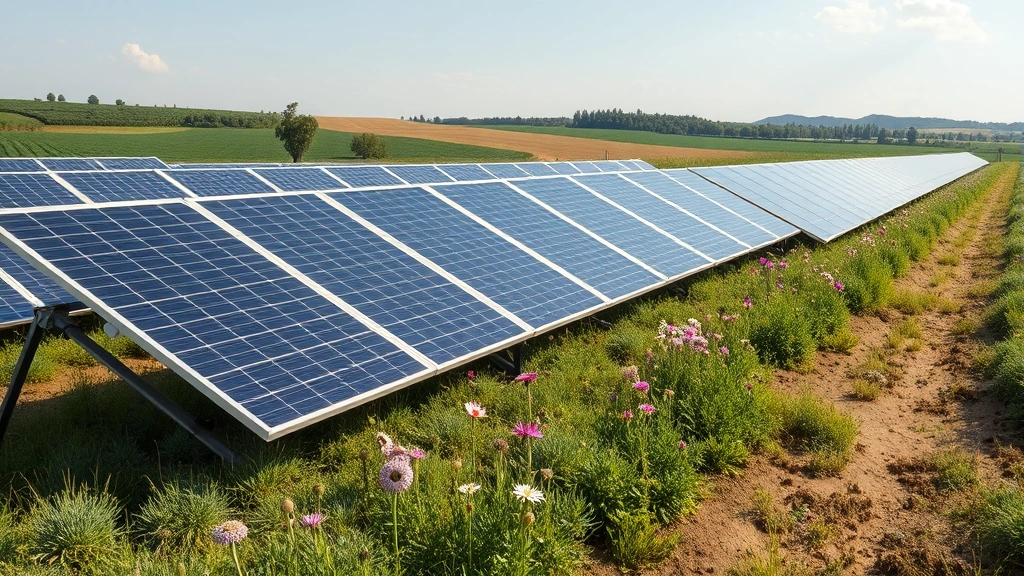
The transition to renewable energy systems represents a critical component of circular economy development. Unlike fossil fuels extracted from finite reserves, solar and wind energy harvest renewable flows that regenerate continuously. While renewable infrastructure requires material inputs, these inputs cycle through closed-loop systems rather than dissipating as atmospheric pollutants. The economic case for renewables strengthens as technology costs decline and the full environmental costs of fossil fuels receive recognition.
Regenerative agriculture offers another circular economy application with profound ecosystem implications. Rather than depleting soil through monoculture production, regenerative practices build soil organic matter, increase water infiltration, enhance biodiversity, and sequester atmospheric carbon. Farmers implementing these approaches report improved resilience to climate variability and reduced input costs despite lower per-acre yields, suggesting that true cost accounting favors regenerative systems.
Career opportunities in ecological restoration and sustainable economics expand as this transition accelerates. Professionals seeking to contribute meaningfully to environmental solutions should explore careers that help the environment, which increasingly span technical, policy, business, and community domains.
 Policy Instruments for Ecological Recovery
Transforming the relationship between economies and ecosystems requires policy instruments that correct market failures and align economic incentives with ecological sustainability. Carbon pricing mechanisms, implemented through carbon taxes or cap-and-trade systems, represent the most theoretically sound approach. By assigning monetary values to emissions, carbon pricing causes market actors to internalize climate damages and reduces demand for carbon-intensive activities.
However, carbon pricing alone proves insufficient without complementary policies addressing other ecosystem damages. Biodiversity loss, soil degradation, water depletion, and pollution require sector-specific instruments. Payment for ecosystem services programs compensate landowners for maintaining forests, wetlands, and other ecosystems that provide carbon sequestration, water purification, pollination, and flood regulation. When designed effectively, these programs create economic incentives for conservation that compete with extractive alternatives.
Natural capital accounting represents another critical policy domain. Governments that measure and report ecosystem service values and natural capital depreciation can make informed decisions about resource use and development priorities. The UN Environment Programme’s natural capital accounting initiatives support countries in integrating environmental data into national accounts, enabling true cost accounting for policy decisions.
Regulatory approaches, including habitat protection, pollution standards, and resource extraction limits, address market failures where pricing mechanisms prove politically infeasible or economically insufficient. Marine protected areas that restrict fishing preserve breeding populations and ecosystem functions, generating long-term economic benefits through sustainable fisheries that exceed short-term extraction values. Similarly, wetland protection policies prevent catastrophic losses of flood regulation and water purification services.
Understanding technical dimensions of environmental monitoring systems proves increasingly important for policy implementation. Professionals managing environmental data systems should familiarize themselves with environment variables Linux and related technical infrastructure that enables real-time monitoring of ecosystem conditions and economic-environmental integration.
Subsidy reform constitutes a powerful but politically challenging policy lever. Governments worldwide spend an estimated $7 trillion annually on subsidies for fossil fuels, agriculture, and other activities when environmental costs receive inclusion. Redirecting these resources toward renewable energy, sustainable agriculture, and ecosystem restoration could fundamentally reorient economic activity within existing fiscal frameworks.
- Carbon Taxes: Direct pricing of emissions creates immediate economic incentives for emissions reduction across all sectors
- Biodiversity Offsets: Requirements that development projects compensate for habitat loss through restoration elsewhere preserve ecosystem functions
- Circular Economy Standards: Regulations requiring product design for recyclability and material recovery reduce resource extraction demands
- Ecosystem Service Valuation: Monetary assessment of natural capital enables cost-benefit analysis that incorporates environmental factors
- Regenerative Agriculture Support: Agricultural subsidies shifted from intensive monoculture to regenerative practices rebuild soil and biodiversity
 FAQ
FAQ
How do economists measure the value of ecosystem services?
Ecosystem service valuation employs multiple methodologies including market pricing (where services trade directly), revealed preference approaches (inferring values from economic decisions), and stated preference surveys (asking people their willingness to pay for environmental protection). Carbon sequestration, for instance, receives valued based on carbon market prices or the social cost of carbon. Water purification values derive from avoided water treatment costs. These approaches remain imperfect but generate orders of magnitude more accurate representations of ecosystem value than traditional zero-valuation.
Can economies grow without harming ecosystems?
Absolute decoupling of economic growth from resource depletion and ecosystem degradation remains theoretically possible but has not been achieved at meaningful scales. Some nations reduced domestic environmental impacts while increasing consumption of imported goods, creating apparent decoupling that disappears when accounting for supply chain externalities. Growth in service economies and renewable energy sectors demonstrates potential for economic expansion without proportional resource consumption, but global evidence suggests that without deliberate policy intervention, economic growth continues driving ecosystem degradation.
What role does technology play in ecological-economic integration?
Technology enables improved environmental monitoring, renewable energy generation, resource efficiency, and circular material flows. However, technology alone cannot overcome fundamental market failures or alter incentive structures that reward ecosystem destruction. Technology proves most effective when combined with policy instruments that price environmental damages and regenerative economic models that treat natural capital as essential rather than optional.
How do developing nations balance economic development with ecosystem protection?
This tension reflects genuine conflicts between immediate poverty alleviation and long-term ecological sustainability. However, evidence increasingly suggests that unsustainable resource extraction generates temporary income while permanently reducing productive capacity. Developing nations benefit most from direct support for sustainable development pathways, technology transfer for renewable energy and regenerative agriculture, and debt relief that reduces pressure for unsustainable resource extraction to service external obligations.
What indicators best measure progress toward ecological-economic sustainability?
Genuine Progress Indicator, Adjusted Net Savings, and Natural Capital Accounts provide more comprehensive sustainability measures than GDP. Leading indicators track renewable resource harvest rates relative to regeneration rates, biodiversity indices, ecosystem service provision levels, and carbon sequestration relative to emissions. Integrated frameworks that combine economic, social, and ecological metrics enable assessment of whether development improves or degrades overall human and ecological wellbeing.


