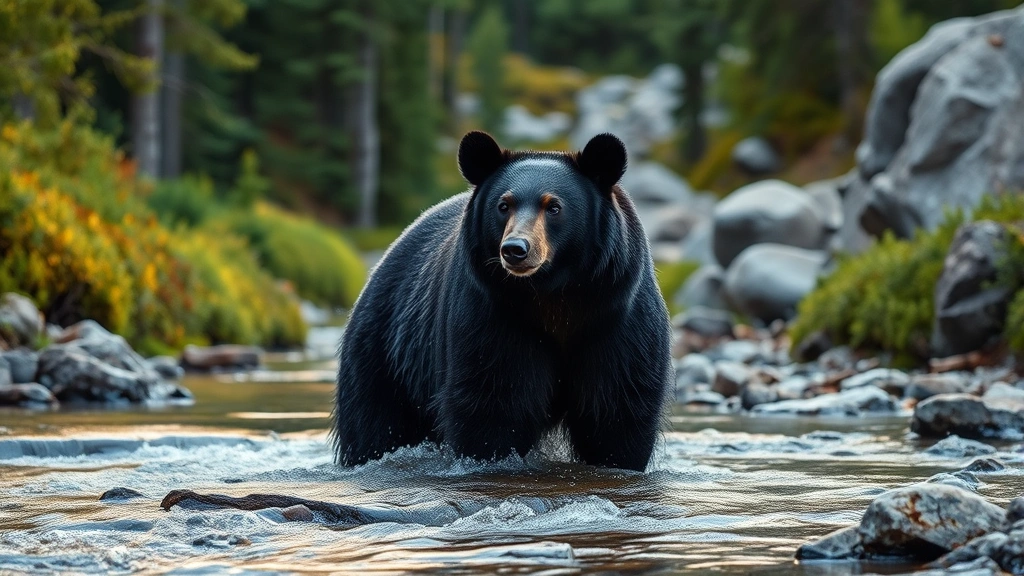
Can Bears Boost Local Economies? Study Insights on Black Bear Environment Benefits
The presence of black bears in North American ecosystems has long been viewed through a conservation lens, but emerging research reveals a compelling economic dimension that challenges traditional cost-benefit analyses. Recent studies demonstrate that black bears generate substantial revenue through wildlife tourism, ecosystem services valuation, and indirect economic multipliers that ripple through rural communities. This paradigm shift from viewing bears as liabilities to recognizing them as economic assets fundamentally reframes how we approach human-environment interaction in bear-inhabited regions.
The economic case for bear conservation extends beyond simple tourism metrics. When researchers account for ecosystem services—including seed dispersal, nutrient cycling, and forest health maintenance—black bears emerge as keystone species with measurable monetary value. A growing body of ecological economics literature suggests that protecting bear populations yields higher long-term returns than extractive industries, particularly when accounting for environmental degradation costs that traditional economic models ignore.
The Economic Value of Black Bear Tourism
Wildlife tourism centered on black bears represents one of the fastest-growing sectors in rural American economies. According to research published by the World Bank’s Environmental Economics Division, wildlife viewing generates over $29 billion annually across North America, with bears comprising a significant portion of this value. In regions like the Great Smoky Mountains and Appalachian corridor, black bear sightings drive tourism spending that supports hotels, restaurants, guide services, and photography businesses.
The economic multiplier effect amplifies initial tourism spending. When visitors spend money on bear-watching excursions, their expenditures circulate through local economies multiple times. A single bear-viewing trip might generate $500-$1,500 in direct spending, but economic modeling suggests each dollar creates an additional $1.50-$2.00 in secondary economic activity. This multiplier effect means that protecting black bear populations directly sustains employment in hospitality, retail, and service sectors that might otherwise decline as traditional resource extraction industries contract.
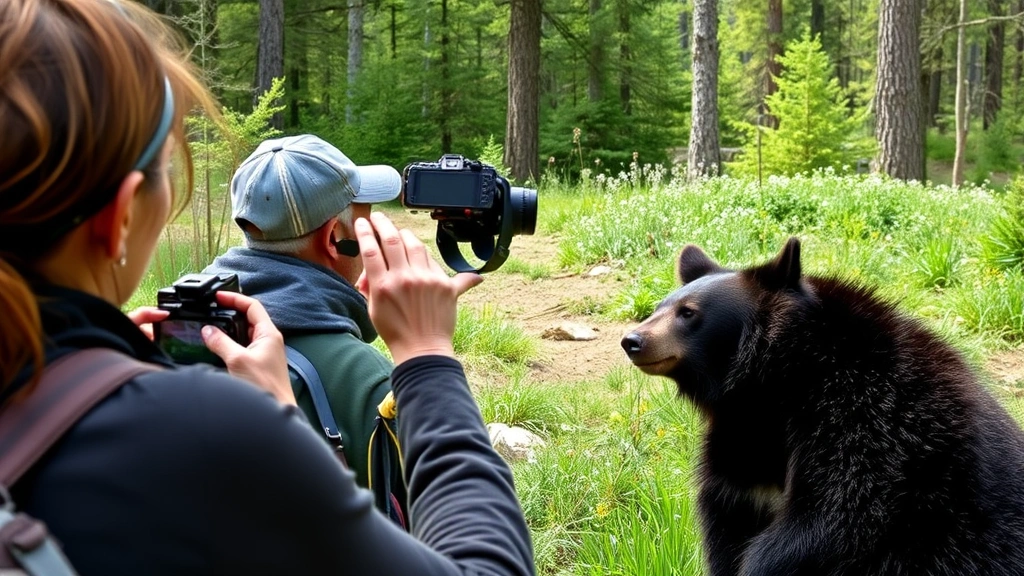
Photography and ecotourism enterprises have emerged as particularly lucrative bear-adjacent businesses. Professional wildlife photographers report that images of bears command premium prices in stock photography markets, while bear-focused tourism packages consistently outperform other wildlife offerings. Research from ecological economics journals indicates that a single charismatic megafauna species like the black bear can increase regional tourism receipts by 15-25% in accessible habitat areas.
Ecosystem Services and Natural Capital
Beyond direct tourism revenue, black bears provide ecosystem services that economists increasingly quantify in monetary terms. As omnivorous consumers and seed dispersers, bears influence forest composition, nutrient distribution, and vegetation patterns across vast territories. When bears consume berries, nuts, and salmon, they transport nutrients from aquatic to terrestrial ecosystems and disperse seeds across landscapes, directly enhancing forest productivity and resilience.
The valuation of these services requires sophisticated ecological accounting. The United Nations Environment Programme has developed frameworks for assigning monetary value to ecosystem functions. For black bears, researchers estimate that nutrient cycling services alone—the value of nitrogen and phosphorus redistribution through bear foraging—may be worth $5-$15 million annually across their North American range. Forest health improvements driven by bear-mediated seed dispersal translate to increased timber productivity and carbon sequestration capacity, further monetizing ecosystem benefits.
Carbon sequestration represents another quantifiable service. Healthy forests maintained through impacts humans have had on the environment include bear-mediated ecosystem engineering. Bears promote forest diversity and structural complexity, which enhance carbon storage capacity. At current carbon pricing models ($50-$150 per metric ton CO2), the carbon sequestration services provided by bear-influenced forests in a single state might exceed $20-$50 million annually. These calculations demonstrate that preserving black bear habitat preserves natural capital assets that provide perpetual economic returns.
Regional Case Studies and Revenue Impact
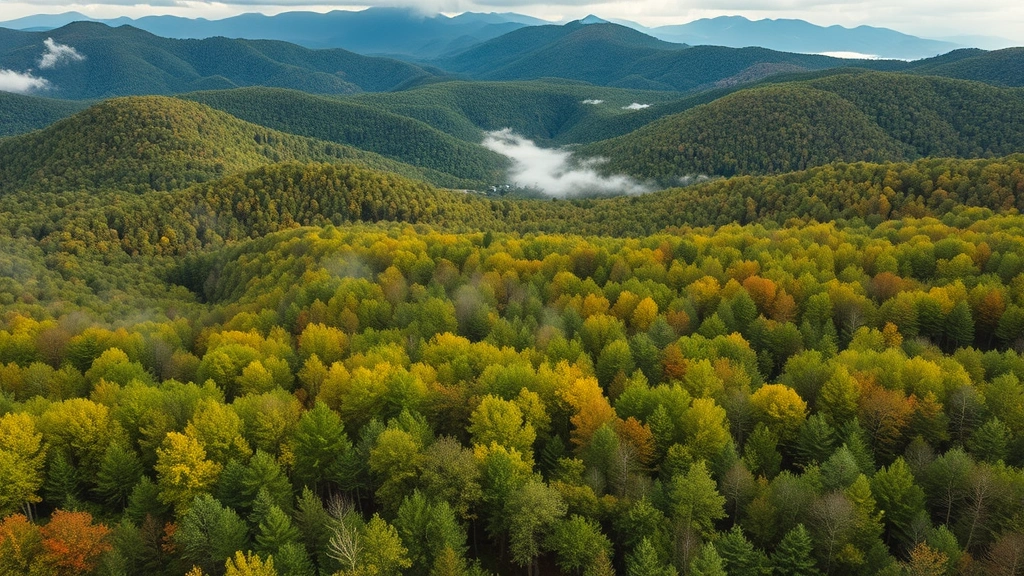
Specific regional analyses reveal concrete economic benefits from black bear conservation. The Great Smoky Mountains National Park, where black bears represent the primary large carnivore, attracts over 12 million annual visitors, with bears cited as a primary draw by approximately 40% of surveyed visitors. Economic impact studies attribute $200-$300 million annually to bear-related tourism in the tri-state region surrounding the park. This revenue supports thousands of jobs and generates substantial tax revenue for communities that historically relied on resource extraction.
The Adirondack region of New York presents another instructive case. Following black bear population recovery in the 1980s-1990s, tourism expenditures increased substantially. Local economies shifted from timber-dependent models to service-oriented tourism economies, with bear-watching and nature photography generating an estimated $15-$25 million annually. This economic transition occurred alongside improved environmental outcomes, demonstrating that economic and ecological interests can align when proper management frameworks exist.
In British Columbia, bear viewing tourism generates approximately $100 million annually, supporting remote communities that would otherwise face economic decline. Indigenous communities have particularly benefited, developing bear-viewing enterprises that respect traditional ecological knowledge while generating sustainable income. These cases illustrate how human-environment interaction can be economically beneficial when structured around conservation principles.
Challenges and Human-Bear Conflict Economics
The economic case for bears faces significant complications from human-bear conflicts. Property damage, livestock predation, and personal safety incidents impose measurable costs on rural communities. Quantifying these costs requires careful analysis: direct losses (damaged property, killed livestock) average $500,000-$1.5 million annually across affected states, while indirect costs (deterrent infrastructure, management programs) add another $1-$3 million annually per state.
However, cost-benefit analyses reveal that tourism revenues substantially exceed conflict costs in most regions. Where bears generate $100+ million in annual tourism spending, conflict costs typically represent 1-3% of total benefits. This economic reality suggests that investing in conflict mitigation proves more economically rational than bear removal programs. Insurance mechanisms, compensation funds, and preventive infrastructure (electric fencing, bear-resistant garbage containers) cost less than foregone tourism revenue.
The distribution of costs and benefits creates equity challenges, however. Urban tourists and distant beneficiaries capture most tourism revenue, while rural residents bear disproportionate conflict costs. Addressing this inequity requires mechanisms that redirect tourism revenues toward affected communities—such as dedicated compensation funds, revenue-sharing agreements, and employment opportunities in bear-management enterprises. Economic research suggests that transparent cost-sharing mechanisms increase local support for bear conservation by 40-60%.
Sustainable Management Frameworks
Effective bear management requires integrating economic analysis with ecological science. Conservation organizations increasingly employ economic tools to justify protective policies. Payments for ecosystem services (PES) programs offer direct compensation to landowners who maintain bear habitat, creating financial incentives aligned with conservation. These programs have proven particularly effective in Appalachian regions where private landowners control critical habitat corridors.
Adaptive management frameworks that monitor both ecological and economic outcomes enable course corrections based on empirical evidence. When tourism revenue declines or conflict costs spike, management strategies can adjust through dynamic pricing, habitat restoration investments, or conflict mitigation intensification. This approach contrasts with static policies that fail to respond to changing conditions and emerging economic opportunities.
Technology offers new economic opportunities for bear conservation. Real-time GPS tracking data enables precision management that minimizes conflicts while maximizing tourism value. Drone surveillance, camera trap networks, and AI-powered monitoring systems reduce management costs while improving decision-making quality. These technologies represent investments that yield returns through improved efficiency and expanded revenue opportunities.
International policy frameworks increasingly recognize bear conservation as an economic development strategy. The UNEP’s Natural Capital Accounting initiative encourages countries to incorporate ecosystem service values into national accounting systems, which would formalize the economic case for bear protection. As ecological economics becomes mainstream policy, the financial case for conservation strengthens substantially.
Building resilience in bear-dependent economies requires diversification beyond wildlife tourism. Supporting value-added agricultural products, artisanal crafts, and cultural tourism creates economic stability that reduces vulnerability to wildlife-related shocks. Communities succeeding in bear-economy transitions are those that view bears as anchors for broader economic diversification rather than sole economic solutions.
Workforce development represents a critical but often overlooked economic dimension. Training programs for bear guides, wildlife photographers, habitat restoration workers, and conservation technicians create career pathways in rural communities. Investing in education and skills development ensures that bear-based economies generate quality employment rather than low-wage seasonal work. Research suggests that formalized training programs increase average earnings in wildlife tourism by 30-50% compared to unstructured approaches.
Frequently Asked Questions
How much money do black bears generate for local economies annually?
Black bear-related tourism generates an estimated $200-$300 million annually across North America, with ecosystem services adding another $50-$100 million in quantified benefits. These figures vary significantly by region, with areas like the Great Smoky Mountains generating substantially higher revenues than remote wilderness regions with lower visitor accessibility.
Do ecosystem services really translate to economic value?
Yes, increasingly sophisticated ecological accounting methods assign monetary values to ecosystem functions. Nutrient cycling, seed dispersal, carbon sequestration, and forest health improvements provided by bears have measurable economic value when assessed using standard environmental economics frameworks. However, these valuations contain uncertainty and require transparent methodology disclosure.
How do we address the costs borne by rural residents experiencing bear conflicts?
Effective solutions include dedicated compensation funds, revenue-sharing mechanisms that direct tourism income to affected communities, subsidized conflict-prevention infrastructure, and employment opportunities in bear management. Successful programs combine financial mechanisms with transparent communication about cost-benefit analyses that demonstrate net economic benefits of conservation.
Can bear economies replace declining resource extraction industries?
Bear-based tourism can provide substantial income but typically cannot fully replace resource extraction employment without economic diversification. Successful transitions involve developing multiple economic sectors—tourism, agriculture, crafts, technology—that collectively replace lost resource extraction jobs while improving long-term sustainability and resilience.
What role does international policy play in bear conservation economics?
International frameworks increasingly formalize ecosystem service valuation in national accounting systems, strengthening the financial case for conservation. Global sustainability initiatives push countries toward natural capital accounting that recognizes bear conservation’s economic value, influencing policy decisions and investment priorities.


