
Can Biodiversity Boost Economies? Expert Insights
The relationship between biodiversity and economic growth has long been treated as a trade-off: preserve nature or pursue prosperity. However, mounting scientific evidence and economic analysis suggest this dichotomy is fundamentally flawed. Leading economists, conservation scientists, and policy experts now demonstrate that thriving ecosystems and robust economies are not opposing forces—they are deeply interconnected systems where biodiversity loss directly undermines economic resilience, productivity, and long-term wealth creation.
Recent global assessments value ecosystem services at trillions of dollars annually, yet these natural assets remain largely invisible in traditional economic accounting. From pollination services worth billions to climate regulation and water purification, biodiversity generates tangible economic returns that far exceed the costs of conservation. This article explores expert insights into how biodiversity strengthens economies, the mechanisms through which ecological health drives economic performance, and the emerging frameworks transforming how we measure and value natural capital.
The Economic Value of Ecosystem Services
Biodiversity generates economic value through ecosystem services—the benefits humans derive from natural systems. The World Bank estimates that ecosystem services globally are worth approximately $125 trillion annually, yet conventional GDP accounting excludes these contributions entirely. This accounting gap creates perverse incentives where destroying ecosystems appears economically rational in short-term analyses, despite catastrophic long-term costs.
Expert analysis reveals four primary categories of ecosystem services with direct economic implications. Provisioning services include food, freshwater, timber, and pharmaceuticals derived from biodiverse systems. Supporting services—nutrient cycling, soil formation, pollination, and water purification—form the foundation enabling agricultural productivity and human settlement. Regulating services encompassing climate regulation, flood control, and disease suppression prevent economic losses exceeding billions annually. Cultural services including recreation, aesthetic value, and spiritual significance generate tourism revenue and quality-of-life benefits reflected in property values and human health outcomes.
A comprehensive study examining global pollination services found that crop pollination alone—dependent on biodiversity of insects, birds, and bats—provides economic value between $235 billion and $577 billion annually. Yet agricultural intensification and pesticide use destroy pollinator populations, creating hidden costs that eventually surface as reduced yields, increased input costs, and market volatility. Regions maintaining diverse semi-natural habitats adjacent to farmland experience higher pollinator populations, greater crop yields, and improved economic stability compared to monoculture-dependent regions.
Water purification services exemplify how biodiversity directly impacts economic efficiency. Wetlands, forests, and riparian zones naturally filter contaminants, preventing costly treatment requirements. New York City’s watershed protection strategy illustrates this economics perfectly: investing $1.5 billion in ecosystem restoration in the Catskills proved far cheaper than constructing water treatment facilities costing $8-10 billion, while simultaneously providing co-benefits including flood control, carbon sequestration, and habitat restoration.
Biodiversity as Economic Infrastructure
Understanding types of environment and their economic functions reveals that biodiversity functions as critical infrastructure comparable to roads, ports, and power grids. Yet unlike human-built infrastructure receiving dedicated investment and protection, natural infrastructure faces persistent underinvestment and degradation. Economists increasingly recognize this infrastructure analogy as essential for reframing biodiversity protection as economic necessity rather than environmental luxury.
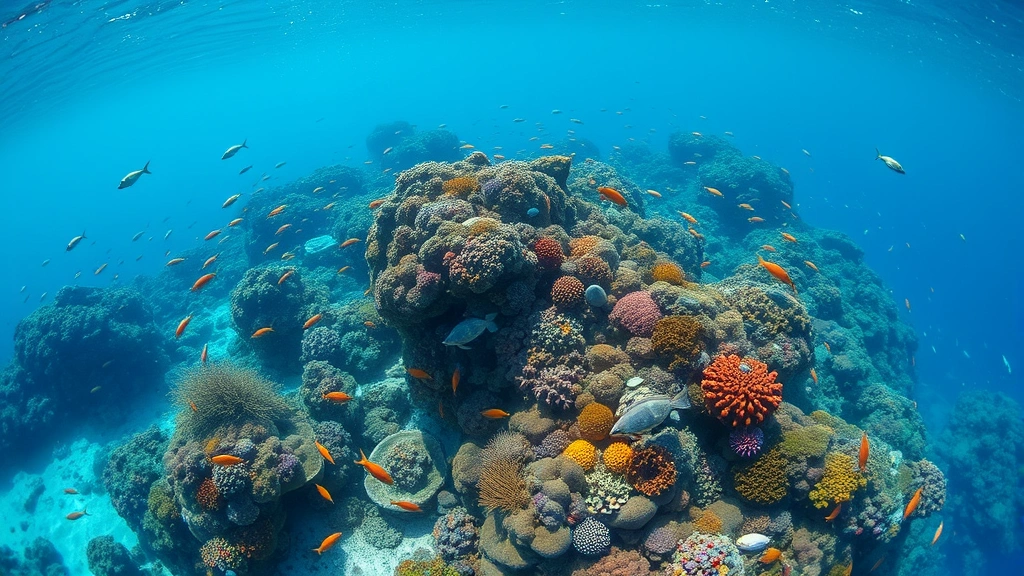
Coral reef ecosystems demonstrate infrastructure economics with particular clarity. These biodiverse systems protect coastlines from storms, support fisheries feeding 500 million people, and generate $375 billion annually through tourism and fisheries. Yet coral loss accelerates due to warming oceans and pollution, directly threatening this economic foundation. The Great Barrier Reef’s degradation already costs Australia’s economy $1 billion annually in tourism losses, with projections suggesting $5-10 billion in cumulative losses by 2050 without intervention. Restoration investments prove economically rational from purely financial perspectives, yet require recognizing reef biodiversity as economic infrastructure deserving capital allocation comparable to port facilities.
Mangrove forests provide similar infrastructure functions: protecting coastlines, supporting fishery productivity, filtering water, and storing carbon. Yet mangrove conversion to aquaculture and development destroys this infrastructure, generating short-term gains while imposing long-term costs through increased storm damage, fishery collapse, and coastal erosion. Economic analysis consistently shows mangrove conservation generates 5-10 times greater long-term economic returns than conversion alternatives, yet conversion continues due to accounting systems ignoring infrastructure losses.
Agricultural Productivity and Food Security
Agricultural economics increasingly demonstrates that biodiversity within and surrounding farming systems directly determines productivity, resilience, and profitability. The relationship between human-environment interaction in agricultural contexts reveals that maximum short-term yields from monoculture systems consistently underperform biodiverse systems over medium and long-term horizons.
Soil biodiversity provides perhaps the clearest productivity link. A single gram of healthy soil contains 1 billion microorganisms, including bacteria, fungi, and arthropods that build soil structure, enhance nutrient availability, suppress diseases, and improve water retention. Industrial agriculture’s reliance on tillage, synthetic fertilizers, and pesticides devastates soil biodiversity, requiring ever-increasing chemical inputs to maintain yields. Studies comparing conventional and biodiverse agricultural systems reveal that diverse farming approaches achieve comparable yields with 30-50% lower input costs, while generating superior long-term productivity as soil health improves over time.
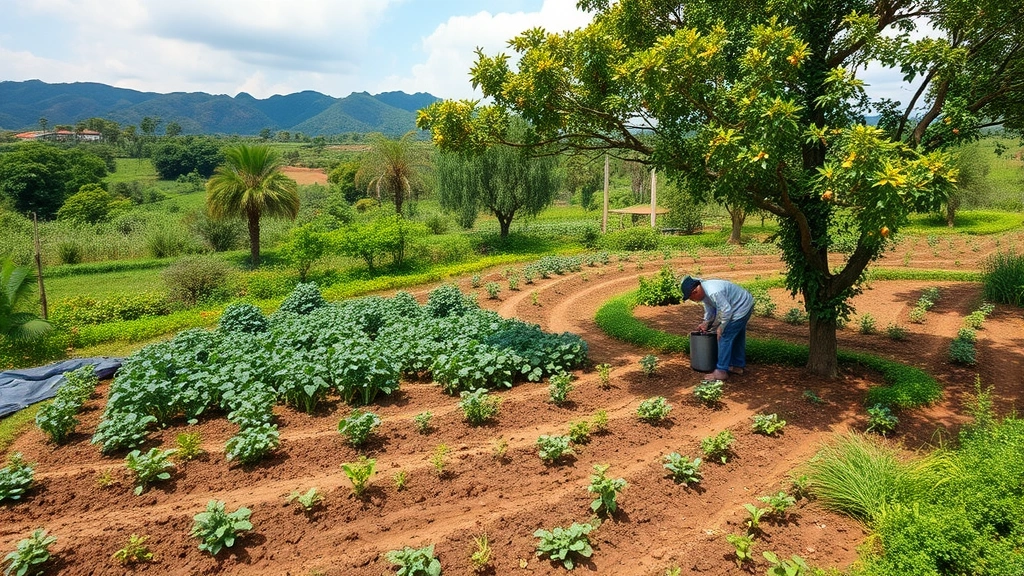
Agroforestry systems integrating trees with crops exemplify biodiversity-driven productivity gains. These systems maintain 2-3 times greater species diversity than monocultures while increasing total productivity by incorporating multiple products (nuts, fruits, timber, fodder) alongside primary crops. Economic analysis shows agroforestry systems generate 20-40% higher net returns per hectare than conventional monoculture farming when ecosystem service values are quantified, while simultaneously improving resilience to climate variability and price volatility.
Pest and disease management reveals additional economic benefits of agricultural biodiversity. Natural pest control from predatory insects and birds reduces crop losses by 20-50% in biodiverse systems compared to pesticide-dependent monocultures. The economic value of natural pest control globally exceeds $50 billion annually, yet pesticide use continues expanding, destroying the biological control systems generating these savings. Farmers adopting integrated pest management incorporating biodiversity conservation reduce pesticide costs by 30-60% while achieving superior yield stability and crop quality.
Tourism and Recreation Economics
Biodiversity-rich environments generate enormous tourism revenue, yet this economic value remains largely unaccounted for in conservation cost-benefit analyses. Global nature-based tourism generates over $600 billion annually, representing 5-10% of global GDP in many developing nations. This sector depends entirely on biodiversity conservation, yet receives minimal policy support compared to extractive industries damaging the ecosystems generating tourism revenue.
Costa Rica exemplifies how biodiversity conservation creates economic prosperity. The nation protected 25% of its territory in national parks and reserves while building world-class ecotourism infrastructure. Tourism now generates 3% of GDP and 15% of employment, surpassing traditional exports like bananas and coffee in economic importance. Critically, this economic transition required initial conservation investment that appeared economically irrational in short-term analyses, yet generated returns exceeding all alternative land uses over 20-year horizons.
Wildlife viewing tourism demonstrates the economic premium biodiversity commands. African safaris generate $20-30 billion annually, with individual tourists paying $5,000-15,000 weekly for wildlife viewing. This revenue vastly exceeds returns from extractive industries like hunting or livestock, yet wildlife populations face persistent pressure from poaching and habitat loss. Economic analysis shows that protecting elephant populations for tourism generates $23,000 lifetime value per animal, compared to $1,000-2,000 from hunting, yet poaching continues due to weak enforcement and short-term incentive misalignment.
Recreation economics extends beyond international tourism to local and domestic recreation markets. Hiking, fishing, bird-watching, and nature-based recreation generate billions in spending annually while providing health benefits reducing healthcare costs. Studies linking access to biodiverse natural areas with reduced obesity, mental health disorders, and stress-related conditions document economic savings exceeding $2,000-5,000 per person annually through healthcare cost reduction alone.
Climate Resilience and Risk Mitigation
Understanding how humans affect the environment through climate forcing reveals that biodiversity provides critical resilience mechanisms protecting economic assets. Diverse ecosystems demonstrate superior capacity to withstand climate shocks, maintain productivity during extreme events, and recover rapidly from disturbances. This resilience creates measurable economic value through reduced disaster losses and improved production stability.
Forest biodiversity provides climate regulation services worth trillions of dollars through carbon sequestration and climate stabilization. Tropical forests store 250-300 tons of carbon per hectare, with global forest carbon stocks valued at $2+ trillion at carbon prices reflecting climate damage costs. Yet deforestation continues at 10 million hectares annually, releasing 4-5 billion tons of CO2 while destroying this climate regulation infrastructure. Economic analysis shows forest conservation generates climate benefits worth $5,000-20,000 per hectare annually, yet land-use change for agriculture and development continues due to accounting systems externalizing climate costs.
Mangrove and wetland ecosystems provide dual benefits of carbon sequestration and coastal protection. Mangroves sequester carbon 40 times faster than terrestrial forests, storing carbon in waterlogged soils preventing decomposition. Simultaneously, mangrove forests protect coastlines from storms and sea-level rise, preventing damages worth billions annually. Yet mangrove loss accelerates due to aquaculture expansion, with mangrove conversion destroying climate regulation and coastal protection services worth $20,000-50,000 per hectare annually in present-value terms.
Agricultural biodiversity provides climate resilience through genetic diversity enabling adaptation to changing conditions. Crop varieties adapted to diverse growing conditions, pest pressures, and climate patterns provide insurance against monoculture vulnerability. Yet agricultural industrialization has eliminated 75% of crop genetic diversity over past century, concentrating production on a handful of high-yielding varieties vulnerable to climate variation and pests. Maintaining agricultural biodiversity requires modest investment compared to economic losses from crop failures, yet receives minimal policy support.
Innovation and Biotechnology Markets
Biodiversity represents an enormous untapped resource for pharmaceutical, agricultural, and industrial innovation. Approximately 25% of pharmaceutical drugs originate from rainforest plants, with rainforest biodiversity representing potential drug pipeline worth hundreds of billions of dollars. Yet pharmaceutical companies invest minimally in bioprospecting from remaining biodiverse regions, while those regions continue losing species at rates exceeding discovery capacity.
Biomimicry—designing materials and processes inspired by biological solutions—represents emerging innovation economy entirely dependent on biodiversity. Biological structures, processes, and systems provide templates for solving engineering challenges with superior efficiency. Spider silk proteins inspire development of stronger, lighter materials. Leaf structures inform photovoltaic design. Biological waste management systems inspire industrial processes. Yet this innovation economy remains nascent due to limited investment in biodiversity science and limited mechanisms compensating source countries for biological knowledge contributing to innovation.
Agricultural biotechnology increasingly recognizes genetic resources from traditional crops and wild relatives as critical for breeding crops adapted to climate change. Crop wild relatives—ancestral species and related wild plants—contain genetic variation enabling traits like drought tolerance, disease resistance, and heat adaptation essential for future food security. Yet habitat loss threatens crop wild relatives with extinction, destroying genetic resources worth trillions in future agricultural productivity. Protecting crop wild relatives in their native habitats costs $5-10 per hectare annually, generating expected returns of $10,000+ per hectare through breeding improvements enhancing productivity and resilience.
Measuring Natural Capital
Traditional economic accounting systems exclude natural capital from GDP calculations, creating systematic undervaluation of biodiversity and ecosystem services. Pioneering work on positive impacts humans have on the environment demonstrates that natural capital accounting methodologies enable more accurate economic assessment of conservation investments. The UN Environment Programme has developed natural capital accounting frameworks enabling nations to quantify ecosystem service values and track natural capital depletion alongside traditional economic measures.
Natural capital accounting reveals shocking economic losses masked by conventional GDP reporting. Indonesia’s forest loss, for example, reduces measured GDP by only 0.5% annually despite destroying $5-10 billion in ecosystem services annually. If ecosystem service losses were incorporated into GDP calculations, Indonesia’s economic growth would appear negative in most years, reversing policy priorities toward conservation investment. Botswana’s wildlife conservation generates 3% of GDP through tourism, yet investment in wildlife protection remains minimal due to accounting systems treating wildlife as free goods with no opportunity cost.
The Genuine Progress Indicator (GPI) and Inclusive Wealth Index represent alternative accounting frameworks incorporating natural capital depletion, environmental costs, and social factors alongside traditional GDP. Nations adopting these frameworks—including Costa Rica, Bhutan, and increasingly European Union members—demonstrate that environmental conservation and economic prosperity align when comprehensive accounting reveals true costs and benefits. Research from the World Wildlife Fund indicates nations with highest genuine progress indicators consistently maintain stronger biodiversity protection than GDP-maximizing nations.
Payment for ecosystem services (PES) mechanisms represent policy innovations translating ecosystem service values into market mechanisms incentivizing conservation. Programs compensating landowners for maintaining forests, wetlands, or other biodiverse habitats create direct economic incentives aligning private interests with conservation. Costa Rica’s PES program has protected 1 million hectares through direct payments, generating forest recovery and biodiversity restoration while providing income to rural communities. Expansion of PES mechanisms globally could unlock trillions in conservation investment currently constrained by inadequate funding mechanisms.
Corporate natural capital accounting increasingly recognizes that supply chain resilience depends on ecosystem health. Companies relying on agricultural inputs, freshwater, or natural materials face material risks from biodiversity loss and ecosystem degradation. Investors increasingly demand that companies quantify natural capital dependencies and implement mitigation strategies. This investor pressure, combined with regulatory requirements in leading economies, drives corporate investment in biodiversity conservation exceeding government spending in many regions.
FAQ
How much economic value does biodiversity provide annually?
Global ecosystem services generated by biodiversity are valued at approximately $125-145 trillion annually, though estimates vary based on valuation methodologies. This vastly exceeds global GDP of $100 trillion, illustrating that biodiversity generates economic value exceeding all human economic activity combined. However, these values remain largely invisible in conventional economic accounting.
Which industries depend most heavily on biodiversity?
Agriculture, tourism, pharmaceuticals, and fisheries depend most directly on biodiversity. Agriculture relies on pollinator biodiversity, soil microorganisms, and genetic diversity in crop varieties. Tourism depends on wildlife and scenic natural areas. Pharmaceuticals derive 25% of drugs from wild species. Fisheries depend entirely on aquatic biodiversity. Beyond these sectors, manufacturing, energy, and construction all depend on ecosystem services including water purification, climate regulation, and natural disaster prevention.
What is the economic cost of biodiversity loss?
The Intergovernmental Science-Policy Platform on Biodiversity and Ecosystem Services (IPBES) estimates that biodiversity loss costs $2.7 trillion annually in ecosystem service losses and economic damages. This includes agricultural productivity losses, increased disease transmission, climate damages, and tourism revenue losses. These costs are expected to double by 2050 without intervention, making biodiversity loss among the most economically damaging global challenges.
Can biodiversity protection and economic growth coexist?
Yes, extensive evidence demonstrates that biodiversity conservation and economic growth are complementary when measured using comprehensive accounting frameworks. Nations investing in ecosystem protection consistently achieve superior long-term economic growth, greater resilience to economic shocks, and improved quality of life compared to extractive-focused economies. The apparent trade-off between conservation and growth results from accounting systems externalizing environmental costs.
What policy mechanisms best incentivize biodiversity conservation?
Payment for ecosystem services, natural capital accounting, carbon pricing, biodiversity-focused taxation, and regulatory frameworks establishing environmental standards all prove effective. Combinations of mechanisms prove most successful, with payments for ecosystem services addressing market failures while regulation establishes minimum environmental standards. Critically, successful policies treat biodiversity as economic infrastructure requiring investment and protection comparable to human-built infrastructure.
How can businesses profit from biodiversity conservation?
Businesses profit through ecosystem service provision (water purification, pollination, pest control), tourism revenue, pharmaceutical innovation, agricultural productivity improvements, supply chain resilience, and carbon credit markets. Companies increasingly recognize that ecosystem health directly impacts profitability through reduced input costs, supply chain stability, and regulatory compliance. Sustainable business models incorporating biodiversity conservation consistently outperform extractive models over 10+ year horizons.


