
Electric Cars: Environmental Impact? Expert Insights
The transition to electric vehicles represents one of the most significant shifts in transportation technology of our era. Yet a persistent question haunts the conversation: are electric cars bad for the environment? This question deserves nuanced analysis rather than simplistic answers. While electric vehicles (EVs) are often promoted as the environmental solution to climate change, the reality involves examining their entire lifecycle—from manufacturing through disposal—and understanding how they interact with broader energy systems and economic structures.
The environmental case for electric cars is not automatically positive simply because they produce zero tailpipe emissions. Instead, their environmental benefit depends critically on the energy grid’s composition, manufacturing practices, battery production methods, and the broader definition of environment science we apply when measuring impact. This comprehensive analysis explores the multifaceted relationship between electric vehicles and environmental sustainability from ecological economics and environmental science perspectives.
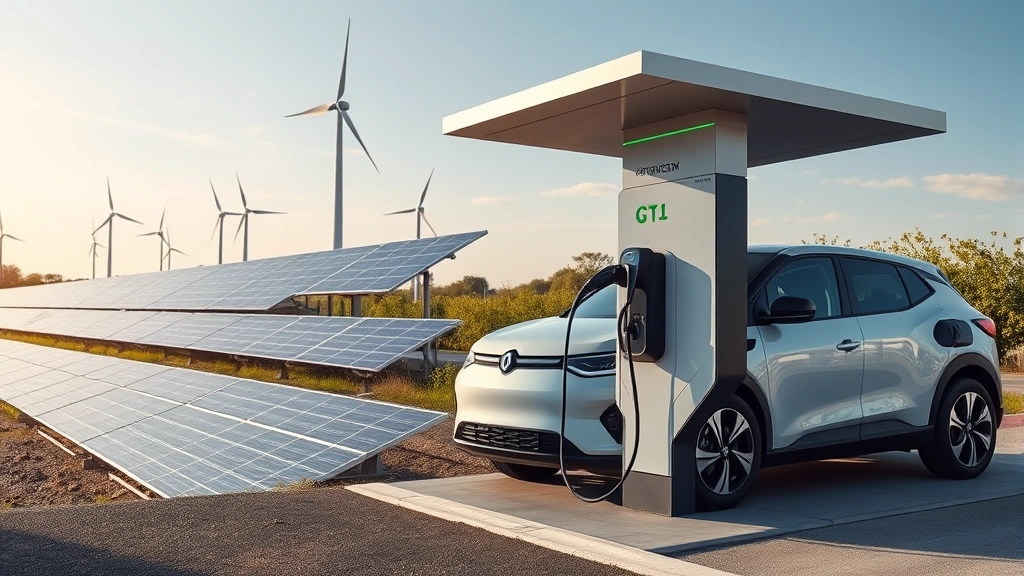
Battery Production and Mining Impacts
The environmental burden of electric vehicles begins long before the vehicle reaches a showroom. Battery production—essential for EV functionality—requires extraction of critical minerals including lithium, cobalt, nickel, and manganese. According to research from the World Bank, demand for lithium alone is projected to increase by 40 times by 2040 as EV adoption accelerates globally. This mining explosion carries profound environmental consequences that challenge the “clean vehicle” narrative.
Lithium extraction in South America’s “Lithium Triangle” (Chile, Argentina, Bolivia) consumes enormous quantities of water in already water-stressed regions. A single ton of lithium requires approximately 500,000 gallons of water to extract, devastating local aquifers and agricultural communities dependent on groundwater. The human environment interaction in these mining regions demonstrates how solving one environmental problem in wealthy nations can create severe ecological crises elsewhere.
Cobalt mining in the Democratic Republic of Congo raises additional ethical and environmental concerns. Beyond environmental degradation from mining operations, cobalt extraction often involves exploitative labor practices and contributes to regional instability. Nickel mining generates acidic mine drainage that contaminates waterways for decades. These impacts represent genuine environmental externalities rarely factored into consumer perceptions of EV “greenness.”
The manufacturing process itself is energy-intensive. Producing an EV battery requires approximately 61-106 megajoules of energy per kilowatt-hour of capacity, depending on production location and methods. This front-loaded environmental cost means an electric vehicle must operate for several years before offsetting the emissions embedded in its production.

Lifecycle Emissions Analysis
When examining whether electric cars are environmentally problematic, lifecycle assessment (LCA) provides crucial perspective. A comprehensive LCA considers manufacturing emissions, operational emissions, and end-of-life impacts. Research published in environmental economics journals demonstrates that most EVs break even on emissions within 15,000 to 30,000 miles of driving in regions with moderately clean electricity grids.
In regions powered primarily by renewable energy—such as Norway, which generates 98% of electricity from hydropower—this breakeven point occurs much faster, sometimes within 5,000 miles. Conversely, in regions relying heavily on coal power, the advantage becomes marginal or nonexistent for several years. This geographic variation is critical: an EV in coal-dependent Poland presents different environmental implications than an identical vehicle in wind-powered Denmark.
Over a vehicle’s typical 200,000-mile lifespan, lifecycle emissions for electric vehicles in most developed nations remain 50-70% lower than comparable gasoline vehicles, even accounting for manufacturing impacts. However, this advantage shrinks considerably in coal-dependent regions and depends entirely on future grid decarbonization trajectories. The environmental benefit is not inherent to the vehicle itself but rather contingent upon broader energy system transformation.
Grid Energy Sources Matter
The environmental performance of electric vehicles is inextricably linked to electricity grid composition—a factor often overlooked in simplified environmental arguments. An EV charged from a renewable-heavy grid represents genuine emissions reduction; the same vehicle charged primarily from coal-generated electricity merely shifts emissions from tailpipes to power plants while potentially increasing total emissions due to thermal conversion inefficiencies.
Global grid composition varies dramatically. In 2023, renewable energy comprised approximately 30% of global electricity generation, with fossil fuels still dominating at roughly 62%. As grids decarbonize—a process already accelerating in Europe, North America, and increasingly in Asia—the environmental advantage of existing EVs automatically improves without any vehicle modifications. This creates a temporal dimension to EV environmental assessment: a car purchased today becomes cleaner tomorrow simply through grid improvements.
This grid-dependent reality has profound implications for how humans affect the environment through transportation choices. Policymakers face a critical decision: should environmental incentives for EV adoption be contingent on grid decarbonization targets? Current policies in most nations provide equal subsidies regardless of regional grid composition, potentially misallocating resources.
Economic Incentives and Market Dynamics
From ecological economics perspectives, electric vehicle promotion reveals important market failure dynamics. The environmental costs of battery mining, fossil fuel extraction, and energy production are not fully reflected in market prices. Governments worldwide subsidize EV purchases through tax credits, rebates, and infrastructure investments while simultaneously subsidizing fossil fuel production—creating contradictory incentive structures.
The United Nations Environment Programme estimates global fossil fuel subsidies exceeded $7 trillion annually when accounting for environmental externalities. These subsidies artificially depress gasoline prices, making EVs appear more economically attractive than they would in an unsubsidized market. This creates a peculiar situation where environmental policy relies on correcting one market failure (EV subsidies) to counteract another (fossil fuel subsidies), rather than addressing root causes.
The economic incentive structure also shapes which populations benefit from EV adoption. Tax credits for vehicle purchases primarily benefit higher-income households capable of purchasing new vehicles, while lower-income populations continue relying on used gasoline vehicles or public transportation. This distributional inequality raises environmental justice concerns: wealthier populations receive subsidies for environmental improvements while bearing fewer environmental burdens from mining and energy production.
Water Resources and Ecosystem Disruption
Beyond mining impacts, electric vehicle proliferation affects water resources through altered electricity demand patterns. Thermal power plants—whether coal, natural gas, or nuclear—consume enormous quantities of water for cooling. Expanded electricity demand from EV charging increases water consumption in water-stressed regions, potentially exacerbating conflicts between agricultural, municipal, and energy sectors.
Renewable energy sources present different water challenges. While wind and solar require minimal operational water, manufacturing solar panels and wind turbines involves water-intensive processes. Battery manufacturing similarly demands substantial water inputs, particularly in arid regions where lithium extraction occurs. The cumulative water footprint of transitioning to electric vehicles is substantial and unevenly distributed geographically.
Ecosystem disruption extends beyond water concerns. Mining operations fragment habitats, destroying biodiversity hotspots to supply battery materials for vehicles in distant wealthy nations. The types of environment most affected—tropical rainforests, wetlands, and grasslands—are often those with highest biodiversity value and greatest importance for global carbon cycling.
The Carbon Payback Period
Understanding electric vehicles’ environmental impact requires calculating their carbon payback period—the time required for operational emissions reductions to offset manufacturing emissions. This calculation varies substantially based on grid composition and vehicle efficiency.
In a renewable-heavy grid, an average EV achieves carbon payback within 1-3 years of typical driving. In a coal-dominated grid, this period extends to 5-8 years or longer. For consumers in transitional grids improving toward renewable energy, the payback period continuously shrinks. A vehicle purchased today in a region transitioning to 50% renewable energy will achieve faster payback than calculated at purchase time, as the grid continues improving.
This temporal dimension creates policy complexity. Environmental advocates promoting immediate EV adoption argue that vehicles purchased today will benefit from future grid improvements, justifying current purchases even in fossil-fuel-dependent regions. Critics counter that resources devoted to EV subsidies might generate greater environmental returns if directed toward grid decarbonization or public transportation infrastructure, which would improve environmental performance across all vehicles regardless of powertrain.
Alternative Solutions and Complementary Strategies
Examining whether electric cars are bad for the environment ultimately requires considering alternative transportation solutions and systemic approaches. Electric vehicles represent one pathway toward transportation decarbonization, but not necessarily the optimal pathway for all contexts or populations.
Public transportation systems—buses, trains, and rapid transit—can reduce per-capita emissions by 75-90% compared to private vehicles, whether electric or gasoline-powered. Yet most developed nations have dramatically underinvested in public transportation while subsidizing private vehicle ownership through infrastructure spending. From ecological economics perspectives, this represents a fundamental misallocation of resources toward higher-impact, higher-cost solutions when lower-cost alternatives exist.
Active transportation—walking and cycling—offers zero-emission mobility for short distances where most urban trips occur. Yet cycling infrastructure investment remains minimal in most nations compared to roadway spending. Integrated mobility systems combining public transportation, cycling infrastructure, and selective EV deployment for necessary private vehicle trips would likely achieve greater environmental benefits per dollar spent than current policies emphasizing universal EV adoption.
Land use patterns fundamentally shape transportation environmental impacts. Dense, mixed-use urban development reduces transportation distances and enables viable public transportation; sprawling suburban development necessitates private vehicles regardless of powertrain. Yet zoning regulations in most developed nations mandate low-density development, virtually guaranteeing automobile dependence. Reforming environment awareness policies to address land use patterns would generate substantial environmental benefits exceeding those from vehicle electrification alone.
Manufacturing efficiency improvements represent another critical pathway. Lightweighting vehicles through advanced materials, optimizing aerodynamics, and improving drivetrain efficiency reduces energy consumption regardless of powertrain. A lightweight, efficient gasoline vehicle might consume less total energy than a heavy electric vehicle, though emissions profiles differ substantially based on grid composition.
Expert Perspectives and Emerging Research
Leading environmental economists and sustainability researchers increasingly emphasize that electric vehicles represent necessary but insufficient solutions to transportation’s environmental challenges. Research from the International Society for Ecological Economics highlights that vehicle electrification without simultaneous grid decarbonization, land use reform, and transportation system restructuring may merely postpone rather than resolve environmental crises.
Emerging research on critical mineral recycling offers potential improvements to EV environmental profiles. Advanced recycling technologies can recover 95%+ of lithium, cobalt, and nickel from spent batteries, dramatically reducing future mining requirements. However, current recycling capacity remains minimal—less than 5% of EV batteries are recycled—due to economic and regulatory limitations. Scaling recycling infrastructure requires policy intervention and economic incentives currently lacking in most nations.
Climate scientists emphasize that rapid transportation decarbonization is necessary to meet Paris Agreement targets. Electric vehicles, despite their limitations, currently represent the most scalable technology for reducing transportation emissions within timeframes required for climate stabilization. This creates a pragmatic tension: while EVs are not optimally environmentally designed, rejecting them delays emissions reductions that are urgently needed.
FAQ
Are electric cars truly zero-emission vehicles?
Electric vehicles produce zero tailpipe emissions but are not zero-emission when accounting for electricity generation. Their emissions depend entirely on grid composition. In renewable-heavy grids, they approach zero-emission operation; in coal-dependent grids, they generate substantial indirect emissions. Lifecycle assessments including manufacturing, mining, and energy production demonstrate that EVs generate emissions throughout their lifespan, though typically 50-70% lower than gasoline vehicles in most developed nations.
How long does it take for an electric car to offset its manufacturing emissions?
The carbon payback period varies from 1-3 years in renewable-heavy grids to 5-8+ years in coal-dependent grids. Average timeframes in most developed nations range from 2-4 years. This means most EVs offset manufacturing emissions within their typical ownership period, generating net environmental benefits despite initial production impacts.
What is the environmental impact of lithium mining for EV batteries?
Lithium mining in arid regions consumes 500,000 gallons of water per ton of lithium extracted, depleting aquifers in water-stressed areas. Mining operations generate environmental degradation affecting local ecosystems and agricultural communities. Cobalt and nickel mining present similar or worse environmental impacts. These externalities are rarely reflected in vehicle pricing, representing genuine environmental costs borne by communities distant from vehicle consumers.
Do electric vehicles reduce overall energy consumption?
Electric vehicles are more energy-efficient than gasoline vehicles—electric motors convert approximately 77% of electrical energy to mechanical energy compared to 12-30% for internal combustion engines. However, total energy consumption depends on vehicle weight and aerodynamics. A lightweight, efficient gasoline vehicle might consume less total energy than a heavy electric vehicle, though EV emissions profiles remain superior in most grid contexts due to cleaner electricity sources.
Are there environmental alternatives to electric vehicles?
Public transportation, cycling infrastructure, and land use reforms that reduce transportation distances offer substantial environmental benefits. These alternatives often generate greater emissions reductions per dollar invested than vehicle electrification. Integrated approaches combining improved public transportation, active transportation infrastructure, dense development patterns, and selective EV deployment for necessary private trips would achieve greater environmental outcomes than universal EV adoption alone.
How does grid decarbonization affect electric vehicle environmental benefits?
As electricity grids incorporate more renewable energy, existing EVs automatically become cleaner without modification. An EV purchased today becomes progressively more environmentally beneficial as its regional grid decarbonizes. This creates a temporal dimension where current EV purchases benefit from future grid improvements, justifying adoption even in currently fossil-fuel-dependent regions if grid decarbonization trajectories are credible.


