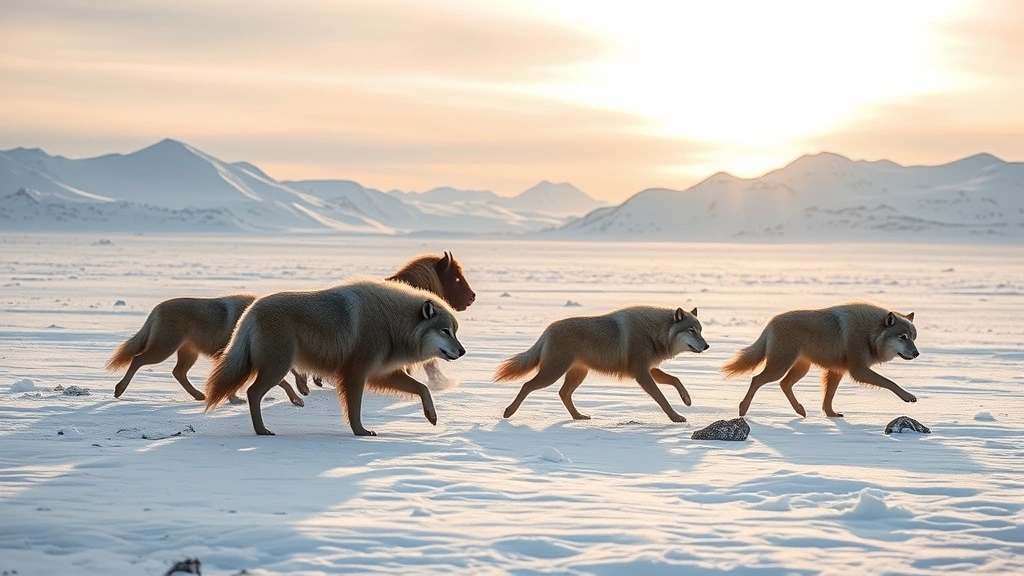
Arctic Wolves and Ecosystems: Expert Insights on Ecological Balance and Environmental Economics
Arctic wolves represent far more than iconic predators roaming frozen tundras—they embody the intricate economic and ecological relationships that sustain entire northern ecosystems. These apex predators play a critical role in maintaining biodiversity, regulating prey populations, and supporting the livelihoods of indigenous communities who depend on healthy Arctic environments. Understanding the arctic wolf environment requires examining the complex interplay between wildlife conservation, ecosystem services, and the economic value of natural capital in one of Earth’s most fragile regions.
The Arctic ecosystem faces unprecedented pressures from climate change, industrial expansion, and resource extraction. Arctic wolves serve as sentinel species, their population dynamics reflecting broader environmental health and sustainability challenges. Recent research demonstrates that apex predator conservation generates measurable economic returns through ecosystem services—including carbon sequestration, prey population regulation, and tourism revenue—that often exceed the costs of protection programs. This article synthesizes expert insights on arctic wolf ecology, ecosystem functioning, and the economic implications of predator conservation in Arctic regions.
Arctic Wolf Ecology and Ecosystem Function
Arctic wolves (Canis lupus arctos) inhabit the northernmost regions of North America, Greenland, and Russia, occupying some of Earth’s most extreme environments. These apex predators have evolved remarkable physiological and behavioral adaptations enabling survival in temperatures dropping below -50°C and across vast territories spanning thousands of square kilometers. Their ecological role extends far beyond predation—wolves function as keystone species whose presence structures entire food webs and influences vegetation patterns across tundra landscapes.
Pack structure and social organization directly impact predation efficiency and ecosystem regulation. Arctic wolf packs typically comprise 5-10 individuals, though packs of up to 20 wolves have been documented in regions with abundant prey. This social structure enables cooperative hunting strategies targeting large ungulates, particularly muskoxen and caribou, which constitute 90% of their diet. The energy transfer efficiency through wolf predation—approximately 10-20% of prey biomass converted to wolf biomass—represents a critical ecological mechanism regulating herbivore populations and preventing overgrazing of tundra vegetation.
The concept of environment and society intersections becomes particularly salient when examining arctic wolf ecology. These predators demonstrate remarkable adaptability to human presence, yet their populations remain vulnerable to anthropogenic pressures. Research from the World Wildlife Fund indicates that Arctic wolf populations have stabilized in some regions following legal protection, while others face continued persecution and habitat fragmentation.
Prey population dynamics in Arctic ecosystems exhibit cyclical patterns influenced by predation pressure, climate variability, and vegetation availability. Caribou populations in the Porcupine Herd fluctuate between 100,000 and 200,000 individuals, with wolf predation accounting for 15-25% of annual mortality in peak predation years. This regulatory mechanism prevents catastrophic overgrazing and maintains plant community composition essential for all herbivores. Muskox populations similarly depend on wolf predation to maintain sustainable densities, particularly in regions where alternative predators (grizzly bears, wolverines) have been eliminated.
Trophic Cascades and Biodiversity Dynamics
Trophic cascades initiated by apex predators represent one of ecology’s most powerful organizing principles. When wolves regulate herbivore populations, they indirectly influence vegetation structure, which cascades through entire ecosystems affecting smaller predators, scavengers, and plant communities. Research on Yellowstone wolf reintroduction demonstrated that apex predator restoration triggers measurable changes in riparian vegetation, stream morphology, and songbird communities—a phenomenon increasingly documented in Arctic systems.
Arctic trophic cascades operate through multiple pathways. Primary predation directly reduces herbivore biomass, allowing vegetation recovery and increased plant diversity. Secondary effects include behavioral changes—prey animals alter movement patterns and habitat use to minimize predation risk, creating heterogeneous grazing patterns that enhance plant community diversity. Tertiary effects emerge through scavenging dynamics: wolf kills provide crucial nutrition to wolverines, arctic foxes, ravens, and eagles, particularly during harsh winter months when alternative prey becomes scarce.
The human effects on environments significantly modify these natural trophic dynamics. Indigenous subsistence hunting, commercial resource extraction, and climate-driven habitat changes alter predator-prey relationships established over millennia. Studies from Arctic communities reveal that wolf predation pressure increases when caribou migration routes shift due to climate change, intensifying conflicts between conservation goals and traditional hunting practices.
Biodiversity metrics in Arctic regions demonstrate strong correlations with apex predator presence. Areas with established wolf populations exhibit 15-30% higher plant species richness compared to wolf-free zones, attributable to reduced herbivory pressure and increased vegetation structural complexity. Small mammal communities benefit from expanded vegetation cover, supporting diverse rodent populations that sustain smaller predators and raptors. This cascading biodiversity enhancement generates measurable ecosystem service improvements including enhanced carbon storage, pollination, and pest regulation.
Scavenger ecology represents a critical but often overlooked component of Arctic trophic cascades. Wolverines derive 30-50% of winter nutrition from wolf kills in some populations, while arctic foxes time denning and pup-rearing to coincide with wolf predation peaks. Ravens exhibit specialized foraging behaviors exploiting wolf kill sites, and their populations show strong positive correlations with wolf presence. These scavenging relationships create nutritional subsidies supporting entire communities of secondary and tertiary consumers.
Climate Change Impacts on Arctic Wolf Populations
Climate change represents the paramount threat to Arctic wolf ecosystems, operating through multiple interconnected mechanisms. Rapid Arctic warming—occurring at twice the global average rate—fundamentally alters prey availability, habitat structure, and seasonal phenology that wolves depend upon. Sea ice decline reduces access to marine mammals in coastal regions, while tundra vegetation shifts northward, displacing traditional caribou migration routes and creating novel predator-prey dynamics.
Caribou population responses to climate change directly impact wolf survival and reproduction. Earlier spring vegetation green-up mismatches caribou calving phenology, reducing calf survival rates and ultimately decreasing prey availability for wolves. Conversely, extended growing seasons and increased vegetation productivity in some Arctic regions temporarily enhance carrying capacity, though these benefits remain offset by increased metabolic demands during longer active seasons. Research indicates that wolf pack sizes correlate strongly with caribou population trends, with declining prey availability forcing wolves into smaller family units with reduced hunting success rates.
Permafrost thaw introduces additional ecological complexity. Melting permafrost alters drainage patterns, creating expanded wetlands that benefit some prey species while degrading habitat for others. Denning habitat for wolves becomes increasingly compromised as permafrost destabilization undermines soil stability critical for den site establishment and maintenance. Pregnant females require secure denning sites for parturition and early pup-rearing, making permafrost degradation a direct threat to reproductive success.
The intersection of climate change with human environment interaction creates compounding pressures on Arctic wolf populations. Industrial development accelerates during warming periods when Arctic regions become more accessible, increasing habitat fragmentation and human-wildlife conflict. Indigenous communities face simultaneous pressures from changing prey distributions and climate impacts on traditional hunting practices, potentially increasing persecution of wolves perceived as competitors.
Temporal mismatches between predators and prey represent emerging climate change impacts with severe consequences. If caribou calving advances while wolf denning timing remains fixed by photoperiod, wolves may encounter prey populations during suboptimal windows for pack provisioning. These phenological mismatches could fundamentally alter predator-prey dynamics established over evolutionary timescales, with unpredictable ecosystem consequences.

Economic Value of Apex Predator Conservation
Quantifying the economic value of Arctic wolf conservation requires integrating ecosystem service valuation, traditional knowledge systems, and opportunity cost analysis. Recent ecological economics research demonstrates that apex predators generate measurable economic returns substantially exceeding protection costs, though these benefits often accrue unevenly across stakeholder communities.
Ecosystem services provided by wolves include prey population regulation, carbon sequestration enhancement through vegetation recovery, nutrient cycling acceleration, and tourism revenue generation. A comprehensive study by the World Bank Environment Program valued apex predator ecosystem services at $2,000-$6,000 per animal annually in temperate ecosystems, with Arctic systems potentially providing higher per-capita values due to pristine conditions and limited alternative economic activities.
Carbon sequestration represents a particularly significant but undervalued ecosystem service. Vegetation recovery following wolf-mediated herbivore reduction increases plant biomass and soil carbon storage. Arctic tundra soils contain approximately 1,700 gigatons of carbon—nearly twice atmospheric carbon—making even modest vegetation changes substantial for climate regulation. Conservative estimates suggest wolf-mediated vegetation expansion sequesters 50-200 kg of carbon annually per square kilometer, valued at $2,500-$10,000 per square kilometer under standard carbon pricing mechanisms.
Tourism and cultural ecosystem services generate substantial economic returns in Arctic regions. Wolf-watching tourism in northern Canada and Alaska generates millions of dollars annually, supporting local economies and incentivizing conservation. Indigenous communities increasingly recognize wolves’ cultural and spiritual significance, translating into economic valuation of cultural ecosystem services often overlooked in conventional economic analyses. Research from the United Nations Environment Programme estimates that cultural ecosystem services from large carnivores represent 20-40% of total ecosystem service value in Arctic regions.
Opportunity cost analysis reveals that livestock predation costs, while locally significant, constitute a minor fraction of total economic value generated by wolf conservation. In regions where subsistence hunting dominates, wolf predation of caribou and muskox represents a renewable resource transfer rather than net economic loss—predation harvests surplus production that would otherwise be lost to starvation or disease. Economic modeling demonstrates that wolf conservation generates positive net benefits even accounting for all quantifiable costs.
The EcoRise Daily Blog has extensively documented how natural capital accounting increasingly incorporates apex predator values into national wealth assessments. Arctic nations adopting comprehensive natural capital accounting frameworks demonstrate substantially higher long-term economic sustainability compared to those relying on extractive resource valuations alone.
Indigenous Communities and Arctic Wolf Coexistence
Indigenous peoples of the Arctic have coexisted with wolves for thousands of years, developing sophisticated ecological knowledge systems and cultural practices reflecting deep understanding of predator-prey dynamics. Inuit, Dene, Sami, and other Arctic communities view wolves not as external threats but as integral ecosystem components worthy of respect and protection. Traditional ecological knowledge regarding wolf behavior, prey relationships, and sustainable harvesting practices often exceeds scientific understanding developed over recent decades.
Contemporary challenges emerge from conflicting management objectives between indigenous subsistence practices and conservation priorities. When wolf predation reduces caribou availability for traditional hunting, indigenous communities face pressure to participate in wolf culling programs conflicting with cultural values. Conversely, industrial development and habitat degradation reduce prey availability independent of predation, yet wolves bear disproportionate blame for declining hunting success. This dynamic reflects broader patterns of environmental and societal interactions shaped by colonial legacies and unequal power distributions.
Co-management arrangements increasingly recognize indigenous rights and knowledge in Arctic wolf conservation. Programs in Canada and Alaska incorporating indigenous governance structures demonstrate improved conservation outcomes compared to top-down management approaches. These arrangements formalize traditional ecological knowledge, provide indigenous communities with decision-making authority, and generate economic benefits through employment in monitoring and management activities.
Subsistence hunting practices themselves represent important ecosystem services often undervalued in economic analyses. Indigenous harvesting of caribou and muskox maintains cultural practices, generates nutritional security, and provides economic value through country food production. Research indicates that integrated management recognizing both wolf predation and indigenous hunting as legitimate ecosystem uses generates better long-term sustainability outcomes than approaches privileging one use over others.
Climate change disproportionately impacts indigenous communities whose livelihoods depend on predictable prey availability. As wolf-prey dynamics shift, traditional hunting knowledge becomes partially obsolete while new ecological relationships remain poorly understood. Indigenous communities increasingly participate in research documenting these changes, contributing observations spanning decades and providing critical data for adaptive management.
Conservation Strategies and Policy Frameworks
Effective Arctic wolf conservation requires integrated policy frameworks addressing habitat protection, sustainable harvesting, human-wildlife conflict mitigation, and climate adaptation. Current approaches vary dramatically across Arctic nations, reflecting different governance structures, economic priorities, and conservation philosophies.
Protected area networks represent foundational conservation strategy, yet Arctic regions remain dramatically underrepresented in global protected area systems. Expanding protected areas encompassing intact wolf habitat requires balancing conservation with indigenous land rights and economic development pressures. Transboundary protected areas prove particularly valuable given wolf pack home ranges spanning thousands of kilometers across international boundaries. The Porcupine Caribou Herd, for example, migrates across Canada-Alaska borders, necessitating coordinated management transcending national jurisdictions.
Sustainable harvesting frameworks provide alternative conservation approaches recognizing that wolves and humans can coexist through regulated predation. Quota-based hunting systems implemented in some Arctic regions maintain viable wolf populations while permitting limited harvesting for cultural, economic, and conflict mitigation purposes. Research demonstrates that populations can sustain 10-20% annual harvest rates while remaining stable, though actual sustainable levels depend on pack structure, prey availability, and environmental conditions.
Human-wildlife conflict mitigation strategies address livestock predation and competition with subsistence hunting—the primary drivers of wolf persecution. Non-lethal deterrence including fladry (flagging), guardian animals, and livestock management practices reduce conflicts without eliminating wolves. Economic compensation programs for livestock losses, while costly, prove far less expensive than ecosystem service losses from wolf extirpation. Research on reducing environmental footprints increasingly emphasizes that predator conservation represents a critical climate mitigation strategy through ecosystem service provision.
Climate adaptation strategies must explicitly address how Arctic warming reshapes wolf-prey dynamics and habitat availability. Proactive management anticipating phenological mismatches, range shifts, and novel predator-prey configurations will prove more effective than reactive approaches responding to crisis conditions. Adaptive management frameworks incorporating monitoring data, traditional knowledge, and scenario planning enable flexible responses to rapid environmental change.
International conservation frameworks including CITES and regional agreements provide legal protections but often lack enforcement mechanisms and adequate funding. Strengthening international cooperation through coordinated research, shared management protocols, and funding mechanisms proves essential for transcontinental conservation of migratory predator-prey systems. The International Union for Conservation of Nature increasingly recognizes Arctic apex predators as priority conservation targets requiring enhanced international support.
Economic instruments including payments for ecosystem services, carbon credits, and biodiversity offsets provide innovative funding mechanisms for Arctic wolf conservation. Coupling conservation with climate mitigation objectives through carbon finance creates additional incentives for protection. Certification programs for Arctic products incorporating wolf conservation criteria provide market-based mechanisms aligning economic incentives with conservation goals.

Technological innovations including GPS collar monitoring, environmental DNA analysis, and remote sensing enhance conservation effectiveness by providing real-time population and habitat data. These tools enable adaptive management responding to environmental changes at unprecedented speeds. However, technology cannot replace on-the-ground stewardship and indigenous knowledge systems proving essential for long-term conservation success.
FAQ
How do arctic wolves impact their prey populations?
Arctic wolves regulate prey populations through direct predation, typically harvesting 15-25% of caribou and muskox populations annually. This predation prevents overgrazing, maintains vegetation diversity, and paradoxically enhances long-term prey population sustainability by preventing catastrophic population crashes from starvation. Wolves also influence prey behavior, causing herbivores to avoid high-predation risk areas, creating heterogeneous grazing patterns that benefit overall vegetation health.
What ecosystem services do arctic wolves provide?
Wolves provide multiple ecosystem services including prey population regulation, vegetation recovery enhancement, carbon sequestration through plant biomass increases, nutrient cycling acceleration, and tourism revenue generation. They also support scavenger communities through kill sites providing crucial winter nutrition. Cultural ecosystem services including spiritual and cultural significance to indigenous communities represent additional values often underquantified in economic analyses.
How does climate change affect arctic wolf populations?
Climate change impacts wolves through multiple pathways: prey availability shifts due to vegetation changes and caribou migration alterations, denning habitat becomes compromised through permafrost thaw, and phenological mismatches between predators and prey reduce hunting success. These cumulative pressures reduce wolf pack sizes, reproduction rates, and population viability, particularly in regions already experiencing prey declines from industrial development.
Can arctic wolves and indigenous hunting coexist sustainably?
Yes, research demonstrates that integrated management recognizing both wolf predation and indigenous harvesting as legitimate ecosystem uses generates better sustainability outcomes than approaches privileging one use. Co-management arrangements incorporating indigenous governance and traditional ecological knowledge prove more effective than top-down management, while adequate prey availability remains essential for both predator and human subsistence needs.
What conservation approaches prove most effective for arctic wolves?
Effective conservation requires integrated strategies including protected area expansion, sustainable harvesting frameworks, human-wildlife conflict mitigation, and climate adaptation planning. Transboundary cooperation, indigenous co-management, and ecosystem service valuation prove particularly important given wolf ecology and Arctic governance complexities. Combining legal protections with economic mechanisms aligning conservation with human development goals enhances long-term viability.
How do arctic wolves influence carbon cycling and climate regulation?
Wolves indirectly enhance carbon sequestration through vegetation recovery following herbivore regulation. Reduced grazing pressure allows tundra plants to accumulate biomass and expand into previously degraded areas, increasing soil carbon storage. Arctic soils contain vast carbon reserves, making even modest vegetation changes significant for climate regulation. Some estimates suggest wolf-mediated vegetation expansion sequesters 50-200 kg carbon annually per square kilometer, valued at thousands of dollars per square kilometer under carbon pricing mechanisms.


