
AI’s Environmental Impact: Expert Insights on Technology and Ecological Costs
Artificial intelligence has become one of the most transformative technologies of our era, reshaping industries from healthcare to finance. Yet beneath the innovation narrative lies a significant environmental cost that experts and policymakers are only beginning to fully understand. The computational infrastructure required to train and deploy AI systems consumes vast amounts of energy, generates substantial carbon emissions, and strains water resources globally. This paradox—that a technology often promoted as a solution to environmental challenges simultaneously creates new ecological burdens—demands serious examination.
As AI adoption accelerates worldwide, the environmental implications extend far beyond data center electricity consumption. The manufacturing of specialized hardware, the mining of rare earth elements, and the energy-intensive processes of model training represent interconnected challenges that intersect with broader questions about human environment interaction and resource management. Understanding these impacts requires an interdisciplinary approach combining environmental science, economics, and technology policy analysis.
Energy Consumption and Carbon Emissions from AI Systems
The electricity demands of AI infrastructure represent one of the most quantifiable environmental impacts of the technology. Training large language models requires enormous computational power sustained over weeks or months. Research indicates that training a single large AI model can consume between 50,000 to 700,000 megawatt-hours of electricity, depending on model complexity and optimization efficiency. This translates to carbon emissions equivalent to the annual electricity consumption of hundreds of households.
Data centers housing AI systems operate continuously, consuming roughly 1-2% of global electricity as of 2024, with projections suggesting this could reach 3-4% by 2030. The environmental cost of computational intensity varies significantly based on grid composition. A data center powered primarily by renewable energy generates substantially lower emissions than one reliant on fossil fuels. However, the average global electricity grid remains carbon-intensive, meaning most AI infrastructure currently contributes meaningfully to greenhouse gas accumulation.
The operational phase of AI systems compounds initial training emissions. Inference—the process of running trained models to generate predictions or responses—occurs billions of times daily across commercial applications. Each query to ChatGPT, image generation through diffusion models, or recommendation algorithm execution requires electricity. Collectively, these distributed computational tasks create an environmental burden that extends far beyond the visible data center infrastructure.
Expert analysis from ecological economics research institutions highlights that the energy intensity of AI differs fundamentally from traditional software. Conventional applications execute predetermined algorithms efficiently. AI systems, particularly deep learning models, require iterative mathematical operations across vast parameter spaces, making them inherently less efficient. Optimizing this fundamental architecture remains an active research frontier, but current approaches offer only marginal improvements.
Water Depletion and Resource Strain
While energy consumption dominates discussions of AI’s environmental impact, water depletion represents an equally critical but underappreciated concern. Data centers require enormous quantities of water for cooling systems that prevent hardware from overheating. Estimates suggest that a single data center can consume between 300,000 to 750,000 gallons of water daily, depending on climate conditions and cooling technology employed.
The geographical concentration of AI infrastructure amplifies water stress in already water-scarce regions. Major tech companies have established data center clusters in areas selected for cool climates and cheap electricity, often coinciding with regions experiencing water scarcity. This creates direct competition between AI infrastructure and agricultural, industrial, and municipal water needs. During drought conditions, data center water consumption can strain local aquifers and surface water supplies, creating tensions with farming communities and indigenous populations.
Research from environmental economics institutes demonstrates that water consumption costs are frequently externalized—borne by local ecosystems and communities rather than reflected in operational expenses. Groundwater depletion from data center cooling operations may take decades to reverse, creating long-term ecological damage. The interdependence between energy and water creates compounding effects; water-cooled systems reduce energy consumption compared to air cooling, yet this efficiency gain comes at the expense of water resources.
Hardware Manufacturing, Supply Chains, and Electronic Waste
The physical infrastructure underlying AI systems generates environmental impacts throughout its lifecycle. Graphics processing units (GPUs), tensor processing units (TPUs), and specialized AI chips require rare earth elements, cobalt, lithium, and other materials extracted through environmentally destructive mining operations. The supply chain for semiconductor manufacturing involves energy-intensive processes and generates hazardous chemical waste.
Manufacturing a single advanced processor requires approximately 240 kilograms of water and generates toxic byproducts. When multiplied across millions of chips deployed globally, this represents significant environmental burden during the production phase, before any operational electricity consumption occurs. Mining operations for materials like cobalt create ecological damage, including deforestation, water contamination, and ecosystem disruption in regions with limited environmental regulation.
Electronic waste (e-waste) from obsolete hardware compounds manufacturing impacts. As AI technology rapidly evolves, older generation chips become outdated, creating disposal challenges. Most e-waste ends up in developing nations where informal recycling operations expose workers and ecosystems to toxic materials including lead, mercury, and cadmium. The circular economy challenges inherent in rapid technology obsolescence remain largely unresolved.
The embodied carbon—total emissions generated during manufacturing, transportation, and assembly—of AI hardware infrastructure often exceeds operational emissions over a device’s lifetime. This lifecycle perspective reveals that focusing exclusively on data center efficiency obscures the full environmental picture. Sustainable AI development requires addressing manufacturing impacts with equivalent urgency to operational efficiency improvements.
Economic Implications for Sustainable Development
From an ecological economics perspective, AI’s environmental costs represent a classic case of market failure where negative externalities are not reflected in market prices. Companies deploying AI systems benefit from computational capabilities while costs of energy consumption, water depletion, and waste generation are borne by society broadly. This misalignment between private benefits and social costs creates economic inefficiency and environmental unsustainability.
The World Bank and United Nations Environment Programme have documented how resource-intensive technologies like AI can undermine sustainable development goals. Water depletion in developing nations, where data centers increasingly locate, diverts resources from poverty reduction and agricultural development. Carbon emissions from AI infrastructure contribute to climate change impacts that disproportionately affect vulnerable populations least responsible for technology adoption.
Integrating environmental costs into economic models of AI deployment reveals that true operational expenses are substantially higher than accounting statements suggest. Carbon pricing mechanisms, water scarcity premiums, and waste management costs would significantly alter the cost-benefit analysis of AI investment. Strategies to reduce carbon footprint at organizational and systemic levels become economically rational when environmental externalities are properly valued.
The opportunity cost of AI infrastructure investment deserves consideration. Capital and resources devoted to AI systems could alternatively fund renewable energy deployment, ecosystem restoration, or sustainable agriculture. Economic models comparing alternative resource allocations suggest that unconstrained AI expansion may reduce overall welfare when environmental costs are comprehensively accounted. This doesn’t necessarily argue against AI development, but rather for deliberate prioritization of applications generating sufficient social value to justify environmental expenditure.
Mitigation Strategies and Technical Solutions
Addressing AI’s environmental impact requires multifaceted approaches spanning technical innovation, operational efficiency, and strategic deployment decisions. Algorithmic efficiency improvements represent one promising avenue. Researchers are developing techniques to reduce computational requirements for model training and inference, including knowledge distillation, quantization, and sparse neural networks. These approaches can reduce energy consumption by 50% or more without substantially compromising performance.
Hardware innovation offers additional mitigation potential. Specialized chips designed specifically for AI workloads can improve energy efficiency compared to general-purpose processors. Analog computing approaches and neuromorphic architectures that mimic biological neural systems may eventually enable substantially more efficient computation. However, these technologies remain largely experimental and require significant development before widespread deployment.
Data center infrastructure improvements can reduce operational emissions. Liquid cooling systems, waste heat recovery, and advanced power management techniques lower electricity consumption. Geographic optimization of data center placement in regions with abundant renewable energy decreases carbon intensity. Some major technology companies have committed to powering data centers entirely with renewable energy, though achieving this globally remains challenging given infrastructure constraints.
Operational practices and deployment strategies provide immediate impact potential. Pruning unnecessary AI models, consolidating computational workloads, and deploying models more efficiently through edge computing and federated learning reduce aggregate infrastructure demands. Organizations can prioritize AI applications generating highest social value relative to environmental cost, avoiding deployment of marginally beneficial systems. World Environment Day 2025 discussions increasingly emphasize this value-weighted deployment approach.
” alt=”Data center facility with cooling systems and renewable energy panels integrated into modern sustainable infrastructure design”/>
Policy Frameworks and Corporate Responsibility
Addressing AI’s environmental impact requires policy interventions establishing accountability for externalities. Carbon pricing mechanisms that assign costs to emissions-generating activities create economic incentives for efficiency improvements. Water usage fees reflecting scarcity value encourage data center operators to reduce consumption. Regulatory frameworks requiring environmental impact assessments before deploying large-scale AI infrastructure enable informed decision-making about tradeoffs.
Extended producer responsibility policies could require technology companies to manage end-of-life disposal and recycling of hardware, internalizing costs currently externalized to developing nations. Mandatory disclosure of environmental impacts from AI operations would enable stakeholders to evaluate true costs and make informed decisions. Supply chain transparency requirements could address mining impacts and labor practices in semiconductor manufacturing.
Corporate sustainability commitments represent another governance mechanism. Technology companies have announced goals to achieve net-zero emissions and reduce water consumption. However, voluntary commitments frequently lack enforcement mechanisms and accountability structures. Combining corporate responsibility with regulatory oversight creates more robust environmental governance. Industry standards and certification schemes can establish baseline environmental requirements for AI infrastructure.
International cooperation through organizations like the United Nations Environment Programme can establish globally coordinated approaches to AI governance. Developing nations hosting data centers require capacity building and technology transfer to implement environmental management practices. Technology companies should contribute to environmental remediation in regions where infrastructure has generated impacts.
The relationship between AI environmental governance and broader human environment interaction patterns suggests that addressing AI impacts requires systemic rather than isolated interventions. Technology policy must integrate with energy system transformation, water management, and circular economy development. Siloed approaches focusing exclusively on AI efficiency miss opportunities for synergistic solutions.
FAQ
How much energy does training a large AI model actually consume?
Training large language models like GPT-style systems consumes between 50,000 to 700,000 megawatt-hours of electricity, depending on model size, complexity, and optimization efficiency. This translates to carbon emissions equivalent to the annual electricity usage of 50-500 average households. Smaller models and fine-tuning applications require substantially less energy than initial training of massive foundation models.
Can renewable energy completely solve AI’s environmental problems?
While powering data centers with renewable energy significantly reduces carbon emissions, it doesn’t address all environmental impacts. Water consumption for cooling, hardware manufacturing impacts, and rare earth element mining continue regardless of electricity source. Renewable energy is necessary but insufficient for full environmental sustainability of AI infrastructure. Complementary efficiency improvements and deployment restraint remain essential.
Is AI actually helpful for environmental problems despite its environmental cost?
AI applications in climate modeling, renewable energy optimization, and environmental monitoring generate significant environmental benefits. However, these benefits must exceed the environmental costs of AI infrastructure itself. Not all AI applications justify their environmental expenditure. Rigorous impact assessment comparing benefits to costs, rather than assuming AI is inherently beneficial, represents the appropriate analytical approach.
What’s the difference between AI training emissions and operational emissions?
Training emissions occur during the intensive computational process of developing and refining AI models, typically concentrated in a few weeks or months. Operational emissions accumulate continuously as trained models are deployed to answer queries and generate predictions. For heavily-used systems, operational emissions often exceed training emissions over time. Both must be considered in comprehensive environmental impact assessment.
Are smaller AI models more environmentally friendly?
Generally yes, though the relationship isn’t perfectly linear. Smaller models consume less energy for both training and inference. However, some specialized smaller models may be less efficient than carefully optimized larger systems. The relevant comparison involves environmental cost per unit of useful output, requiring context-specific analysis. Deploying appropriately-sized models for specific applications rather than maximizing model scale represents sound environmental practice.
How does AI environmental impact connect to broader sustainability challenges?
AI infrastructure competes for energy and water resources with other development priorities. In water-scarce regions, data center demands can undermine agricultural productivity and human welfare. Carbon emissions from AI contribute to climate change affecting vulnerable populations. These connections illustrate why AI environmental governance must integrate with broader sustainable development planning rather than treating technology in isolation.

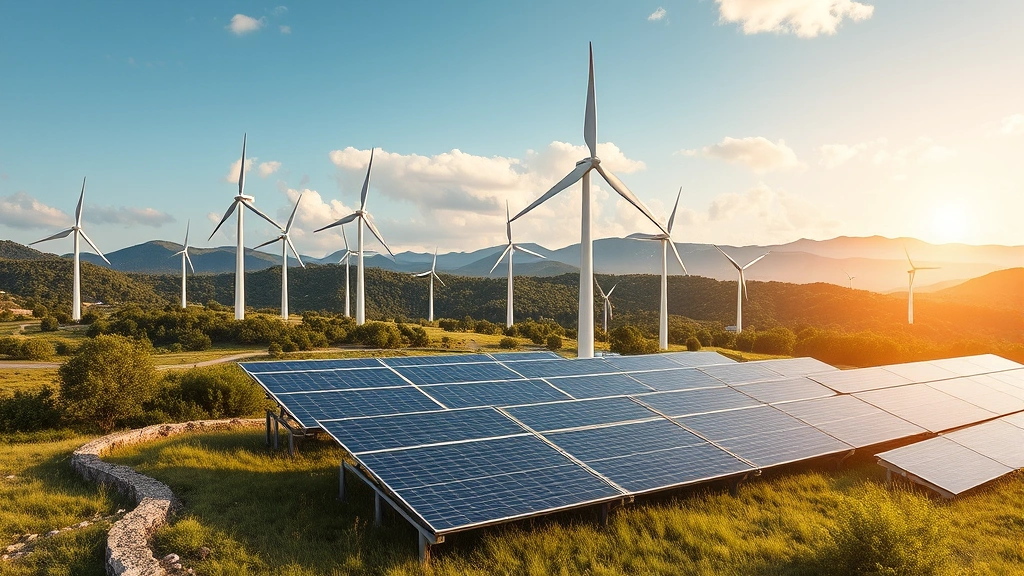
” alt=”Renewable energy wind turbines and solar panels providing clean power to sustainable technology infrastructure in natural landscape”/>
Understanding AI’s environmental impact requires moving beyond technological optimism toward clear-eyed assessment of tradeoffs and costs. The technology generates genuine benefits for medical research, scientific discovery, and various commercial applications. However, these benefits must be weighed against substantial environmental burdens that current market mechanisms fail to capture. Achieving sustainable AI development demands technical innovation, policy intervention, corporate accountability, and strategic deployment decisions prioritizing applications generating sufficient value to justify environmental expenditure. The intersection of artificial intelligence and environmental sustainability represents one of the defining challenges of the coming decades, requiring urgent attention from technologists, policymakers, economists, and environmental scientists working collaboratively.
Organizations seeking to minimize their environmental footprint while leveraging AI capabilities should examine renewable energy for homes and businesses as foundational infrastructure. Beyond energy considerations, supporting sustainable practices across supply chains and staying informed through environmental analysis enables more responsible technology deployment decisions.


