Is Green Economy Sustainable? Economist Insights
The green economy represents one of the most significant paradigm shifts in economic thinking of the twenty-first century. As global environmental degradation accelerates and climate change threatens economic stability, policymakers and economists increasingly ask whether transitioning to green economic models can deliver both environmental restoration and sustained prosperity. This question sits at the intersection of ecological economics, environmental policy, and macroeconomic theory, demanding rigorous analysis beyond idealistic rhetoric.
A permissive operational environment describes situations when governments, institutions, and markets create favorable conditions for sustainable business practices, technological innovation, and ecological restoration. Understanding whether green economies can thrive within such permissive frameworks requires examining the fundamental tensions between growth imperatives, resource constraints, and ecosystem regeneration.

Defining Green Economy and Its Economic Foundations
The green economy, according to the United Nations Environment Programme (UNEP), represents economic activity that results in improved human well-being and social equity while significantly reducing environmental risks and ecological scarcities. This definition fundamentally challenges conventional economic models that treat environmental resources as infinite externalities rather than finite capital stocks.
Ecological economics, distinct from environmental economics, posits that the economy operates as a subsystem within Earth’s finite biosphere. This perspective suggests that unlimited economic growth becomes impossible on a planet with limited resources. The framework emphasizes biophysical limits, natural capital accounting, and the primacy of ecosystem services that underpin all economic activity. When considering whether green economies are sustainable, economists must address whether decoupling economic growth from environmental degradation represents genuine progress or merely delayed ecological collapse.
Traditional neoclassical economics assumes perfect substitutability between natural and human-made capital. Green economy advocates argue this assumption proves dangerously false. Photosynthesis cannot be replaced by machinery; pollinator populations cannot be substituted with mechanical technology; atmospheric carbon regulation cannot be engineered away once tipping points occur. These critical natural capital stocks require preservation rather than substitution, fundamentally altering economic calculus.
Understanding a group of all organisms and their environment becomes essential when evaluating economic systems. The green economy must account for how human economic activity affects entire ecological systems, not merely isolated resources.

The Decoupling Debate: Growth Without Environmental Destruction
Central to green economy sustainability claims stands the concept of decoupling: the possibility of achieving economic growth while reducing environmental impact. Proponents cite evidence of relative decoupling in developed nations—where GDP grows while carbon emissions per unit of GDP decline. However, this distinction between relative and absolute decoupling proves critical.
Relative decoupling means environmental impact grows slower than economic output. Absolute decoupling requires environmental impact to decline while the economy expands. Most economist analyses reveal that developed nations achieve relative decoupling primarily through outsourcing manufacturing to nations with weaker environmental regulations, not through genuine efficiency improvements. Global carbon accounting reveals that wealthy nations’ consumption-based emissions—including embodied emissions in imported goods—continue rising even as production-based emissions appear to decline.
Research from the World Bank and ecological economics scholars demonstrates that absolute decoupling at the global scale remains elusive. While renewable energy capacity expands exponentially, total global energy consumption continues increasing, driven by rising living standards in developing economies. The critical question becomes whether technological improvements can accelerate sufficiently to achieve genuine absolute decoupling before ecological tipping points trigger irreversible damage.
The Jevons paradox—named after nineteenth-century economist William Stanley Jevons—suggests that efficiency improvements may paradoxically increase resource consumption. More efficient vehicles encourage more driving; cheaper renewable electricity enables energy-intensive industries to expand. Without complementary policy mechanisms that establish hard limits on resource extraction or carbon emissions, efficiency gains may simply enable accelerated consumption.
Systemic Challenges to Green Economy Sustainability
Several structural economic challenges threaten green economy sustainability, regardless of technological progress or policy intentions.
Financial System Architecture: Modern economies depend on fractional reserve banking and perpetual credit expansion. Banks create money by extending loans, requiring economic growth to service debt obligations. A steady-state or degrowth economy—potentially necessary for ecological sustainability—would face immediate financial instability. This architectural constraint means permissive operational environments for green economy development must simultaneously reform monetary and financial systems, a politically formidable challenge.
Consumption Patterns and Growth Imperative: Market economies require continuous expansion to maintain employment and prevent deflationary crises. Corporations face shareholder pressure to increase profits indefinitely, driving planned obsolescence, marketing-induced consumption, and resistance to circular economy principles. The green economy framework struggles to reconcile human environment interaction patterns built on perpetual consumption growth with planetary boundaries.
Rebound Effects and Behavioral Economics: Psychological research demonstrates that efficiency improvements often lead to increased consumption of the improved good or substitution toward other resource-intensive activities. Carbon pricing, touted as a market-based solution, may prove insufficient if price elasticity remains low and high-carbon alternatives lack feasible substitutes.
Biodiversity Loss and Ecosystem Complexity: Economic models typically value ecosystem services through willingness-to-pay methodologies, yet this approach fundamentally underestimates value. Pollinator collapse, soil degradation, and ocean acidification proceed irreversibly despite economic benefits from continued degradation. The green economy must address whether market mechanisms can adequately protect ecological systems that provide non-substitutable services.
Policy Frameworks and Permissive Operational Environments
A permissive operational environment describes situations when governments and institutions establish regulatory frameworks, financial incentives, and infrastructure supporting green economic development. Creating such environments requires coordinated policy action across multiple domains.
Carbon Pricing and Emissions Trading: Carbon pricing mechanisms—whether carbon taxes or cap-and-trade systems—attempt to internalize environmental externalities. However, political economy constraints limit carbon prices to levels economists calculate as insufficient. The European Union’s Emissions Trading System demonstrates how political compromise produces prices that fail to drive transformative change.
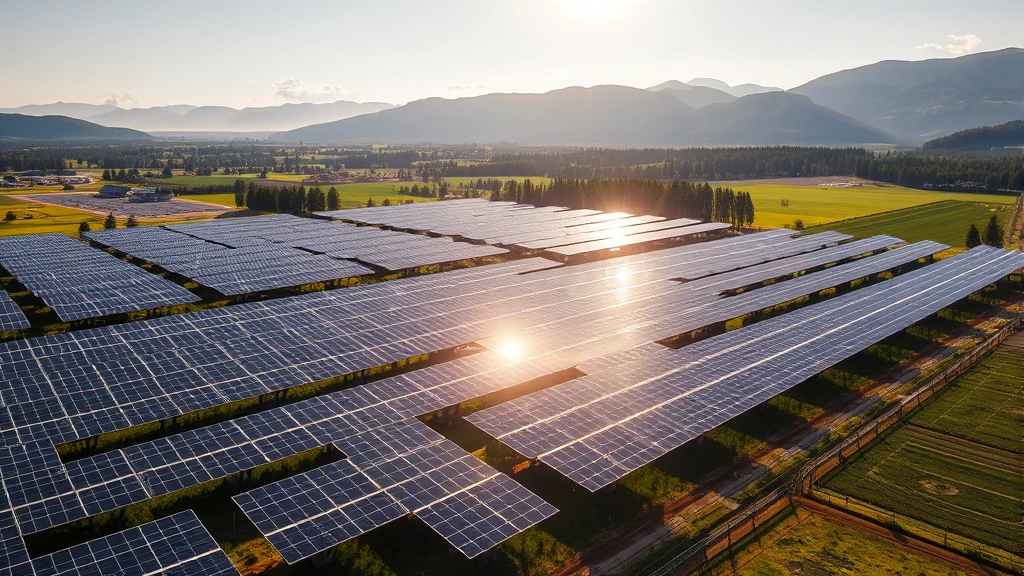
Renewable Energy Transition: Subsidies and mandates accelerating renewable energy deployment have proven effective in certain contexts. Denmark, Germany, and Costa Rica demonstrate that high renewable penetration becomes technically feasible. Yet manufacturing renewable infrastructure requires mining rare earth elements, constructing new transmission infrastructure, and managing intermittency challenges—all involving significant environmental costs and upfront capital requirements.
Circular Economy Principles: Transitioning from linear take-make-dispose models toward circular systems where materials cycle repeatedly represents theoretical sustainability improvement. However, thermodynamic reality limits true circularity; every cycle generates waste heat and material degradation. Additionally, circular economy implementation requires biological community of interacting organisms and their physical environment considerations—ensuring industrial processes don’t harm ecosystems during material recovery.
Nature-Based Solutions and Ecosystem Restoration: Protecting forests, wetlands, and marine ecosystems offers cost-effective carbon sequestration and biodiversity preservation. However, competing land uses—agriculture, infrastructure, resource extraction—generate powerful economic incentives for continued conversion. Permissive environments for green economy require mechanisms protecting ecosystem services against short-term profit maximization.
Technological Innovation as Economic Solution
Green economy optimists emphasize technological potential: renewable energy costs declining exponentially, electric vehicle manufacturing scaling rapidly, carbon capture technology advancing, and artificial intelligence optimizing resource efficiency. These developments provide genuine cause for measured optimism.
However, technological determinism—assuming innovation automatically solves sustainability challenges—obscures crucial limitations. First, technology deployment requires decades; climate and biodiversity crises demand rapid transformation within this decade. Second, scaling existing technologies globally demands unprecedented resource mobilization. Manufacturing sufficient battery capacity for global electrification requires mining lithium, cobalt, and other minerals at scales that stress ecosystems and create new environmental problems.
Third, many proposed technological solutions remain speculative. Direct air carbon capture operates at tiny scales with enormous energy requirements. Geoengineering proposals carry unknown risks and potential for unintended consequences. Fourth, technology diffusion follows economic logic; innovations that maximize profitability may not maximize environmental benefit. Patent protections prevent developing nations from accessing green technologies, slowing global transition.
The most promising technological pathway combines renewable energy, electrification, efficiency improvements, and demand reduction. Yet this combination requires not merely technological change but fundamental transformation in consumption patterns, which technology alone cannot deliver.
Real-World Implementation and Global Examples
Examining actual green economy experiments reveals both progress and persistent limitations.
Scandinavian Models: Nordic nations demonstrate that wealthy economies can combine high living standards with low carbon emissions through renewable energy, carbon pricing, and strong environmental regulation. However, these successes depend on historical wealth enabling infrastructure investment, small populations, and geographic advantages (hydroelectric potential). Their model proves difficult to replicate globally, particularly in developing nations facing urgent poverty alleviation imperatives.
Costa Rican Renewable Energy Leadership: Costa Rica generates over 99 percent of electricity from renewable sources, yet total energy consumption and carbon emissions continue rising due to transportation and agriculture sectors. This example illustrates that sectoral decoupling—success in one domain—doesn’t guarantee economy-wide sustainability.
Chinese Green Economy Initiatives: China’s massive renewable energy investment, electric vehicle manufacturing, and reforestation programs demonstrate that centralized planning can mobilize resources for green transition. Yet China simultaneously expands coal power generation, pursues resource-intensive Belt and Road infrastructure, and maintains export-dependent manufacturing. State capacity enables rapid deployment but hasn’t resolved fundamental tensions between growth and sustainability.
African Development Challenges: Nations pursuing development face genuine dilemmas. Restricting fossil fuel use limits poverty alleviation; accepting high-carbon development threatens global climate stability. Green economy frameworks must address whether wealthy nations’ historical emissions entitle developing nations to similar carbon budgets—a question with profound justice implications.
The Future of Green Economics
Honest economic assessment suggests green economy sustainability depends on five converging transformations:
First, paradigm shift in economic measurement: GDP growth must be supplemented or replaced with indicators capturing genuine progress toward well-being, ecological health, and equity. Ten ways to protect the environment require economic systems that reward such protection rather than penalizing it through growth reduction.
Second, financial system reform: Monetary systems must accommodate steady-state or degrowth economies without triggering systemic collapse. This requires fundamental restructuring of banking, debt mechanisms, and investment incentives.
Third, consumption transformation: Wealthy nations must reduce material throughput while maintaining well-being—decoupling prosperity from consumption. Cultural and behavioral economics insights suggest this proves possible; happiness research shows well-being plateaus beyond modest income levels, yet consumption continues expanding.
Fourth, global cooperation on resource allocation: Planetary boundaries mean cumulative resource use faces hard limits. International frameworks must equitably distribute remaining carbon budgets, freshwater access, and biodiversity preservation capacity. This requires unprecedented cooperation and justice mechanisms.
Fifth, temporal reframing: Economic decision-making must incorporate long-term consequences. Current discount rates in cost-benefit analysis systematically undervalue future environmental and social impacts. Intergenerational justice demands different temporal frameworks.
Research from ecological economics journals and environmental economics institutions increasingly documents that business-as-usual green economy approaches—marginal efficiency improvements within existing growth frameworks—prove insufficient. More fundamental transformations in economic structure, consumption patterns, and institutional arrangements appear necessary.
The honest answer to whether green economy proves sustainable is conditional: sustainability becomes possible within permissive operational environments that simultaneously reform financial systems, transform consumption patterns, enforce ecological limits, and distribute resources equitably. Current green economy initiatives, while valuable, remain insufficient without these deeper structural changes. The question shifts from whether green economy succeeds to whether political-economic systems can implement the transformations genuine sustainability demands.
For deeper exploration of ecosystem relationships essential to economic analysis, consider examining definition of environment science and returning to Ecorise Daily’s comprehensive blog for additional environmental-economic analysis.
FAQ
What distinguishes green economy from sustainable development?
Sustainable development emphasizes balancing environmental protection, economic growth, and social equity across three dimensions. Green economy focuses specifically on economic structures and mechanisms that minimize environmental impact while maintaining prosperity. Green economy represents one approach to achieving sustainable development, but not the only pathway.
Can renewable energy fully replace fossil fuels?
Technically, renewable energy can supply global electricity demands. However, complete replacement requires solving intermittency challenges, manufacturing sufficient storage capacity, and electrifying transportation and heating sectors. Timeline constraints and resource requirements for scaling remain significant challenges, though not insurmountable with sufficient investment and coordination.
Does carbon pricing alone solve climate change?
Carbon pricing provides valuable economic incentives but proves insufficient alone. Political economy constraints limit carbon prices to insufficient levels; behavioral responses may be weaker than economists predict; and some emissions sources lack viable alternatives. Carbon pricing works best combined with regulatory standards, investment in alternatives, and demand reduction policies.
How do developing nations balance development and environmental protection?
This represents perhaps the most challenging policy question. Developing nations require resources for poverty alleviation; restricting emissions limits their development pathways. Justice frameworks suggest wealthy nations—responsible for cumulative historical emissions—should provide financial and technological support enabling developing nations to pursue low-carbon development. This requires unprecedented resource transfers and technology sharing.
What role does individual behavior change play?
Individual consumption choices matter, yet systemic factors dominate environmental impact. Focusing primarily on individual responsibility obscures how economic structures, corporate decision-making, and government policy shape options available to consumers. Effective sustainability requires both individual behavioral change and systemic transformation; neither alone suffices.


