
Is Ecosystem Collapse Affecting Economy? Study Insights
The relationship between ecological degradation and economic performance has shifted from academic curiosity to urgent policy concern. Recent research demonstrates that ecosystem collapse isn’t merely an environmental issue—it directly undermines economic stability, productivity, and long-term growth. Global economies lose an estimated $125 trillion annually through ecosystem service degradation, a figure that dwarfs most national GDPs and represents one of the most significant yet underpriced economic risks facing modern civilization.
This comprehensive analysis examines how ecosystem collapse manifests as economic disruption, drawing on peer-reviewed studies, institutional research, and real-world case studies. Understanding these connections is essential for policymakers, investors, and business leaders seeking to comprehend systemic economic risks and build resilient economic systems.
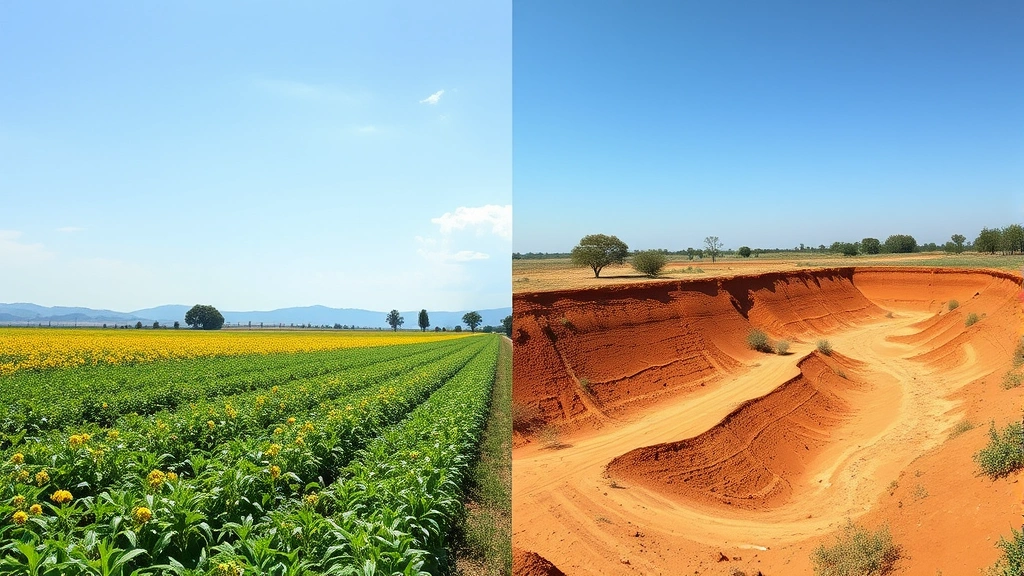
The Economic Value of Ecosystem Services
Ecosystem services—the benefits humans derive from natural systems—represent the foundation of all economic activity. These services include pollination, water purification, climate regulation, soil formation, and nutrient cycling. The Millennium Ecosystem Assessment, a comprehensive global study, valued these services at approximately $125 trillion annually, equivalent to roughly 1.5 times global GDP.
When ecosystems degrade, these services diminish or disappear entirely. A study published in Nature found that ecosystem service loss accelerated dramatically between 2000 and 2020, with consequences rippling through supply chains, labor markets, and financial systems. The economic impact isn’t uniform—developing nations dependent on agriculture and natural resource extraction face disproportionate losses.
Understanding human environment interaction reveals how economic systems are embedded within ecological systems. When we treat ecosystems as infinite resources rather than finite capital stocks, we systematically undervalue future economic capacity. This accounting error drives decisions that generate short-term profits while destroying long-term economic viability.
The World Bank’s Natural Capital Accounting initiative attempts to incorporate ecosystem value into national accounting systems. Early findings suggest that countries experiencing rapid ecosystem degradation show inflated GDP growth figures that mask underlying economic decline once natural capital depreciation is factored in. Indonesia, for example, experienced apparent economic growth of 5-6% annually during the 1990s-2000s, yet natural capital depreciation from deforestation exceeded 4% of GDP annually, indicating actual economic contraction.

Mechanisms of Economic Impact
Ecosystem collapse affects economies through multiple reinforcing pathways. The primary mechanisms include:
- Production function disruption: Agricultural yields decline as pollinator populations collapse, soil fertility decreases, and water availability fluctuates. Global agricultural productivity growth has slowed from 2.1% annually (1960-1990) to 0.9% (2000-2020), directly correlating with ecosystem degradation.
- Supply chain fragmentation: Ecosystem collapse in one region creates cascading disruptions across global supply networks. The 2011 Thai flooding, exacerbated by wetland loss, disrupted semiconductor manufacturing worldwide and cost the electronics industry an estimated $40 billion.
- Labor productivity reduction: Heat stress from climate change, disease expansion into new regions due to ecosystem disruption, and food insecurity reduce worker productivity. Studies indicate each 1°C temperature increase above optimal growing conditions reduces labor productivity by 1.7% in outdoor sectors.
- Infrastructure damage: Ecosystem collapse removes natural buffers against extreme weather. Mangrove loss increases storm surge damage; wetland drainage increases flood damage; forest loss increases landslide risk. Global economic losses from weather-related disasters have increased from $50 billion annually (1980s) to $165 billion annually (2010s).
- Health system strain: Ecosystem degradation facilitates zoonotic disease emergence, increases malnutrition, and exacerbates pollution-related illness. The economic cost of pandemic risk alone—a direct consequence of ecosystem collapse—is estimated at $570 billion annually in preventive spending.
These mechanisms operate simultaneously and reinforce each other. Agricultural decline reduces rural incomes, forcing migration to urban centers, increasing slum populations vulnerable to disease. Heat stress reduces productivity, lowering wages and increasing poverty, which increases pressure to exploit remaining natural resources, accelerating ecosystem collapse.
Case Studies of Ecosystem Collapse and Economic Consequences
The Aral Sea Collapse: The diversion of the Amu Darya and Syr Darya rivers for irrigation reduced the Aral Sea to 10% of its original volume. The resulting ecosystem collapse devastated fisheries that employed 60,000 workers, destroyed regional irrigation through salt contamination, and created health crises costing billions in medical spending. The regional economy contracted by 15% in real terms, with recovery decades away and incomplete.
North Atlantic Cod Fisheries: Overfishing and ecosystem disruption caused the collapse of cod stocks off Newfoundland in 1992. The closure cost 40,000 jobs and an estimated $2 billion in lost economic activity. Twenty years later, despite fishing restrictions, stocks remained at 5% of historical levels, demonstrating the economic persistence of ecosystem collapse.
Indonesian Deforestation: The conversion of 20 million hectares of forest to palm oil plantations generated short-term export revenues but destroyed ecosystem services worth an estimated $50 billion annually. Soil degradation, water pollution, increased flood and drought severity, and biodiversity loss created economic losses exceeding the financial gains. The 2015 haze crisis alone, caused by forest fires in degraded ecosystems, cost the region $30 billion in health and productivity losses.
Pollinator Decline in North America: Bee population collapse due to habitat loss, pesticide use, and monoculture agriculture threatens crops valued at $15 billion annually in the U.S. alone. Some crops, like almonds, depend 90% on honeybee pollination. Declining pollinator populations have already increased food prices by 5-10% for affected crops and threaten agricultural viability in several regions.
Agricultural and Food System Vulnerabilities
Agriculture represents the interface between ecosystem services and economic production, making food systems particularly vulnerable to ecosystem collapse. Global food production depends on three critical ecosystem services: pollination, water availability, and soil fertility. All three are degrading simultaneously.
Soil degradation affects 1.5 billion hectares globally, reducing productivity and increasing input costs. Farmers compensate with more fertilizer, creating dead zones in waterways and further degrading ecosystems. This vicious cycle increases food prices, reduces farmer incomes, and creates food insecurity affecting 800 million people. The economic cost of soil degradation alone exceeds $400 billion annually in lost productivity.
Water scarcity, intensified by ecosystem collapse (wetland loss, groundwater depletion, river ecosystem degradation), constrains agricultural expansion and increases irrigation costs. The Indus Valley irrigation system, dependent on snowmelt from degrading mountain ecosystems, faces 30% water reduction by 2050, threatening food security for 400 million people and creating economic losses exceeding $100 billion.
Understanding impacts humans have had on the environment reveals how agricultural practices themselves drive ecosystem collapse. Monoculture farming eliminates habitat diversity, intensive pesticide use kills non-target species, and fertilizer runoff creates eutrophication. These practices maximize short-term yields while minimizing long-term ecosystem resilience, ultimately undermining agricultural viability.
Climate change, driven by ecosystem collapse and interacting with it, creates additional agricultural stress. Crop yield variability increases, suitable growing regions shift, and extreme weather events damage harvests. The economic impact compounds as food price volatility increases, making food security planning impossible for poor households.
Financial Markets and Ecosystem Risk
Financial markets increasingly recognize ecosystem collapse as a material financial risk. Asset values depend on future cash flows, which depend on ecosystem service availability. Companies with high ecosystem exposure—agriculture, fisheries, forestry, food processing, pharmaceuticals—face earnings volatility and valuation compression as ecosystem risks materialize.
The financial sector has begun quantifying ecosystem risk. A UNEP report identified $43 trillion in economic value dependent on ecosystem services, with $36 trillion at risk from ecosystem collapse. This represents roughly 50% of global economic output, suggesting that ecosystem collapse poses systemic financial risk comparable to the 2008 financial crisis.
Insurance companies, particularly those covering agricultural and property losses, face mounting claims from ecosystem-related disasters. Reinsurance costs have increased 300% since 2000, reflecting increased climate and ecosystem-related damage. This cost increase reduces profitability, raises premiums for consumers, and incentivizes capital flight from vulnerable regions.
Investment funds increasingly screen for ecosystem risk. The sustainable investment market has grown to $35 trillion globally, reflecting institutional recognition that ecosystem collapse creates financial risk. However, this reallocation of capital may accelerate economic disruption in regions dependent on extractive industries, creating social conflict and political instability.
Corporate earnings increasingly reflect ecosystem constraints. Agricultural companies report declining yields despite technological improvements. Pharmaceutical companies face reduced plant biodiversity limiting drug discovery. Energy companies face water scarcity limiting thermal power generation. These earnings pressures manifest as stock price volatility and valuation compression, reducing capital availability and increasing cost of capital.
Climate Economics and Tipping Points
Ecosystem collapse and climate change interact through positive feedback loops that accelerate both. Deforestation reduces carbon sequestration while increasing atmospheric CO2. Permafrost thaw releases methane, accelerating warming, which further destabilizes permafrost. Coral reef bleaching reduces ocean productivity and carbon uptake. These feedbacks create tipping points beyond which ecosystem collapse becomes self-reinforcing and potentially irreversible.
The economic implications of tipping points are catastrophic. Stern Review on the Economics of Climate Change estimated that unmitigated climate change could reduce global GDP by 5-20% permanently. Recent research suggests ecosystem tipping points could double this impact. Once triggered, tipping points create economic disruption that no amount of adaptation spending can fully offset.
The Amazon rainforest represents a critical tipping point. Deforestation beyond 20-25% of original forest area may trigger forest dieback, converting rainforest to savanna. This transition would release 50-200 billion tons of carbon, accelerate global warming, eliminate ecosystem services supporting 400 million people, and destroy the agricultural productivity of South America. Economic modeling suggests this scenario could reduce global GDP by 10-15% and create humanitarian crises affecting billions.
Coral reef collapse represents another critical tipping point. Reefs support 500 million people economically and 1 billion nutritionally. Reef loss would eliminate $375 billion in ecosystem services, eliminate fisheries supporting 100 million people, and destroy tourism industries in island nations. The economic impact would rival the largest financial crises in history.
Understanding these risks requires integrating ecological tipping points into economic models. Traditional economic models assume smooth, reversible environmental change. Ecosystem science reveals that environmental change is often abrupt, nonlinear, and irreversible beyond critical thresholds. Economic models incorporating these realities project much higher costs for ecosystem collapse and much greater value for ecosystem protection.
Policy Responses and Economic Opportunities
Recognizing ecosystem collapse as economic risk creates incentives for policy intervention. Several policy approaches show promise:
Natural Capital Accounting: Incorporating ecosystem value into national accounting systems reveals true economic performance. The Genuine Progress Indicator, which adjusts GDP for environmental and social factors, shows that real progress in wealthy nations has stagnated since the 1970s despite rising GDP. This accounting reform creates political pressure for ecosystem protection.
Payments for Ecosystem Services: Direct compensation for ecosystem protection can make conservation economically competitive with extraction. Costa Rica’s Payment for Ecosystem Services program has protected 25% of forest area while generating rural income. The program costs $50 million annually but generates $2 billion in ecosystem services.
Carbon Pricing: World Bank carbon pricing initiatives aim to internalize climate costs into economic decisions. Carbon prices of $50-100 per ton could shift investment away from high-carbon activities and toward ecosystem protection and renewable energy. Early evidence from EU carbon markets shows that carbon pricing does reduce emissions, though prices remain below levels needed for climate stability.
Learning how to reduce carbon footprint at individual and organizational levels creates market demand for low-carbon products and services. This demand shift incentivizes business innovation and ecosystem protection. Companies reducing carbon footprints often discover co-benefits including cost reduction, improved efficiency, and reduced ecosystem risk exposure.
Ecosystem Restoration Economics: Restoration creates immediate employment while rebuilding ecosystem services. The UN Decade on Ecosystem Restoration aims to restore 1 billion hectares by 2030. At $1,000 per hectare average restoration cost, this represents a $1 trillion investment creating 10 million jobs while generating $10 trillion in ecosystem service value over 50 years—a 10:1 return on investment.
Sustainable Finance Standards: UNEP Finance Initiative and other programs establish standards for ecosystem risk disclosure and green finance. These standards direct capital toward ecosystem-compatible activities and away from destructive activities. Early evidence suggests sustainable investment outperforms conventional investment, creating financial incentives for ecosystem protection.
Renewable Energy Transition: Shifting from fossil fuels to renewable energy eliminates ecosystem damage from extraction and combustion while creating economic opportunities. Renewable energy for homes reduces household energy costs while supporting ecosystem protection. Global renewable capacity has grown 30% annually since 2010, creating 12 million jobs and reducing energy costs in many regions.
These policy responses share a common theme: ecosystem protection and economic prosperity are complementary, not contradictory. The economic case for ecosystem protection rests on recognizing that ecosystems provide services worth trillions annually, that ecosystem collapse imposes costs exceeding these service values, and that protection and restoration generate positive returns on investment.
Sustainable Consumption: Consumer demand for sustainable products drives business innovation and ecosystem protection. Sustainable fashion brands demonstrate that ecological responsibility can align with profitability. The sustainable fashion market grows 5x faster than conventional fashion, indicating genuine consumer preference for ecosystem-compatible products.
The economic transition away from ecosystem-destructive activities requires managed policy support. Without intervention, markets fail to price ecosystem value, leading to overexploitation. With appropriate policy—carbon pricing, natural capital accounting, ecosystem service payments, and sustainable finance standards—markets can drive rapid transition toward ecosystem-compatible economic systems.
FAQ
How much economic value do ecosystems provide annually?
The Millennium Ecosystem Assessment valued ecosystem services at approximately $125 trillion annually. This represents pollination, water purification, climate regulation, soil formation, nutrient cycling, and other services essential to all economic activity. Recent updates suggest this figure understates true value, as it excludes many services difficult to monetize.
Which economic sectors are most vulnerable to ecosystem collapse?
Agriculture, fisheries, forestry, food processing, pharmaceuticals, tourism, and insurance face the highest exposure. These sectors depend directly on ecosystem services or face significant climate and weather risk. Secondary impacts affect finance, real estate, and manufacturing through supply chain disruption and input cost increases.
Can economic growth continue without ecosystem protection?
No. Ecosystem collapse undermines the natural capital stocks that enable economic production. Short-term growth from ecosystem exploitation eventually reverses as services degrade. Genuine long-term economic growth requires ecosystem protection and restoration. Sustainable economic models integrate ecosystem limits into growth strategies.
What is the cost of ecosystem restoration versus ecosystem protection?
Protection costs 10-50 times less than restoration. Preventing ecosystem degradation preserves services at minimal cost. Restoring degraded ecosystems requires expensive, long-term interventions with uncertain outcomes. This cost differential creates strong economic incentives for prevention-focused policies.
How do ecosystem risks affect financial markets?
Ecosystem risks create earnings volatility, valuation uncertainty, and asset stranding. Companies dependent on ecosystem services face declining profits as services degrade. Financial institutions face increased default risk as borrowers face ecosystem-related income decline. Insurance companies face mounting claims from ecosystem-related disasters. These factors create systemic financial risk comparable to major financial crises.
What role can individual actions play in ecosystem protection?
Individual consumption choices aggregate into market signals that drive business behavior. Reducing carbon footprint, supporting sustainable products, and advocating for ecosystem protection policies create cumulative economic pressure for ecosystem-compatible business practices. Individual actions also reduce personal ecosystem risk exposure and contribute to cultural shifts toward sustainability.
How do ecosystem tipping points affect economic planning?
Tipping points create thresholds beyond which ecosystem change becomes irreversible. Economic planning must account for these thresholds by protecting ecosystems approaching critical points. Traditional economic models assume smooth environmental change and underestimate tipping point risks. Updated models incorporating ecosystem science project much higher costs for ecosystem collapse and greater value for protection.


