
How Ecosystems Impact Economies: New Study Insights
The relationship between ecological systems and economic prosperity has long been understood in theory, yet recent comprehensive studies reveal the magnitude of this interdependence with unprecedented clarity. Ecosystems generate trillions of dollars in services annually—from pollination and water filtration to climate regulation and nutrient cycling—yet these contributions remain largely invisible in traditional economic accounting. When we examine what impacts humans have had on the environment, we simultaneously uncover the economic consequences of ecological degradation.
A groundbreaking World Bank assessment demonstrates that ecosystem loss costs the global economy approximately $2.7 trillion annually through diminished natural capital and reduced ecosystem services. This figure dwarfs many nations’ GDP and represents a hidden tax on human prosperity. Understanding these dynamics requires examining how natural systems support economic activity, why conventional metrics fail to capture ecological value, and what policy frameworks can better align economic incentives with environmental stewardship.
The emerging field of ecological economics challenges the assumption that economic growth can proceed indefinitely without ecological constraints. By integrating biophysical limits with economic analysis, researchers now quantify the precise mechanisms through which ecosystem degradation translates into economic loss, poverty, and systemic instability.
Ecosystem Services and Economic Valuation
Ecosystem services represent the tangible and intangible benefits that human populations derive from natural systems. The United Nations Environment Programme categorizes these into four primary types: provisioning services (food, water, timber), regulating services (climate regulation, flood control, disease regulation), supporting services (nutrient cycling, soil formation, photosynthesis), and cultural services (recreation, spiritual value, aesthetic appreciation).
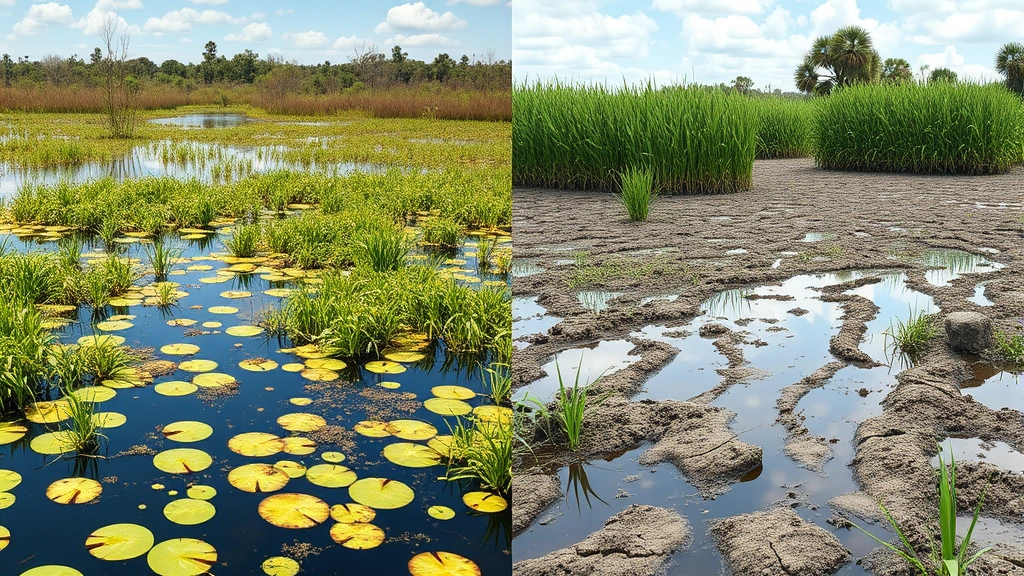
Recent economic analyses reveal the staggering magnitude of these services when properly valued. Pollination services alone, predominantly provided by wild and managed bee populations, generate an estimated $15-20 billion annually in agricultural productivity across global markets. Yet beekeeping industries represent only a fraction of this value, with the majority accruing as uncompensated benefits to farmers and consumers. Similarly, wetlands provide water filtration, flood mitigation, and carbon sequestration valued at $23,000 per hectare annually—a figure that dramatically exceeds the agricultural returns from wetland conversion to cropland.
The challenge of valuation extends beyond simple market calculations. How does one price the cultural significance of a sacred forest, or the existence value of species that provide no direct human benefit? Ecological economics journals increasingly employ contingent valuation methods, hedonic pricing, and travel cost methods to estimate non-market values. These approaches reveal that ecosystem services often generate greater economic value in their natural state than when converted to alternative uses.

The Hidden Costs of Ecological Degradation
When ecosystems degrade, the economic consequences cascade through interconnected systems in ways that traditional accounting obscures. Deforestation, for instance, simultaneously reduces timber revenue (a visible cost), eliminates carbon sequestration capacity (invisible climate cost), disrupts water cycles (hidden agricultural and urban costs), and eliminates pharmaceutical compounds (foregone innovation value). The World Bank’s research indicates that when these hidden costs are totaled, the true economic cost of deforestation exceeds sustainable timber harvesting returns by 5-10 times.
Agricultural productivity depends critically on ecosystem health. Soil degradation, driven by unsustainable farming practices and reduced biodiversity, costs the global economy $400 billion annually in lost crop productivity. This figure represents a direct translation of ecological decline into reduced economic output. Similarly, fisheries collapse in regions where overharvesting has exceeded ecosystem regeneration capacity, resulting in job losses, community disruption, and food security crises affecting millions of people dependent on marine protein sources.
The relationship between human environment interaction and economic stability extends to climate regulation services. Tropical forests sequester approximately 150-200 tons of carbon per hectare, with atmospheric carbon valued at $50-100 per ton in emerging carbon markets. Forest loss therefore represents not merely an environmental tragedy but a massive transfer of wealth from future generations to present-day economic actors who externalize climate costs.
Water systems exemplify how ecological degradation creates economic cascades. Aquifer depletion in agricultural regions—from the Ogallala Aquifer in North America to the Indus Valley in South Asia—represents mining of natural capital disguised as economic productivity. When aquifers deplete, agricultural regions face abrupt economic contraction, rural exodus, and social destabilization. The World Bank estimates that water scarcity will reduce global GDP by 6% by 2050 if current degradation patterns continue.
Natural Capital Accounting and GDP Limitations
Conventional Gross Domestic Product measurements systematically undervalue ecosystem contributions while overvaluing extractive activities. When a nation harvests old-growth forest, GDP increases through timber sales and processing revenues, yet the loss of natural capital—the standing forest’s capacity to generate perpetual services—is completely unaccounted for in national accounting frameworks. This creates a fundamental distortion where economic growth appears stronger precisely when natural capital depletion accelerates most rapidly.
Natural capital accounting methodologies, pioneered by researchers at environmental economics research institutions, propose adjusting national accounts to reflect ecosystem asset values. The United Nations has developed the System of Environmental-Economic Accounting (SEEA) framework, which several nations now implement alongside traditional GDP reporting. Results reveal that true economic growth, adjusted for natural capital depletion, is substantially lower than headline GDP figures suggest.
Costa Rica’s experience demonstrates this accounting challenge vividly. The nation’s GDP grew robustly during the 1980s-1990s, yet natural capital accounting revealed that forest loss and ecosystem degradation offset much of this apparent economic gain. When adjusted for natural capital depletion, Costa Rica’s true economic growth rate fell from 5.2% to 3.1% annually—a difference that fundamentally changes policy assessment regarding development sustainability.
The International Union for Conservation of Nature emphasizes that incorporating natural capital into economic frameworks represents not environmental advocacy but economic accuracy. Failure to do so creates systematic bias toward short-term extraction over long-term sustainability, leading to economically irrational decisions that destroy wealth-generating capacity for temporary gains.
Regional Case Studies: Biodiversity Loss and Economic Impact
Southeast Asian biodiversity hotspots illustrate ecosystem-economy linkages with particular clarity. The region contains approximately 20% of global species diversity yet faces deforestation rates exceeding 1% annually. Economic analyses of this biodiversity loss reveal that pharmaceutical compounds derived from Amazonian and Southeast Asian plants generate $43 billion in annual global pharmaceutical sales, yet source communities and nations capture less than 1% of this value. The economic incentive structure thus encourages biodiversity destruction rather than conservation.
The collapse of Atlantic cod fisheries provides a cautionary economic case study. For decades, the fishery generated $2 billion annually and supported 40,000 jobs in Atlantic Canada alone. When ecosystem carrying capacity was exceeded through overharvesting, the population crashed catastrophically. The subsequent fishery closure cost the region $2 billion in lost economic output and displaced 30,000 workers permanently. The economic value of sustained moderate harvesting—approximately $1.2 billion annually indefinitely—vastly exceeds the short-term gains from exceeding ecosystem regeneration capacity.
African savanna ecosystems demonstrate ecosystem-economy relationships through wildlife-based tourism. Kenya’s wildlife generates $1.5 billion annually in tourism revenue, representing 8% of national GDP and employing 500,000 people directly. This economic value depends entirely on ecosystem integrity—large predator populations, herbivore migrations, and landscape connectivity. Habitat fragmentation and poaching simultaneously reduce ecosystem services and tourism revenue, creating economic collapse alongside ecological degradation. The economic case for wildlife conservation in Kenya is therefore overwhelming, yet political economy factors often favor short-term extraction.
Coral reef ecosystems provide another instructive case. These systems occupy 0.1% of ocean area yet support 25% of marine species. Reef-dependent fisheries and tourism generate $375 billion annually globally. Ocean acidification and warming, driven by atmospheric carbon accumulation, threaten reef viability. Economic analyses indicate that preventing reef collapse through carbon emission reductions costs substantially less than adapting to the economic consequences of reef loss, yet the economic incentive structure fails to reward prevention.
Policy Mechanisms for Ecosystem-Economy Integration
Aligning economic incentives with ecosystem preservation requires policy mechanisms that internalize previously externalized ecological costs. Carbon pricing represents perhaps the most prominent example—by assigning monetary value to atmospheric carbon, carbon pricing creates economic incentives favoring low-carbon activities. Current carbon prices ($50-150 per ton in advanced markets) remain below most estimates of climate damage costs ($100-300 per ton), yet even these imperfect prices shift economic calculations substantially.
Payment for ecosystem services (PES) programs directly compensate ecosystem stewardship. Costa Rica’s PES program, established in 1997, pays landowners to maintain forest cover, creating economic incentive alignment with conservation. Evaluations indicate the program cost-effectively preserved 400,000 hectares of forest while generating rural income and carbon sequestration benefits. The program’s success demonstrates that when ecosystem services are properly valued monetarily, economic actors rationally choose conservation.
Biodiversity offset requirements mandate that development projects damaging ecosystems create compensatory habitat restoration elsewhere. While controversial, these mechanisms at least force developers to internalize some ecological costs rather than externalizing them entirely. More sophisticated offset markets, where ecosystem restoration credits trade at prices reflecting their scarcity value, theoretically incentivize cost-effective conservation.
Subsidy reform represents another critical policy lever. Agricultural subsidies totaling $700 billion annually worldwide often encourage practices degrading soil, water, and biodiversity. Redirecting these subsidies toward sustainable agriculture would simultaneously reduce ecological degradation and improve long-term agricultural productivity. Similarly, fossil fuel subsidies estimated at $5.9 trillion annually (when including climate damage externalities) fundamentally distort energy markets against renewable alternatives.
To effectively reduce carbon footprint at economy-wide scale requires policy frameworks addressing the fundamental misalignment between private incentives and social costs. Carbon pricing, subsidy reform, and natural capital accounting together create conditions where profit-maximizing behavior aligns with ecological sustainability.
Future Outlook: Green Economy Transition
The emerging green economy represents an attempt to decouple economic growth from resource depletion and environmental degradation. Rather than constraining growth, proponents argue that investing in renewable energy, sustainable agriculture, and ecosystem restoration creates economic opportunities while addressing ecological crises. Initial evidence supports this perspective—renewable energy sectors now employ more people than fossil fuel industries globally, and sustainable agriculture demonstrates productivity matching or exceeding conventional methods when properly managed.
The transition presents substantial challenges, however. Incumbent industries dependent on ecosystem degradation resist policy changes threatening their business models. The political economy of transition requires managing distributional consequences—coal miners and oil workers face employment disruption, requiring robust social support systems. Developing nations dependent on natural resource exports face revenue implications of conservation policies, necessitating international financial support mechanisms.
Technological innovation offers additional pathways. Precision agriculture using sensors and data analytics reduces input requirements while maintaining productivity. Renewable energy costs have declined 90% for solar and 70% for wind over the past decade, making clean energy economically superior to fossil alternatives in many contexts. Circular economy approaches reducing material throughput create efficiency gains generating economic value while reducing resource pressure.
The UNEP Green Economy Initiative models scenarios where transitioning to green economy pathways requires investing 2-3% of global GDP annually in sustainable infrastructure and ecosystem restoration. These investments generate returns exceeding costs through avoided climate damage, improved agricultural productivity, and health benefits from reduced pollution. The economic case for green transition, properly calculated, is therefore compelling.
International cooperation mechanisms represent essential infrastructure for ecosystem-economy alignment. The Paris Climate Agreement, biodiversity conventions, and emerging ocean governance frameworks attempt to coordinate national policies toward global ecological sustainability. These mechanisms remain imperfect and inadequately funded, yet they represent recognition that ecosystem services generating global value require governance transcending national boundaries.
FAQ
What are the main ecosystem services with greatest economic value?
Carbon sequestration, pollination, water filtration, and climate regulation collectively represent the highest-value ecosystem services, generating an estimated $125-145 trillion annually globally when properly valued. These services dwarf many national economies yet remain largely uncompensated in markets.
How do we measure ecosystem service economic value?
Valuation employs multiple methodologies: market-based approaches use revealed preferences from actual transactions; hedonic pricing extracts ecosystem service values from property prices; contingent valuation surveys willingness-to-pay for ecosystem preservation; travel cost methods value recreation services; replacement cost approaches estimate service value based on artificial substitute costs; and damage avoidance methods calculate costs prevented by ecosystem services.
Why do traditional GDP measurements fail to capture ecosystem value?
GDP counts resource extraction as income while ignoring depletion of natural capital stocks. Harvesting a forest increases GDP through timber sales, yet the loss of forest capital—its capacity to generate perpetual services—is unaccounted for. This creates systematic bias favoring extraction over sustainability.
What policy mechanisms most effectively align economic incentives with ecosystem conservation?
Carbon pricing, payment for ecosystem services programs, biodiversity offset requirements, natural capital accounting, and subsidy reform collectively create conditions where profit-maximizing behavior supports ecological sustainability. Effectiveness varies by context, requiring tailored policy combinations.
Can green economy transition generate economic growth?
Evidence suggests green economy transition can maintain or accelerate economic growth while reducing resource depletion and environmental degradation. Renewable energy sectors employ more people than fossil fuel industries; sustainable agriculture matches conventional productivity; and ecosystem restoration generates employment. The transition requires managing distributional consequences and international cooperation, yet the economic case for proceeding is compelling.
How does biodiversity loss translate into economic costs?
Biodiversity loss reduces ecosystem resilience, decreases productivity of natural systems, eliminates pharmaceutical and agricultural genetic resources, and increases vulnerability to environmental shocks. These effects translate into reduced agricultural productivity, increased disease prevalence, higher adaptation costs, and diminished ecosystem service capacity.


