
Tennessee’s Economy & Ecosystems: Expert Insights
Tennessee stands at a critical juncture where economic development and ecological preservation must coexist. The state’s unique geography, spanning from the Appalachian Mountains to the Mississippi River Delta, creates distinct climate zones and environmental systems that directly influence economic activities. Understanding the interplay between Tennessee’s temperate climate, diverse lighting conditions across seasons, and environmental setup is essential for sustainable economic planning.
The Volunteer State’s economy has historically relied on natural resource extraction, agriculture, and manufacturing—sectors deeply intertwined with ecosystem health. As climate patterns shift and environmental regulations evolve, Tennessee faces unprecedented challenges in balancing growth with conservation. This comprehensive analysis explores how Tennessee’s environmental characteristics shape economic opportunities and constraints, drawing on expert perspectives and empirical data.
Climate as Economic Foundation
Tennessee’s subtropical to temperate climate classification creates a distinctive economic environment. The state experiences four distinct seasons with average annual temperatures ranging from 54°F to 60°F, depending on elevation and geographic location. This climate variability directly impacts multiple economic sectors, from agriculture to tourism to energy production. Understanding these climate patterns is fundamental to the human environment interaction that defines Tennessee’s economic landscape.
The state’s precipitation patterns, averaging 50-55 inches annually, support robust freshwater ecosystems and hydroelectric potential. The Tennessee Valley Authority (TVA), a landmark New Deal agency, has leveraged these water resources for seven decades, generating approximately 40% of the region’s electricity through hydropower while simultaneously managing flood control and navigation. This integration of natural systems into economic infrastructure demonstrates how environmental characteristics become economic assets.
According to World Bank research on climate-economy relationships, regions with Tennessee’s climate profile experience optimal conditions for diverse economic activities. However, climate variability increasingly threatens this stability. Recent data indicates temperature extremes have increased 15-20% over the past two decades, with implications for agricultural yields, energy demand patterns, and infrastructure resilience.
Temperature Patterns and Business Operations
Tennessee’s temperature regime creates distinct seasonal business cycles. Winter temperatures averaging 35-45°F in the Cumberland Plateau contrast sharply with summer highs of 85-90°F in the Mississippi lowlands. These variations influence heating and cooling costs, agricultural growing seasons, and tourism patterns throughout the year.
The commercial real estate sector responds directly to temperature extremes. HVAC systems operate at maximum capacity during summer months, consuming substantial energy resources. Commercial buildings designed for Tennessee’s climate face increasing pressure from temperature volatility. Energy costs for temperature regulation represent 40-50% of operational expenses for many businesses, making climate efficiency critical for competitiveness.
Agricultural operations demonstrate profound temperature sensitivity. Tobacco, historically Tennessee’s signature crop, requires specific temperature conditions for optimal growth and curing. Contemporary diversification toward commodity crops like soybeans and corn reflects both economic shifts and temperature-driven agricultural adaptation. The growing season’s length—approximately 200 days—constrains crop selection and rotation strategies, directly affecting farm profitability and land use patterns.
Tourism, Tennessee’s third-largest industry, fluctuates seasonally based on temperature and climate conditions. Summer months draw peak visitors to outdoor attractions, while winter weather patterns influence visitation to mountain resorts and urban destinations. The natural environment teaching value of Tennessee’s ecosystems attracts educational tourism, particularly around Great Smoky Mountains National Park, which generates approximately $2.5 billion in annual economic activity.
Seasonal Lighting and Agricultural-Energy Nexus
Tennessee’s latitude (35-36°N) creates significant seasonal variation in daylight hours, ranging from approximately 9.5 hours in December to 14.5 hours in June. This photoperiod variation profoundly influences both agricultural productivity and energy consumption patterns.
Agricultural operations depend critically on photoperiod-sensitive crops. Many traditional Tennessee crops, including tobacco and certain vegetable varieties, respond to day-length changes that trigger flowering and maturation. Modern indoor agriculture operations utilize controlled lighting environments to overcome these natural constraints, representing a growing but energy-intensive economic sector. Controlled environment agriculture (CEA) facilities in Tennessee consume 10-15 times more electricity per unit area than conventional outdoor agriculture, creating tension between productivity gains and environmental sustainability.
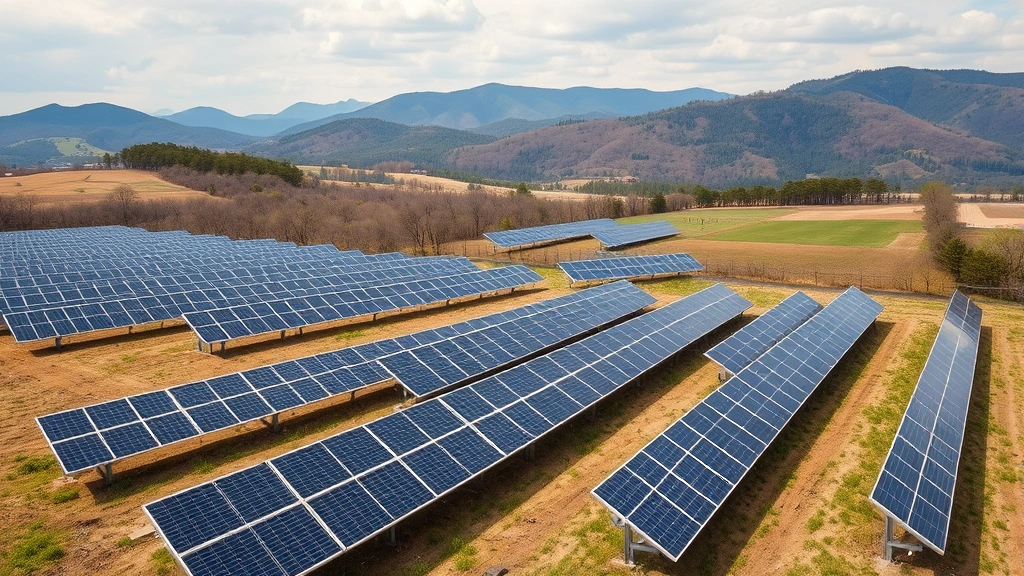
The energy sector responds directly to seasonal lighting patterns. Winter’s extended darkness increases residential and commercial lighting demand by 30-40% compared to summer months. This seasonal variation strains grid capacity and influences peak demand pricing. Renewable energy integration, particularly solar installations, must account for seasonal irradiance variation—winter insolation in Tennessee averages 2.5-3.0 kWh/m²/day compared to 5.5-6.0 kWh/m²/day in summer.
Tennessee’s solar potential represents underutilized economic opportunity. Current solar capacity represents less than 2% of the state’s renewable generation, despite favorable conditions. Expanding renewable energy for homes adoption could generate $800 million to $1.2 billion in economic value while reducing carbon emissions by 5-8 million tons annually. The seasonal lighting advantage—though variable—provides foundation for solar expansion compatible with agricultural land use through agrivoltaic approaches.
Quantifying Ecosystem Services
Tennessee’s diverse ecosystems—forests covering 54% of state land, freshwater systems spanning 926,000 acres, and grasslands comprising 2.8 million acres—provide quantifiable economic services. Research from ecological economics journals indicates these natural systems generate $89-127 billion in annual ecosystem services value when accounting for water purification, carbon sequestration, pollination, and recreational benefits.
The state’s forest ecosystems provide critical economic functions beyond timber production. Carbon sequestration capacity ranges from 2.5-4.2 tons per acre annually, representing potential climate mitigation asset worth $75-180 per acre depending on carbon pricing mechanisms. With 13.9 million acres of forest, Tennessee’s total carbon sequestration value could reach $1.0-2.5 billion annually under emerging carbon market frameworks.
Freshwater systems generate substantial economic value through multiple pathways. The Cumberland River system alone supports commercial navigation worth $340 million annually, while providing water supplies for 3.2 million residents and supporting agricultural irrigation on 380,000 acres. Water quality degradation from agricultural runoff and industrial discharge costs the state an estimated $200-300 million annually in treatment expenses and lost recreational value.
Pollination services, often invisible in economic accounting, represent critical agricultural inputs. Tennessee’s agricultural sector depends on pollination services valued at $85-120 million annually. Declining pollinator populations—bee populations have declined 30-40% over two decades—threaten this economic foundation. Habitat restoration and pesticide reduction represent investments in ecosystem service preservation with direct economic returns.
Environmental Setup and Infrastructure Development
Tennessee’s physical environmental setup—topography, soil composition, water availability, and vegetation patterns—fundamentally constrains and enables infrastructure development. The state’s varied terrain creates distinct regional economies. The Cumberland Plateau’s rugged topography limits large-scale agricultural operations but supports forestry and outdoor recreation. The Mississippi embayment’s flat terrain enables intensive agriculture but creates drainage and flooding challenges requiring substantial infrastructure investment.
Soil characteristics directly influence agricultural productivity and land values. The state’s dominant soil orders—ultisols in the eastern highlands and alfisols in western regions—exhibit varying fertility and erosion susceptibility. Soil degradation costs Tennessee agriculture an estimated $120-180 million annually through lost productivity. Conservation practices, including contour farming and cover cropping, represent investments in environmental setup improvement with 3-5 year payback periods through yield protection.
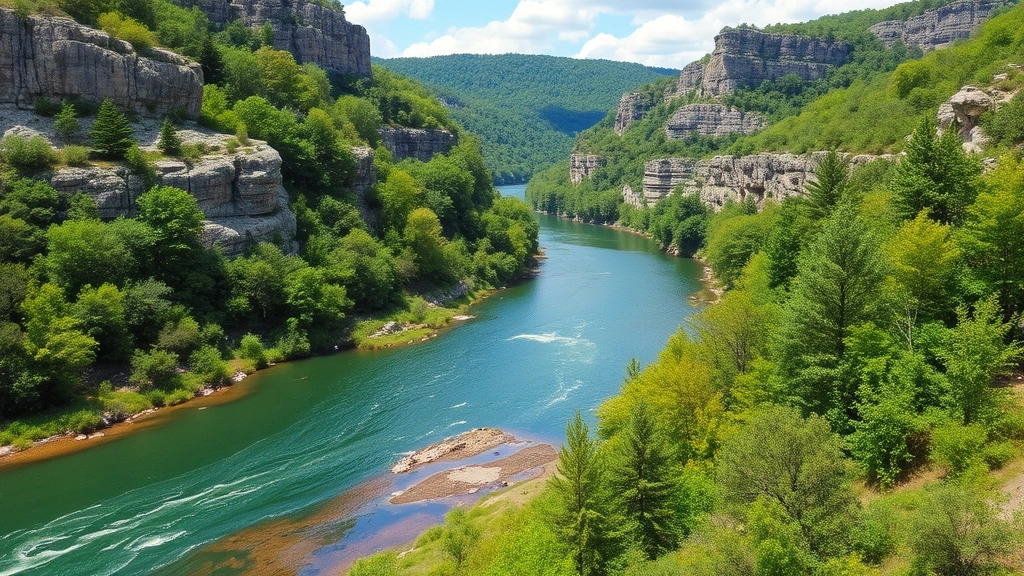
Water infrastructure represents Tennessee’s largest environmental-economic integration system. The TVA operates 49 dams creating 650,000 surface acres of reservoirs. This infrastructure simultaneously provides hydroelectric generation (19,000-21,000 GWh annually), flood control protecting $8-12 billion in property values, recreational opportunities generating $2.1 billion annually, and water supply for industrial and municipal use. Climate change threatens this system through altered precipitation patterns and temperature-driven evaporation increases of 3-5% per degree Celsius.
Transportation infrastructure reflects environmental constraints. River navigation on the Mississippi, Tennessee, and Cumberland rivers handles 45-55 million tons of cargo annually, representing 12-15% cost savings compared to truck transport. However, seasonal water level variations limit shipping seasons and cargo capacity. Climate projections indicating increased drought frequency threaten this economic corridor. Conversely, flood risk increases require adaptive infrastructure investment.
Tennessee’s Sustainable Economic Transition
Tennessee faces imperative to transition toward sustainable economic models that preserve ecosystem functions while supporting prosperity. Current economic structure remains relatively carbon-intensive, with per capita emissions of 14.2 tons CO₂ annually—approximately 25% above national average. This reflects the state’s manufacturing base, transportation logistics hub role, and energy-intensive industries.
The renewable energy transition represents primary decarbonization pathway. Tennessee’s current renewable generation—approximately 8% of total electricity—lags national average of 12-13%. Expanding renewable capacity to 30-40% by 2035 could generate 8,000-12,000 permanent jobs while reducing emissions 30-35 million tons annually. Wind potential in the Cumberland Plateau remains largely underdeveloped, with capacity factors of 30-35% comparable to leading wind states.
Industrial symbiosis and circular economy approaches offer economic opportunities. Tennessee’s manufacturing base, concentrated in automotive, chemical, and food processing sectors, generates substantial waste streams. Industrial ecology research indicates 15-25% waste reduction potential through inter-firm material exchange networks, generating $200-400 million annual value while reducing environmental impact. Pilot programs in Knoxville and Nashville demonstrate feasibility of coordinated waste valorization.
Agricultural transition toward regenerative practices represents simultaneous economic and ecological opportunity. Regenerative agriculture—incorporating cover cropping, reduced tillage, and integrated livestock management—increases soil carbon sequestration while improving long-term yields. Transition costs of $50-150 per acre amortize within 4-6 years through input cost reduction and premium market access. Tennessee’s 14.8 million acres of farmland could generate $1.5-2.0 billion in added value through regenerative transition.
The carbon footprint reduction imperative extends to consumption patterns. Tennessee residents’ average carbon footprint of 16.8 tons annually reflects both industrial activity and lifestyle choices. Local food system development, exemplified by community garden initiatives, reduces transportation emissions while building social capital and food security. Current community gardens generate $2,000-5,000 annual value per site while reducing individual carbon footprints 200-500 kg annually.
Economic diversification toward ecosystem-dependent sectors offers resilience and growth. Ecotourism, nature-based recreation, and environmental services represent fastest-growing sectors nationally. Tennessee’s natural assets—Great Smoky Mountains, Cumberland River system, extensive cave networks—support 18,000+ direct jobs in nature tourism with 4-6% annual growth rates compared to 1-2% for traditional sectors. Ecosystem restoration investment generates immediate employment while building long-term economic assets.
According to UNEP research on green economy transitions, nature-positive economic models generate 15-25% higher employment than extractive alternatives over 10-20 year periods. Tennessee’s transition potential aligns with this evidence, suggesting sustainable economic restructuring represents not sacrifice but opportunity.
FAQ
How does Tennessee’s temperature climate affect business operations?
Tennessee’s temperature range of 35-90°F creates distinct seasonal business cycles. HVAC costs consume 40-50% of commercial building operational expenses, while agricultural growing seasons of approximately 200 days constrain crop selection. Tourism fluctuates seasonally based on weather conditions, with summer peak visitation driving 35-40% of annual revenue for outdoor attractions.
What is the economic value of Tennessee’s ecosystem services?
Tennessee’s ecosystems generate estimated $89-127 billion in annual ecosystem services value. Forest carbon sequestration alone represents $1.0-2.5 billion potential value, while freshwater systems provide $340 million in navigation commerce plus $200-300 million in water treatment value. Pollination services support $85-120 million in agricultural productivity.
How can Tennessee transition toward sustainable economy?
Primary pathways include renewable energy expansion to 30-40% by 2035 (generating 8,000-12,000 jobs), regenerative agriculture adoption across 14.8 million acres (creating $1.5-2.0 billion value), industrial symbiosis reducing waste 15-25% ($200-400 million value), and ecotourism development leveraging natural assets for 4-6% annual growth rates.
What role does seasonal lighting play in Tennessee’s energy system?
Photoperiod variation from 9.5 hours in winter to 14.5 hours in summer drives 30-40% increase in lighting demand during dark months. Solar potential of 2.5-6.0 kWh/m²/day varies seasonally, currently generating less than 2% of renewable capacity but representing $800 million to $1.2 billion expansion opportunity through agrivoltaic approaches.
How does climate change threaten Tennessee’s water infrastructure?
TVA’s 49-dam system generates 19,000-21,000 GWh annually and protects $8-12 billion in property values. Climate projections indicate 3-5% increased evaporation per degree Celsius and altered precipitation patterns threatening hydroelectric generation, navigation seasons, and flood control capacity. Adaptive infrastructure investment of $2-4 billion represents necessary resilience measure.
What ecosystem services do Tennessee’s forests provide?
Tennessee’s 13.9 million forested acres sequester 2.5-4.2 tons carbon annually per acre, provide habitat for 3,000+ wildlife species, filter water for downstream users, and support $2.8 billion timber industry. Forest ecosystem services exceed timber value by 3-5x when accounting for carbon, water, and recreational benefits.


