
Macro Environment Impact on Economy: An Overview
The macro environment represents the broader external forces that shape economic performance, institutional frameworks, and development trajectories across nations and regions. Unlike microeconomic factors that affect individual firms or industries, macroeconomic environmental conditions encompass climate systems, natural resource availability, biodiversity patterns, and geophysical phenomena that create the foundational constraints and opportunities for all economic activity. Understanding how these environmental dimensions influence macroeconomic outcomes has become increasingly critical as global economies face unprecedented ecological pressures, resource scarcity, and climate volatility.
Contemporary economic analysis increasingly recognizes that separating environmental considerations from macroeconomic policy represents a fundamental analytical error. The macro environment functions as both a source of essential ecosystem services—including nutrient cycling, water purification, pollination, and climate regulation—and a constraint on productive capacity when degraded. When environmental systems deteriorate, the costs manifest through reduced agricultural yields, increased disaster recovery expenditures, diminished worker productivity, compromised infrastructure resilience, and constrained investment returns across multiple sectors. This comprehensive overview examines how environmental variables integrate into macroeconomic frameworks and influence long-term economic sustainability.
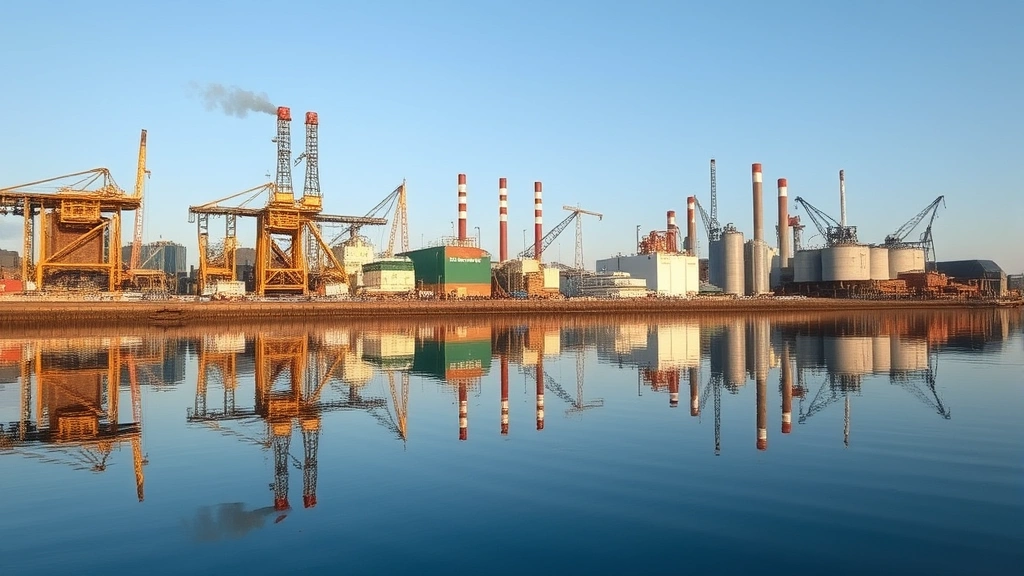
Defining Macro Environment in Economic Context
The macro environment encompasses all large-scale environmental systems operating at regional, continental, and global scales that influence economic activity. This includes atmospheric composition and climate patterns, hydrological cycles and water availability, soil health and agricultural capacity, forest ecosystems and carbon sequestration, marine biodiversity and fishery productivity, mineral and fossil fuel reserves, and geophysical hazards including earthquakes, volcanic activity, and extreme weather events. Economic theory traditionally treated these environmental dimensions as external to economic models—exogenous variables operating outside the primary system of analysis. However, ecological economics and environmental accounting frameworks now recognize that environmental conditions fundamentally shape the production possibility frontier and determine the sustainability of economic growth trajectories.
The relationship between physical environment characteristics and economic outcomes operates through multiple transmission channels. Primary production capacity depends directly on climate conditions, soil quality, and water availability. Manufacturing and service sectors require stable infrastructure, which becomes compromised by environmental degradation and extreme events. Financial markets price in environmental risks through increased discount rates and reduced asset valuations in vulnerable regions. Labor productivity correlates with environmental quality, disease burden, and climate stress. Capital accumulation faces constraints when environmental degradation destroys productive assets and reduces returns on investment.

Environmental Systems and Economic Productivity
The macro environment provides the biophysical foundation for all economic production. Agricultural productivity—which remains central to food security and rural livelihoods in developing economies—depends critically on precipitation patterns, soil nutrient cycling, temperature regimes, and pest population dynamics all shaped by broader environmental conditions. When environmental systems degrade, agricultural yields decline, rural incomes fall, and food prices rise, creating cascading effects through entire economies. Studies from the World Bank document that agricultural productivity losses from climate change could reduce global GDP by 2-6% by 2100 if current trajectories continue.
Water availability represents another critical environmental variable with direct macroeconomic implications. Approximately 70% of global freshwater withdrawals support agriculture, while industrial processes and urban consumption compete for limited supplies. In water-stressed regions, economic growth faces hard constraints as agricultural expansion becomes impossible and industrial development encounters infrastructure limitations. The living environment quality directly affects labor productivity through disease burden, heat stress, and psychological wellbeing. Research indicates that workers in hot climates experience 2-4% productivity reductions for every degree Celsius above optimal temperature thresholds.
Biodiversity and ecosystem resilience create economic value through multiple pathways often invisible in conventional accounting. Pollinator populations support approximately 15% of global food production valued at $15-20 billion annually. Forest ecosystems regulate hydrological cycles, reducing flood and drought severity while moderating temperature extremes. Wetlands filter water, reduce coastal erosion, and support fishery productivity. Coral reefs protect coastlines from storm surge while supporting tourism and food security for millions of people. When biodiversity declines and ecosystem resilience diminishes, these economic services become compromised, creating hidden costs throughout macroeconomic systems.
Climate Volatility and Macroeconomic Instability
Climate variability and extreme weather events create substantial macroeconomic volatility through multiple transmission mechanisms. Extreme precipitation events cause flooding that destroys productive assets, disrupts supply chains, and requires costly emergency responses. Droughts reduce agricultural yields, increase food prices, strain water supplies, and intensify competition for limited resources. Hurricanes, typhoons, and severe storms cause direct infrastructure damage while disrupting economic activity across affected regions. The economic costs of climate-related disasters have increased substantially over recent decades, with annual losses now exceeding $150-300 billion globally depending on measurement methodology.
The macro environment creates economic volatility through channels that extend beyond direct physical damage. Climate-induced migration creates fiscal pressures on receiving regions while reducing labor supply in origin areas. Environmental refugees compete for employment, housing, and services, creating social tensions and political instability that increase risk premiums across financial markets. Agricultural price volatility from weather-driven supply shocks transmits to broader inflation, affecting monetary policy transmission and real interest rates. Supply chain disruptions from environmental events increase production costs and reduce economic efficiency across interconnected global production networks.
Emerging research documents how climate volatility reduces long-term investment and capital accumulation in vulnerable regions. When businesses and households face uncertain returns from environmental hazards, they reduce investment in productive assets, preferring liquid holdings that can be quickly relocated if environmental conditions deteriorate. This capital flight reduces productive capacity growth, perpetuates lower productivity, and creates poverty traps in environmentally vulnerable regions. Insurance markets fail to function effectively when catastrophic risks exceed capital availability, leaving populations and businesses to bear environmental losses directly.
Natural Resource Depletion and Economic Growth
The macro environment contains finite natural resources that constrain long-term economic growth if extraction rates exceed regeneration rates. Fisheries provide instructive examples: when catch rates exceed reproduction rates, fish populations collapse, eliminating productive capacity entirely. The Grand Banks cod fishery collapse in the 1990s cost tens of thousands of jobs and demonstrated how resource depletion creates abrupt economic transitions. Similar dynamics operate across forestry, where unsustainable harvest rates reduce future timber productivity, and agriculture, where soil degradation reduces yields and requires costly remediation.
Fossil fuel depletion represents a particularly significant macroeconomic constraint as finite petroleum, natural gas, and coal reserves approach depletion curves in many regions. Peak oil production in conventional fields has already occurred in numerous countries, requiring increasingly expensive extraction methods and energy-intensive processing. The energy return on investment (EROI) for oil production has declined from approximately 100:1 in the 1930s to approximately 10-15:1 currently, indicating that extracting remaining reserves requires substantially greater economic resources. This energy constraint operates independently from climate policy, creating a fundamental macroeconomic limit on growth trajectories dependent on fossil fuel expansion.
The transition to renewable energy systems requires substantial capital investment and creates transition costs as existing fossil fuel infrastructure becomes economically stranded. However, the alternative—continued dependence on depleting fossil fuel reserves—creates even greater macroeconomic risks as energy costs rise and supply security diminishes. Natural resource depletion thus creates a macroeconomic imperative toward economic restructuring regardless of climate considerations, as finite resources fundamentally constrain growth in resource-intensive economic models.
Ecosystem Services Valuation in National Accounts
Traditional gross domestic product (GDP) accounting treats ecosystem services as free inputs with zero economic value, creating systematic underestimation of natural capital depreciation and environmental costs. When forests are harvested, GDP increases from the timber sale while the lost ecosystem services—carbon sequestration, water regulation, biodiversity habitat, soil conservation—appear nowhere in national accounts. When fisheries collapse from overharvesting, GDP may increase initially from high catch volumes, then suddenly decline when stocks crash, creating an illusion of sudden economic shock rather than reflecting the gradual depletion process.
United Nations Environment Programme and World Bank initiatives on natural capital accounting attempt to correct this fundamental measurement problem by valuing ecosystem services and incorporating natural capital depreciation into expanded national accounting frameworks. Research indicates that incorporating environmental costs into GDP calculations typically reduces measured growth rates by 2-8% annually in developing economies heavily dependent on natural resource extraction. For some nations, genuine progress accounting that incorporates environmental and social factors shows stagnation or decline while conventional GDP measures show growth, indicating that measured economic expansion masks underlying resource depletion.
The valuation of ecosystem services requires methodological sophistication to estimate non-market values through revealed preference methods (observing actual market transactions), stated preference methods (surveying willingness to pay), benefit transfer approaches (applying valuations from similar ecosystems), and production function methods (estimating ecosystem contributions to marketed outputs). The human environment interaction creates complex interdependencies where changes in environmental systems ripple through economic structures in ways difficult to isolate and quantify. Despite methodological challenges, environmental accounting frameworks provide more accurate macroeconomic measurements than conventional GDP approaches that ignore natural capital.
Policy Mechanisms for Environmental-Economic Integration
Effective macroeconomic policy must integrate environmental constraints and opportunities rather than treating them as external considerations. Carbon pricing mechanisms—whether implemented as taxes or cap-and-trade systems—internalize climate costs into economic decisions, creating incentives for emissions reductions and renewable energy transitions. Research from ecological economics journals demonstrates that carbon prices of $50-100 per ton of CO2 equivalent create sufficient incentives for substantial emissions reductions while remaining economically manageable for most sectors. However, current carbon prices typically range from $5-30 per ton, remaining insufficient to drive necessary transitions.
Natural resource taxation and royalty systems can align private extraction incentives with social welfare by capturing resource rents for public benefit. When extraction taxes remain too low, private actors capture excessive rents while public communities bear environmental costs of degradation. Increasing taxation on resource extraction creates fiscal revenues for sustainable development while reducing incentives for excessive resource depletion. Payment for ecosystem services programs provide direct compensation for maintaining environmental functions, creating financial incentives for conservation rather than conversion. When properly designed, these programs can achieve environmental goals at lower cost than regulatory approaches while generating income for rural communities.
Environmental standards and regulations establish minimum environmental performance requirements across economic sectors. Emissions standards for industrial facilities, fuel efficiency requirements for vehicles, and water quality standards for discharges create baseline environmental protections. However, regulations alone cannot capture the full range of environmental-economic interdependencies, requiring complementary market-based mechanisms and voluntary initiatives. The most effective policy approaches combine regulatory minimums with economic incentives that encourage performance exceeding regulatory requirements.
Sectoral Vulnerabilities to Macro Environmental Change
Different economic sectors face varying degrees of vulnerability to environmental change, creating heterogeneous macroeconomic impacts. Agriculture remains the most directly vulnerable sector, with productivity dependent on climate, water availability, soil health, and pest populations all shaped by environmental conditions. A single severe drought can devastate agricultural output, creating food security crises and economic disruption across connected sectors. Fisheries face similar vulnerabilities as marine ecosystem changes alter fish populations and productivity.
Tourism and hospitality sectors depend critically on environmental quality and aesthetic characteristics. Coral reef degradation undermines marine tourism, reducing employment and government revenues in island nations. Forest ecosystem degradation reduces ecotourism opportunities. Climate change altering seasonal patterns disrupts winter sports industries while making some regions less attractive as travel destinations. Insurance and financial services face increasing environmental risk as asset valuations in climate-vulnerable regions decline and disaster-related claims increase. Property insurance becomes prohibitively expensive or unavailable in flood-prone and hurricane-prone areas, reducing property values and limiting investment.
Manufacturing sectors increasingly face water supply constraints, energy cost volatility, and supply chain disruptions from environmental hazards. Semiconductor manufacturing, data centers, and thermal power generation all require substantial water supplies increasingly constrained in many regions. Transportation infrastructure faces degradation from extreme heat, flooding, and permafrost thaw in high-latitude regions. The energy sector experiences reduced hydroelectric capacity during droughts while facing stranded asset risks as fossil fuel demand declines. Conversely, renewable energy and environmental technology sectors represent growth opportunities as environmental constraints drive transitions toward sustainable economic structures.
Future Economic Trajectories and Environmental Constraints
The macro environment will increasingly determine feasible economic growth trajectories as environmental constraints become binding in multiple regions simultaneously. Climate change projections indicate substantial productivity losses in agriculture, water stress affecting billions of people, and increasing frequency of extreme weather events. Simultaneously, fossil fuel depletion and renewable energy transitions require substantial capital reallocation and economic restructuring. These environmental changes create a fundamental shift in macroeconomic constraints compared to the industrial era when environmental limits seemed distant and non-binding.
Degrowth and steady-state economics frameworks propose that wealthy economies reduce material throughput while maintaining or improving wellbeing through dematerialization, efficiency improvements, and qualitative development. Rather than pursuing continuous GDP expansion, these approaches emphasize optimal scale where economic activity remains within planetary boundaries while meeting human needs. Implementing such transitions requires substantial institutional change, including reformed accounting frameworks, tax structures rewarding resource efficiency rather than extraction, and policy frameworks valuing environmental preservation alongside economic expansion.
Conversely, green growth approaches propose that technological innovation and market mechanisms can decouple economic expansion from environmental degradation, allowing continued GDP growth within environmental constraints. Evidence for absolute decoupling—where GDP increases while environmental impacts decline—remains limited and contested. Relative decoupling, where environmental impacts grow slower than GDP, occurs in some wealthy nations, but this often reflects outsourcing of material-intensive production to developing economies rather than genuine efficiency improvements. Global decoupling sufficient to meet climate targets and environmental sustainability objectives remains unachieved at scale.
The resolution of tensions between growth imperatives and environmental constraints will shape macroeconomic trajectories throughout the 21st century. Technological transitions toward renewable energy, circular economy approaches minimizing waste, and sustainable agriculture offer pathways for maintaining reasonable living standards within environmental boundaries. However, achieving these transitions requires policy frameworks that internalize environmental costs, direct investment toward sustainable infrastructure, and create institutional structures aligned with long-term environmental sustainability rather than short-term profit maximization. The macro environment will ultimately determine whether contemporary economic systems prove adaptable to ecological constraints or whether environmental degradation forces abrupt economic contraction.
FAQ
How does the macro environment specifically influence inflation and monetary policy?
Environmental shocks create inflation through multiple pathways. Agricultural disruptions increase food prices, which comprise 15-30% of consumption baskets in developing economies. Energy supply constraints from resource depletion or refinery disruptions increase energy costs. Supply chain disruptions from extreme weather increase production costs across sectors. Central banks face dilemmas when environmental shocks create stagflation (simultaneous inflation and stagnation), as traditional monetary policy tools prove insufficient. Raising interest rates to combat inflation reduces investment needed for environmental adaptation, while maintaining low rates accommodates inflation, reducing real returns and discouraging productive investment.
What percentage of economic losses result from environmental degradation?
Estimates vary substantially depending on methodology. The World Bank estimates annual losses from environmental degradation at 4-6% of GDP in developing economies most dependent on natural resources. Costs from climate change impacts alone could reach 5-20% of GDP by 2100 under high-emissions scenarios. However, these estimates capture only easily quantifiable direct losses, omitting less visible costs including reduced productivity, increased disease burden, and constrained development opportunities. Comprehensive accounting that includes all environmental costs would likely show environmental degradation consuming 10-15% of global economic output currently.
Can market mechanisms alone solve environmental-economic problems?
Market mechanisms including carbon pricing, environmental taxes, and ecosystem service payments address some environmental-economic misalignments by internalizing external costs. However, markets fail comprehensively when addressing environmental problems because: (1) many ecosystem services lack market prices and resist valuation, (2) environmental thresholds and tipping points create non-linear dynamics that markets cannot price accurately, (3) long-term environmental risks exceed typical market discount rates, and (4) distributional consequences of environmental degradation create political economy constraints. Effective environmental policy requires combining market mechanisms with regulatory standards, public investment in sustainable infrastructure, and institutional reforms aligned with environmental sustainability.
How do developing and developed economies differ in environmental-economic vulnerabilities?
Developing economies typically face greater environmental vulnerability because agricultural sectors remain large, infrastructure proves less resilient, climate zones concentrate in vulnerable tropical and subtropical regions, and capital availability for adaptation remains constrained. However, developed economies face substantial vulnerabilities including dependence on energy-intensive consumption patterns, coastal concentration of valuable infrastructure and population, and psychological adjustment challenges to reduced material consumption. The distribution of climate impacts falls most heavily on developing economies despite developed economies bearing historical responsibility for cumulative emissions, creating justice dimensions that complicate international climate negotiations and economic policy coordination.
What role does technological innovation play in resolving environmental-economic tensions?
Technological innovation offers genuine opportunities for improving environmental performance, including renewable energy systems with declining costs, energy efficiency improvements, sustainable agriculture techniques, and circular economy approaches minimizing waste. However, technological optimism proves insufficient without addressing underlying consumption patterns and economic structures. Efficiency improvements often trigger rebound effects where lower costs increase consumption, offsetting environmental benefits. Scaling new technologies requires substantial capital investment and institutional change. Technology alone cannot address environmental problems rooted in systemic overconsumption and growth imperatives that exceed planetary boundaries. Technological transitions must accompany institutional reforms and behavioral changes toward sustainable economic organization.


