What Is a Hostile Environment? Legal Insight and Environmental Economics
A hostile environment, in legal and ecological contexts, refers to conditions—whether physical, social, or economic—that are fundamentally incompatible with human wellbeing, business operations, or ecosystem stability. The term carries distinct meanings across disciplines: employment law defines it as workplace harassment or discrimination creating an intimidating atmosphere, while environmental economics examines how degraded natural systems impose hostile conditions on economic activity and human survival. Understanding this concept requires integrating legal frameworks with ecological and economic analysis, particularly as climate change and environmental degradation intensify hostile conditions globally.
The intersection of legal definitions and environmental realities reveals a critical gap in how societies address systemic hostility. When natural resources deplete, pollution accumulates, and climate patterns shift, entire regions become economically and physically hostile. Simultaneously, legal systems struggle to categorize and address these compound crises. This analysis explores hostile environments through multiple lenses: employment law, environmental policy, ecological economics, and sustainable development, demonstrating why integrated approaches are essential for addressing contemporary challenges.
Legal Definition of Hostile Environment
In legal terminology, a hostile environment encompasses circumstances where individuals face systematic opposition, intimidation, or obstruction that violates their rights or prevents normal functioning. Employment law provides the most codified definition: the U.S. Equal Employment Opportunity Commission defines a hostile work environment as conduct based on protected characteristics (race, color, religion, sex, national origin, disability, age) that creates an intimidating, offensive, or abusive workplace. However, this definition has expanded considerably to include environmental and geopolitical contexts.
Legal scholars increasingly recognize that hostile environments extend beyond interpersonal harassment. They encompass structural conditions—inadequate infrastructure, lack of legal protections, resource scarcity, and environmental degradation—that systematically disadvantage populations. International law addresses hostile environments through refugee conventions, climate justice frameworks, and human rights instruments recognizing that certain geographic and economic conditions render territories uninhabitable or economically unviable. The United Nations Environment Programme documents how environmental hostility creates legal obligations for states to provide protection and remediation.
The legal burden of proof for establishing a hostile environment typically requires demonstrating: (1) unwelcome conduct, (2) based on protected status or environmental degradation, (3) sufficiently severe or pervasive to alter conditions, and (4) employer or state knowledge and failure to remedy. This framework, while useful for employment cases, proves inadequate for addressing systemic environmental hostility affecting millions. Understanding human environment interaction reveals how legal definitions must evolve to capture complex, multi-causal hostile conditions.
Employment Law and Workplace Hostility
Workplace hostile environments represent the most litigated category, with thousands of cases annually establishing precedent. Courts have consistently held that conduct need not involve physical violence or economic harm to constitute hostility—psychological intimidation, exclusion, and demeaning treatment suffice. Landmark cases like Harris v. Forklift Systems established that hostile environments violate Title VII of the Civil Rights Act when a reasonable person would find conditions abusive.
Modern workplace hostility extends beyond traditional discrimination. Environmental factors now trigger hostile environment claims: inadequate safety equipment, exposure to hazardous substances, and failure to accommodate disabilities create legal liability. Organizations increasingly face liability for hostile environments stemming from inadequate responses to climate-related workplace disruptions—extreme heat, flooding, air quality degradation—that compromise employee safety and dignity.
Economic data reveals significant costs associated with hostile work environments. The World Bank estimates that workplace hostility reduces productivity by 15-30%, increases healthcare costs, and drives talent migration. Employees experiencing hostile conditions exhibit elevated stress hormones, decreased cognitive function, and higher turnover rates. Organizations addressing hostility through proactive policies, inclusive practices, and environmental remediation demonstrate superior financial performance, lower absenteeism, and enhanced innovation. The economic case for eliminating workplace hostility aligns with broader sustainability imperatives: both require systemic change toward equity and ecological stability.
Environmental Hostility and Ecological Economics
Environmental hostility occurs when ecosystem degradation renders territories economically unproductive or physically dangerous. Ecological economics—an interdisciplinary field integrating biophysical limits with economic analysis—provides frameworks for quantifying environmental hostility. Unlike conventional economics assuming infinite substitutability and growth, ecological economics recognizes that natural capital depletion creates irreversible hostile conditions.
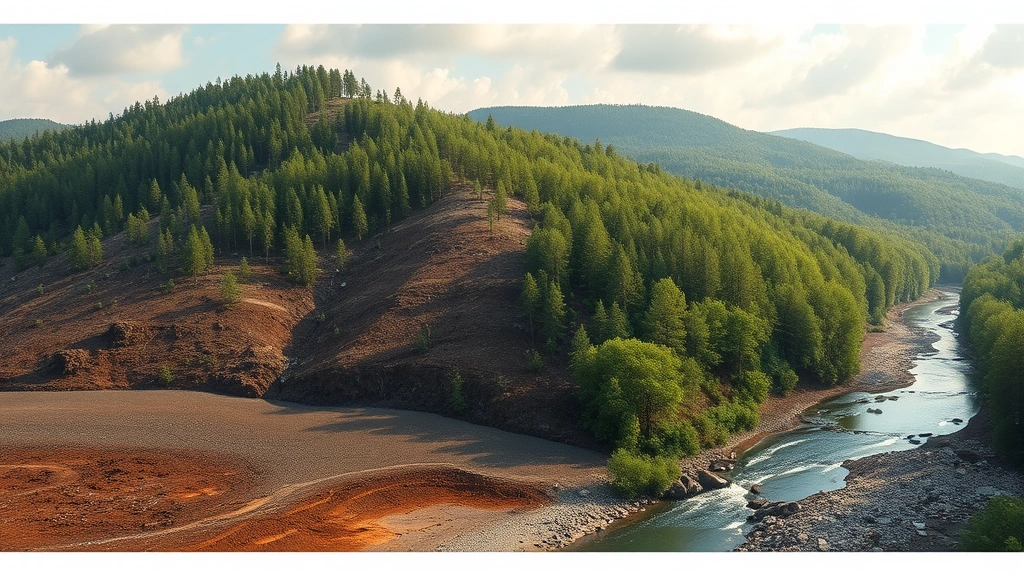
Hostile environments emerge from multiple ecological pathways: soil degradation reducing agricultural yields, water scarcity limiting industrial production, biodiversity loss disrupting ecosystem services, pollution causing health crises, and climate instability creating unpredictability. Each pathway degrades economic viability. A region experiencing concurrent soil erosion, aquifer depletion, and extreme weather becomes economically hostile—investment becomes irrational, populations migrate, and institutions fail. The Sahel region, Mediterranean basin, and Southeast Asian megadeltas exemplify how environmental hostility compounds economic hostility.
Ecological economics quantifies environmental hostility through natural capital accounting, which assigns monetary values to ecosystem services: carbon sequestration, pollination, water purification, flood regulation, and nutrient cycling. When environmental degradation reduces natural capital, economists measure the loss as reduced economic capacity. A region losing 30% of forest cover experiences proportional reductions in carbon storage, water regulation, and biodiversity—rendering it progressively more hostile economically. Understanding how to reduce carbon footprint becomes essential for preventing hostile environmental conditions at local and global scales.
The concept of environmental justice within ecological economics reveals that hostile environments disproportionately affect marginalized populations. Low-income communities and developing nations concentrate near pollution sources, experience first impacts from climate change, and possess fewest resources for adaptation. This creates legal and ethical obligations for addressing environmental hostility as a justice issue, not merely an environmental concern.
Climate Change as Hostile Environment Creation
Climate change represents the most significant hostile environment generator of the twenty-first century. Rising temperatures, shifting precipitation, extreme weather intensification, and ecosystem disruption create cascading hostility across agricultural, water, energy, and health systems. The Intergovernmental Panel on Climate Change projects that 2-3 billion people will face permanent water scarcity, agricultural productivity will decline 10-25%, and coastal regions housing 600 million will experience regular inundation by 2100.
Climate-driven hostile environments generate legal and economic crises simultaneously. Agricultural zones become unsuitable for traditional crops, forcing costly transitions or abandonment. Coastal cities face uninhabitability from sea-level rise and storm surge. Small island nations experience existential threats. These conditions trigger climate migration—already displacing millions—creating legal questions about climate refugees, territorial claims, and state responsibility. International law inadequately addresses climate-driven hostile environments, leaving populations vulnerable and creating geopolitical instability.
Economic modeling reveals climate hostility compounds exponentially. Each degree of warming increases hostile zone expansion, migration pressures, conflict risk, and adaptation costs. The Stern Review estimated unmitigated climate change could reduce global GDP by 5-20% permanently. Conversely, aggressive climate mitigation costs 1-2% of GDP but prevents catastrophic hostility. This economic logic supports rapid renewable energy deployment and natural ecosystem protection. Renewable energy for homes represents one scalable adaptation, yet systemic transformation requires policy intervention across energy, agriculture, transportation, and land use sectors.
Legal frameworks addressing climate hostility remain nascent. Some nations recognize climate migration rights; others pursue climate reparations arguing developed nations created hostility through historical emissions. International agreements like the Paris Accord attempt coordinated response but lack enforcement mechanisms. This legal-institutional gap allows hostile environments to proliferate while accountability remains diffuse.
Economic Implications and Market Failures
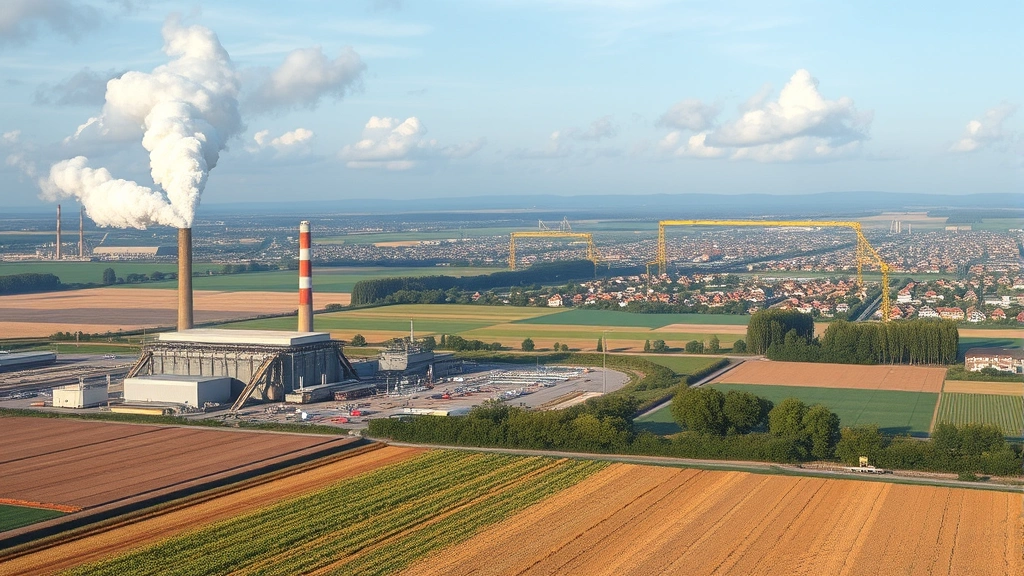
Hostile environments reveal fundamental market failures in conventional economic systems. Markets efficiently allocate resources when property rights are defined, information is complete, and externalities are minimal. Hostile environments emerge precisely when these conditions collapse: environmental commons lack ownership incentives for protection, future climate impacts remain economically discounted, and ecosystem degradation imposes costs on populations disconnected from beneficiaries.
Ecological economics identifies several critical market failures generating hostile environments. First, natural capital externalities: pollution, deforestation, and resource depletion impose costs on society without market prices, so producers over-exploit natural systems. Second, temporal discounting: markets systematically undervalue future environmental hostility, preferring short-term extraction over long-term sustainability. Third, distributional failures: hostile environments concentrate among populations lacking market power, while benefits accrue to distant producers and consumers. Fourth, threshold effects: ecosystems exhibit tipping points where gradual degradation suddenly becomes catastrophic hostility.
Quantifying these failures requires integrated economic-ecological analysis. Research from the Nature journal estimates global ecosystem service losses at $125 trillion annually from continued degradation. This figure dwarfs conventional GDP measurements, suggesting markets massively undervalue environmental hostility prevention. Correcting these failures requires pricing natural capital, implementing carbon taxes, establishing payment for ecosystem services, and shifting to circular economy models eliminating waste.
The economic transition away from hostile environment creation demands policy intervention. Carbon pricing directly addresses climate hostility generation. Biodiversity credits incentivize ecosystem protection. Agricultural subsidies reform prevents soil hostility through monoculture. Water pricing prevents aquifer depletion creating water-scarcity hostility. Land-use planning prevents infrastructure sprawl into critical ecosystems. Each intervention corrects market failures driving hostile environment creation, aligning economic incentives with ecological sustainability and human wellbeing.
Legal Remedies and Policy Solutions
Addressing hostile environments requires integrated legal and policy frameworks operating across scales. At the employment level, remedies include harassment prevention training, diverse hiring, equitable promotion, harassment investigation protocols, and damage awards. Organizations implementing comprehensive hostile environment prevention demonstrate measurable improvements in retention, productivity, and innovation.
Environmental hostile environments demand more complex remedies. Individual litigation—suing polluters for damages—proves inadequate given diffuse causation and delayed impacts. Regulatory approaches establishing environmental standards, monitoring compliance, and imposing penalties prove more effective. The Clean Air Act, Clean Water Act, and similar legislation reduced environmental hostility in developed nations by establishing baselines below which hostile conditions legally cannot exist. However, enforcement remains inconsistent globally, and standards often lag scientific understanding of hostility thresholds.
Policy solutions increasingly emphasize prevention over remediation. Climate mitigation prevents hostile environment creation more cost-effectively than adaptation. Forest protection prevents water-scarcity hostility cheaper than desalination. Sustainable agriculture prevents soil-hostility through regenerative practices. These preventive approaches align with ecological economics principles: maintaining natural capital prevents hostile condition emergence.
Emerging legal frameworks address climate hostility specifically. Some nations recognize constitutional rights to healthy environments. Courts increasingly hold governments liable for inadequate climate action, arguing hostile conditions violate human rights. The EU’s Green Deal, net-zero commitments, and carbon pricing represent policy responses to climate hostility. However, implementation gaps persist—most nations’ climate policies insufficient to prevent projected hostile environment expansion.
International cooperation mechanisms attempt coordinated hostile environment prevention. The UNEP coordinates environmental protection. Multilateral development banks increasingly condition financing on environmental safeguards preventing hostile condition creation. Yet geopolitical tensions, economic competition, and institutional weakness limit effectiveness. Stronger international legal frameworks—potentially including enforcement mechanisms and sanctions—may prove necessary as climate and ecological hostility intensifies.
Case Studies in Hostile Environments
Real-world hostile environments illustrate the convergence of legal, ecological, and economic dimensions. The Aral Sea region experienced environmental hostility from Soviet-era irrigation policies diverting rivers for cotton production. The sea contracted 90%, creating an ecological desert with toxic salt-dust storms, devastated fisheries, and health crises affecting millions. Legal recourse proved minimal—the Soviet system lacked environmental accountability mechanisms. Economic recovery required massive investment in ecosystem restoration, desalination infrastructure, and economic diversification, yet the region remains economically and environmentally hostile decades later.
Bangladesh’s Sundarbans mangrove forest faces compound hostility from sea-level rise, freshwater depletion, and deforestation. Rising seas inundate agricultural land, creating water-salinity hostility. Mangrove loss removes storm-surge protection, increasing cyclone hostility. Biodiversity collapse eliminates ecosystem services. Legal frameworks exist—Bangladesh ratified international environmental agreements—yet implementation capacity remains limited. Economic pressure to convert mangroves to aquaculture and agriculture drives continued degradation despite hostile consequence recognition. This case demonstrates how legal frameworks prove insufficient without economic incentive alignment and enforcement capacity.
The Appalachian coal-mining region illustrates workplace and environmental hostility convergence. Coal mining creates immediate workplace hostility—high injury rates, respiratory diseases, and poor safety conditions. Environmental hostility emerges from mountaintop removal mining, stream pollution, and ecosystem destruction. Once coal declines economically, the region faces compound hostility: limited employment alternatives, degraded ecosystems, and health legacies from decades of exposure. Legal remedies through workers’ compensation and environmental litigation prove inadequate for addressing systemic hostility. Economic transition requires investment in alternative industries, environmental remediation, and worker retraining—interventions rarely implemented at scale.
These cases reveal that hostile environments require integrated responses. Legal frameworks alone cannot remedy hostility without economic resources and ecological restoration. Economic development alone proves unsustainable without environmental protection and social equity. Ecological restoration fails without addressing underlying economic incentives and legal accountability. Successful hostile environment resolution demands simultaneous intervention across all three domains: legal accountability, economic transition, and ecological restoration.
FAQ
What constitutes a hostile environment legally?
Legally, a hostile environment involves unwelcome conduct based on protected characteristics or environmental conditions that are sufficiently severe or pervasive to alter working or living conditions unreasonably. The standard requires that a reasonable person would find the environment intimidating, offensive, or abusive, and that the responsible party had knowledge and failed to remedy the situation.
How do environmental degradation and hostile environments relate?
Environmental degradation creates hostile conditions by reducing ecosystem services, polluting air and water, destabilizing climate patterns, and eliminating economic viability. As natural capital depletes, regions become progressively less habitable and economically productive, creating environmental hostility that often compounds legal and social hostility.
Can climate change be legally addressed as hostile environment creation?
Increasingly, yes. Some courts recognize that inadequate climate action creates hostile environmental conditions violating human rights. Legal frameworks are developing to hold governments and corporations accountable for climate hostility generation. However, enforcement mechanisms remain weak, and international legal consensus has not fully crystallized around climate hostility accountability.
What economic solutions address hostile environment creation?
Economic solutions include carbon pricing making climate hostility costly, natural capital accounting revealing true ecosystem value, payment for ecosystem services incentivizing protection, circular economy models eliminating waste, and subsidy reform aligning agricultural economics with sustainability. These mechanisms correct market failures driving hostile environment creation.
How do hostile environments affect different populations differently?
Marginalized populations experience disproportionate hostile environment exposure due to geographic location near pollution sources, limited economic resources for adaptation, and reduced political power for protection. Environmental justice frameworks recognize this inequity and argue that addressing hostile environments requires prioritizing vulnerable populations in remediation and prevention efforts.
What role do international agreements play in addressing hostile environments?
International agreements like the Paris Climate Accord establish frameworks for coordinated response to hostile environment creation. However, these agreements lack enforcement mechanisms, rely on voluntary compliance, and often set insufficient targets. Strengthening international legal frameworks with binding obligations and enforcement capacity remains critical for effective hostile environment prevention at scale.


