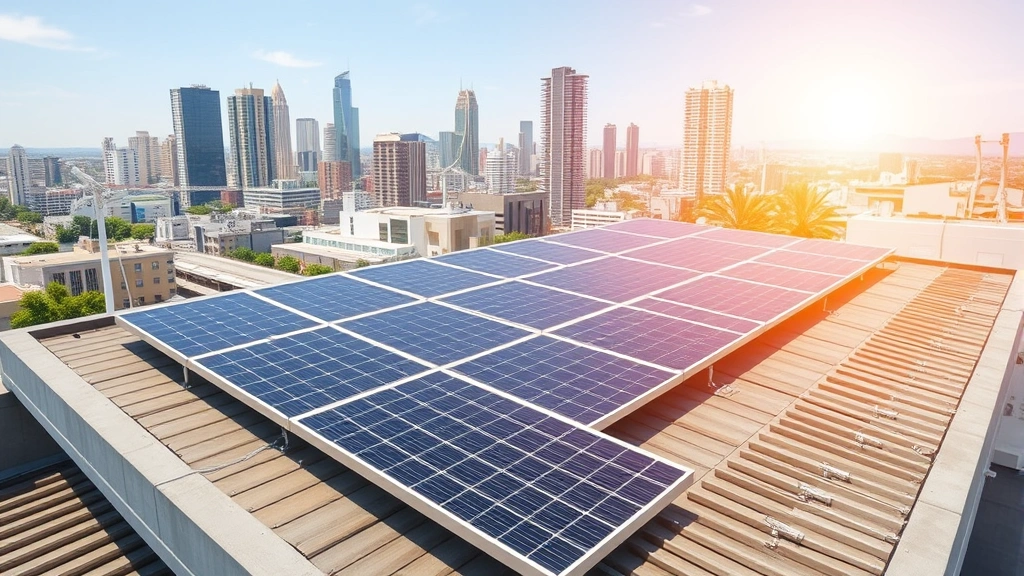
How Green Investments Impact Economy: A Study
Green investments represent one of the most transformative economic shifts of the 21st century, fundamentally reshaping how capital flows through global markets while simultaneously addressing environmental degradation. As governments, corporations, and institutional investors increasingly recognize the financial imperatives of ecological sustainability, the intersection of environmental stewardship and economic growth has become a central focus of economic policy and investment strategy.
The relationship between environmental investments and economic performance extends far beyond simple corporate social responsibility metrics. Recent data demonstrates that green investments generate measurable returns across multiple economic indicators, including job creation, GDP growth, and long-term asset value preservation. This comprehensive analysis examines how sustainable capital allocation drives economic benefits while establishing the scientific foundation for understanding these interconnected systems.

Understanding Green Investments and Economic Framework
Green investments encompass capital allocation directed toward projects, technologies, and enterprises that generate positive environmental outcomes while delivering financial returns. This category includes renewable energy infrastructure, energy efficiency upgrades, sustainable agriculture, green building construction, and ecosystem restoration initiatives. The economic framework supporting these investments differs fundamentally from traditional finance models, incorporating externality valuation and natural capital accounting.
The concept of green economy integration stems from ecological economics principles, which recognize that traditional GDP measurements fail to account for environmental costs. When corporations invest in renewable energy systems or implement circular economy practices, they simultaneously reduce operational costs and environmental liabilities. This dual benefit creates what economists term “green premium”—the measurable financial advantage derived from sustainability-aligned investments.
Understanding human environment interaction proves essential for comprehending why green investments generate superior economic outcomes. As environmental pressures intensify—through climate change impacts, resource scarcity, and ecosystem collapse—the economic value of preventive investments increases exponentially. Companies implementing sustainable practices today avoid tomorrow’s compliance costs, supply chain disruptions, and regulatory penalties.
Recent studies from the World Bank indicate that every dollar invested in climate adaptation yields approximately four dollars in economic benefits through avoided damages and improved productivity. This return ratio underscores why institutional investors increasingly view green investments not as charitable expenditures but as fundamental risk management and wealth creation strategies.

Job Creation and Employment Dynamics
The employment multiplier effect of green investments substantially exceeds traditional infrastructure spending. Renewable energy sectors generate 2-3 times more jobs per dollar invested compared to fossil fuel industries, according to UNEP research. Solar installation, wind turbine manufacturing, energy auditing, and sustainable construction create diverse employment opportunities across skill levels and geographic regions.
Green job creation demonstrates particular strength in rural and economically disadvantaged communities where renewable energy projects anchor regional development. A single utility-scale solar facility generates approximately 200-250 construction jobs and 10-20 permanent operational positions. When multiplied across thousands of projects globally, green investments represent a substantial employment engine driving economic inclusion and community resilience.
The quality of green employment extends beyond quantitative metrics. These positions typically offer competitive wages, benefits, and career advancement opportunities. Workers in renewable energy sectors earn wages comparable to or exceeding traditional energy industry compensation, while providing long-term career stability. This employment quality contributes to broader economic health through increased consumer spending, reduced social service demands, and enhanced tax base stability.
Workforce transition dynamics warrant careful consideration as economies shift from extractive to regenerative models. Strategic green investment programs incorporate retraining initiatives for displaced workers, ensuring equitable economic transition. Countries implementing comprehensive green job programs—including apprenticeships in renewable energy installation, sustainable agriculture training, and circular economy manufacturing—demonstrate superior economic resilience and social cohesion.
Financial Returns and Investment Performance
Contrary to outdated perceptions characterizing environmental investments as financially suboptimal, contemporary data reveals superior risk-adjusted returns from green portfolios. The Bloomberg NEF Green Energy Investment Index demonstrates consistent outperformance of ESG-aligned funds relative to conventional benchmarks, particularly during economic volatility periods.
Renewable energy projects deliver predictable, inflation-protected cash flows through power purchase agreements and government incentive programs. Unlike fossil fuel investments vulnerable to commodity price fluctuations, solar and wind installations benefit from long-term fixed revenue streams and declining technology costs. This financial stability attracts conservative institutional investors including pension funds, insurance companies, and sovereign wealth funds.
Green bond markets have expanded from approximately $10 billion in 2012 to over $500 billion annually by 2023, reflecting institutional recognition of sustainable investment opportunities. These debt instruments finance renewable energy infrastructure, energy efficiency retrofits, and sustainable transportation systems while offering competitive yields. The rapid expansion indicates market confidence in green investment fundamentals and growing demand for sustainable financial products.
Technology cost curves demonstrate accelerating deflation in renewable energy and battery storage sectors. Solar photovoltaic costs declined 90% over the past decade, while lithium-ion battery prices fell 89% since 2010. This cost trajectory creates expanding profit margins for green technology manufacturers and operators, generating substantial shareholder value and attracting venture capital investment in emerging technologies.
Sectoral Economic Growth Through Sustainability
Green investments catalyze economic transformation across multiple sectors simultaneously. The renewable energy sector alone represents a $2+ trillion global market opportunity through 2050, encompassing generation, storage, grid modernization, and integration technologies. This market expansion creates opportunities for equipment manufacturers, construction firms, engineering consultants, and technology developers.
Energy efficiency retrofitting of existing building stock represents an equally substantial economic opportunity. Approximately 80% of current building infrastructure will remain in use through 2050, requiring systematic efficiency upgrades. Building energy performance improvements reduce operational costs 20-30% while improving occupant comfort and property values. This sector employs construction workers, engineers, auditors, and technicians while generating measurable economic returns.
Sustainable agriculture and regenerative land management practices create economic value through premium product pricing, reduced input costs, and ecosystem service monetization. Farmers implementing degradation reduction strategies through conservation agriculture, agroforestry, and soil carbon sequestration achieve yield increases while accessing premium markets. Ecosystem service payments for carbon sequestration, pollinator habitat provision, and water filtration create additional income streams.
Circular economy manufacturing transforms waste streams into valuable resources, reducing material costs and creating new business opportunities. Companies implementing circular design principles achieve 5-20% cost reductions through material efficiency while developing new revenue channels from remanufacturing and recycling operations. This economic model generates employment in collection, sorting, reprocessing, and product redesign activities.
The renewable energy for homes sector demonstrates particular growth potential in distributed generation and residential efficiency upgrades. Homeowners investing in solar installations, heat pumps, and smart building controls achieve 10-25 year payback periods while reducing energy costs and increasing property values. This residential sector drives demand for installation services, financing products, and monitoring technologies.
Risk Mitigation and Long-Term Economic Stability
Green investments function as comprehensive risk mitigation strategies addressing interconnected environmental, financial, and social vulnerabilities. Climate change impacts—including extreme weather events, agricultural disruption, and infrastructure damage—impose substantial economic costs estimated at 1-5% of global GDP by 2050 without mitigation. Green investments reduce these impact probabilities and magnitudes, preserving economic value and asset stability.
Supply chain resilience improves substantially through green investment strategies emphasizing local sourcing, renewable energy independence, and circular material flows. Companies reducing dependence on volatile commodity markets and geopolitically sensitive supply chains achieve superior operational stability. This resilience becomes increasingly valuable as environmental constraints tighten resource availability and geopolitical tensions disrupt traditional supply networks.
Regulatory risk mitigation represents a quantifiable financial benefit of green investments. Anticipating increasingly stringent environmental regulations, companies implementing sustainable practices today avoid future compliance costs, equipment retrofitting expenses, and potential penalties. Early adopters of carbon pricing, emissions standards, and circular economy requirements maintain competitive advantages as regulatory frameworks tighten globally.
Stranded asset risk—the potential devaluation of fossil fuel infrastructure due to climate policy and demand shifts—creates substantial financial exposure for traditional energy investors. Green investments avoid this stranding risk while capturing value from accelerating renewable energy transitions. This risk differential increasingly influences institutional investment allocation, with major pension funds and endowments divesting fossil fuels in favor of renewable energy portfolios.
Physical climate risk assessment reveals how green investments reduce vulnerability to environmental hazards. Renewable energy infrastructure demonstrates superior resilience to climate impacts compared to centralized fossil fuel systems. Distributed solar installations, localized battery storage, and microgrids maintain energy supply during extreme weather events that disrupt traditional grid infrastructure. This resilience provides measurable economic value through reduced outage costs and business continuity.
Policy Mechanisms and Economic Incentives
Government policy frameworks profoundly influence green investment economics through diverse incentive mechanisms. Feed-in tariffs guarantee renewable energy producers favorable electricity prices, creating predictable revenue streams that justify capital investment. Tax credits for renewable energy installation, energy efficiency improvements, and electric vehicle purchases reduce effective costs and accelerate adoption rates.
Carbon pricing mechanisms—including carbon taxes and cap-and-trade systems—internalize environmental externalities, making sustainable alternatives economically competitive. When carbon costs reflect atmospheric damage, renewable energy becomes the lowest-cost energy source in most markets. This policy-driven price correction redirects capital toward green investments and creates market-based incentives for decarbonization.
Green bonds and sustainability-linked financing mechanisms reduce capital costs for environmental projects. Government guarantees, concessional financing, and blended finance structures mobilize private capital for green infrastructure by reducing investment risk. Development banks and multilateral institutions increasingly deploy catalytic capital to attract institutional investors to green projects in emerging markets.
Procurement policies requiring government agencies to purchase renewable energy, sustainable products, and services create stable demand streams supporting green industries. Public procurement represents 10-15% of GDP in most developed economies, providing substantial market opportunities for green suppliers. This demand stability enables businesses to invest in capacity expansion and technology development.
The carbon footprint reduction imperative drives policy innovation across sectors, from transportation electrification mandates to building performance standards. These regulatory drivers create immediate economic opportunities for companies providing decarbonization solutions while establishing long-term competitive advantages for early adopters.
Global Economic Models and Implementation
International economic models demonstrate consistent findings regarding green investment multiplier effects. The International Monetary Fund research indicates green stimulus spending generates 1.5-2.0 times greater economic multipliers compared to conventional infrastructure investment. This superior multiplier effect stems from labor-intensive nature of green projects and distributed supply chain benefits across communities.
Developing economies increasingly recognize green investments as pathways to leapfrog fossil fuel infrastructure and achieve sustainable development simultaneously. Rather than replicating centralized coal-based energy systems, emerging markets deploy distributed renewable energy, microgrids, and efficient building technologies. This strategic approach achieves lower-cost energy access while avoiding carbon lock-in and associated future liabilities.
The transition toward green economy models requires comprehensive policy coherence integrating energy, transportation, agriculture, and industrial policies. Successful implementations—including Costa Rica’s renewable energy dominance, Denmark’s wind energy leadership, and Germany’s renewable energy transition—demonstrate that coordinated policy frameworks accelerate investment and deliver superior economic outcomes.
Ecological economics frameworks increasingly influence mainstream economic policy, incorporating natural capital valuation and ecosystem service accounting. National accounting systems adopting adjusted net savings metrics—accounting for environmental degradation and resource depletion—reveal that traditional GDP growth often masks declining true economic wealth. Green investments reverse this dynamic, simultaneously increasing measured GDP and environmental wealth.
The sustainable fashion brands emergence demonstrates consumer demand driving green investment across industries. When customers preferentially purchase sustainable products, companies gain financial incentives to implement circular economy practices, reducing waste and material costs while accessing premium market segments. This market-driven sustainability creates competitive advantages for green innovators.
Integration of environmental economics research into financial institutions increasingly influences capital allocation decisions. When investors understand that environmental stewardship generates superior financial returns, capital flows accelerate toward green investments. This capital reallocation creates virtuous cycles where declining renewable energy costs attract additional investment, further accelerating cost deflation and market expansion.
FAQ
What constitutes a green investment?
Green investments encompass capital directed toward projects generating measurable environmental benefits alongside financial returns. This includes renewable energy infrastructure, energy efficiency improvements, sustainable agriculture, ecosystem restoration, green building construction, and circular economy manufacturing. The defining characteristic involves simultaneous achievement of environmental and economic objectives.
How much economic value do green investments generate?
Economic returns vary by project type and location, but comprehensive analyses indicate green investments deliver 4-7% annual returns while providing environmental benefits valued at 10-20% of project costs. Job creation multipliers range from 1.5-3.0 compared to traditional infrastructure, while risk-adjusted financial returns increasingly exceed conventional investments.
Why do renewable energy investments outperform fossil fuels financially?
Renewable energy projects benefit from zero fuel costs, predictable long-term revenue streams through power purchase agreements, and rapidly declining technology costs. Fossil fuel investments face commodity price volatility, carbon regulation risks, and stranded asset exposure. These fundamental economics favor renewable energy as lowest-cost energy source in most markets.
How do governments support green investments?
Policy mechanisms include feed-in tariffs, tax credits, carbon pricing, green bonds, procurement requirements, and concessional financing. These tools reduce capital costs, create stable revenue streams, and internalize environmental externalities. Effective policy frameworks accelerate green investment deployment and improve financial returns.
What employment opportunities emerge from green investments?
Green sectors create diverse jobs across skill levels: installation technicians, engineers, project managers, construction workers, manufacturing employees, and maintenance technicians. These positions typically offer competitive wages, benefits, and long-term career stability. Rural and economically disadvantaged communities benefit substantially from green infrastructure deployment.
How do green investments reduce economic risk?
Green investments mitigate climate change impacts, regulatory compliance costs, supply chain disruption, and stranded asset risks. Companies implementing sustainable practices achieve operational resilience, cost reductions, and competitive advantages as environmental constraints tighten. Long-term economic stability improves through diversified renewable energy systems and circular economy practices.


