Environmental Degradation: An Economist’s Viewpoint
Environmental degradation represents one of the most pressing economic challenges of our time, yet it remains fundamentally misunderstood by traditional economic frameworks. From a pure economic perspective, environmental degradation occurs when natural capital—the stock of environmental assets including forests, fisheries, minerals, and atmospheric quality—depreciates faster than it can regenerate or be substituted by human-made capital. This degradation imposes what economists call negative externalities: costs borne by society that are not reflected in market prices.
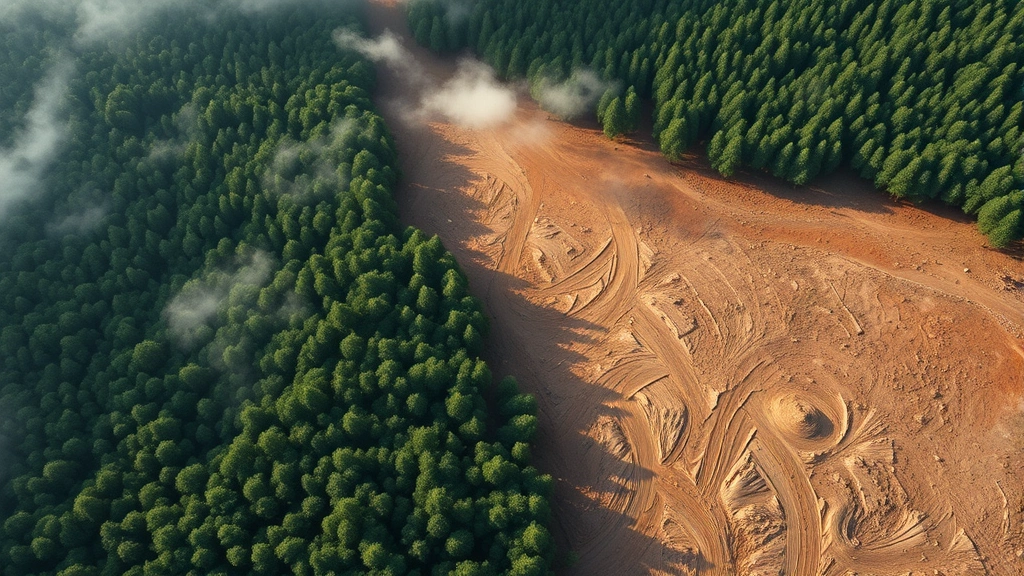
The paradox at the heart of modern economics is that we measure prosperity through gross domestic product (GDP), which counts resource extraction as income rather than capital depletion. When we fell a forest, we celebrate the timber revenue without accounting for the loss of the forest itself. This accounting error has led to decades of unsustainable economic policies that treat the environment as an infinite resource rather than a finite system with measurable biophysical limits. Understanding degradation in environment through an economic lens requires us to reconcile market failures with ecological realities.
The intersection of economics and environmental science reveals that the costs of inaction far exceed the investments required for prevention. Yet markets consistently fail to price environmental risk adequately, leading to what economists term the tragedy of the commons—where individual rational actors pursuing self-interest deplete shared resources to the detriment of collective welfare.
Market Failures and Environmental Economics
The foundation of environmental economics rests on identifying why markets systematically fail to protect environmental assets. A market failure occurs when the allocation of goods and services by the free market is inefficient, resulting in a loss of economic value. Environmental degradation is perhaps the most pervasive market failure in modern economies.
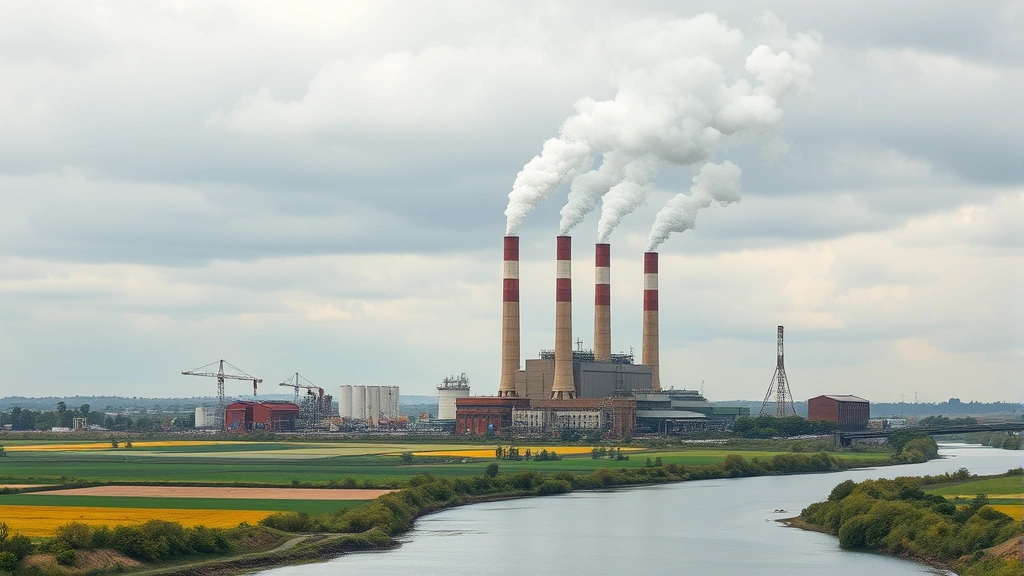
Consider air pollution from industrial production. A factory emitting sulfur dioxide creates costs—health expenses, reduced agricultural yields, infrastructure corrosion—that are not borne by the factory owner. These are external costs, or externalities. The factory produces at a level that maximizes its private profit, but produces more than the socially optimal quantity because it ignores the damage it causes. This fundamental misalignment between private incentives and social welfare explains why unregulated markets systematically degrade environmental quality.
The concept of natural capital is critical here. Unlike human-made capital, natural capital often exhibits non-linear responses to degradation. A forest can absorb moderate logging pressure, but beyond a threshold, ecosystem collapse occurs suddenly. Fisheries can sustain certain harvest levels, but overfishing causes stock collapse. These threshold effects mean that incremental environmental damage can suddenly become catastrophic, making prevention far more economical than remediation.
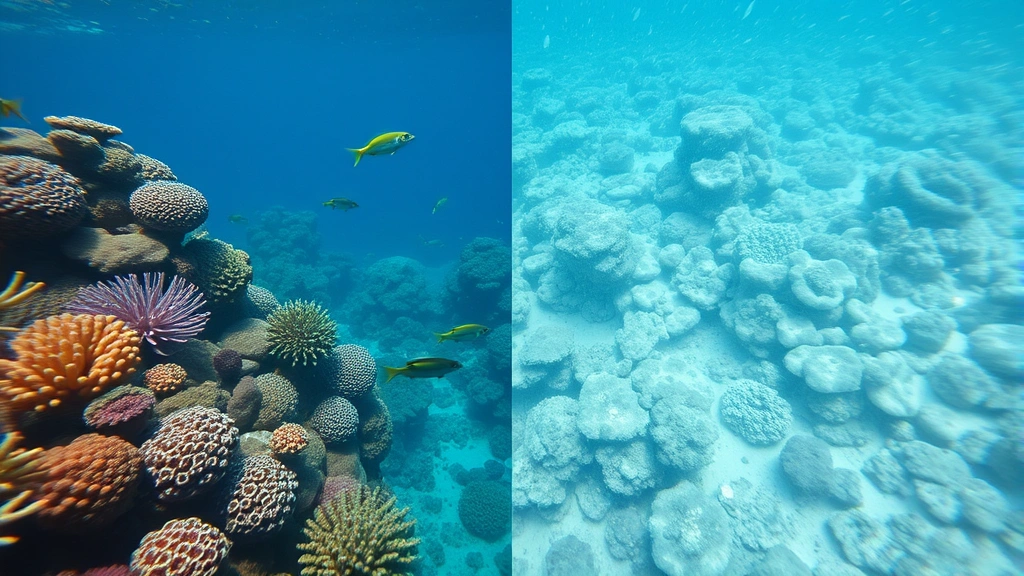
As outlined in research on human environment interaction, economic systems are embedded within ecological systems, not separate from them. The economy depends on ecosystem services—pollination, water filtration, climate regulation, nutrient cycling—that have no market price. When these services are degraded, the economic costs eventually surface, often in the form of expensive technological substitutes or reduced productivity.
The True Cost of Natural Capital Depletion
Calculating the economic value of environmental degradation requires moving beyond conventional GDP accounting. The World Bank’s environmental economics research demonstrates that when natural capital depletion is factored into national accounts, the picture of economic progress becomes dramatically different. Countries appearing to grow robustly by conventional metrics are often depleting their resource bases at alarming rates.
A comprehensive economic analysis must include several categories of environmental costs. Direct resource costs involve the depletion of extractive resources—timber, minerals, fossil fuels. Ecosystem service costs encompass the loss of services like carbon sequestration, watershed protection, and biodiversity support. Health and productivity costs result from pollution and contamination. Adaptation and mitigation costs represent investments needed to respond to environmental damage.
Research by ecological economists at leading institutions quantifies these costs comprehensively. A landmark UNEP study found that environmental degradation costs developing nations up to 7% of their GDP annually—far exceeding official development assistance. For wealthy nations, the figure often reaches 3-4% of GDP. These are not hypothetical losses; they represent actual reductions in human welfare through health impacts, lost productivity, and foregone economic opportunities.
The concept of shadow pricing allows economists to estimate the economic value of environmental goods that don’t have market prices. When economists value a wetland by calculating the cost of treating water to replace the wetland’s purification services, or value a forest by summing carbon sequestration value and recreational value, the numbers often astound policymakers. A single hectare of tropical forest might generate $10,000-$15,000 in annual ecosystem service value, yet be cleared for timber worth $2,000-$3,000, a decision that destroys wealth even by narrow economic calculation.
Measuring Environmental Degradation Economically
Quantifying degradation in environment requires developing metrics that capture both the rate of resource depletion and the economic consequences. Traditional GDP fails this test because it conflates income with capital consumption. An economy logging its last forest while GDP grows is actually experiencing economic decline—it’s converting capital into consumption.
Adjusted Net Savings, also called genuine savings, represents a more accurate measure. This metric accounts for human capital investment, natural capital depletion, and environmental damage. Countries with negative adjusted net savings are unsustainable; they’re consuming more than they produce and depleting their natural endowments. Research shows that many resource-dependent economies have negative genuine savings rates, meaning they’re on an unsustainable trajectory despite positive GDP growth.
Specific measurement frameworks include:
- Ecosystem Accounting: Tracking changes in ecosystem extent (how much forest, wetland, or grassland exists) and condition (quality and health of remaining ecosystems)
- Material Flow Analysis: Quantifying the physical flows of resources through economies to identify inefficiencies and waste
- Life Cycle Assessment: Measuring environmental impacts of products from resource extraction through disposal
- Environmental Impact Assessment: Evaluating specific projects’ environmental consequences before implementation
The UN Environment Programme has developed standardized environmental accounting methods that countries increasingly adopt. These frameworks reveal that degradation accelerates non-linearly. Initial resource extraction is often reversible, but beyond critical thresholds, degradation becomes irreversible or requires prohibitively expensive restoration.
Economic Instruments for Environmental Protection
Once we understand environmental degradation as an economic problem rooted in market failures, solutions become apparent. Rather than simply restricting activity, economists design instruments that align private incentives with social welfare. These market-based mechanisms harness economic forces for environmental protection.
Carbon pricing represents the most discussed application. By placing a price on carbon emissions—either through carbon taxes or cap-and-trade systems—the externality is internalized. Emitters face the true cost of their activities, creating incentives for emissions reduction. The European Union’s Emissions Trading System, despite imperfections, has demonstrated that carbon pricing can drive meaningful emissions reductions while maintaining economic growth.
Related approaches include:
- Pollution taxes: Charging polluters based on the quantity of pollution, creating incentives for cleaner production
- Tradeable permits: Creating markets for environmental rights, allowing efficient allocation through voluntary exchange
- Payments for ecosystem services: Directly compensating landowners for maintaining environmental assets—forests, wetlands, grasslands
- Green bonds: Financing environmental projects through capital markets
- Subsidy reform: Removing perverse incentives that encourage environmental degradation, such as fossil fuel subsidies
These instruments work because they respect economic logic while changing the price signals that guide decisions. A factory manager facing carbon costs will invest in efficiency. A farmer receiving payment for forest conservation has economic incentive to preserve rather than clear. These approaches avoid the inefficiency of command-and-control regulation while achieving environmental goals.
Understanding how to reduce carbon footprint at individual and organizational levels connects to these broader economic mechanisms. When carbon has a price, individual choices to reduce consumption, improve efficiency, or shift to clean energy become economically rational rather than altruistic.
Ecosystem Services and Economic Valuation
The ecosystem services framework represents a paradigm shift in environmental economics. Rather than viewing nature as a backdrop to economic activity, this approach recognizes that ecosystems provide services essential to human welfare and economic production. Quantifying these services in economic terms demonstrates the wealth we risk losing through degradation.
Ecosystem services fall into four categories: provisioning services (food, water, timber, minerals), regulating services (climate regulation, flood control, pollination, water purification), cultural services (recreation, spiritual value, aesthetic appreciation), and supporting services (nutrient cycling, soil formation, photosynthesis). Each has economic value, though most lack market prices.
A landmark study published in Ecological Economics journal estimated global ecosystem service value at $125-$145 trillion annually—roughly double global GDP. This staggering figure illustrates our economic dependence on nature. Yet most of this value is invisible in market transactions, making it vulnerable to degradation.
Valuation methods vary. Market-based approaches use actual prices for ecosystem services that are traded (timber, agricultural products). Replacement cost methods calculate what it would cost to replace ecosystem services technologically (constructed wetlands instead of natural wetlands for water treatment). Contingent valuation surveys people about their willingness to pay for environmental preservation. Hedonic pricing infers environmental value from property prices—cleaner air and proximity to nature command price premiums.
These valuations often shock policymakers. The economic value of pollinator services globally exceeds $500 billion annually. Tropical forests’ carbon storage value often exceeds timber harvest value by orders of magnitude. Wetlands’ water filtration services can exceed their value for any other use. When these values are made explicit, degradation appears economically irrational even ignoring moral or ecological arguments.
Policy Integration and Circular Economics
Addressing environmental degradation requires integrating economic policy across multiple domains. Environmental protection cannot be a separate policy concern; it must be central to economic, trade, agricultural, and energy policy. This integration is beginning to occur through several mechanisms.
Circular economy approaches represent a fundamental shift from linear take-make-dispose economics. By designing products for longevity, repairability, and recyclability, circular systems reduce resource extraction and environmental degradation simultaneously. Companies find that circular design reduces costs—fewer raw materials required, waste disposal expenses eliminated. The transition to circular economics is not primarily an environmental sacrifice but an economic optimization.
This connects to broader concepts of science environment definition, which increasingly incorporates economic dimensions. Environmental science now recognizes that understanding degradation requires analyzing economic incentives, market structures, and policy frameworks alongside biophysical processes.
Green fiscal policy represents another integration mechanism. Governments can shift taxation from income and capital (which are desirable) to resource extraction and pollution (which are undesirable). A carbon tax combined with reduced income taxes achieves environmental protection while potentially improving economic efficiency. Several European nations have implemented such reforms with positive economic results.
Natural capital accounting is becoming standard practice among leading economies and multilateral institutions. By treating natural capital like any other capital asset, governments can identify when they’re operating unsustainably and adjust policies accordingly. Countries are increasingly publishing natural capital accounts alongside GDP figures, creating pressure for policies that maintain rather than deplete natural wealth.
The transition to renewable energy for homes and businesses illustrates how economic logic increasingly supports environmental protection. As renewable energy costs have declined dramatically, the economic case for transition has strengthened. What once appeared as environmental sacrifice now appears as economic opportunity.
Broader policy integration includes making environmental impact assessment mandatory for all major economic decisions, incorporating environmental costs into public procurement, and reforming international trade rules to prevent environmental arbitrage—where production shifts to jurisdictions with weak environmental standards. These changes align economic incentives with ecological sustainability.
Community-level actions support this integration. Starting community gardens demonstrates how local economic activity can reduce degradation while building social capital. These initiatives reduce transportation costs for food, improve local food security, enhance ecosystem services through green space, and generate community economic benefits—a win-win-win outcome when viewed through an integrated economic-ecological lens.
FAQ
What is the economic cost of environmental degradation?
Environmental degradation costs developing nations approximately 7% of GDP annually and wealthy nations 3-4% of GDP. This includes direct resource depletion, lost ecosystem services, health impacts, and adaptation expenses. Global ecosystem service degradation represents losses in the trillions of dollars annually.
Why do markets fail to protect the environment?
Markets fail because environmental costs are externalities—borne by society rather than reflected in prices. Polluters don’t pay for damage, resource extractors don’t account for depletion, and ecosystem services lack market prices. This causes markets to overproduce environmentally damaging goods relative to the socially optimal level.
How can carbon pricing reduce emissions?
Carbon pricing internalizes the externality of emissions by making polluters pay for damage. This increases the cost of carbon-intensive activities, creating economic incentives for emissions reduction. Higher energy costs encourage efficiency improvements, fuel switching, and technological innovation in clean energy.
What are ecosystem services worth economically?
Global ecosystem services are valued at $125-$145 trillion annually. This includes provisioning services (food, water, resources), regulating services (climate control, pollination, water purification), and cultural services (recreation, aesthetic value). Individual services can be worth billions to trillions annually.
How does circular economy reduce degradation?
Circular economy designs products for durability, repairability, and recyclability, reducing raw material extraction and waste. This simultaneously reduces environmental degradation and often reduces costs through decreased material inputs and waste disposal expenses, creating economic and environmental benefits.
What is natural capital accounting?
Natural capital accounting treats environmental assets like economic assets, tracking their depletion or growth. Adjusted net savings measures show whether a country is operating sustainably. Negative adjusted net savings indicate unsustainable resource consumption despite positive GDP growth.


