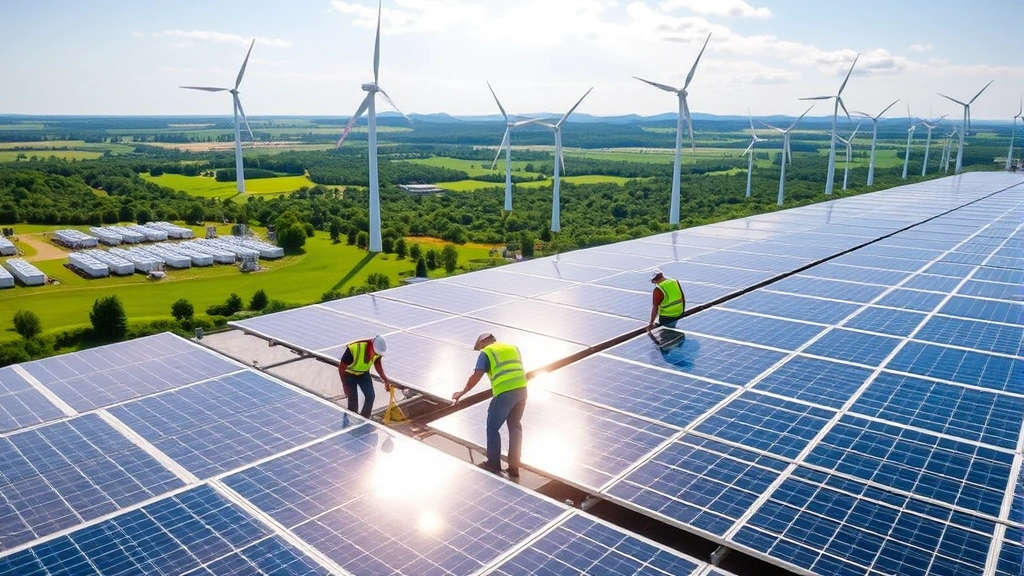
Can Green Policies Boost the Economy? Study Insights
The intersection of environmental policy and economic growth has long been portrayed as a zero-sum game, where ecological protection necessarily comes at the cost of prosperity. However, emerging research and real-world implementations challenge this outdated narrative. Green policies—encompassing renewable energy mandates, carbon pricing mechanisms, and circular economy frameworks—are increasingly demonstrating measurable positive returns on investment, job creation, and long-term economic stability. This paradigm shift represents one of the most significant developments in contemporary economic policy, fundamentally reshaping how governments, businesses, and investors approach sustainable development.
Recent comprehensive studies from leading economic institutions reveal that strategic green policies can simultaneously reduce environmental degradation and stimulate robust economic growth. The mechanism is multifaceted: green investments create immediate employment across manufacturing, construction, and technology sectors while reducing long-term costs associated with climate change, resource depletion, and ecosystem collapse. Understanding these dynamics requires examining empirical evidence, economic theory, and case studies from jurisdictions that have successfully integrated environmental sustainability with economic prosperity.
Understanding Green Policy Economics
Green policies operate within a framework that integrates ecological economics with traditional macroeconomic analysis. Unlike conventional environmental regulations that impose costs without explicit economic returns, modern green policies are designed as investment mechanisms that generate measurable economic value while addressing environmental challenges. This represents a fundamental shift in how policymakers conceptualize the relationship between environmental sustainability and economic activity.
The economic case for green policies rests on several foundational principles. First, natural capital—forests, fisheries, minerals, and clean air—represents genuine economic assets. Degrading these assets through pollution, deforestation, or resource overexploitation imposes real costs on economies, even if those costs don’t appear in traditional GDP calculations. Second, renewable energy and sustainable production methods have achieved technological maturity and cost competitiveness with fossil fuel alternatives. Third, green investments stimulate demand across multiple economic sectors, generating multiplier effects that amplify initial spending.
Research from the World Bank demonstrates that economies investing in green infrastructure experience GDP growth rates comparable to or exceeding those reliant on carbon-intensive development. The critical variable is policy design: poorly implemented green policies can indeed create economic inefficiencies, while well-designed frameworks leverage market mechanisms and innovation incentives to deliver both environmental and economic benefits.
Employment and Job Creation Benefits
One of the most tangible economic benefits of green policies manifests through employment generation. The renewable energy sector, energy efficiency retrofitting, sustainable agriculture, and environmental remediation industries are extraordinarily labor-intensive compared to fossil fuel extraction and processing. A single dollar invested in renewable energy creates approximately 2.7 times more jobs than equivalent fossil fuel investments, according to multiple economic analyses.
Green employment exhibits structural advantages over traditional energy sector work. These jobs are geographically distributed across communities rather than concentrated in extraction zones, making them accessible to diverse regional economies. They require varied skill levels, from advanced engineering positions to installation and maintenance roles, creating pathways for workers across educational backgrounds. Furthermore, green jobs demonstrate higher wage stability and lower unemployment volatility compared to resource-dependent sectors vulnerable to commodity price fluctuations.
The transition toward sustainable energy in Europe has created over 1.2 million jobs in renewable energy and energy efficiency sectors alone. Germany’s renewable energy transition, despite initial skepticism about economic impacts, generated approximately 300,000 direct and indirect jobs by 2020. These employment figures extend beyond energy production to include manufacturing, installation, maintenance, research, and administrative functions. When combined with carbon footprint reduction initiatives and sustainable human-environment interaction practices, employment opportunities multiply across economic sectors.
Labor market analysis reveals that green economy workers earn competitive wages comparable to traditional energy sector employment, with superior long-term job security. Unlike coal mining or oil extraction—sectors experiencing structural decline—renewable energy and efficiency sectors are expanding, offering career advancement and skill development opportunities. This employment transition supports broader economic resilience by reducing dependency on volatile commodity markets and building human capital in growth-oriented industries.
Cost Savings and Risk Mitigation
Beyond employment generation, green policies deliver substantial economic returns through cost avoidance and risk reduction. Climate change imposes enormous economic costs through infrastructure damage, agricultural productivity losses, health system strain, and ecosystem service degradation. The United Nations Environment Programme estimates that climate inaction will cost the global economy between 5-20% of GDP annually by 2050, while climate action investments represent only 1-2% of annual global GDP.
Renewable energy exemplifies cost-benefit dynamics clearly. Solar and wind power have experienced dramatic cost reductions—solar photovoltaic costs declined 90% over the past decade—making them economically competitive with fossil fuels in most global markets. Once installed, renewable infrastructure generates electricity at near-zero marginal costs, insulating economies from fuel price volatility and supply disruptions. This price stability provides competitive advantages for energy-intensive industries and reduces macroeconomic vulnerability to geopolitical energy shocks.
Energy efficiency improvements in buildings, transportation, and industrial processes generate immediate financial returns through reduced operational costs. A building retrofitted with efficient insulation, heat recovery systems, and LED lighting reduces energy consumption by 30-50%, translating to substantial cost savings exceeding initial investment within 5-10 years. Multiplied across building stock, industrial facilities, and transportation fleets, these efficiency improvements represent trillions in cumulative cost reductions.
Green policies also mitigate catastrophic economic risks. Extreme weather events, water scarcity, and agricultural disruption impose unpredictable costs that destabilize financial systems and insurance markets. By reducing climate change severity through emissions reduction, green policies stabilize long-term economic conditions and reduce insurance costs, mortgage default risks, and infrastructure replacement expenses. This risk mitigation function provides economic value distinct from direct job creation or cost savings.

Innovation and Competitive Advantage
Green policies function as powerful innovation catalysts, driving technological breakthroughs that generate competitive advantages in global markets. Policy mechanisms like renewable energy standards, carbon pricing, and efficiency regulations create predictable demand for clean technologies, incentivizing private sector R&D investment. Companies developing superior renewable energy systems, battery technologies, and sustainable materials gain first-mover advantages in rapidly expanding global markets.
The renewable energy technology sector exemplifies this dynamic. Global clean energy investments exceed $300 billion annually, with major technology companies and startups competing aggressively to capture market share. This competitive pressure accelerates innovation cycles, reducing costs and improving performance characteristics. Battery technology improvements driven by electric vehicle mandates and renewable integration requirements have applications extending far beyond energy, influencing consumer electronics, aviation, and industrial equipment sectors.
Green policies also stimulate business model innovation. Circular economy frameworks incentivize companies to redesign products for durability, repairability, and material recovery, creating new business opportunities in remanufacturing, recycling, and product-as-service models. These innovations often generate higher profit margins and customer loyalty compared to traditional linear production models. Companies embracing circular economy principles report improved financial performance, reduced material costs, and enhanced brand value.
Nations leading in green technology innovation capture disproportionate economic benefits. Denmark’s dominance in wind turbine manufacturing, Germany’s leadership in solar technology and energy storage, and China’s dominance in battery production reflect the competitive advantages generated by strategic green policy investments. These technology sectors provide high-value employment, export opportunities, and intellectual property earnings that multiply economic returns far beyond initial policy investments.
Global Case Studies and Evidence
Real-world implementations provide compelling evidence for green policy economic benefits. Costa Rica, a small Central American nation, has achieved remarkable economic growth while transitioning to nearly 100% renewable electricity. This achievement generated substantial economic benefits: tourism revenue increased as environmental quality improved, agricultural productivity benefited from climate stability, and technology expertise created export opportunities in sustainable agriculture and renewable energy consulting.
Denmark’s renewable energy transition demonstrates that high renewable penetration (80% by 2023) is compatible with economic competitiveness and industrial productivity. Danish companies leveraging renewable energy cost advantages achieved export leadership in pharmaceutical, wind energy, and precision manufacturing sectors. The transition generated approximately 70,000 direct jobs and contributed significantly to GDP growth during implementation decades.
China’s massive renewable energy investments—exceeding $500 billion cumulatively—generated millions of manufacturing and installation jobs while positioning China as the global leader in solar and battery technology markets. These investments created export industries generating substantial foreign exchange earnings, offsetting initial government expenditures many times over. The renewable energy for homes transition particularly demonstrates scalability and economic viability across diverse markets.
South Korea’s Green Growth initiative combined renewable energy expansion, energy efficiency programs, and green technology R&D investment. Implementation generated 250,000 jobs while maintaining robust GDP growth rates and establishing South Korea as a global leader in green technology manufacturing and export. The initiative produced measurable improvements in air quality, water resources, and ecosystem health while strengthening economic competitiveness.
Portugal’s renewable energy transition achieved 65% renewable electricity penetration while maintaining stable electricity prices and system reliability. The transition created thousands of manufacturing, installation, and maintenance jobs while reducing energy import dependency and improving trade balance. Economic analysis demonstrates that employment gains and cost savings exceeded initial policy investments within 15 years.
Challenges and Implementation Barriers
Despite compelling evidence, green policy implementation faces significant obstacles. Transitional disruptions affect workers in declining fossil fuel industries, requiring substantial retraining and support programs. Without adequate transition assistance, green policies generate legitimate economic hardship in coal mining regions and oil-dependent communities. Successful implementations integrate just transition frameworks providing income support, education programs, and economic diversification assistance for affected workers and communities.
Policy design quality critically determines outcomes. Poorly designed carbon taxes, renewable energy standards, or efficiency regulations can impose excessive costs on specific sectors without generating commensurate environmental benefits. Effective green policies employ market mechanisms like carbon pricing and tradeable permits, technology-neutral standards that encourage cost-effective solutions, and phased implementation timelines allowing business adaptation and investment planning.
Capital requirements for green infrastructure transition present financing challenges, particularly for developing economies. Renewable energy systems, grid modernization, and building retrofitting require substantial upfront investment. Addressing this barrier requires international climate finance mechanisms, development bank lending, and private sector investment mobilization through risk reduction and return guarantees. The World Bank and multilateral development institutions increasingly recognize green investment financing as core development priorities.
Political economy obstacles frequently impede implementation. Incumbent fossil fuel industries lobby against policies threatening their market positions, while short-term political cycles discourage long-term investment in green infrastructure. Overcoming these barriers requires sustained political commitment, transparent cost-benefit communication, and stakeholder engagement demonstrating that green policies benefit broad constituencies rather than imposing concentrated costs.
Technical integration challenges emerge as renewable energy penetration increases. High renewable electricity shares require advanced grid management, energy storage systems, and demand flexibility mechanisms ensuring reliability. These technical requirements impose costs, though rapidly declining battery prices and smart grid technologies increasingly provide cost-effective solutions. Successful high-renewable systems like Denmark and Costa Rica demonstrate technical feasibility, establishing templates for other regions.
Additionally, when examining sustainable fashion brands and circular economy practices, implementation barriers include supply chain complexity, consumer behavior change requirements, and measurement challenges. Nevertheless, companies successfully navigating these barriers achieve competitive advantages and improved profitability, demonstrating that sustainability challenges are surmountable through strategic innovation and investment.
FAQ
Do green policies actually create net economic benefits or do they merely transfer costs?
Comprehensive economic analyses demonstrate that well-designed green policies generate net positive economic benefits through job creation, cost savings, risk mitigation, and innovation acceleration. Rather than transferring costs, effective policies redistribute economic activity toward sustainable sectors while reducing long-term climate and environmental costs. Studies from major economic institutions consistently show positive return-on-investment ratios for green policy packages, though poorly designed policies can create inefficiencies.
How long before green policy investments generate positive economic returns?
Returns emerge across different timescales. Employment creation occurs immediately as green investments begin. Energy cost savings materialize within 5-15 years as renewable systems and efficiency improvements offset initial capital costs. Risk mitigation benefits—reduced climate damage costs—accumulate over decades. Comprehensive economic analyses typically show cumulative positive returns within 10-20 years, with benefits accelerating as technologies mature and costs decline further.
What happens to workers in fossil fuel industries during green transitions?
Successful transitions require deliberate just transition policies including income support, retraining programs, pension protection, and economic diversification assistance for affected workers and communities. Evidence from Europe and other regions demonstrates that comprehensive transition programs successfully redeploy workers into growing green sectors, though outcomes depend critically on policy design and funding adequacy. Without transition support, workers experience legitimate economic hardship requiring policy attention.
Can developing countries afford green policy investments?
While capital requirements are substantial, developing countries increasingly access green financing through international climate funds, development banks, and private investment. Furthermore, renewable energy costs have declined to levels making them economically competitive with fossil alternatives in many developing regions. Avoiding fossil fuel lock-in through green investments proves more economically efficient than building carbon-intensive infrastructure requiring expensive retrofitting later.
What’s the relationship between green policies and inflation?
Green policies’ inflation impacts depend on implementation design. Renewable energy and efficiency improvements typically reduce energy costs, exerting downward pressure on inflation. Carbon pricing mechanisms can create temporary price increases, though revenue recycling through tax reductions or investments can offset inflationary pressures. Evidence from carbon pricing jurisdictions shows modest, manageable inflation impacts compatible with stable monetary policy.
How do green policies affect international competitiveness?
Early-adopting nations gain competitive advantages through leadership in clean technology markets, cost advantages from renewable energy and efficiency, and enhanced brand value in sustainability-conscious consumer markets. Carbon border adjustment mechanisms increasingly level competitive playing fields, preventing carbon leakage to less-regulated jurisdictions. Rather than reducing competitiveness, strategic green policies enhance long-term competitive positioning in rapidly evolving global markets.


