
Boosting Economy Through Ecosystems: A Study
The relationship between economic growth and ecosystem health has evolved from a perceived trade-off into a recognized symbiosis. Modern economies increasingly depend on the services that healthy ecosystems provide—from pollination and water filtration to climate regulation and carbon sequestration. This paradigm shift represents one of the most significant developments in economic thinking, challenging the traditional separation of natural capital from financial systems.
Understanding how to harness ecosystem services for economic benefit requires examining the intricate connections between biodiversity, natural resources, and market mechanisms. When properly valued and managed, ecosystems become not obstacles to economic development but fundamental infrastructure supporting sustainable prosperity. This comprehensive study explores the mechanisms through which ecosystem health translates into economic value, the measurement challenges involved, and the practical strategies nations and businesses employ to capitalize on these relationships.
Understanding Ecosystem Services and Economic Value
Ecosystem services represent the tangible and intangible benefits humans derive from natural systems. These services fall into four primary categories: provisioning services (food, water, timber), regulating services (climate control, disease regulation, flood prevention), supporting services (nutrient cycling, soil formation), and cultural services (recreation, spiritual value, aesthetic appreciation). Each category directly or indirectly contributes to economic productivity and human welfare.
The economic value of these services remains staggering when quantified. Global ecosystem services are estimated to contribute trillions of dollars annually to the world economy. Pollination alone—a regulating service provided primarily by insects—supports agricultural production valued at over $500 billion yearly. Wetlands filter water and prevent flooding, providing services worth thousands of dollars per hectare annually. Coral reefs support fisheries and tourism industries generating over $375 billion globally while protecting coastal communities from storms.
Understanding the science environment definition becomes crucial when attempting to quantify these relationships. Ecosystems function as integrated systems where each component contributes to overall productivity. The loss of a single species or habitat type can cascade through the system, reducing the provision of multiple services simultaneously. This interconnectedness means that protecting ecosystem integrity often proves more economically efficient than attempting to replace lost services through technological means.
The concept of natural capital—treating ecosystems as assets that generate flows of services—fundamentally reframes environmental protection as economic investment. When a forest is harvested unsustainably, the economy gains short-term revenue but loses long-term ecosystem service provision. By accounting for this trade-off, policymakers can make more economically rational decisions about resource management.
Natural Capital Accounting and GDP Measurement
Traditional gross domestic product measures economic activity but ignores the depletion of natural capital. A nation could clearcut all its forests, drain all its aquifers, and exhaust its fisheries while showing positive GDP growth. This accounting method masks the true economic trajectory, creating the illusion of prosperity while depleting the foundation of future economic activity.
Natural capital accounting attempts to correct this deficiency by incorporating ecosystem asset values into national accounts. The World Bank has pioneered adjusted net savings measures that account for natural resource depletion and environmental degradation. Countries implementing genuine progress indicators or similar frameworks discover that their true economic growth often lags significantly behind conventional GDP figures.
The methodology involves several complex steps. First, economists must identify and measure ecosystem stocks—the quantity and quality of natural assets. Second, they must value the flows of services these assets generate. Third, they must account for changes in asset quality and quantity over time. This process requires collaboration between ecologists, economists, and data specialists.
Valuation methods include market-based approaches (using actual prices paid for ecosystem services), replacement cost methods (estimating the expense of replacing lost services with technology), and contingent valuation (surveying people about their willingness to pay for ecosystem preservation). Each method has strengths and limitations, and combining multiple approaches typically provides more robust estimates.
The implications of proper natural capital accounting are profound. Countries that implement these systems often discover that environmental protection represents not a cost to the economy but an investment in future prosperity. Decisions about land use, resource extraction, and pollution become clearer when the true economic value of ecosystem services is visible.

Case Studies in Ecosystem-Based Economics
Costa Rica provides a compelling example of ecosystem-based economic development. The nation has transformed from a country dependent on cattle ranching and banana production into a global leader in ecotourism and conservation. By paying landowners for ecosystem services—particularly forest conservation—Costa Rica has increased forest cover while generating economic returns. The program demonstrates that human environment interaction can be fundamentally restructured toward mutual benefit.
The country’s payment for ecosystem services program has protected over 1.5 million hectares while providing income to rural communities. Ecotourism revenues now exceed traditional agricultural exports, proving that ecosystem preservation can drive economic growth. This model has been replicated across Latin America, Africa, and Asia with varying degrees of success.
Madagascar’s ecosystem-based adaptation program showcases how environmental management addresses economic vulnerability. By restoring mangrove forests and coral reefs, the nation simultaneously reduces coastal flood risk and enhances fishery productivity. The dual benefit—protecting both people and livelihoods—illustrates how ecosystem services provide insurance against climate-related economic shocks.
China’s Grain-for-Green Program represents perhaps the world’s largest ecosystem restoration initiative. By converting marginal agricultural land back to forest and grassland, the program has reduced soil erosion, improved water quality, and enhanced carbon sequestration. While primarily motivated by environmental concerns, the economic benefits—reduced flood damage, improved agricultural productivity on remaining land, and carbon credit revenues—have justified continued investment.
The Pantanal wetland region spanning Brazil, Bolivia, and Paraguay demonstrates how ecosystem services support regional economies. Fish populations sustained by wetland productivity support commercial and subsistence fisheries feeding millions of people. During recent droughts and wildfires, economic losses from reduced ecosystem service provision reached billions of dollars, highlighting the economic importance of maintaining wetland health.
Policy Mechanisms and Market Instruments
Governments employ diverse policy approaches to translate ecosystem value into economic incentives. Payment for ecosystem services programs directly compensate landowners for conservation activities. Carbon markets create financial value for forest protection and reforestation. Environmental taxes internalize the costs of pollution and resource depletion. Each mechanism attempts to align private economic incentives with ecosystem preservation.
The effectiveness of these instruments depends on careful design and implementation. Payment schemes must be set at levels sufficient to compete with alternative land uses. Carbon markets require robust verification systems to ensure additionality—that protected forests would have been lost without the program. Environmental taxes must reach levels that meaningfully change behavior without causing economic disruption.
The United Nations Environment Programme has documented successful policy frameworks across diverse contexts. Approaches that combine regulatory requirements with market incentives typically outperform either mechanism alone. For instance, regulations preventing wetland destruction combined with payments for wetland restoration prove more effective than relying solely on market mechanisms.
Biodiversity offsetting—allowing development in one area while requiring ecosystem restoration elsewhere—attempts to maintain overall ecosystem service provision. However, this approach faces significant challenges. Restored ecosystems often require decades to provide services equivalent to those lost. Geographic displacement of ecosystem services may create localized shortages despite global balance. Rigorous oversight is essential to prevent offsetting from becoming a mechanism to avoid genuine conservation.
Subsidy reform represents an underutilized policy lever. Governments spend an estimated $700 billion annually on subsidies that damage ecosystems—agricultural subsidies encouraging intensive farming, fossil fuel subsidies driving carbon emissions, and fishery subsidies promoting overharvesting. Redirecting even a fraction of these resources toward ecosystem protection would dramatically accelerate conservation while improving economic efficiency.
Technology and Innovation in Ecosystem Management
Emerging technologies are transforming how societies monitor, manage, and restore ecosystems. Remote sensing and satellite imagery enable real-time tracking of forest cover, wetland extent, and coral reef health at unprecedented spatial resolution. Machine learning algorithms process vast environmental datasets, identifying patterns and enabling predictive management. Drone technology facilitates ecosystem monitoring and restoration in remote or hazardous areas.
Blockchain and distributed ledger technologies create transparent, tamper-proof records of ecosystem service transactions. These systems enable payment mechanisms that directly connect ecosystem stewards with beneficiaries, reducing transaction costs and improving trust. Some nations are experimenting with tokenized natural capital—creating digital assets representing specific ecosystem services or conservation outcomes.
Restoration ecology increasingly employs advanced techniques to accelerate ecosystem recovery. Assisted migration moves species to new ranges where climate change has made original habitats unsuitable. Genetic rescue introduces genetic diversity into threatened populations. Rewilding reintroduces apex predators and megafauna that structure ecosystems. While controversial, these interventions may prove necessary as climate change rapidly transforms ecological conditions.
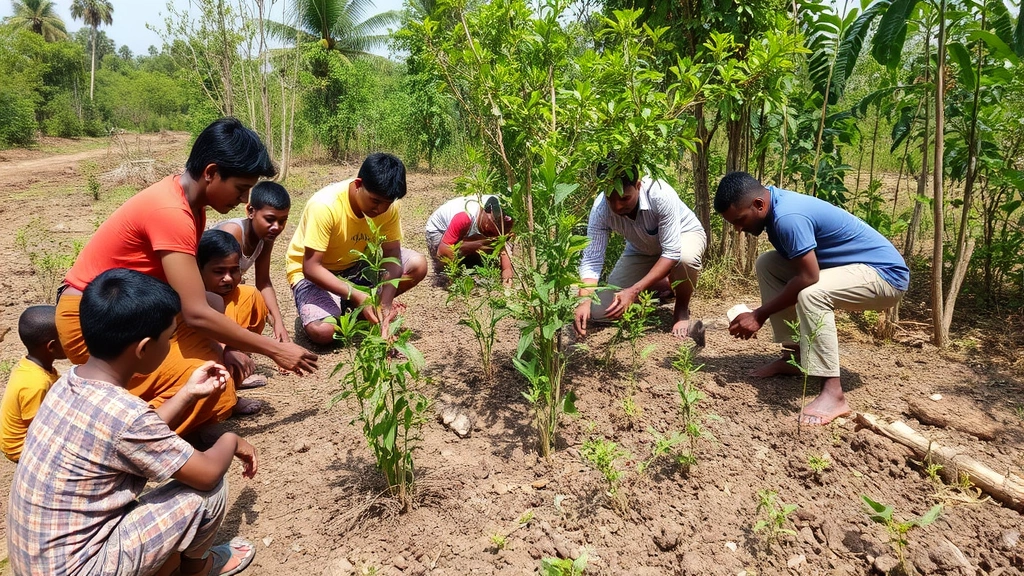
Agricultural innovation demonstrates how technology can enhance ecosystem service provision within production systems. Regenerative agriculture practices—cover cropping, reduced tillage, rotational grazing—restore soil health while maintaining productivity. Agroforestry integrates trees with crop and livestock production, providing timber and food while enhancing biodiversity and carbon sequestration. Precision agriculture uses data analytics to optimize input use, reducing pollution while improving yields.
Strategies for how to reduce carbon footprint increasingly leverage ecosystem-based solutions alongside technological approaches. Natural climate solutions—protecting forests, restoring wetlands, improving agricultural practices—can provide 30-40% of emissions reductions needed to meet climate targets while simultaneously generating economic benefits through ecosystem service provision.
Challenges and Future Directions
Despite growing recognition of ecosystem economic value, implementation faces substantial obstacles. Ecosystem services often lack clear property rights, making it difficult to establish market mechanisms. Benefits from conservation may accrue globally while costs concentrate locally, creating distributional conflicts. Short-term economic pressures frequently override long-term ecosystem considerations in decision-making.
Measurement uncertainty complicates ecosystem valuation. Ecosystems are complex, and understanding all services provided by particular habitats remains incomplete. Valuation methods involve significant assumptions and subjective judgments. This uncertainty can undermine confidence in ecosystem-based economics and provide ammunition for those seeking to dismiss conservation concerns as economically unjustified.
Scaling ecosystem-based approaches from successful pilots to national and global levels presents enormous challenges. What works in one context may fail in another due to different ecological, economic, and social conditions. Institutional capacity limitations in developing nations hinder implementation of sophisticated monitoring and payment systems. Political economy obstacles—vested interests in extractive industries, limited government budgets for conservation—impede policy adoption.
The relationship between ecosystem protection and renewable energy for homes and broader energy transitions will shape future economic development. As societies transition away from fossil fuels, land use patterns will shift dramatically. Ensuring that renewable energy infrastructure—solar farms, wind turbines, hydroelectric facilities—is developed in ways that minimize ecosystem damage while maintaining ecosystem service provision represents a critical challenge.
Climate change introduces unprecedented complexity into ecosystem-based economics. Ecosystems face rapid environmental change that may exceed their adaptive capacity. Species ranges shift, precipitation patterns alter, and extreme weather intensifies. Ecosystem services that societies depend upon may decline despite conservation efforts. Adaptation strategies must account for these changes while maintaining economic resilience.
Consumption patterns and sustainable fashion brands illustrate how ecosystem-based economics extends across consumer choices. The ecological footprint of clothing production—water use, chemical pollution, habitat conversion—remains largely invisible in market prices. Incorporating ecosystem costs into fashion pricing would fundamentally alter consumption patterns and incentivize more sustainable production methods.
The future of ecosystem-based economics depends on successfully integrating natural science, economic theory, and policy implementation. This requires interdisciplinary collaboration at scales and intensities rarely achieved in contemporary institutions. Universities, research institutes, and government agencies must restructure incentives to reward integrated research and implementation. International cooperation becomes essential as ecosystems cross borders and ecosystem service flows benefit distant populations.
FAQ
How are ecosystem services valued in monetary terms?
Ecosystem service valuation employs multiple methodologies including market-based approaches (using actual prices for traded services), replacement cost methods (estimating technological alternatives), and contingent valuation (surveying willingness to pay). The appropriate method depends on the specific service and available data. Most rigorous valuations combine multiple approaches to triangulate estimates and acknowledge uncertainty.
Can ecosystem-based economics replace traditional development approaches?
Ecosystem-based economics complements rather than replaces conventional development. The approach recognizes that healthy ecosystems generate economic value through service provision. However, some development objectives—urban expansion, industrial production, transportation infrastructure—necessarily involve ecosystem modification. The goal is optimizing this balance through better valuation, accounting, and decision-making frameworks.
What role do indigenous communities play in ecosystem-based economics?
Indigenous peoples manage approximately 25% of global land area while maintaining disproportionately high biodiversity. Traditional ecological knowledge developed over centuries often proves superior to conventional conservation approaches. Ecosystem-based economics increasingly recognizes indigenous land rights and incorporates traditional management practices, though power imbalances and historical injustices complicate equitable benefit-sharing.
How do carbon markets relate to broader ecosystem-based economics?
Carbon markets represent one application of ecosystem-based economics, creating financial value for carbon sequestration services. However, carbon markets focus narrowly on climate mitigation while ignoring other ecosystem services. Comprehensive ecosystem-based economics considers multiple services simultaneously, often discovering that protecting forests provides greater overall economic value through water provision, biodiversity conservation, and livelihood support than carbon payments alone would suggest.
What is the relationship between ecosystem economics and poverty reduction?
Ecosystem-based approaches can support poverty reduction by creating income opportunities for rural communities through payment programs, ecotourism, and sustainable resource management. However, unless carefully designed, these programs can displace traditional livelihoods or concentrate benefits among elites. Equitable ecosystem-based development requires genuine community participation in program design and benefit-sharing arrangements that prioritize poverty reduction.


