
How Biodiversity Boosts Economies: A Study
The relationship between biodiversity and economic prosperity has evolved from academic curiosity to urgent policy imperative. Recent research demonstrates that biological diversity generates measurable economic returns across multiple sectors, from agriculture and pharmaceuticals to tourism and climate regulation. This intersection of science, environment, and economic systems reveals a fundamental truth: nature’s wealth is directly proportional to human wealth.
Ecosystems rich in biodiversity provide services valued at trillions of dollars annually. Pollination alone contributes approximately $15 billion to U.S. agriculture, while global ecosystem services exceed $125 trillion. Yet conventional economic models have historically treated biodiversity loss as externality rather than capital depletion. This article examines how human-environment interaction creates economic value, supported by empirical evidence and real-world case studies.
Economic Value of Ecosystem Services
Ecosystem services represent the direct and indirect benefits humans obtain from natural systems. These include provisioning services (food, water, raw materials), regulating services (climate, disease, water purification), supporting services (nutrient cycling, soil formation), and cultural services (recreation, spiritual, educational). The World Bank estimates that natural capital comprises approximately 26% of total wealth in developing countries, compared to 2% in high-income nations.
Biodiversity underpins each of these service categories. Diverse microbial communities in soil enhance nutrient cycling efficiency. Varied plant species improve water filtration and retention. Complex forest structures regulate temperature and precipitation patterns. When biodiversity declines, service provision diminishes nonlinearly—ecosystems often collapse suddenly after reaching critical thresholds. Research published in major ecological economics journals demonstrates that maintaining biodiversity above minimum viable levels costs significantly less than restoring degraded ecosystems.
Wetland ecosystems exemplify this economic logic. A hectare of wetland provides water filtration, flood control, and carbon sequestration valued at $25,000-$30,000 annually. Yet wetlands are drained for agricultural expansion, destroying this service flow to capture short-term agricultural gains. This represents a classic case of temporal economic myopia, sacrificing long-term wealth for immediate profit.
Biodiversity and Agricultural Productivity
Agricultural systems depend entirely on biodiversity. Crop pollination, soil health, pest regulation, and genetic diversity all derive from biological complexity. Industrial monoculture agriculture demonstrates the economic fragility of biodiversity-poor systems. Reduced genetic diversity increases vulnerability to pests, diseases, and climate variability, necessitating expensive chemical inputs and irrigation infrastructure.
Diverse agricultural systems outperform monocultures across multiple economic metrics. Polyculture farms show 20-30% higher productivity per unit land area compared to single-crop systems when ecosystem services are properly valued. Intercropping—planting complementary species together—reduces pest pressure naturally, decreasing pesticide expenditure by 40-60%. Soil microbial diversity enhances nutrient availability, reducing fertilizer requirements without yield penalties.
The economic benefit extends beyond production costs. Biodiversity-rich farms command premium prices in markets valuing sustainability. Organic certification, which requires maintaining soil biodiversity and eliminating synthetic pesticides, generates price premiums of 20-40%. Consumer willingness-to-pay for biodiverse agricultural products reflects growing recognition of environmental and health externalities embedded in food production.
Genetic crop diversity provides insurance against climate shocks. Traditional crop varieties often display superior drought tolerance, disease resistance, or nutrient density compared to modern hybrids. The United Nations Environment Programme estimates that climate change will cost agriculture $5 trillion by 2100 without adaptive capacity—capacity that depends on genetic diversity preservation.
Pharmaceutical and Biotechnology Innovation
Approximately 40% of pharmaceutical compounds derive from natural products, with another 25% derived from natural product templates. Biodiversity hotspots contain disproportionate shares of pharmacologically active compounds. Tropical rainforests, comprising 6% of Earth’s land area, contain 50% of documented plant species. Yet only 1% of tropical plants have been screened for medicinal properties, suggesting vast untapped economic potential.
The commercial value of pharmaceutical discoveries from biodiversity is enormous. Aspirin, derived from willow bark, generates billions annually. Taxol, derived from Pacific yew bark, revolutionized cancer treatment with a market value exceeding $1 billion annually. The Madagascar periwinkle yields two alkaloids that cure childhood leukemia and Hodgkin’s disease, generating $300 million in annual sales. These represent merely the documented successes; countless species with unrealized pharmaceutical potential face extinction.
Biotechnology innovation increasingly leverages biodiversity. Enzymes isolated from thermophilic bacteria enable PCR technology, the foundation of modern molecular biology. Microbial diversity provides novel biosynthetic pathways for producing industrial chemicals sustainably. Agricultural biotechnology relies on genetic variation within crop wild relatives to enhance yield and stress tolerance.
The economic model for pharmaceutical development from biodiversity remains problematic. Biopiracy—extraction of genetic resources without benefit-sharing—transfers wealth from biodiverse nations to developed economies. The Nagoya Protocol attempts to establish benefit-sharing mechanisms, ensuring that nations hosting biodiversity receive compensation for pharmaceutical discoveries. Proper implementation could generate hundreds of billions in annual transfers to developing nations while incentivizing conservation.

Tourism and Recreation Economics
Nature-based tourism generates approximately $600 billion annually in direct spending, with indirect economic impacts exceeding $1.2 trillion. Biodiversity-rich destinations command premium pricing and experience higher visitation rates. Protected areas with intact ecosystems and charismatic megafauna generate substantially more tourism revenue than degraded sites.
Costa Rica exemplifies successful biodiversity-based tourism economics. With only 0.03% of Earth’s land area, Costa Rica harbors 6% of global species. Tourism revenue exceeds $4 billion annually, representing 8% of GDP and employing 13% of the workforce. This economic model incentivizes forest conservation—deforestation rates have reversed as forest preservation generates greater economic value than conversion to pasture or agriculture.
Coral reef ecosystems provide comparable economic benefits. Global coral reef tourism generates $36 billion annually while supporting 500 million people dependent on reef fisheries. Yet 50% of coral reefs have been destroyed, reducing ecosystem productivity and tourism revenue. Reef restoration costs $100,000-$1 million per hectare, yet intact reefs provide $375,000 in annual ecosystem services per hectare.
Recreation and aesthetic value of biodiverse landscapes generates significant consumer surplus. Hiking, birdwatching, and nature photography spending reflects willingness-to-pay for natural beauty and biodiversity experience. Property values near natural areas command 5-15% premiums, capitalizing biodiversity value into real estate markets.
Climate Regulation and Carbon Markets
Biodiversity enhances ecosystem resilience to climate change while simultaneously mitigating climate change through carbon sequestration. Forests, wetlands, and grasslands store carbon in biomass and soil. Diverse ecosystems sequester carbon more efficiently than monocultures due to complementary resource use and extended growing seasons.
Carbon markets monetize this climate service. Verified Emission Reductions (VERs) from forest conservation trade at $5-$25 per ton CO2, with compliance markets reaching $50-$100 per ton. A hectare of tropical forest sequesters approximately 200-300 tons of carbon over 100 years, representing $1,000-$7,500 in carbon value. REDD+ (Reducing Emissions from Deforestation and Degradation) mechanisms channel climate finance toward forest conservation, creating economic incentives for biodiversity preservation.
Soil carbon sequestration provides comparable economic benefits. Diverse grassland systems sequester 0.5-2 tons of carbon per hectare annually through biological nitrogen fixation and deep root systems. Regenerative agriculture practices that enhance soil biodiversity generate carbon credits while improving productivity. This integration of climate and biodiversity economics creates win-win scenarios where conservation simultaneously addresses climate and extinction crises.
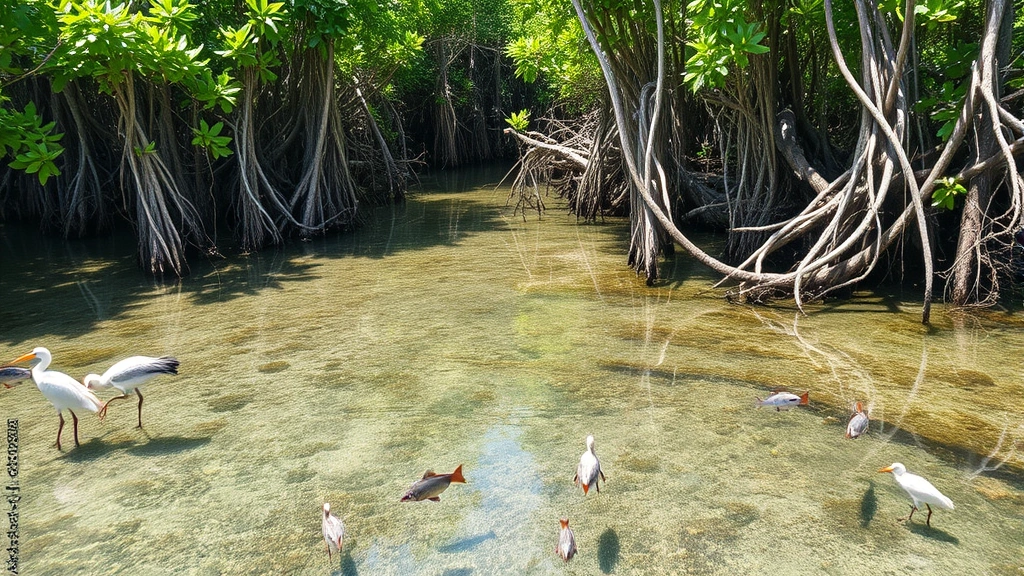
Mangrove forests exemplify biodiversity-climate linkages. These ecosystems store 3-4 times more carbon per hectare than terrestrial forests while supporting 80% of fish species in tropical coastal zones. Mangrove protection generates dual benefits: climate mitigation and fisheries productivity. Yet 35% of global mangroves have been destroyed, eliminating carbon sinks and fisheries habitat.
Biodiversity Loss and Economic Costs
The economic costs of biodiversity loss accumulate across multiple dimensions. Species extinction reduces genetic libraries available for crop improvement, pharmaceutical discovery, and industrial biotechnology. Ecosystem collapse eliminates service provision, requiring expensive technological substitutes. Economic resilience declines as diversification decreases.
The Intergovernmental Science-Policy Platform on Biodiversity and Ecosystem Services (IPBES) estimates that biodiversity loss costs $2-5 trillion annually through ecosystem service degradation. Agricultural productivity losses from pollinator decline exceed $15 billion annually in developed nations alone. Fisheries collapse from ecosystem degradation eliminate $80-100 billion in annual yield.
Climate change amplifies biodiversity loss costs. Species face simultaneous pressures from habitat destruction, pollution, and changing climate conditions. Adaptation capacity decreases as genetic and ecosystem diversity diminish. Economic damages from unmitigated climate change—exacerbated by reduced ecosystem resilience—could reach 10-20% of global GDP by 2100.
Zoonotic disease emergence links biodiversity loss to pandemic risk. Habitat fragmentation forces wildlife into human proximity, increasing spillover probability. The COVID-19 pandemic, likely originating from wildlife trade enabled by habitat loss, imposed $10+ trillion in economic damages. Conserving biodiversity reduces pandemic risk, providing insurance value exceeding direct conservation costs.
Policy Integration and Market Mechanisms
Translating biodiversity’s economic value into policy requires integrating natural capital accounting into national economic systems. GDP measures economic activity without accounting for natural capital depletion. A nation that harvests all its forests in one year experiences GDP growth despite catastrophic wealth loss. Adjusted Net Savings (ANS) metrics account for natural capital depreciation, revealing that many nations experiencing apparent GDP growth face declining genuine savings.
Payment for Ecosystem Services (PES) mechanisms create market incentives for biodiversity conservation. Farmers receive direct payments for maintaining riparian buffers that filter agricultural runoff. Forest owners receive compensation for carbon sequestration and watershed protection. These mechanisms can cost-effectively achieve conservation objectives by targeting high-value ecosystem service providers.
Biodiversity offsets require developers to conserve or restore equivalent habitat when destroying natural areas. While controversial, offsets create financial incentives for habitat restoration. A $50 million development project might fund $5-10 million in habitat restoration, generating conservation outcomes that wouldn’t occur otherwise. Effectiveness depends on rigorous additionality standards ensuring that offsets fund conservation beyond baseline trends.
International agreements increasingly recognize biodiversity’s economic value. The Convention on Biological Diversity’s post-2020 framework includes targets for protecting 30% of land and ocean area by 2030. Economic analyses demonstrate that achieving these targets costs approximately $100 billion annually but generates $10+ trillion in ecosystem service benefits.
Consider reducing carbon footprint through biodiversity-based solutions. Reforestation and wetland restoration sequester carbon while restoring habitat. These approaches cost 10-50% less than technological carbon removal while generating co-benefits including water purification, flood control, and wildlife habitat.
Corporate biodiversity commitments increasingly recognize economic dependencies. Major corporations have pledged to eliminate deforestation from supply chains, recognizing that forest loss threatens commodity production. Sustainable fashion brands emphasize biodiversity-friendly production methods, recognizing consumer preferences for environmentally responsible products. These commitments reflect recognition that long-term profitability depends on maintaining biodiversity and ecosystem services.
Financial institutions increasingly incorporate biodiversity risk into investment decisions. Banks incorporating environmental, social, and governance (ESG) criteria screen out investments in biodiversity-destructive industries. Asset managers representing $130+ trillion recognize that biodiversity loss poses systemic financial risk. This capital reallocation accelerates transition toward biodiversity-positive business models.
The transition from extraction to regeneration creates substantial economic opportunities. Regenerative agriculture, agroforestry, and ecosystem restoration represent high-growth industries. The United Nations Environment Programme estimates that the circular economy could generate $4.5 trillion in economic benefits by 2030 while reducing environmental pressures. Biodiversity-based circular economy models integrate ecosystem regeneration with economic development.
Technological innovation increasingly leverages biodiversity. Biomimicry—designing technologies inspired by natural solutions—reduces material and energy intensity. Mycelium-based materials replicate fungal growth processes to create durable, compostable alternatives to plastics. Biomimetic cooling systems replicate termite mound architecture, reducing air conditioning energy consumption by 90%. These innovations generate economic value while reducing environmental impact.
Return on investment for conservation consistently exceeds financial returns from destructive extraction. A meta-analysis of conservation investments found that ecosystem-based approaches generated $7-15 in benefits for every dollar invested. Protected area networks generate $250 billion annually in ecosystem services while costing $25 billion to establish and maintain—a 10:1 benefit-cost ratio. Yet conservation funding remains chronically underfunded, representing a massive market failure.
FAQ
How much economic value does biodiversity provide?
Global ecosystem services from biodiversity exceed $125 trillion annually. This includes $15 billion from pollination, $36 billion from coral reef tourism, $80-100 billion from fisheries, and trillions in climate regulation and water purification. These figures underestimate true value since many services lack market prices.
Which economic sectors depend most on biodiversity?
Agriculture (pollination, pest control, soil health), pharmaceuticals (40% of drugs derived from natural products), tourism (nature-based tourism generates $600 billion annually), and fisheries (500 million dependent on marine biodiversity) depend most directly on biodiversity. Indirectly, all economic sectors depend on biodiversity-provided climate regulation and water purification.
What is the cost of biodiversity loss?
IPBES estimates biodiversity loss costs $2-5 trillion annually through ecosystem service degradation. Agricultural productivity losses from pollinator decline exceed $15 billion annually. Climate change damages exacerbated by reduced ecosystem resilience could reach 10-20% of global GDP by 2100. Pandemic risk increases substantially with habitat fragmentation.
Can market mechanisms effectively conserve biodiversity?
Payment for Ecosystem Services, carbon markets, and biodiversity offsets create financial incentives for conservation. Evidence suggests these mechanisms cost-effectively achieve conservation objectives when properly designed. However, they require rigorous monitoring and additionality standards to ensure genuine conservation outcomes rather than subsidizing business-as-usual practices.
How does biodiversity enhance economic resilience?
Diverse economic systems withstand shocks better than specialized ones. Biodiversity-rich agricultural systems tolerate climate variability, pests, and diseases better than monocultures. Ecosystem diversity enhances resilience to environmental change. Genetic diversity provides adaptation options for crop improvement. This resilience generates economic value by reducing vulnerability to external shocks.
What policy changes would better integrate biodiversity into economics?
Natural capital accounting would reveal true economic costs of biodiversity loss. Removing subsidies for biodiversity-destructive activities (agriculture, logging, fishing) would correct market failures. Expanding payment for ecosystem services would create conservation incentives. International agreements establishing protected areas and benefit-sharing mechanisms would coordinate conservation globally. Financial regulation incorporating biodiversity risk would redirect capital toward conservation.


