
Can Ecosystems Boost Economies? Research Insights
The relationship between ecological health and economic prosperity has emerged as one of the most critical questions facing policymakers, economists, and environmental scientists in the twenty-first century. For decades, conventional economic models treated nature as an infinite resource, externality, or backdrop to human productive activity. However, mounting empirical evidence reveals a fundamentally different reality: thriving ecosystems generate measurable economic value through services that underpin human wellbeing, market stability, and long-term growth.
Recent research demonstrates that ecosystem degradation imposes substantial economic costs—estimated at trillions of dollars annually in lost services—while ecosystem restoration and conservation deliver significant returns on investment. This paradigm shift challenges the false dichotomy between environmental protection and economic development, revealing instead a complementary relationship where ecological resilience directly strengthens economic resilience.
Understanding these connections requires examining how natural systems regulate biogeochemical cycles, support agricultural productivity, mitigate climate risks, and generate revenue streams that benefit communities worldwide. The evidence is compelling and increasingly quantifiable.
Ecosystem Services and Economic Valuation
Ecosystem services represent the direct and indirect contributions that natural systems provide to human economies and wellbeing. These services span four primary categories: provisioning services (food, water, timber), regulating services (climate regulation, water purification, flood control), supporting services (nutrient cycling, pollination), and cultural services (recreation, spiritual value, aesthetic appreciation).
The Millennium Ecosystem Assessment, conducted by over 1,300 scientists, estimated that global ecosystem services were worth approximately $125 trillion annually—a figure dwarfing global GDP of roughly $100 trillion. Despite this extraordinary value, most ecosystem services remain unpriced in market transactions, creating what economists call a “natural capital accounting gap.” When services carry no price tag, they become invisible to conventional cost-benefit analyses, leading to systematic underinvestment in conservation.
Understanding the science environment definition is essential for comprehending how ecosystems function as economic entities. Natural systems operate according to physical and biological laws that generate measurable outputs. Wetlands, for instance, provide water purification, carbon storage, and flood buffering that would cost billions to replicate with infrastructure. Tropical rainforests regulate precipitation patterns across entire continents, supporting agricultural productivity thousands of kilometers away.
Contemporary research employs sophisticated valuation methodologies including contingent valuation, hedonic pricing, replacement cost analysis, and travel cost methods to assign monetary values to ecosystem services. A 2021 study in Nature Sustainability found that forests globally provide pollination, pest control, and water filtration services worth $125 billion annually—benefits that flow directly to agricultural producers and municipalities.
Biodiversity as Economic Infrastructure
Biodiversity functions as foundational economic infrastructure, yet this reality remains poorly integrated into development planning. Species diversity within ecosystems creates functional redundancy and resilience—characteristics that translate directly into economic stability and productivity.
Research on agricultural systems demonstrates that farms with higher biodiversity exhibit greater resistance to pests, diseases, and climate variability. A meta-analysis of 1,500 studies found that diverse cropping systems produce 20-30% higher yields per hectare than monocultures when accounting for all crops produced. This finding challenges the conventional narrative that biodiversity and agricultural productivity are inversely related. Instead, ecological diversity and economic productivity reinforce each other.
The human environment interaction fundamentally depends on maintaining functional biodiversity. Pollinator populations—bees, butterflies, birds, and bats—provide pollination services valued at $15-20 billion annually in the United States alone. Global crop production depends on pollination services worth an estimated $200-300 billion yearly. Yet pollinator populations have declined 40-75% across many regions due to habitat loss, pesticide use, and climate disruption.
Pharmaceutical biodiversity represents another critical economic dimension often overlooked. Approximately 25% of modern prescription drugs derive from tropical plant species, yet less than 1% of tropical plants have been pharmacologically screened. The potential economic value of undiscovered pharmaceutical compounds in remaining tropical forests could exceed $100 billion. Ecosystem destruction eliminates this option value permanently.
Industrial applications of biodiversity extend across textiles, cosmetics, biotechnology, and renewable materials. Spider silk proteins, developed through biomimicry of spider webs, demonstrate how ecological knowledge generates innovation and economic value. Protecting ecosystems preserves this biological library of economic potential.

Climate Regulation and Financial Stability
Ecosystems regulate global climate through multiple mechanisms, and climate stability is prerequisite to economic stability. Forests, wetlands, peatlands, and ocean ecosystems sequester carbon, buffering atmospheric concentrations. This carbon storage function provides an economic service by reducing climate change damages—damages that the World Bank estimates could reduce global GDP by 5-20% by 2100 without mitigation.
The economic value of carbon sequestration varies by methodology but typically ranges from $50-200 per ton of CO2 equivalent. A single hectare of mature tropical forest sequesters approximately 300-500 tons of carbon over its lifetime, representing $15,000-100,000 in climate regulation services. Yet tropical forests are cleared at rates exceeding 10 million hectares annually, destroying this climate infrastructure and releasing stored carbon.
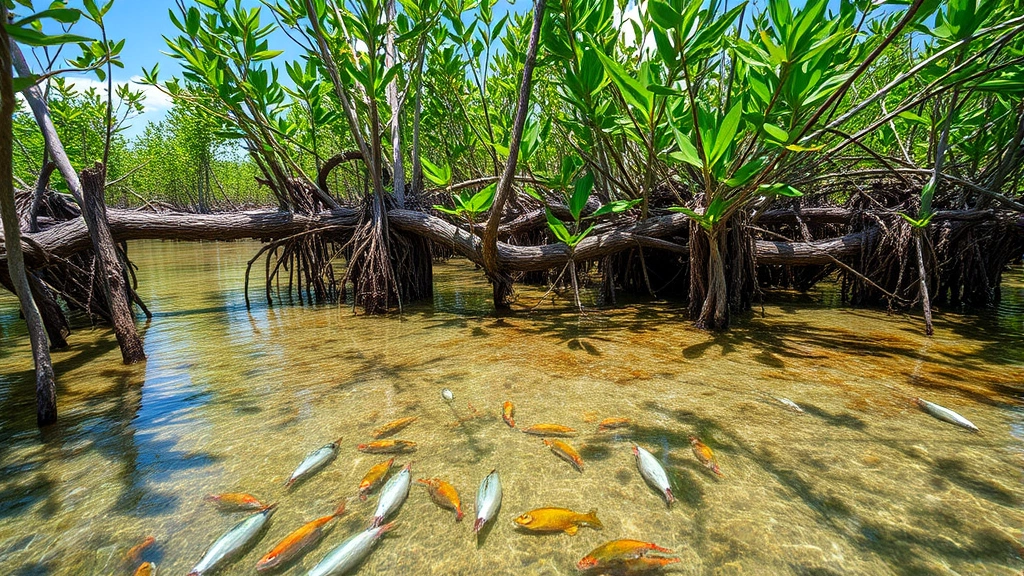
Coastal ecosystems—mangrove forests, salt marshes, coral reefs—provide storm surge buffering that protects infrastructure and lives. The 2004 Indian Ocean tsunami caused $13.6 billion in damages, with mortality concentrated in areas where mangrove forests had been cleared for aquaculture. Intact mangrove forests reduced tsunami damage by 50-90% in protected areas. The economic value of this natural disaster mitigation infrastructure is substantial: mangrove protection in Southeast Asia prevents approximately $1 billion in annual damage.
Climate volatility creates financial instability. Agricultural productivity fluctuates with temperature and precipitation extremes, affecting commodity prices and supply chains. Ecosystem resilience—the capacity to absorb disturbances while maintaining function—directly reduces economic volatility. Diverse agricultural landscapes with hedgerows, wetlands, and riparian buffers demonstrate greater productivity stability across climate variability compared to simplified monocultures.
Agriculture, Pollination, and Food Security
Global food production depends on ecosystem services that remain largely invisible in agricultural economics. Soil formation, water cycling, nutrient cycling, and pest control all represent ecosystem services essential to agricultural productivity. Yet industrial agriculture has systematically degraded these supporting services while temporarily increasing yields through external inputs.
Soil health exemplifies this dynamic. Natural soil formation occurs at rates of 1-2 millimeters per decade, yet industrial agriculture causes soil loss at rates of 24-25 millimeters per decade in many regions. This represents a 12-25x acceleration of soil depletion. The economic cost of soil degradation globally reaches approximately $400 billion annually in lost productivity. Regenerative agriculture practices that rebuild soil health and ecosystem function often restore productivity while reducing input costs.
Pollination services deserve particular attention given their critical role in food security. Approximately 75% of global food crops depend partially or entirely on pollination services. In developed economies, crop values dependent on pollination exceed $15 billion annually. Yet pollinator declines threaten this service delivery. Restoring habitat for wild pollinators—through conservation of flowering plants, reduced pesticide use, and connectivity corridors—provides returns on investment exceeding 16:1 in agricultural productivity gains.
Water cycling through ecosystems supports agricultural productivity. Forests regulate precipitation, maintain groundwater recharge, and prevent erosion that silts irrigation infrastructure. Deforestation disrupts these hydrological services, reducing water availability during growing seasons and increasing irrigation costs. In the Ganges Basin, deforestation reduced dry-season water flows by 30-50%, causing agricultural productivity declines and water stress affecting 400 million people.
The physical environment provides the material basis for agricultural productivity. Protecting this foundation through conservation, restoration, and sustainable management practices represents one of the highest-return investments available to developing economies.
Tourism and Recreation Economics
Ecosystem-based tourism generates substantial economic value while creating incentives for conservation. Global nature-based tourism exceeds $600 billion annually, supporting millions of jobs and providing critical income to developing economies. This economic value depends entirely on ecosystem integrity.
Protected areas demonstrate clear economic returns. A comprehensive analysis of African protected areas found that wildlife tourism generates $29 billion annually while supporting 3.6 million jobs. The cost of managing these protected areas is approximately $1 billion annually, yielding a benefit-to-cost ratio exceeding 29:1. Similar returns appear across protected areas globally—Costa Rican ecotourism generates $4 billion annually while supporting conservation of 25% of Central America’s remaining biodiversity.
Recreational ecosystem services extend beyond tourism. Proximity to natural areas increases property values, reduces healthcare costs through improved mental and physical health outcomes, and enhances community wellbeing. Studies consistently demonstrate that access to green space reduces stress-related illness, depression, and anxiety while improving cognitive function and creativity. These health benefits translate into economic value through reduced healthcare expenditures and increased productivity.
Urban ecosystems provide measurable economic value. Street trees reduce urban heat island effects, lowering cooling costs by 2-8% while extending pavement lifespan. Urban wetlands and green infrastructure reduce stormwater treatment costs by 5-10% compared to conventional gray infrastructure. These ecosystem services often provide superior performance at lower lifetime costs than engineered alternatives.
Carbon Markets and Natural Capital
Emerging carbon markets create financial mechanisms to value ecosystem carbon sequestration services. Voluntary carbon markets exceeded $1 billion in 2021, with nature-based solutions (forest conservation, restoration, and sustainable management) representing the largest category. These markets price carbon sequestration, creating direct economic incentives for ecosystem protection.
REDD+ (Reducing Emissions from Deforestation and Forest Degradation) mechanisms have mobilized over $10 billion for forest conservation in developing countries. While debates persist regarding effectiveness and equity, these mechanisms demonstrate that carbon sequestration services can generate sufficient economic value to compete with deforestation for land use. In some regions, REDD+ payments exceed $10 per hectare annually—values that can support livelihoods while maintaining forest cover.
Natural capital accounting represents an emerging framework for integrating ecosystem services into national accounting systems. Several countries—including Costa Rica, Botswana, and the Philippines—have adopted natural capital accounting that values ecosystem services as productive assets. This accounting framework reveals that conventional GDP growth often masks natural capital depletion, showing that true economic growth requires maintaining or increasing natural capital stocks.
The how to reduce carbon footprint strategies increasingly emphasize ecosystem-based solutions. Nature-based solutions for carbon sequestration—reforestation, wetland restoration, peatland conservation—typically cost $5-15 per ton of CO2 equivalent, far below costs of many technological solutions. These approaches simultaneously provide biodiversity benefits, water security improvements, and livelihood support.
The United Nations Environment Programme estimates that nature-based solutions could provide 37% of climate mitigation needed to limit warming to 1.5°C, while simultaneously delivering co-benefits worth trillions in ecosystem services. This analysis reveals that climate mitigation and ecosystem protection are economically complementary objectives.
Policy Frameworks and Implementation
Translating ecosystem service research into economic policy requires institutional frameworks that value natural capital in decision-making. Several policy approaches have demonstrated effectiveness:
Payment for Ecosystem Services (PES) Programs: These mechanisms directly compensate landholders for maintaining or restoring ecosystem services. Costa Rica’s PES program, established in 1997, has protected over 1 million hectares while providing income to participating farmers. Evaluations show that PES programs cost 50-75% less than conventional protected areas while maintaining comparable conservation outcomes when designed with local participation.
Biodiversity Offsets: These require developers to compensate for ecosystem damage through restoration elsewhere. While controversial, well-designed offset programs create financial incentives for restoration. Studies from Australia and Brazil show that offset requirements increase restoration investment and ecosystem recovery rates.
Green Infrastructure Investment: Incorporating ecosystem services into infrastructure planning yields superior outcomes. Green-gray hybrid infrastructure that combines engineered and natural solutions typically provides better performance at lower cost than conventional gray infrastructure alone. Cities worldwide increasingly adopt green stormwater infrastructure, urban forests, and restored wetlands as core infrastructure strategies.
Sustainable Supply Chain Management: Corporations increasingly adopt supply chain practices that maintain ecosystem services. Regenerative agriculture certifications, sustainable forestry standards, and fishery management practices create market premiums for products from systems that maintain natural capital. These approaches demonstrate that business profitability and ecosystem protection can align.
The renewable energy for homes transition exemplifies how ecosystem-based economic transitions create opportunity. Renewable energy infrastructure often integrates with ecosystem management—solar farms with pollinator habitat, wind farms with grassland restoration, hydroelectric systems with watershed protection.
Implementation challenges persist. Ecosystem services valuation remains methodologically contested, with different approaches yielding different results. Equitable benefit distribution from ecosystem services remains problematic—international payment schemes often concentrate benefits among wealthy nations while imposing conservation constraints on developing countries. Addressing these equity concerns requires participatory governance frameworks that center local community interests.
The sustainable fashion brands movement demonstrates how ecosystem service considerations reshape consumer industries. Brands incorporating regenerative agriculture, ecosystem restoration, and biodiversity protection into supply chains increasingly command market premiums, revealing consumer willingness to pay for products aligned with ecosystem protection.
Research from ecological economics journals, including Ecological Economics, consistently demonstrates that ecosystem protection generates superior economic returns compared to extractive alternatives when full costs and benefits are calculated. A comprehensive review in Ecosystem Services examined 200+ case studies and found that ecosystem conservation and restoration yield benefit-to-cost ratios averaging 7:1, with many projects exceeding 15:1 returns.
FAQ
How are ecosystem services economically valued?
Ecosystem service valuation employs multiple methodologies: replacement cost analysis (what would engineered systems cost?), contingent valuation (what would people pay?), hedonic pricing (how much do ecosystems affect property values?), travel cost methods (how much do people spend accessing ecosystems?), and market price approaches (what do ecosystem products sell for?). Different methods yield different results, reflecting methodological and philosophical differences in environmental economics.
What is the economic value of biodiversity?
Biodiversity value spans direct use (pharmaceutical compounds, food crops, materials), indirect use (pollination, pest control, water purification), option value (potential future uses), and existence value (intrinsic worth independent of human use). Total economic value of global biodiversity likely exceeds $100 trillion, though precise quantification remains contested. This value depends on maintaining functional ecosystems rather than isolated species preservation.
Do ecosystem protection and economic growth conflict?
This depends on accounting methodology. Conventional GDP measures count natural capital depletion as income rather than capital loss, creating the false appearance that extractive activities generate growth. Natural capital accounting reveals that true economic growth requires maintaining ecosystem services. Empirical evidence increasingly shows that ecosystem-based economies generate superior long-term growth compared to extractive alternatives.
How can developing countries benefit from ecosystem services?
Developing countries possess disproportionate shares of global biodiversity and ecosystem services. Payment for ecosystem services, conservation finance, sustainable tourism, and bioeconomy development can generate substantial income while maintaining ecosystems. However, these mechanisms require capacity building, fair benefit-sharing arrangements, and protection against “land-grabbing” where conservation restrictions benefit external actors while constraining local livelihoods.
What role do ecosystems play in climate adaptation?
Ecosystem-based adaptation leverages ecosystem services to reduce climate vulnerability. Mangrove protection reduces hurricane damage, forest conservation maintains water supplies during droughts, wetland restoration buffers flooding, and agricultural biodiversity reduces crop failure risks. These adaptation strategies often cost 25-50% less than conventional infrastructure-based approaches while providing co-benefits including livelihood support, biodiversity protection, and carbon sequestration.
Can markets alone protect ecosystems?
Market-based mechanisms for ecosystem protection—carbon markets, payments for ecosystem services, green bonds—provide important but insufficient protection. Markets systematically undervalue ecosystem services, particularly those providing benefits to poor communities or future generations. Effective ecosystem protection requires complementary policy approaches: regulation (protected areas, pollution limits), public investment (restoration, research), and community governance (participatory management, indigenous rights recognition).


