
Can Nature’s Economy Boost GDP? Economist Insights
The relationship between natural capital and gross domestic product has emerged as one of the most pressing questions in contemporary economics. As traditional GDP measurements face mounting criticism for ignoring environmental degradation, economists worldwide are exploring whether accounting for nature’s contributions could fundamentally reshape how we measure economic progress. This inquiry challenges the foundational assumptions of growth-focused economics and opens pathways toward sustainable prosperity.
Natural ecosystems generate trillions of dollars annually through services we often take for granted—pollination, water filtration, climate regulation, and carbon sequestration. Yet conventional GDP calculations exclude these contributions entirely. Understanding how to integrate nature’s economy into our economic frameworks requires examining the intersection of ecological science, environmental economics, and policy innovation. The evidence suggests that recognizing nature’s economic value isn’t merely an academic exercise; it’s essential for building resilient, long-term economic systems.
Understanding Natural Capital and Economic Value
Natural capital represents the world’s stocks of environmental assets—forests, wetlands, fisheries, mineral deposits, and atmosphere. Unlike traditional capital, natural capital operates within complex, interconnected systems where degradation compounds across multiple dimensions. Economists increasingly recognize that natural capital underpins all economic activity, yet our accounting systems treat it as externality rather than asset.
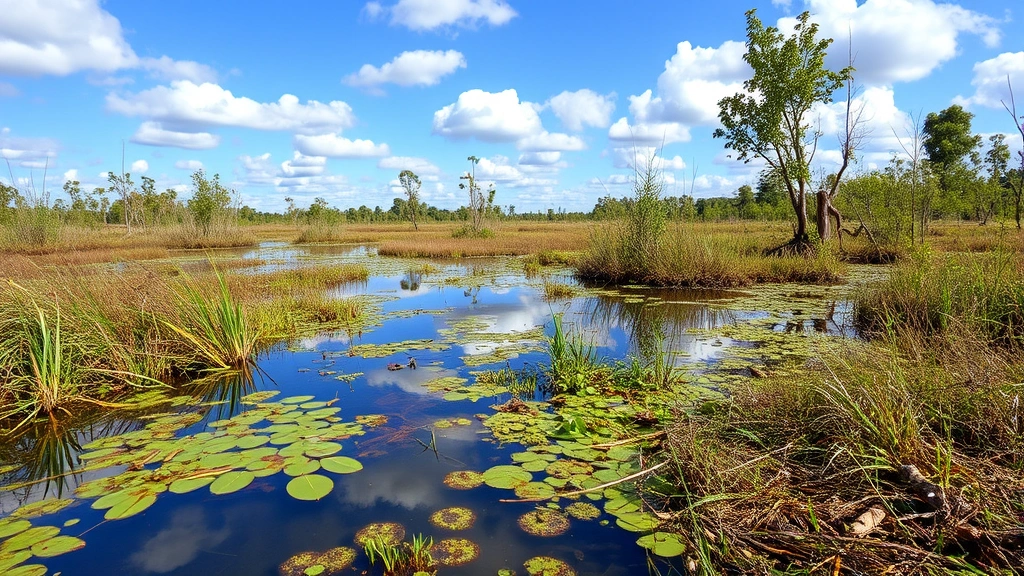
The concept of natural capital emerged from ecological economics, a discipline challenging mainstream economics’ assumptions about resource abundance and substitutability. Economic analysis of natural systems reveals that many ecosystem functions cannot be replicated by human-made capital. A wetland’s ability to filter water and prevent flooding, for instance, provides services worth millions that would cost exponentially more to engineer artificially.
Integrating natural capital into GDP requires quantifying its economic contribution. This involves assessing how ecosystem services support human wellbeing and economic productivity. When we examine human environment interaction, we see that economic systems depend entirely on nature’s capacity to provide resources and absorb waste. Yet this dependence remains invisible in standard accounting.
The World Bank estimates that natural capital comprises approximately 26% of total wealth in developing countries, but only 2% in high-income nations—not because wealthy countries have less nature, but because their accounting systems undervalue it. This measurement gap creates perverse incentives where destroying natural capital appears economically beneficial in the short term.

Ecosystem Services and GDP Contribution
Ecosystem services encompass the benefits humans derive from natural systems, typically categorized as provisioning (food, water, timber), regulating (climate control, flood prevention, pollination), supporting (nutrient cycling, soil formation), and cultural (recreation, spiritual value) services. Each category contributes economically, though some contributions remain difficult to quantify.
Global ecosystem services research indicates that nature provides approximately $125 trillion in annual services to the global economy. This staggering figure dwarfs global GDP—roughly $100 trillion—suggesting that accounting for nature would fundamentally reshape economic measurements. Pollination services alone contribute $15-20 billion annually to global agriculture, yet pollinator populations face unprecedented decline due to habitat loss and agricultural practices.
Carbon sequestration represents another critical ecosystem service with profound economic implications. Forests absorb approximately 2.4 gigatons of carbon dioxide annually, effectively subsidizing industrial economies by preventing atmospheric accumulation. Valuing this service at carbon prices ranging from $50-150 per ton yields contributions worth $120-360 billion yearly—yet forests continue being converted to other uses that generate short-term GDP growth while destroying this invaluable service.
Water provisioning and purification services demonstrate how nature’s economy directly supports human populations. Watersheds and forests maintain water cycles that supply drinking water, irrigation, and hydroelectric power. When examining physical environment functioning, we recognize that intact ecosystems provide water security worth billions to downstream communities. Degradation of these systems creates costs—treatment expenses, health impacts, agricultural losses—that appear as economic activity in GDP but represent genuine welfare loss.
The Measurement Challenge
Converting nature’s contributions into monetary terms presents profound methodological challenges. How do we value existence value—people’s willingness to preserve species and ecosystems regardless of direct use? How do we account for irreversibility when ecosystem collapse may be permanent? These questions reveal limitations inherent in monetary valuation approaches.
Economists employ several valuation methods: revealed preference (observing actual market choices), stated preference (surveys about hypothetical choices), replacement cost (expenses to artificially replace ecosystem functions), and benefit transfer (applying valuations from similar ecosystems). Each method produces different results and carries particular biases. Replacement cost approaches often underestimate nature’s value by assuming technological substitutes exist. Stated preference methods may overestimate by capturing moral rather than economic values.
The debate over monetary valuation reflects deeper philosophical disagreements. Some economists argue that assigning prices to nature commodifies it, enabling further destruction. Others contend that valuation is necessary because markets ignore unpriced resources. This tension between ecological integrity and economic rationality remains unresolved, though practical necessity increasingly drives valuation efforts in policy contexts.
Recent developments in natural capital accounting provide more comprehensive frameworks. The UN’s System of Environmental-Economic Accounting (SEEA) integrates environmental data with national accounts, creating satellite accounts that track natural capital alongside traditional GDP. Several countries now produce natural capital accounts, revealing that conventional GDP growth often masks natural capital depletion. World Bank analyses show that adjusted net savings—incorporating natural capital changes—paint starkly different pictures of economic sustainability than traditional measures.
Case Studies in Nature-Based Economics
Costa Rica exemplifies how ecosystem service valuation can reshape economic policy. The country implemented payment for ecosystem services (PES) programs that compensate landowners for maintaining forests. These programs recognize that forest conservation provides carbon sequestration, water protection, and biodiversity preservation benefits extending beyond individual property lines. Costa Rica’s forest coverage increased from 21% in 1987 to 52% today, while maintaining economic growth—demonstrating that nature’s economy and GDP growth needn’t be mutually exclusive.
Indonesia’s mangrove forests provide striking examples of nature’s economic value. These ecosystems support fisheries worth billions annually, protect coastlines from storms, and sequester carbon at rates exceeding terrestrial forests. Yet mangrove conversion to aquaculture and development destroyed 40% of remaining forests over recent decades. Economists calculating full ecosystem service values found that sustainable mangrove management would generate greater long-term economic benefits than conversion, yet market failures and policy gaps perpetuated destruction.
The Peatlands of Southeast Asia illustrate how nature’s economy intersects with carbon economics. These ecosystems store more carbon than all forests combined, yet drainage for agriculture and development releases catastrophic emissions. The 2015 Indonesian fires burning peatlands released more carbon than entire nations emit annually. Valuing peatland carbon storage at prevailing carbon prices reveals that preservation provides greater economic value than conversion—yet this value remains invisible to decision-makers lacking carbon pricing mechanisms.
New Zealand’s accounting reforms integrated natural capital into national accounts, creating satellite accounts tracking native forests, minerals, and water resources. This framework revealed that resource extraction often generated short-term GDP increases while depleting natural capital, resulting in negative adjusted net savings. The transparency enabled by natural capital accounting influenced policy decisions prioritizing long-term sustainability over immediate extraction.
The restoration of the Everglades demonstrates how investing in ecosystem recovery generates economic benefits. Water management improvements enhanced ecosystem services including water purification, fish production, and flood mitigation. These services support agricultural, fishing, and tourism economies worth tens of billions. The initial restoration investment, while substantial, proved economically justified by ecosystem service benefits—yet such calculations remain exceptional rather than standard in infrastructure planning.
Policy Frameworks and Implementation
Integrating nature’s economy into policy requires multifaceted approaches combining valuation, accounting, and regulatory frameworks. Payment for ecosystem services programs create direct economic incentives for conservation by compensating landowners for maintaining natural capital. These programs have expanded globally, though debates persist regarding their effectiveness and potential perverse effects.
Carbon pricing mechanisms represent the most developed application of ecosystem service valuation in policy. Carbon taxes and cap-and-trade systems assign monetary values to carbon sequestration, creating economic incentives for forest conservation and reforestation. The UN Environment Programme estimates that carbon pricing could drive trillions in climate mitigation investments. Yet current carbon prices remain too low to reflect climate damages, limiting their effectiveness in protecting high-carbon ecosystems.
Biodiversity offsetting mechanisms attempt to maintain ecosystem service provision by requiring development projects to offset habitat destruction elsewhere. While theoretically sound, implementation reveals challenges: offsets often occur in different locations with different species and services, restoration success rates remain uncertain, and accounting for complex ecological relationships proves difficult. Critics argue that offsetting enables continued destruction of irreplaceable ecosystems.
Natural capital accounting frameworks, like SEEA, enable governments to track ecosystem health alongside economic growth. These accounts reveal whether GDP growth represents genuine economic progress or merely conversion of natural capital to produced capital. Several countries now produce natural capital accounts, creating transparency about sustainability. However, integration into policy remains inconsistent, with many governments maintaining traditional GDP as primary success metric.
When considering approaches to reduce carbon footprint at policy scales, nature-based solutions receive insufficient investment despite cost-effectiveness. Protecting and restoring forests, wetlands, and grasslands sequesters carbon while providing co-benefits including water purification, biodiversity conservation, and livelihood support. Yet these nature-based solutions compete for funding with technological approaches despite superior cost-effectiveness.
Green infrastructure investments integrate ecosystem services into urban and infrastructure planning. Protecting watersheds rather than building treatment plants, maintaining wetlands rather than constructing flood barriers, and preserving urban forests rather than relying entirely on air conditioning all provide cost savings while enhancing ecosystem resilience. These approaches demonstrate that incorporating nature’s economy into infrastructure planning generates superior financial and environmental outcomes.
Challenges and Criticisms
Critics raise legitimate concerns about nature-based economics approaches. Reducing nature to monetary values risks enabling further commodification and destruction. If ecosystems are valued economically, those with insufficient economic value may receive inadequate protection. Biodiversity hotspots in poor countries may face pressure to convert to economically productive uses if their ecosystem service values appear insufficient.
Methodological challenges persist in ecosystem service valuation. Aggregating services across spatial scales, accounting for nonlinear ecosystem responses to degradation, and valuing services without substitutes all present difficulties. When ecosystems collapse, their economic value may become infinite (irreplaceable) or zero (destroyed), yet these discontinuities cannot be captured in continuous valuation functions. Moreover, aggregating services across regions obscures local impacts—global carbon values may not reflect local water quality or livelihood consequences.
Implementation gaps plague nature-based economics despite theoretical soundness. Governments often lack institutional capacity for natural capital accounting and ecosystem service valuation. International agreements establish frameworks like the Kunming-Montreal Global Biodiversity Framework yet lack enforcement mechanisms. Market-based approaches encounter transaction costs, monitoring challenges, and political resistance from industries benefiting from ecosystem destruction.
The assumption that monetary valuation sufficiently motivates conservation proves questionable. Even where ecosystem service values substantially exceed conversion profits, destruction continues due to market failures, governance gaps, and distributional conflicts. Communities dependent on ecosystem services often lack political power to prevent destruction benefiting external interests. Valuation without addressing underlying power dynamics and governance failures may prove insufficient.
Sustainable fashion brands and sustainable fashion movements illustrate how consumer awareness of ecosystem impacts can drive market transformation. Yet these remain niche sectors. Mainstream markets continue externalizing environmental costs, suggesting that valuation alone—without regulatory enforcement—proves insufficient for systemic change.
The concept of “natural capital” itself faces criticism as reifying nature as mere economic input. This framing may obscure intrinsic value and enable instrumental perspectives justifying destruction of economically “inefficient” ecosystems. Alternative frameworks emphasizing rights of nature, ecosystem integrity, and humans as ecosystem participants rather than external exploiters may better reflect ecological reality.
Temporal mismatches between ecosystem service provision and economic accounting create perverse incentives. Ecosystem degradation may generate immediate economic benefits (logging revenue, agricultural expansion) while costs accumulate over decades (water scarcity, flood damage, productivity decline). Standard economic discounting rates minimize future costs, making destruction appear economically rational despite generating long-term welfare losses.
FAQ
How much does nature contribute to global GDP?
Research estimates ecosystem services provide $125 trillion annually—exceeding global GDP of approximately $100 trillion. However, this value remains largely unaccounted for in conventional GDP calculations. Individual services vary: pollination contributes $15-20 billion annually, carbon sequestration $120-360 billion yearly depending on carbon pricing, and water services provide even larger values. These contributions are essential to economic activity yet invisible in standard accounting.
Can we really put a price on nature?
Economists employ various valuation methods with different strengths and limitations. Revealed preference approaches observe actual market behavior, stated preference relies on surveys, replacement cost estimates artificial alternatives, and benefit transfer applies similar ecosystem values. Each method produces different results and carries particular biases. While monetary valuation captures some economic value, it cannot fully represent existence value, irreversibility, or intrinsic worth. Valuation serves as policy tool rather than complete representation of nature’s value.
Do payment for ecosystem services programs actually work?
Evidence from Costa Rica, Indonesia, and other regions shows mixed results. Successful programs like Costa Rica’s forest conservation PES have increased forest coverage while maintaining economic growth. However, effectiveness depends on adequate compensation levels, secure tenure, monitoring capacity, and addressing underlying drivers of ecosystem loss. Programs work best when integrated with broader governance reforms addressing corruption and establishing sustainable development pathways.
How does natural capital accounting change economic policy?
Natural capital accounts reveal whether GDP growth represents genuine economic progress or merely conversion of natural capital to produced capital. Countries implementing natural capital accounting often discover that adjusted net savings (incorporating natural capital changes) show negative trends despite positive GDP growth. This transparency can influence policy toward sustainability, though integration into decision-making remains inconsistent across governments.
What about renewable energy solutions and nature’s economy?
When exploring renewable energy for homes and broader energy systems, ecosystem services become critical. Solar and wind installations require land, potentially affecting ecosystems. Yet renewable energy reduces fossil fuel extraction, protecting ecosystems from mining and drilling damage while reducing carbon sequestration demand. Sustainable energy transitions must integrate ecosystem service considerations into siting decisions and land management.
Can nature-based economics solve climate change?
Nature-based solutions including forest protection, restoration, and sustainable agriculture could provide 30% of emissions reductions needed for climate targets, according to UNEP estimates. However, these solutions require substantial investment and supportive policies. Without carbon pricing adequately reflecting climate damages and governance frameworks protecting ecosystems, nature-based solutions remain underfunded relative to technological approaches. Combining nature-based solutions with emissions reductions proves essential for climate stabilization.


