Player vs Environment: Economic Impacts Explained
The tension between economic players—corporations, governments, and consumers—and the natural environment represents one of the most consequential challenges of our time. This dynamic interaction, often framed as “player versus environment,” describes how economic agents make decisions that directly affect ecological systems, which in turn creates cascading financial, social, and environmental consequences. Understanding these economic impacts requires examining how market forces, regulatory frameworks, and individual choices shape our relationship with natural resources.
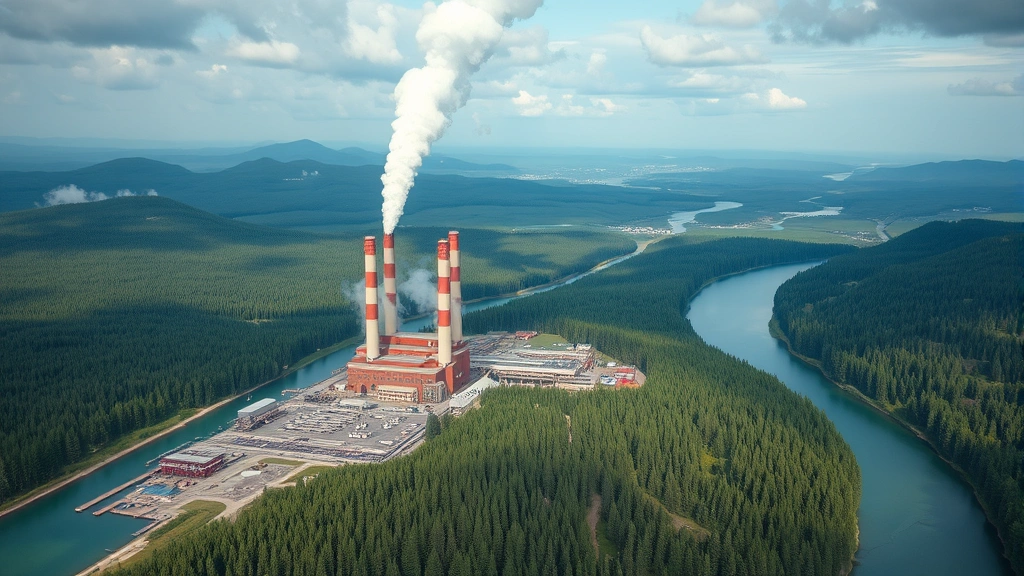
At its core, the player versus environment paradigm reflects a fundamental market failure: the environment’s value isn’t adequately captured in traditional economic calculations. When a factory pollutes a river, the cost of cleanup doesn’t appear on corporate balance sheets. When forests are cleared for agriculture, the carbon sequestration services they provided disappear without economic compensation. These externalities—costs borne by society rather than the polluter—create distorted incentives that favor short-term economic gain over long-term environmental stability.
The stakes of this economic-ecological conflict have never been higher. Global biodiversity loss, climate disruption, and resource depletion impose quantifiable costs on human economies. Yet many players within economic systems continue operating under outdated assumptions that treat the environment as an infinite resource rather than a finite system with planetary boundaries.

The Economic Framework of Environmental Conflict
The player versus environment dynamic emerges from fundamental economic principles and market structures. In conventional neoclassical economics, firms maximize profit by minimizing costs. When environmental degradation isn’t priced into production, it becomes economically rational to externalize these costs. This creates a systemic incentive structure where individual economic actors, acting rationally within their constraints, collectively produce irrational environmental outcomes.
Understanding physical environment degradation through economic lenses reveals that this isn’t simply about “greedy” actors. Rather, it reflects how economic systems are designed. A timber company operating within a capitalist framework must compete with other timber companies. If one company incurs costs to replant forests or protect watersheds while competitors don’t, it faces competitive disadvantage. This creates a “race to the bottom” where environmental protection becomes economically penalizing.
The concept of natural capital—the world’s stocks of environmental assets including soil, air, water, and living organisms—provides crucial analytical framework. Natural capital generates ecosystem services: pollination, water purification, climate regulation, nutrient cycling. Yet these services remain largely invisible in GDP calculations. A nation can clear-cut its forests, deplete its fisheries, and degrade its soils while GDP appears to grow. This accounting gap drives the player versus environment conflict at the macroeconomic level.
According to World Bank estimates, the loss of natural capital represents a significant but underappreciated economic drain. When adjusted for environmental degradation, true economic growth rates in many nations appear substantially lower than reported figures. This hidden cost structure means players throughout the economy operate with incomplete information about true economic performance.

Quantifying Environmental Economic Impacts
Translating environmental damage into economic terms reveals the staggering scale of player versus environment conflicts. The economic costs of environmental degradation operate across multiple dimensions: direct production losses, health expenditures, disaster recovery, productivity decline, and opportunity costs of foregone ecosystem services.
Agricultural productivity provides a concrete example. Soil degradation costs the global economy approximately $400 billion annually in lost productivity. When players in agricultural systems prioritize short-term yield maximization through intensive chemical inputs and monoculture practices, they deplete soil organic matter and microbial communities. Initial productivity gains reverse within years, requiring ever-increasing input costs. Farmers face economic pressure to continue degrading practices, creating a tragic commons scenario where individual rationality produces collective irrationality.
Climate change represents perhaps the most economically significant player versus environment conflict. Stern Review estimates place climate damages at 5-20% of global GDP if warming exceeds 2-3°C. These costs manifest through agricultural disruption, infrastructure damage, health impacts, and mass migration. Yet because climate damages accrue unevenly across time and geography, and because atmospheric carbon remains underpriced, economic players face weak incentives to reduce emissions. A coal plant operator considers only immediate production costs, not the climate damages their emissions generate decades later or thousands of miles away.
Water scarcity exemplifies how player versus environment economics creates cascading crises. Industrial players, agricultural operations, and urban consumers compete for limited freshwater resources. In many regions, groundwater extraction exceeds recharge rates by 2-3 times. Economically, this appears profitable short-term—aquifers provide cheap water. But economically, it’s catastrophic long-term as aquifers deplete. The player versus environment dynamic ensures that individual economic actors deplete shared resources faster than sustainable rates.
Health impacts from environmental degradation impose enormous economic costs. Air pollution causes approximately 7 million premature deaths annually, with associated economic costs exceeding $5 trillion when accounting for lost productivity and medical expenses. Yet air polluters don’t internalize these costs—they remain externalized to workers, families, and healthcare systems. This pricing distortion means polluting production appears more economically efficient than it truly is.
Corporate Players and Ecological Externalities
Corporations represent primary players in environmental conflicts, not through malice but through structural economic incentives. Corporate decision-makers operate within frameworks where environmental protection must justify itself economically against immediate profit maximization. When environmental costs remain externalized, protection becomes economically irrational from a shareholder perspective.
The extractive industries—mining, oil, gas, timber—exemplify player versus environment dynamics. A mining company generates employment and government revenue while extracting minerals. But it also generates acid mine drainage, heavy metal contamination, and landscape destruction. The economic benefits flow to shareholders and governments; the environmental costs flow to downstream communities and future generations. This temporal and spatial mismatch of costs and benefits drives the conflict.
Consider how human environment interaction plays out in corporate supply chains. A clothing manufacturer sources materials from suppliers offering lowest prices. If those suppliers produce cotton through intensive pesticide use that contaminates groundwater, or source palm oil through rainforest destruction, the contamination and deforestation costs don’t appear in supply chain economics. The player versus environment dynamic cascades through global supply networks, with environmental costs concentrated in developing nations where regulatory enforcement remains weak.
Financial markets amplify these dynamics. Short-term stock price optimization incentivizes quarterly earnings maximization, discouraging long-term environmental investments. A company investing heavily in renewable energy or circular economy practices faces immediate profit reduction and potential stock price decline, regardless of long-term value creation. This temporal mismatch between environmental payoffs and financial markets drives systematic underinvestment in environmental protection.
Yet corporate players aren’t monolithic. Some companies recognize that environmental degradation ultimately threatens business continuity. Supply chain disruptions from extreme weather, resource scarcity, and regulatory tightening create financial risks. Forward-thinking corporations increasingly view environmental protection as risk management and competitive differentiation. This emerging recognition that player and environment interests can align represents a crucial shift in economic dynamics.
Consumer Behavior and Environmental Economics
Consumers represent another crucial player category in environmental conflicts, though their role differs from corporate actors. Individual consumption choices aggregate into massive environmental impacts. Global consumption patterns drive deforestation, ocean depletion, greenhouse gas emissions, and waste accumulation. Yet consumers face information asymmetries and economic pressures that create player versus environment conflicts at the individual level.
The tragedy of the commons operates at consumer level through public goods provision. Individual consumers benefit from cheap products manufactured through environmentally destructive processes. The environmental costs—pollution, resource depletion, ecosystem damage—remain diffuse and largely invisible. Each consumer’s individual choice to purchase cheap goods produces negligible personal environmental impact, yet aggregate choices produce massive environmental damage. This creates rational individual behavior generating irrational collective outcomes.
Income constraints further complicate consumer-environment dynamics. Sustainable products typically cost more than conventional alternatives. For low-income consumers, choosing environmentally responsible options means reducing consumption of other necessities. This creates a player versus environment conflict where economic security and environmental protection appear mutually exclusive. Only when environmental costs are internalized into conventional product pricing does sustainable consumption become economically accessible to all income groups.
Learning about how to reduce carbon footprint represents one consumer response to player versus environment conflicts. Individual actions like reducing energy consumption, shifting to plant-based diets, or purchasing secondhand goods do reduce environmental impact. However, individual consumer action alone cannot solve structural environmental problems. Systemic change requires altering the economic incentives that make environmentally destructive consumption economically rational.
Fashion consumption exemplifies consumer-environment conflicts. Fast fashion generates enormous environmental costs: resource-intensive cotton production, chemical-intensive dyeing, water pollution, textile waste. Yet consumers face economic incentives to purchase cheap clothing through marketing and price structures that obscure environmental costs. Exploring sustainable fashion brands demonstrates how market mechanisms can align consumer and environmental interests when prices reflect true costs.
Government Policy and Market Mechanisms
Governments represent crucial players in environmental conflicts, wielding authority to internalize externalities and reshape economic incentives. Yet governments themselves face conflicting pressures: immediate economic growth imperatives versus long-term environmental protection. This creates player versus environment conflicts at the policy level.
Carbon pricing mechanisms—carbon taxes or cap-and-trade systems—represent attempts to internalize climate externalities. By pricing atmospheric carbon, these mechanisms make environmentally destructive production more economically expensive, theoretically aligning private incentives with social welfare. However, political pressure from carbon-intensive industries often results in prices too low to drive substantial behavioral change. The player versus environment conflict manifests as political struggle over carbon price levels.
Regulatory approaches—pollution limits, emissions standards, environmental impact assessments—represent alternative policy mechanisms. These establish environmental constraints within which economic players must operate. However, regulations face enforcement challenges and political opposition. Industries lobby for weaker standards or laxer enforcement. Regulatory capture occurs when regulated industries shape regulatory agencies. This dynamic perpetuates player versus environment conflicts even within regulatory frameworks.
Subsidy structures profoundly shape player versus environment dynamics. Global fossil fuel subsidies exceed $7 trillion annually when accounting for unpriced environmental costs. These subsidies artificially cheapen carbon-intensive energy, making renewable alternatives less competitive. Governments simultaneously pursue renewable energy goals while maintaining subsidies that favor fossil fuels. This policy contradiction reflects the player versus environment conflict embedded in government decision-making.
Tradable permit systems attempt to harness market mechanisms for environmental protection. By creating markets for pollution rights, these systems theoretically allow cost-effective pollution reduction. However, permit allocation mechanisms determine distributional outcomes. Grandfathering permits to existing polluters requires no behavioral change; auctioning permits internalizes costs more effectively. The player versus environment conflict manifests in debates over permit allocation methodology.
Payment for ecosystem services represents another market-based approach. By compensating landowners for maintaining forests, wetlands, or grasslands, these programs attempt to make environmental protection economically profitable. However, determining appropriate payment levels remains contentious. Payments too low won’t change behavior; payments too high represent inefficient resource allocation. This reflects fundamental challenges in pricing nature within economic systems.
Case Studies in Player Versus Environment Dynamics
Real-world examples illuminate how player versus environment conflicts manifest across different economic contexts and environmental systems.
Amazon Deforestation: The Amazon rainforest faces conversion to cattle ranching and soy cultivation. From individual ranchers’ perspectives, forest conversion is economically rational—land use generates immediate income. From global perspectives, deforestation represents catastrophic loss of carbon storage, biodiversity, and rainfall regulation. The player versus environment conflict reflects different economic actors valuing the forest differently. Local players see development opportunity; global players see climate and biodiversity disaster. Without mechanisms to compensate local players for forest preservation, economic incentives favor deforestation.
Fishing Industry Collapse: Global fisheries face depletion from overharvesting. Individual fishing operations benefit from catching maximum fish today. Yet aggregate catch exceeds sustainable yields, collapsing fish populations. The player versus environment conflict manifests as the tragedy of the commons—rational individual behavior producing irrational collective outcomes. Once fisheries collapse, economic benefits disappear entirely. Short-term economic incentives override long-term sustainability.
Industrial Agriculture: Intensive agricultural systems maximize short-term productivity through chemical inputs, monoculture, and soil depletion. Individual farmers operating in competitive markets must adopt these practices to remain economically viable. Yet aggregate adoption degrades soil, contaminates water, reduces biodiversity, and increases input costs. The player versus environment conflict reflects how competitive pressure forces economically rational but environmentally destructive practices.
Textile Manufacturing: Garment production concentrates in low-wage countries with weak environmental enforcement. Individual manufacturers competing on price cannot afford environmental protection costs that competitors avoid. Water pollution, chemical exposure, and waste accumulation result from this player versus environment dynamic. Workers and downstream communities bear environmental costs while corporations and consumers capture economic benefits.
Transitioning to Ecological Economics
Resolving player versus environment conflicts requires fundamental economic transformation. Ecological economics represents an alternative framework recognizing that human economies exist within biophysical limits. Unlike conventional economics treating the environment as a subsystem of the economy, ecological economics recognizes the economy as a subsystem of finite Earth.
True cost accounting represents a crucial transition mechanism. By quantifying environmental costs and incorporating them into product pricing, true cost accounting aligns economic signals with environmental reality. A product’s true price includes environmental degradation costs. When consumers and producers face prices reflecting true costs, economic incentives shift toward environmental protection. The player versus environment conflict transforms into player and environment alignment when costs reflect reality.
Circular economy models represent another transformative approach. Instead of linear take-make-waste production, circular systems design products for reuse, repair, and material recovery. This eliminates the player versus environment conflict embedded in waste generation. Producers remain economically incentivized to design durable, repairable products. Resource consumption declines while economic value persists.
Regenerative practices go further, actively improving environmental systems while generating economic value. Regenerative agriculture builds soil health and biodiversity while producing food. Regenerative forestry enhances carbon storage and ecosystem services while harvesting timber. These approaches dissolve player versus environment conflicts by aligning economic value creation with environmental restoration.
Policy frameworks supporting this transition include carbon pricing, biodiversity offsetting, and natural capital accounting. UNEP initiatives promote ecosystem accounting frameworks that track natural capital alongside financial capital. When nations measure progress through genuine progress indicators incorporating environmental factors rather than GDP alone, economic policies shift toward environmental protection.
Corporate transformation requires stakeholder capitalism replacing shareholder primacy. When corporations optimize for stakeholder wellbeing—including environmental stakeholders—rather than shareholder returns alone, player versus environment conflicts diminish. Research in ecological economics demonstrates that long-term shareholder value actually increases when corporations invest in environmental protection and regeneration.
Consumer transformation requires accessible sustainable choices. When environmental costs are internalized into pricing, sustainable consumption becomes economically rational for all income levels. Renewable energy for homes exemplifies how policy support—subsidies, tax credits, net metering—can make environmentally preferable choices economically preferable.
International cooperation remains essential. Player versus environment conflicts cross national borders through supply chains, atmospheric circulation, and water systems. No single nation can resolve these conflicts alone. International agreements establishing carbon pricing, biodiversity protection, and resource management represent necessary coordination mechanisms.
FAQ
What does “player versus environment” mean in economic terms?
Player versus environment describes conflicts between economic actors—corporations, consumers, governments—pursuing profit or consumption goals and environmental protection. Economic incentives often reward environmentally destructive behavior, creating systematic conflicts between economic gain and environmental health.
Why do companies pollute despite environmental costs?
Companies pollute when pollution costs remain externalized—not reflected in production expenses. Economically rational firms minimize costs they bear, not costs society bears. Without mechanisms to internalize environmental costs, pollution becomes economically profitable despite being socially destructive.
How can consumer choices address player versus environment conflicts?
Individual consumption choices matter but cannot solve structural problems alone. Consumer demand for sustainable products creates market opportunities, but only when environmental costs are internalized into pricing do sustainable choices become economically accessible to all income levels.
What role should government play in resolving these conflicts?
Governments can internalize environmental costs through carbon pricing, regulation, and subsidy reform. By aligning economic incentives with environmental protection, government policy transforms player versus environment conflicts into player and environment alignment.
Is economic growth compatible with environmental protection?
Conventional economic growth decoupled from environmental impact remains impossible—physical economies cannot exceed planetary boundaries indefinitely. However, regenerative economics can increase wellbeing and economic value while improving environmental systems, representing true sustainable growth.


