Impact of Physical Environment on Economy: Comprehensive Study
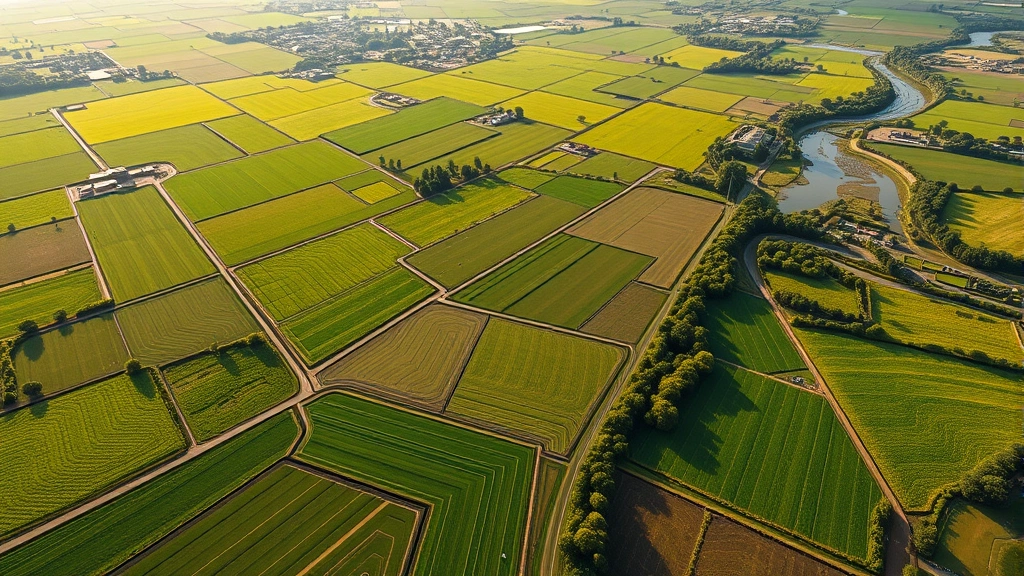
The relationship between the physical environment and economic systems represents one of the most critical yet underexamined intersections in modern policy discourse. Economic prosperity has traditionally been measured through metrics like GDP growth and capital accumulation, yet these indicators frequently ignore the foundational role that natural systems play in generating wealth. The physical environment—encompassing climate patterns, natural resources, biodiversity, soil quality, water systems, and atmospheric conditions—directly determines the productive capacity of economies across all sectors and geographical regions.
Contemporary economic theory increasingly recognizes that environmental degradation imposes substantial costs on economic systems, often referred to as negative externalities. When forests are cleared for short-term agricultural gains, when aquifers are depleted faster than they recharge, or when air quality deteriorates due to industrial emissions, the immediate economic benefits accrue to specific actors while the broader economic costs distribute across society and future generations. Understanding these dynamics requires integrating ecological principles with economic analysis to develop a more accurate assessment of true economic value and long-term prosperity.
This comprehensive study examines how physical environmental factors influence economic outcomes, the mechanisms through which environmental changes translate into economic consequences, and the emerging frameworks for incorporating ecological considerations into economic planning and policy development.
Natural Resources as Economic Foundation
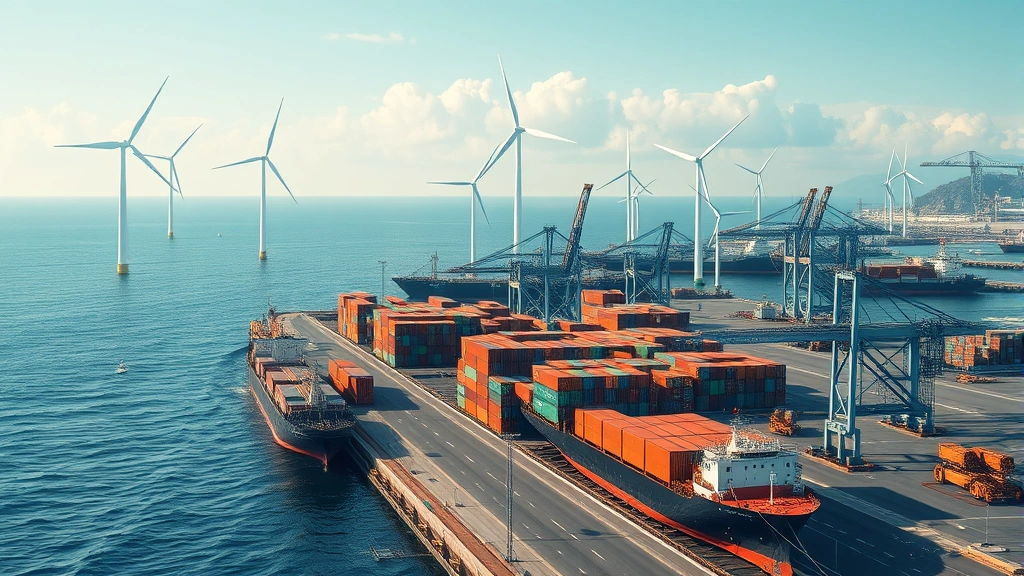
The physical environment supplies the raw materials upon which all economic activity ultimately depends. Mineral deposits, fossil fuel reserves, timber resources, fisheries, and agricultural land constitute the resource base from which industries extract inputs for production. The geographic distribution of these resources fundamentally shapes economic geography, trade patterns, and regional prosperity levels. Nations endowed with abundant natural resources possess competitive advantages in resource-extraction industries, though this advantage requires sustainable management to provide lasting economic benefits.
Resource scarcity and accessibility directly influence production costs and economic competitiveness. Countries with accessible high-quality iron ore deposits, for instance, can develop competitive steel industries with lower extraction costs than regions where ore deposits lie deeper underground or contain lower mineral concentrations. Similarly, proximity to productive fisheries, fertile agricultural lands, or renewable energy sources provides economic advantages that translate into lower production costs and higher profit margins. The World Bank’s research on natural capital accounting demonstrates that countries treating natural resources as depletable assets rather than infinite stocks experience more sustainable economic development trajectories.
However, resource abundance does not automatically guarantee economic prosperity. The “resource curse” phenomenon reveals that nations with significant natural resource endowments sometimes experience slower economic growth, higher corruption, and greater economic inequality than resource-scarce nations. This paradox occurs when resource wealth concentrates in few hands, discourages economic diversification, and reduces incentives for institutional development. Understanding resource economics requires examining not merely resource availability but also governance structures, investment patterns, and economic diversification strategies.

Climate Systems and Economic Productivity
Climate patterns represent perhaps the most pervasive physical environmental factor influencing economic systems. Temperature regimes, precipitation patterns, seasonal variations, and extreme weather events directly affect agricultural productivity, energy demand, infrastructure durability, and labor productivity across all sectors. Agricultural economies remain particularly climate-sensitive, with crop yields fluctuating significantly based on rainfall timing, temperature ranges during growing seasons, and frost frequency. A single drought can devastate agricultural regions, reducing yields by 30-50% and cascading through food supply chains and rural economies.
The physical environment’s climate systems also influence energy economics substantially. Hydroelectric generation depends on precipitation patterns and water availability; wind energy production correlates with regional wind resources; solar generation varies with cloud cover and latitude; and cooling demands for buildings and industrial processes depend on ambient temperatures. Climate change is fundamentally altering these patterns, creating both risks and opportunities for energy economies. Regions experiencing increased precipitation may develop new hydroelectric capacity, while arid regions face declining water availability for both power generation and human consumption.
Infrastructure resilience intersects critically with climate systems. Roads, bridges, power lines, and building systems designed for historical climate conditions may fail under emerging climate scenarios. Coastal infrastructure faces inundation risks from sea-level rise; northern infrastructure faces instability from permafrost thaw; and infrastructure worldwide faces increased stress from more intense precipitation and wind events. These climate-driven infrastructure failures impose substantial economic costs through repair expenses, productivity losses, and disrupted supply chains. The human environment interaction with climate systems requires adaptive infrastructure investment and economic planning that accounts for changing environmental conditions.
Labor productivity represents another critical climate-economic linkage. Worker productivity declines in extreme heat conditions, with significant reductions occurring above 32°C (90°F). Outdoor workers in agriculture, construction, and mining face particular vulnerability to heat stress. Climate change is expanding the geographic area and temporal duration of extreme heat events, potentially reducing labor productivity in tropical and subtropical regions. Economic models incorporating climate-labor productivity linkages project significant GDP reductions in affected regions by mid-century if current climate trajectories continue.
Biodiversity and Economic Resilience
Biodiversity—the variety of species, genetic variants, and ecosystem types—provides critical economic services that markets typically fail to price appropriately. Pollination services from insects and birds enable agricultural production valued at hundreds of billions of dollars annually; natural pest control from predatory species reduces pesticide requirements; soil microorganisms facilitate nutrient cycling essential for crop production; and forest ecosystems provide watershed protection, carbon sequestration, and climate regulation. These ecosystem services represent genuine economic value, yet traditional accounting systems often treat biodiversity loss as costless.
Economic resilience increasingly depends on maintaining biodiversity and ecosystem diversity. Monoculture agricultural systems, while producing high yields in favorable conditions, prove vulnerable to pest outbreaks, disease epidemics, and climate variability. Diverse agricultural systems with multiple crop varieties, integrated livestock, and diverse vegetation provide more stable yields across variable environmental conditions. Similarly, diverse fisheries prove more resilient than those dependent on single species; diverse forests provide more consistent economic returns than plantation monocultures; and diverse energy portfolios prove more economically stable than those dependent on single fuel sources.
Pharmaceutical and biotechnology industries depend directly on biodiversity as an input source. Approximately 40% of pharmaceutical drugs derive from natural compounds originally isolated from organisms. Loss of species through habitat destruction eliminates potential medical discoveries and economic opportunities in the pharmaceutical sector. The economic value of undiscovered pharmaceutical compounds in unexplored ecosystems remains unknowable but potentially substantial. This represents a critical economic argument for biodiversity conservation independent of intrinsic conservation values.
Environmental Degradation and Economic Costs
Environmental degradation imposes substantial economic costs through multiple mechanisms. Soil degradation reduces agricultural productivity and requires increased fertilizer inputs to maintain yields, raising production costs; water pollution increases water treatment expenses and reduces available freshwater supplies; air pollution causes health effects requiring medical expenditures and reducing labor productivity; and ecosystem destruction eliminates ecosystem services requiring expensive technological substitutes or accepting service losses.
The economic costs of environmental degradation extend across temporal and spatial scales. Immediate costs occur when pollution treatment or environmental remediation becomes necessary. Long-term costs accumulate as environmental systems lose regenerative capacity and productive potential. Spatial costs distribute across regions as pollution and ecosystem damage affect areas distant from pollution sources. Atmospheric pollution from industrial regions affects air quality in downwind areas; ocean pollution from coastal sources affects fisheries throughout ocean basins; and greenhouse gas emissions from any source affect global climate systems.
Quantifying environmental degradation costs presents methodological challenges, yet research consistently demonstrates substantial economic impacts. Air pollution costs developing nations approximately 4-6% of GDP annually through health effects, reduced productivity, and increased medical expenses. Water scarcity costs global economies an estimated 260 billion dollars annually through reduced agricultural production and industrial output. Biodiversity loss and ecosystem degradation cost the global economy approximately 2-5 trillion dollars annually according to recent ecological economics assessments. These costs often exceed benefits from activities causing environmental degradation, yet economic decision-making frequently ignores these externalized costs.
Environmental degradation creates particular economic vulnerabilities for developing nations and low-income populations. Poor communities dependent on natural resources for subsistence lack economic alternatives when environmental degradation reduces resource availability. Smallholder farmers relying on rain-fed agriculture face catastrophic economic consequences when climate variability increases; fishing communities lose livelihoods when fish stocks collapse; and pastoral communities face economic ruin when rangeland degradation reduces carrying capacity. Environmental justice considerations reveal that those least responsible for environmental degradation often bear the greatest economic costs.
Sectoral Impacts of Environmental Change
Different economic sectors experience varying degrees of environmental sensitivity. Agriculture remains fundamentally dependent on physical environmental conditions including soil quality, water availability, temperature regimes, and pest and disease pressure. The fishing industry depends on fish stock health, water quality, and ocean ecosystem productivity. Forestry depends on forest ecosystem health and productivity. Renewable energy sectors depend on wind resources, solar radiation, hydroelectric potential, and biomass productivity. Tourism depends on environmental quality and ecosystem integrity. These sectors collectively represent substantial portions of global economic activity, particularly in developing nations where agricultural and resource-dependent sectors dominate employment.
Manufacturing and industrial sectors, while seemingly less environmentally dependent, actually depend on environmental systems for water inputs, waste absorption capacity, cooling water availability, and raw material supplies. Industrial water demands exceed agricultural demands in developed nations, and water scarcity increasingly constrains industrial expansion in arid and semi-arid regions. Climate change impacts on water availability therefore directly threaten industrial production capacity in affected regions.
Services sectors appear environmentally detached yet increasingly depend on environmental quality and climate stability. Transportation and logistics depend on climate-stable infrastructure; financial services depend on stable commodity prices influenced by environmental conditions; real estate values depend on environmental quality and climate risks; and insurance industries face expanding liabilities from climate-related damages. renewable energy transition in services sectors requires substantial capital reallocation and economic restructuring.
Supply chain economics increasingly reflects environmental vulnerabilities. Manufacturing depending on specific material inputs faces risks when environmental degradation threatens material sources. Electronics manufacturing depends on mineral inputs including rare earth elements, copper, and cobalt; agriculture depends on phosphorus and potassium for fertilizer; and energy systems depend on uranium, coal, oil, and natural gas availability. Environmental constraints on material availability therefore constrain production capacity and increase input costs across dependent industries.
Measuring Environmental Economic Value
Traditional economic accounting excludes environmental assets and services from GDP calculations, creating systematic undervaluation of environmental contributions to economic activity. Natural capital accounting represents an emerging framework for incorporating environmental assets into economic measurement systems. This approach assigns monetary values to environmental assets and services, enabling comparison with conventional economic measures and integration into national accounts.
Valuation methodologies for environmental assets include market-based approaches using actual transactions in environmental goods and services; replacement cost methods estimating costs to replace lost ecosystem services with technological alternatives; hedonic pricing methods extracting environmental value from real estate and other market transactions; and stated preference methods surveying willingness to pay for environmental improvements. Each methodology provides different value estimates and addresses different valuation questions, yet all recognize that environmental assets generate genuine economic value warranting inclusion in economic accounts.
The blog home discusses emerging approaches to environmental valuation. Global research institutions including the World Bank and United Nations Environment Programme have developed natural capital accounting frameworks enabling countries to track environmental asset depletion and ecosystem service flows. Costa Rica pioneered environmental accounting integration by tracking forest cover changes, fishery stock depletion, and ecosystem service flows in national accounts. This approach reveals that resource depletion rates exceed sustainable levels and that measured economic growth overstates true economic progress when environmental asset depletion remains unaccounted.
Ecosystem service valuation studies consistently demonstrate substantial economic value. Pollination services globally value at approximately $15-577 billion annually depending on valuation methodology; soil formation and nutrient cycling services value at trillions annually; carbon sequestration services value at hundreds of billions annually; and water purification services provide value comparable to technological water treatment alternatives. These valuations demonstrate that environmental protection frequently generates greater economic value than environmental conversion to alternative uses.
Policy Integration and Economic Reform
Incorporating environmental considerations into economic policy requires fundamental reforms to policy institutions, accounting systems, and decision-making frameworks. Environmental impact assessments now precede major development projects in many nations, requiring systematic evaluation of environmental consequences before project approval. However, assessments often inadequately value environmental impacts or fail to prevent projects with substantial environmental costs. Strengthening assessment methodologies and enforcement mechanisms remains critical for effective environmental protection.
Payments for ecosystem services represent an emerging policy mechanism aligning economic incentives with environmental protection. These programs compensate landowners for maintaining ecosystem services including forest conservation for carbon sequestration, wetland maintenance for water purification, and habitat preservation for biodiversity conservation. Costa Rica’s payment for ecosystem services program has successfully maintained forest cover while providing income to rural communities. Similar programs operate globally, though funding limitations restrict program scale relative to ecosystem service values.
Carbon pricing mechanisms including carbon taxes and cap-and-trade systems attempt to internalize climate costs into economic decision-making. By assigning monetary cost to greenhouse gas emissions, these mechanisms create economic incentives for emissions reductions and shift production toward lower-carbon alternatives. However, carbon prices in most jurisdictions remain substantially below social cost of carbon estimates, limiting effectiveness for achieving climate mitigation objectives. Strengthening carbon pricing mechanisms and expanding coverage to all emissions sources would better align economic incentives with climate protection needs.
Sustainable finance integration represents another critical policy direction. Institutional investors increasingly incorporate environmental, social, and governance criteria into investment decisions, directing capital toward environmentally sustainable enterprises and away from environmentally destructive ones. Central banks are integrating climate risk assessment into financial system stability monitoring, recognizing climate change as a systemic financial risk. These developments create positive feedback loops encouraging corporate environmental performance improvements and economic transition toward sustainability.
The carbon footprint reduction imperative requires economic restructuring across sectors. Energy systems must transition from fossil fuels to renewable sources; transportation systems must shift toward electric and public transit; agricultural systems must reduce chemical inputs and increase regenerative practices; and consumption patterns must shift toward lower-impact goods and services. These transitions require substantial capital investment, workforce retraining, and institutional innovation. However, research increasingly demonstrates that climate mitigation investments generate net economic benefits through avoided climate damages, job creation in clean energy sectors, and health benefits from reduced pollution.
International cooperation on environmental economics remains essential given the global nature of environmental systems. Climate change, ocean pollution, transboundary water resources, and migratory species require coordinated international policy responses. The United Nations Environment Programme facilitates international environmental policy coordination. Trade agreements increasingly incorporate environmental provisions recognizing that trade patterns influence environmental impacts globally. However, international environmental policy remains weakly enforced relative to trade agreements, creating persistent misalignment between economic and environmental objectives.
The natural environment teaching in economics curricula remains inadequate, perpetuating training of economists without sufficient understanding of ecological principles and environmental economics. Integrating environmental economics, ecological economics, and natural resource economics into standard economics education would improve policy analysis quality and increase awareness of environmental-economic linkages among future policymakers and business leaders.
FAQ
How does environmental degradation affect economic growth?
Environmental degradation reduces economic growth through multiple mechanisms: reduced resource availability increases production costs; ecosystem service losses require expensive technological substitutes; health effects reduce labor productivity; climate impacts reduce agricultural and industrial productivity; and infrastructure damage diverts capital from productive investment to remediation. Research suggests environmental degradation costs developing nations 5-10% of annual GDP, substantially reducing growth rates. However, these costs remain largely invisible in conventional accounting systems, causing systematic underestimation of environmental degradation’s economic consequences.
Can economic growth and environmental protection be compatible?
Yes, decoupling economic growth from environmental impact remains possible and increasingly necessary. Technological improvements in energy efficiency, renewable energy deployment, and material efficiency enable economic growth with reduced environmental impact. Service-based economies typically have lower environmental footprints than manufacturing-based economies. However, achieving absolute decoupling—simultaneous economic growth and environmental impact reduction—requires deliberate policy choices, technological investment, and institutional reform. Current global trends show relative decoupling in developed nations but not absolute decoupling, and developing nations continue experiencing coupled economic growth and environmental degradation.
What is natural capital accounting?
Natural capital accounting extends conventional accounting systems to include environmental assets and ecosystem services as capital assets generating flows of economic value. This approach enables tracking of environmental asset depletion alongside conventional economic measures, revealing when measured economic growth reflects unsustainable resource depletion. Natural capital accounting provides more accurate assessment of economic sustainability and enables identification of sectors and regions experiencing unsustainable resource depletion rates.
How do climate systems influence economic productivity?
Climate systems influence economic productivity through multiple pathways: precipitation patterns affect agricultural yields; temperature regimes affect energy demand and labor productivity; extreme weather damages infrastructure and disrupts supply chains; and climate variability increases economic uncertainty. Climate change is intensifying these effects, creating both risks and opportunities. Regions experiencing increased precipitation may develop new productive capacity while arid regions face declining productivity. Adaptation investments in climate-resilient infrastructure and agricultural practices can moderate climate impacts but require substantial capital investment.
Why do markets fail to value environmental assets appropriately?
Markets fail to value environmental assets appropriately because ecosystem services often lack clear property rights, making them difficult to trade; environmental impacts distribute across many individuals and generations, complicating cost allocation; environmental damage often occurs gradually, making cause-effect relationships difficult to establish; and powerful actors benefit from environmental undervaluation, creating political resistance to accurate valuation. These market failures justify government intervention through environmental regulation, environmental pricing mechanisms, and natural capital accounting integration into policy frameworks.
What economic sectors face greatest environmental vulnerability?
Agriculture, fishing, forestry, and tourism face greatest direct environmental vulnerability given their dependence on ecosystem health and environmental quality. Energy, water, and mining sectors face substantial vulnerability to environmental constraints and climate change. Manufacturing and industrial sectors face indirect vulnerabilities through supply chain disruptions and input availability constraints. Services sectors face growing vulnerabilities through climate impacts on infrastructure and real estate values. Recognizing sectoral vulnerabilities enables targeted adaptation strategies and economic diversification investments.


