
Are Externally Managed Environments Sustainable?
The question of whether externally-managed environments can achieve genuine sustainability has become increasingly urgent as human intervention in natural systems reaches unprecedented scales. From industrial agriculture to urban green spaces, from protected wildlife reserves to climate-engineered ecosystems, the tension between human control and ecological resilience defines contemporary environmental management. External management—where human actors make centralized decisions about ecosystem structure, function, and outcomes—presents both opportunities for conservation and risks of ecological fragility.
The sustainability of externally-managed environments depends critically on how we define sustainability itself. If sustainability means maintaining ecosystem services indefinitely while supporting human wellbeing, then external management can succeed only when it mimics natural processes, incorporates adaptive capacity, and accounts for complex system dynamics. However, many externally-managed systems prioritize short-term productivity or conservation goals over long-term ecological stability, creating dependencies that ultimately undermine sustainability.
Understanding this paradox requires examining the economic structures, ecological principles, and governance mechanisms that underpin external management. The evidence suggests that purely top-down environmental control often fails because it ignores emergent properties of complex systems, externalizes costs onto future generations, and creates rigid structures vulnerable to unforeseen disturbances.
Defining Externally-Managed Environments
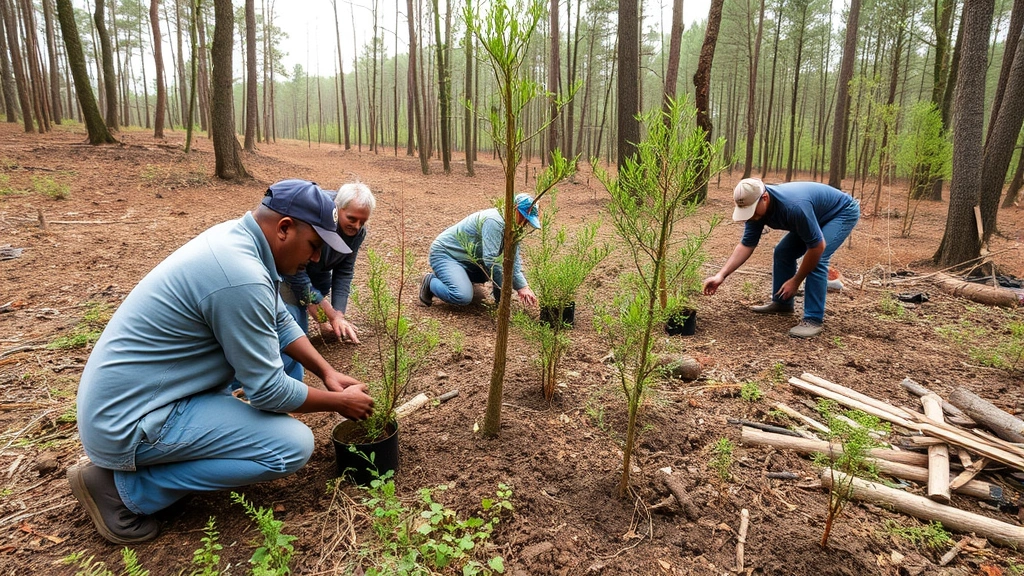
An externally-managed environment represents an ecosystem where decision-making authority resides outside the system itself—typically with government agencies, corporations, or international organizations. This contrasts with community-based management, where local stakeholders maintain primary control, or self-organizing systems that respond to internal feedback mechanisms. Examples include national parks managed by government bureaucracies, industrial monocultures managed by agricultural corporations, and urban parks designed and maintained by municipal authorities.
External management emerged from industrial-era thinking that viewed nature as a resource to be optimized through centralized planning. This approach gained prominence during the twentieth century as technological capacity expanded and professional expertise consolidated. Forest management by government foresters, wildlife management by state wildlife agencies, and agricultural management by corporate agribusiness all represent institutionalized external management.
The fundamental assumption underlying external management is that human expertise can improve upon natural processes. This assumption contains partial truth—humans can indeed enhance certain ecosystem services or prevent specific degradation pathways. However, it often underestimates the complexity of natural systems and overestimates the predictability of human interventions. When external managers treat ecosystems as engineering problems rather than adaptive systems, they frequently create unintended consequences.
The relationship between external management and human-environment interaction reveals how institutional structures shape ecological outcomes. Different management philosophies produce radically different environmental results, even when applied to similar ecosystems.

Economic Externalities and Hidden Costs
One critical limitation of externally-managed environments involves how they handle economic externalities—costs imposed on society or future generations that aren’t reflected in current market prices. A forest managed for timber extraction by external corporations may generate significant profits while externalizing costs such as soil degradation, reduced carbon sequestration, and diminished biodiversity. These costs accumulate over time but remain invisible in quarterly earnings reports.
Research from the World Bank on ecosystem service valuation demonstrates that externally-managed systems frequently undervalue long-term ecological functions. Agricultural systems managed intensively for yield often degrade soil carbon, reduce pollinator populations, and contaminate groundwater—costs borne by society rather than the managing entity. This structural misalignment between decision-maker incentives and actual sustainability represents a fundamental challenge.
The tragedy of the commons operates inversely in externally-managed systems: when a single external authority controls resources, it may extract maximum value in the present, knowing that responsibility for future degradation can be transferred or diffused. This creates what ecological economists call “discount rate bias”—the systematic undervaluing of future ecological services compared to present extraction.
Sustainable management requires internalizing these costs—making external managers accountable for long-term ecological health, not just short-term outputs. This might involve payment for ecosystem services, ecological bonds that require restoration, or performance-based contracts that penalize environmental degradation. Without such mechanisms, external management tends toward unsustainability by structural design.
Understanding these economic dynamics connects directly to broader efforts to reduce carbon footprint across sectors. When externally-managed agricultural and forestry systems account for their true climate costs, the economics shift dramatically.
Ecosystem Complexity and Management Limits
Complex adaptive systems—which accurately describe most ecosystems—possess properties that resist centralized control. These systems feature nonlinear dynamics, where small changes can produce disproportionate effects, and tipping points, where gradual changes suddenly produce catastrophic shifts. External managers operating with incomplete information and simplified models frequently fail to anticipate these dynamics.
The concept of “management for surprise” has emerged in conservation biology as a response to this challenge. Rather than assuming predictability, adaptive management acknowledges uncertainty and builds in monitoring, learning, and course correction. However, many externally-managed systems lack the institutional flexibility for true adaptive management, remaining locked into predetermined plans even when evidence suggests they’re failing.
Consider the history of fire suppression in North American forests—a paradigmatic example of external management failure. Centralized policies mandating fire suppression created conditions for catastrophic megafires, precisely the opposite of the intended outcome. Only after decades of ecological damage did management philosophy shift toward recognizing fire’s ecological necessity. This pattern repeats across multiple domains: predator elimination increasing prey population explosions, pesticide use creating herbicide resistance, dam construction disrupting ecosystem connectivity.
The fundamental issue involves what complexity theorists call “requisite variety”—the management system must possess sufficient internal complexity to match the complexity of the system being managed. External managers attempting to control multidimensional ecosystems through simplified metrics and centralized protocols inevitably encounter limitations. They cannot monitor all relevant variables, cannot respond instantaneously to local conditions, and cannot incorporate the distributed knowledge present in ecosystems and communities.
Technological solutions sometimes seem to offer escape from these constraints. Remote sensing, artificial intelligence, and precision management tools promise better information and faster response. Yet technology alone cannot overcome the fundamental problem: external managers remain external, operating from positions of partial information and limited accountability to the system itself.
Case Studies: Success and Failure
Examining specific examples illuminates both the potential and limitations of external management. Costa Rica’s national park system represents a frequently cited success story. The government established protected areas, excluded extractive industries, and invested in ecosystem restoration. Biodiversity rebounded significantly in protected zones, and the system generated economic value through ecotourism. However, even this success story involves complications: surrounding agricultural systems remain intensive and unsustainable, creating pressure on park boundaries; management decisions often exclude indigenous communities with deeper ecological knowledge; and climate change increasingly challenges the assumption that protected boundaries provide adequate protection.
China’s Grain for Green program demonstrates external management at massive scale. The government paid farmers to convert marginal agricultural land to forest or grassland, reducing soil erosion and carbon emissions. This top-down approach achieved rapid land-use change across millions of hectares—a feat difficult through voluntary mechanisms. Yet challenges emerged: monoculture tree plantations provided fewer ecosystem services than natural forests, biodiversity benefits remained limited, and economic sustainability depended on continued government subsidies rather than market mechanisms.
Industrial agriculture represents perhaps the most pervasive externally-managed environment globally. Centralized corporations and government policies optimize for yield and cost reduction, creating highly productive but ecologically fragile systems. These systems depend on external inputs (fertilizers, pesticides, irrigation), generate significant environmental costs (water pollution, soil degradation, greenhouse gas emissions), and remain vulnerable to disease outbreaks and climate variability. The 2022 global fertilizer crisis demonstrated how externally-managed agricultural systems lack resilience when supply chains disrupt.
Contrasting these with community-managed systems provides perspective. Indigenous land management across Australia, the Amazon, and Southeast Asia has maintained ecological integrity and biodiversity for millennia through adaptive, locally-informed practices. Recent research demonstrates that indigenous territories often show better conservation outcomes than government-protected areas, despite receiving minimal external investment. This suggests that sustainability may correlate more closely with local control and accountability than with external management intensity.
Governance Models for Sustainability
If purely external management proves insufficient for sustainability, what governance models better align management decisions with long-term ecological health? Evidence suggests hybrid approaches combining external oversight with local participation produce superior outcomes. Co-management arrangements, where government agencies partner with community organizations, balance professional expertise with local knowledge and accountability.
The concept of “subsidiarity” in environmental governance—making decisions at the lowest appropriate jurisdictional level—recognizes that ecosystem dynamics often match community scales better than national or international scales. Local managers possess better information about specific conditions, face direct consequences of decisions, and can implement adaptive responses more flexibly than distant bureaucracies.
Payment for ecosystem services (PES) mechanisms attempt to align external management with sustainability by creating economic incentives for ecosystem preservation. Governments or corporations pay landowners or managers to maintain specified ecological conditions. While promising, PES systems face challenges: determining appropriate payment levels, preventing “additionality” problems where payments reward actions that would occur anyway, and ensuring that short-term contracts produce long-term ecological benefits.
Regenerative management represents an emerging philosophy that extends beyond sustainability toward active ecosystem improvement. Rather than seeking to minimize damage or maintain status quo, regenerative approaches aim to enhance ecosystem function, restore degraded areas, and increase resilience. When applied through external management, regenerative approaches require different incentive structures, longer time horizons, and greater flexibility than conventional management.
Governance innovations related to renewable energy transition suggest pathways for externally-managed systems. Distributed renewable energy production, like rooftop solar, combines individual decision-making with grid-level coordination. Similar models might apply to ecosystem management, combining local stewardship with landscape-level coordination.
Future Pathways and Recommendations
Moving toward sustainable externally-managed environments requires fundamental shifts in how we structure management authority, measure success, and distribute accountability. Several evidence-based recommendations emerge from ecological and economic research:
Internalize ecological costs: Implement accounting systems that incorporate ecosystem service values into management decisions. This requires moving beyond GDP-focused metrics toward comprehensive natural capital accounting. UNEP’s initiatives on natural capital provide frameworks for this transition. When managers must account for carbon sequestration value, pollinator services, and soil health, external management becomes more compatible with sustainability.
Build adaptive capacity: Design management systems that can learn, adjust, and respond to changing conditions rather than rigidly implementing predetermined plans. This requires monitoring systems, decision frameworks allowing mid-course corrections, and institutional cultures embracing uncertainty. Adaptive management research provides extensive guidance on implementation.
Distribute decision-making: Shift authority downward and outward from centralized agencies toward communities, local managers, and ecosystem stakeholders. This doesn’t mean abandoning external oversight but rather restructuring it as facilitation and accountability rather than command-and-control. Indigenous land management models offer tested alternatives to centralized external management.
Extend time horizons: Restructure incentives to reward long-term ecological health over short-term extraction. This might involve ecological bonds requiring restoration, multi-decade management contracts with performance metrics, or governance structures insulating ecosystem managers from quarterly profit pressures.
Embrace complexity science: Recognize that ecosystems are complex adaptive systems requiring management approaches acknowledging uncertainty, nonlinearity, and emergent properties. Simple control strategies typically fail; instead, managers should create conditions enabling ecosystem self-organization within desired parameters.
The transition toward sustainable externally-managed environments connects with broader sustainability efforts. Approaches like sustainable fashion production and natural pest control methods demonstrate that external management can align with sustainability when properly structured. These systems succeed because they internalize ecological costs, embrace complexity, and distribute decision-making authority.
The ultimate question isn’t whether external management can achieve sustainability in principle—it can, under proper conditions—but whether existing institutional structures will undergo necessary transformations. This requires political will, economic restructuring, and philosophical shifts regarding humanity’s relationship with nature. The evidence increasingly suggests that sustainability requires moving beyond viewing ecosystems as resources to be optimized through external control, toward viewing them as complex systems requiring partnership, humility, and long-term commitment.
FAQ
What is an externally-managed environment?
An externally-managed environment is an ecosystem where decision-making authority resides with external entities—government agencies, corporations, or organizations—rather than with local communities or the ecosystem itself. Examples include national parks managed by government agencies, industrial forests, and urban parks maintained by municipal authorities.
Can externally-managed environments ever be truly sustainable?
Yes, but only when external management incorporates ecological costs into decision-making, builds adaptive capacity to respond to complexity, distributes authority to local stakeholders, and extends time horizons beyond short-term extraction. Many current externally-managed systems fail these criteria, but redesigned systems could achieve sustainability.
Why do externally-managed systems often fail ecologically?
External management frequently fails because it underestimates ecosystem complexity, externalizes costs onto future generations, lacks local accountability, and implements rigid plans vulnerable to changing conditions. Centralized decision-makers lack the distributed knowledge necessary for adaptive management and often prioritize short-term outputs over long-term sustainability.
What role should local communities play in ecosystem management?
Local communities should play central roles through co-management arrangements, decision-making authority over local resources, and incorporation of traditional ecological knowledge. Evidence demonstrates that indigenous and community-managed ecosystems often maintain better ecological integrity than purely external management, even with minimal external investment.
How can payment for ecosystem services improve external management?
Payment for ecosystem services (PES) mechanisms align economic incentives with ecosystem preservation by compensating managers for maintaining specified ecological conditions. However, PES works best when combined with other governance reforms, as payment alone cannot overcome the fundamental limitations of external management without local participation.
What is adaptive management and why does it matter?
Adaptive management treats management as an ongoing learning process, with monitoring, evaluation, and adjustment built into the system. It matters because it acknowledges that ecosystems are complex and unpredictable, requiring flexible responses rather than rigid adherence to initial plans. Adaptive management increases the likelihood that external management can respond effectively to changing conditions.


