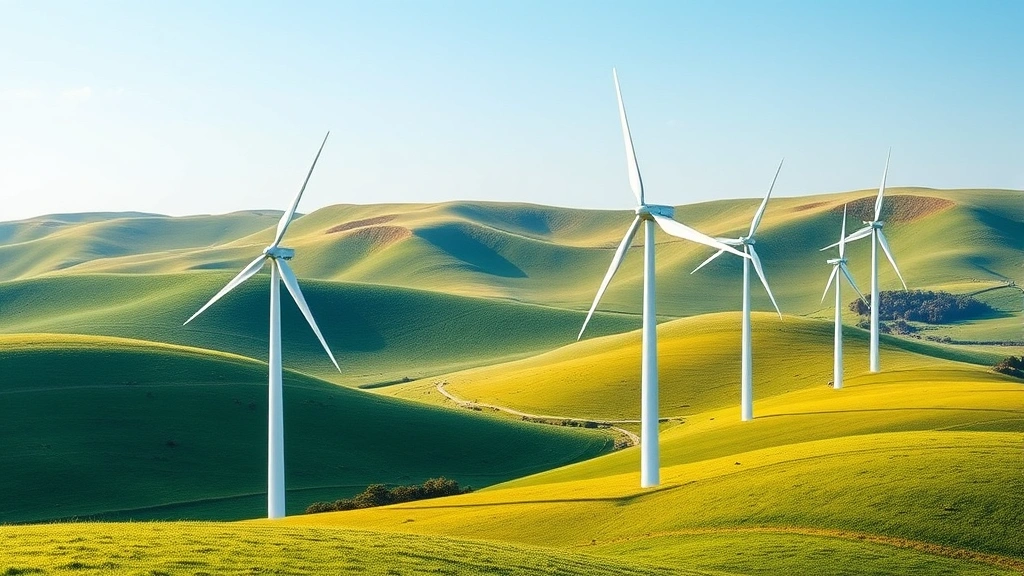
Is Green Growth Sustainable? Economist Insights
The concept of green growth has emerged as a dominant paradigm in environmental and economic policy over the past two decades, promising economic expansion while simultaneously reducing environmental degradation. Policymakers worldwide have embraced this framework, positioning it as a solution to the dual crises of climate change and economic stagnation. Yet beneath this optimistic narrative lies a fundamental tension that economists continue to debate: can perpetual economic growth—the cornerstone of modern capitalism—ever truly be reconciled with planetary boundaries and finite ecological resources?
Green growth theory posits that technological innovation, market mechanisms, and policy interventions can decouple economic output from resource consumption and environmental impact. Proponents argue that renewable energy transitions, circular economy models, and efficiency improvements will enable nations to maintain GDP growth while reducing carbon emissions and resource depletion. However, a growing chorus of ecological economists and sustainability researchers question whether this decoupling is sufficient, achievable at scale, or merely a convenient fiction that allows continued consumption patterns under a different label.
This analysis examines the scientific evidence, economic mechanisms, and practical outcomes of green growth policies, drawing on insights from ecological economics, environmental policy analysis, and real-world implementation data to assess whether green growth represents genuine sustainability or a temporary reprieve from fundamental systemic challenges.
What Is Green Growth and Its Core Assumptions
Green growth represents a paradigm that emerged prominently during the 2008 financial crisis and gained institutional momentum through organizations like the World Bank, OECD, and UNEP. At its essence, green growth proposes that environmental protection and economic development need not be antagonistic; rather, properly designed policies can align them. The framework rests on several interconnected assumptions:
- Technological optimism: Innovation will continuously improve resource efficiency and enable substitution of renewable for non-renewable resources
- Market mechanisms: Price signals and economic incentives can internalize environmental costs, making sustainable practices economically rational
- Relative decoupling: Economic growth can proceed faster than environmental impact growth, reducing the environmental intensity of each unit of GDP
- Institutional capacity: Governments can design and enforce policies that effectively channel market forces toward environmental goals
- Consumer behavior: Information and economic incentives will shift consumption patterns toward sustainable products and services
The World Bank defines green growth as “growth that is efficient in its use of natural resources, clean in that it minimizes pollution and environmental impacts, and resilient in that it accounts for natural hazards and the role of environmental management.” This definition attempts to reconcile three often-competing objectives: economic expansion, resource efficiency, and environmental protection.
However, these assumptions warrant critical examination. Each contains embedded premises about technology trajectories, market behavior, and human rationality that may not hold under real-world conditions, particularly when scaled globally and across multiple sectors simultaneously.
The Decoupling Debate: Theory Versus Reality
The central claim of green growth rests on the possibility of decoupling: separating economic growth from environmental impact. Economists distinguish between two types: relative decoupling (where environmental impact grows slower than GDP) and absolute decoupling (where environmental impact declines while GDP grows).
Relative decoupling has been documented in numerous developed economies. For instance, carbon intensity per unit of GDP has decreased in many OECD nations. However, UNEP research reveals that absolute decoupling remains rare and typically temporary. When absolute decoupling occurs—such as in some European nations reducing territorial carbon emissions—this often reflects offshoring of production rather than genuine reduction in consumption-based emissions. When consumption-based accounting includes imported goods’ embodied emissions, the apparent decoupling largely disappears.
Research from ecological economics journals demonstrates that global material extraction and consumption continue rising even as relative decoupling improves. The Jevons Paradox—where efficiency improvements lead to increased consumption—remains empirically relevant. More fuel-efficient vehicles encourage more driving; cheaper renewable electricity enables expanded electrification of previously non-electrified services. The rebound effect typically recovers 30-60% of theoretical efficiency gains through increased consumption.
Furthermore, critical minerals required for green technology—lithium, cobalt, rare earth elements—are subject to the same depletion dynamics as fossil fuels. Transitioning to renewable energy infrastructure requires extracting vastly more material per unit of energy produced compared to fossil fuels. A single wind turbine requires approximately 1,000 tons of materials; scaling this globally to replace fossil fuel infrastructure involves material flows that challenge planetary boundaries.
Measuring True Environmental Impact
A fundamental challenge in assessing green growth effectiveness lies in measurement. GDP, the primary metric of economic growth, measures monetary transactions regardless of whether they represent genuine wellbeing or environmental restoration. Cleaning up pollution increases GDP; so does the economic activity that caused the pollution.
When examining human-environment interaction through standard economic metrics, critical environmental services remain invisible. Pollination by insects, water filtration by wetlands, climate regulation by forests—these services worth trillions annually appear nowhere in GDP calculations. Conversely, their destruction often appears as economic gain. Logging a forest counts as income; the permanent loss of that forest’s services does not reduce GDP.
Alternative metrics like Genuine Progress Indicator (GPI), Inclusive Wealth Index, and ecological footprint analysis paint substantially different pictures. When environmental degradation, resource depletion, and inequality are properly accounted for, many “growing” economies show stagnation or decline in true wellbeing. Nations with rising GDP and declining GPI are experiencing illusory growth—increasing monetary throughput while depleting natural and social capital.
The concept of planetary boundaries—identified by Earth system scientists—establishes biophysical limits for nine critical processes: climate change, biodiversity loss, land-system change, freshwater use, nitrogen and phosphorus cycles, ocean acidification, ozone depletion, chemical pollution, and aerosol loading. Current evidence suggests humanity has already transgressed safe boundaries for climate change, biodiversity loss, land use, and nitrogen cycling. Green growth policies have not reversed transgression of any boundary; in most cases, the rate of transgression continues accelerating.
Market Mechanisms and Their Limitations
Green growth relies heavily on market mechanisms—carbon pricing, payments for ecosystem services, tradable permits—to internalize environmental costs and create incentives for sustainable behavior. While theoretically elegant, these mechanisms face substantial practical limitations.
Carbon pricing: Carbon taxes and cap-and-trade systems dominate climate policy in developed nations. Yet current carbon prices (typically €20-80 per ton) remain far below the social cost of carbon (estimated at €100-300+ per ton by many economists). At current prices, polluting remains economically rational. Additionally, carbon markets create opportunities for accounting manipulation, carbon leakage to unregulated jurisdictions, and perverse incentives favoring cheap offsets over domestic emissions reductions.
Ecosystem services markets: Attempting to price nature creates several problems. First, it assumes ecosystems can be valued in monetary terms, potentially legitimizing their destruction if compensation is adequate. Second, most ecosystem services lack functioning markets; their valuation remains speculative. Third, monetization often benefits wealthy nations and corporations while disadvantaging indigenous communities whose traditional practices maintained these services without payment.
Technological lock-in: Market mechanisms often reinforce existing technological and infrastructural patterns. Subsidies for electric vehicles, for instance, maintain automobile-dependent transportation systems rather than promoting fundamental modal shifts toward public transit and walkability—which would provide greater emissions reductions per dollar invested.
Regulatory capture: Industries subject to environmental regulations often successfully lobby for weaker standards, longer compliance timelines, and exemptions. Carbon-intensive industries have repeatedly shaped climate policy to minimize their transition burden, resulting in policies far weaker than scientific requirements suggest necessary.
These limitations suggest that market mechanisms, while potentially useful components of environmental policy, cannot serve as primary drivers of sustainability transitions. They require complementation with regulatory mandates, public investment in alternative systems, and structural economic changes that markets alone will not produce.
Case Studies of Green Growth Implementation
Examining specific implementations of green growth policies reveals mixed and often disappointing results.
European Union Emissions Trading System: The EU ETS, the world’s largest carbon market, has operated since 2005. Despite covering approximately 40% of EU emissions, total EU emissions reductions have primarily resulted from economic recession (2008-2012), fuel switching from coal to gas, and renewable energy expansion driven by feed-in tariffs rather than carbon pricing. Carbon prices remained too low to drive significant behavioral change; the system failed to prevent emissions growth in several sectors. Free allowance allocation to heavy industry minimized their compliance costs, and carbon leakage concerns have prevented tighter caps.
Brazil’s biofuel expansion: Promoted as green growth, massive sugarcane ethanol expansion drove deforestation and land-use change, converting biodiverse cerrado ecosystems to monoculture. While reducing fossil fuel consumption, this created trade-offs with biodiversity and food security—demonstrating how single-metric green growth policies can generate negative environmental outcomes across multiple dimensions.
Costa Rica’s payment for ecosystem services: This pioneering program paid landowners to maintain forests and restore degraded land. While expanding forest cover, critics note that payments often went to wealthy landowners with secure tenure rather than poor farmers, that additionality (whether payments actually changed behavior) remained uncertain, and that the program’s success depended on external funding rather than genuine market mechanisms.
Germany’s Energiewende: Germany’s renewable energy transition achieved 46% renewable electricity generation by 2022, a genuine accomplishment. However, overall energy consumption increased; total emissions reductions lagged far behind renewable expansion due to continued fossil fuel use in heating and transport; Germany paradoxically increased coal exports; and the transition’s costs concentrated on lower-income households through higher electricity prices.
These cases illustrate recurring patterns: green growth policies often achieve narrow environmental metrics while creating problematic trade-offs, benefiting wealthy actors, or displacing rather than reducing environmental impact. Success in one domain frequently masks failure in others.

Ecological Economics Critique
Ecological economics, an interdisciplinary field integrating ecology, thermodynamics, and economics, offers fundamental critiques of green growth’s theoretical foundations.
The first-law thermodynamics problem: All economic activity involves transforming low-entropy resources into high-entropy waste. While efficiency improvements reduce this throughput per unit of economic output, they cannot eliminate it. Infinite growth in a finite system is physically impossible; green growth’s premise of perpetual growth therefore contradicts thermodynamic laws.
The rebound effect problem: Efficiency improvements reduce the effective price of services, typically inducing increased consumption. Historical data shows rebound effects of 30-60% for energy services, meaning efficiency improvements reduce consumption only by 40-70% of theoretical potential. This undermines green growth’s core mechanism for decoupling growth from environmental impact.
The scale problem: Global material and energy throughput continues increasing despite relative decoupling improvements. Absolute global resource extraction reached record levels in 2020; material consumption accelerates in developing nations faster than efficiency improvements in developed nations offset it. The World Bank acknowledges that green growth policies have not reversed global resource depletion trends.
The substitution illusion: Green growth assumes renewable resources can substitute for non-renewable resources, and that human-made capital can substitute for natural capital. However, ecological systems provide irreplaceable services—photosynthesis, pollination, climate regulation—that human capital cannot replicate. Some natural capital (biodiversity, stable climate) is non-substitutable; its depletion represents genuine economic loss regardless of monetary compensation.
The political economy problem: Green growth maintains existing power structures and consumption patterns among wealthy populations while proposing marginal efficiency improvements. It avoids redistribution, reduced consumption in wealthy nations, or fundamental changes to production and consumption systems. This political acceptability to incumbent interests may guarantee its inadequacy for achieving genuine sustainability.
These critiques suggest that green growth, while not harmful per se, represents insufficient response to ecological crises. Policies that genuinely address planetary boundaries likely require questioning growth itself rather than merely attempting to make growth greener.
Alternative Frameworks Beyond Green Growth
Recognizing green growth’s limitations, scholars and policymakers have proposed alternative frameworks emphasizing different objectives and mechanisms.
Degrowth: Rather than decoupling growth from environmental impact, degrowth proposes deliberately reducing material and energy throughput in wealthy nations while improving wellbeing through redistribution, reduced working hours, and emphasis on non-material sources of wellbeing. Degrowth acknowledges that wealthy nations vastly exceed sustainable per-capita resource consumption and that achieving global sustainability requires wealthy nations to reduce consumption, creating space for developing nations to meet basic needs.
Steady-state economics: Intermediate between growth and degrowth, steady-state economics proposes stabilizing the physical economy at sustainable scale while allowing qualitative improvement and development. Rather than maximizing GDP, steady-state frameworks target optimal scale where marginal benefits from additional growth equal marginal costs.
Doughnut economics: Kate Raworth’s framework proposes meeting human needs (the doughnut’s inner ring) within planetary boundaries (the outer ring). Rather than maximizing growth, doughnut economics targets optimal provision of wellbeing within ecological limits, emphasizing distribution and sufficiency rather than expansion.
These frameworks share recognition that sustainability requires fundamentally different economic objectives than perpetual growth maximization. They emphasize reducing carbon footprint and environmental impact through consumption reduction in wealthy nations rather than attempting to maintain consumption levels through efficiency improvements.
Implementation of such frameworks requires policy changes aligned with renewable energy transition, but also structural changes: progressive taxation to fund redistribution, reduced working hours, investment in public services, and cultural shifts toward non-material wellbeing sources. These changes face political resistance from incumbent interests benefiting from current arrangements, explaining why green growth—despite its inadequacy—remains preferred by policymakers.
Understanding biotic environment examples and natural environment teaching reveals why alternatives to growth-focused frameworks are necessary. Ecological systems operate according to cycles and limits; they cannot sustain infinite expansion of human economic activity. Policy frameworks must eventually align with these biophysical realities.
The blog home and ongoing analysis of environmental economics demonstrates that mainstream economics has historically undervalued natural systems and overestimated technological solutions’ capacity to overcome ecological limits. Genuine sustainability likely requires incorporating ecological realities more fundamentally into economic frameworks.
FAQ
Is green growth the same as sustainability?
No. Green growth represents an attempt to maintain economic growth while reducing environmental impact; sustainability requires meeting present needs without compromising future generations’ ability to meet theirs. Green growth assumes growth and sustainability are compatible; sustainability frameworks recognize that perpetual growth in a finite system is impossible. Green growth may contribute to sustainability in some contexts, but it is neither necessary nor sufficient for genuine sustainability.
Can technological innovation solve environmental problems without reducing consumption?
Partially, but with significant limits. Technology has improved efficiency substantially—renewable energy costs have declined 90% over two decades, electric vehicle efficiency continues improving. However, efficiency improvements trigger rebound effects where reduced costs increase consumption, partially offsetting efficiency gains. Additionally, technological solutions to certain environmental problems (like biodiversity loss or ecosystem degradation) are limited; these require protecting and restoring natural systems rather than replacing them with technology. True sustainability likely requires both technological improvement and consumption reduction, particularly in wealthy nations.
Why do policymakers prefer green growth over alternative frameworks?
Green growth maintains existing power structures, consumption patterns, and economic systems while promising environmental improvements. This makes it politically acceptable to incumbent interests—wealthy individuals, fossil fuel companies, and growth-dependent institutions—who might oppose frameworks requiring consumption reduction or wealth redistribution. Green growth offers hope that environmental problems can be solved without difficult choices, making it rhetorically attractive despite its limitations. Alternative frameworks, while potentially more effective, would require redistributing wealth, reducing consumption in wealthy nations, and fundamentally restructuring economic systems—changes facing fierce political opposition.
Have any nations successfully implemented green growth?
Some nations have achieved relative decoupling—reducing environmental impact per unit of GDP—through renewable energy expansion, efficiency improvements, and deindustrialization. However, absolute decoupling at national scale remains rare. When achieved, it often reflects offshoring production rather than genuine consumption reduction. Costa Rica, Denmark, and several Nordic nations have made substantial progress on renewable energy and forest protection, but they have not reversed overall resource consumption growth or achieved sustainability within planetary boundaries. Their relative success reflects favorable conditions (small populations, high income, existing hydropower) rather than replicable models for global sustainability.
What would genuine sustainability require?
Genuine sustainability would require: (1) absolute reduction in material and energy throughput in wealthy nations to sustainable per-capita levels; (2) dramatic expansion of renewable energy and circular economy practices; (3) protection and restoration of ecosystems; (4) redistribution of wealth to meet basic needs universally; (5) reduced working hours and emphasis on non-material wellbeing; (6) transformation of food, transport, and housing systems; (7) stabilization of population growth; (8) integration of ecological limits into all economic decision-making. This differs fundamentally from green growth’s attempt to maintain current systems while making them more efficient. Achieving sustainability requires questioning not just how we produce and consume, but whether current levels and patterns of production and consumption can be sustained.


