
Can Ecosystems Boost Economies? Research Insights
The relationship between natural ecosystems and economic growth has long been viewed through a reductionist lens—nature as a resource to exploit rather than a system generating measurable economic value. However, emerging research from ecological economists and environmental scientists fundamentally challenges this paradigm. Ecosystems don’t merely support life; they generate trillions of dollars in services annually through carbon sequestration, pollination, water filtration, and climate regulation. Understanding this symbiotic relationship is essential for policymakers, businesses, and communities seeking sustainable economic prosperity.
The question “Can ecosystems boost economies?” is no longer theoretical. Mounting evidence demonstrates that intact ecosystems deliver superior long-term economic returns compared to their conversion to intensive agriculture or urban development. This article synthesizes cutting-edge research to reveal how natural capital directly influences GDP, employment, and resilience while examining the mechanisms through which ecosystem health translates into measurable economic benefits.

Ecosystem Services and Economic Valuation
The foundational concept enabling this discussion is ecosystem services—the direct and indirect benefits humans derive from natural systems. These services fall into four categories: provisioning (food, water, timber), regulating (climate, flood control, pollination), supporting (nutrient cycling, soil formation), and cultural (recreation, spiritual value). For decades, economists excluded these services from GDP calculations because they lacked market prices. This accounting error systematically undervalued nature’s contributions.
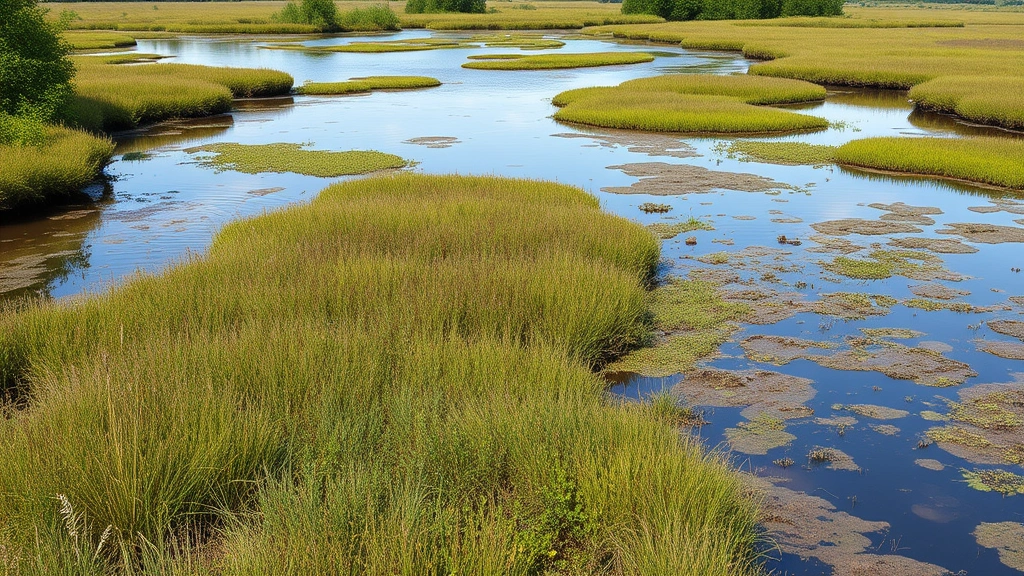
Landmark research from the United Nations Environment Programme (UNEP) and independent ecological economists has quantified these services with increasing precision. A comprehensive meta-analysis published in ecological economics journals found that global ecosystem services are worth approximately $125–145 trillion annually. To contextualize: this exceeds global GDP by a factor of 1.5 to 2. Forests alone provide $125 trillion in services through carbon storage, water regulation, and biodiversity maintenance. Wetlands deliver $15 trillion in flood protection and water purification. Coral reefs support $375 billion in fisheries and tourism while protecting coastlines valued at $1.5 trillion.
The economic logic is straightforward: when ecosystems collapse, the services they provided must be replaced through technology, infrastructure, or simply cannot be replaced at any price. The World Bank estimates that replacing ecosystem services through artificial means costs 2–5 times more than ecosystem restoration. This cost differential creates a compelling economic case for conservation and restoration, independent of environmental ethics.
Natural Capital as Economic Infrastructure
Economists increasingly conceptualize ecosystems as “natural capital”—assets that generate flows of valuable services, analogous to manufactured capital (factories, infrastructure) or human capital (education, skills). This framework reorients how policymakers evaluate investment decisions. A mangrove forest isn’t merely a scenic resource; it’s infrastructure providing storm surge protection, nursery habitat for commercial fish species, and carbon sequestration capacity. When valued this way, wetland preservation competes directly with coastal development on economic grounds.
The concept of biotic environment examples illuminates how living systems function as economic generators. Pollinator insects provide $15–20 billion in annual crop pollination services in the United States alone. Wild pollinators are declining due to habitat loss, forcing farmers to rely increasingly on expensive managed honeybees or manual pollination—both far costlier than the ecosystem service they replace. Similarly, human environment interaction fundamentally depends on natural capital stocks. Aquifers recharged by forest ecosystems supply drinking water to 2 billion people. Soil microbiomes maintain fertility worth trillions in agricultural productivity. These dependencies mean ecosystem degradation directly reduces productive capacity across multiple economic sectors.
Research from the World Wildlife Fund’s Living Planet Index demonstrates that natural capital depletion correlates with economic stagnation. Nations that depleted forest and fishery capital experienced declining GDP growth rates within 10–20 years, even as short-term extraction revenues appeared positive. This lag effect explains why ecosystem decline often goes unnoticed until economic consequences become severe. By then, restoration costs have multiplied.
Employment and Green Economy Growth
Ecosystem-based economic activities generate substantial employment across multiple sectors. Restoration ecology, sustainable forestry, ecotourism, and renewable energy industries directly employ millions globally and demonstrate superior employment-per-dollar-invested compared to extractive industries. A World Bank analysis found that ecosystem restoration creates 2–3 jobs per million dollars invested, compared to 0.5–1 job in conventional resource extraction.
Ecotourism, built on intact ecosystems, generates $29 billion annually in global revenue while employing over 21 million people. This sector demonstrates how ecosystem quality directly translates to economic activity and employment. Costa Rica’s investment in forest preservation and restoration has made ecotourism its largest foreign exchange earner, surpassing traditional agriculture and manufacturing. Similarly, sustainable fisheries built on healthy marine ecosystems employ 200 million people globally and provide livelihoods with superior long-term stability compared to industrial overfishing.
The renewable energy transition, which depends on ecosystem services for resource generation (wind, hydroelectric, solar) and environmental buffering capacity, represents the fastest-growing employment sector globally. Renewable energy jobs increased 5 times faster than fossil fuel employment between 2010–2023. Renewable energy for homes adoption accelerates this trend, creating distributed employment in installation, maintenance, and manufacturing. These jobs are typically higher-wage, require less geographic concentration, and support local economies more effectively than extractive industries.
The transition to ecosystem-positive economies requires workforce development. Training programs in ecological restoration, sustainable agriculture, and conservation technology employ thousands while building human capital in underemployed communities. This creates a multiplier effect: ecosystem investment generates both direct employment and skill development that attracts additional economic activity.
Resilience, Risk Reduction, and Cost Avoidance
One of the most compelling economic arguments for ecosystem investment involves risk reduction and cost avoidance. Intact ecosystems buffer against climate impacts, natural disasters, and resource volatility—providing insurance-like benefits quantifiable in economic terms. Mangrove forests reduce hurricane damage by 73%, saving coastal communities billions in property losses and recovery costs. Wetlands reduce flood damages by 25% on average. Forest cover reduces landslide risk in mountainous regions by 60–80%.
The economic value of this risk reduction is substantial. A study of Philippine mangrove protection found that preserving 1 hectare of mangrove forest provided $1,500 in annual flood protection benefits. When annualized over the forest’s 30-year productive lifetime and discounted at 3%, this equals $30,000 in present-value protection per hectare—far exceeding any alternative land use. Similar calculations across diverse ecosystems consistently show that preservation delivers superior risk-adjusted returns.
Climate regulation services provide perhaps the largest economic benefit, though most difficult to quantify. Forests sequester carbon worth $50–100 per ton at current carbon prices (2024). A mature forest stores 100–300 tons of carbon per hectare. This implies $5,000–30,000 in climate value per hectare, renewable indefinitely through continued growth. When aggregated globally, forest carbon storage represents $2–4 trillion in climate stabilization value. Losing this capacity through deforestation imposes massive costs on global economies through climate impacts.
How to reduce carbon footprint strategies that preserve ecosystems simultaneously generate economic co-benefits through employment, resource production, and risk reduction. This co-benefit structure means ecosystem preservation isn’t a cost imposed on economies but an investment generating multiple returns.
Regional Case Studies and Evidence
Empirical evidence from diverse geographic and economic contexts supports ecosystem-economy linkages. Costa Rica, a middle-income nation, implemented payment for ecosystem services programs in the 1990s, investing in forest restoration and conservation. Twenty years later, forest cover increased from 21% to 52% of national territory. Simultaneously, ecotourism revenues grew from $300 million to $4 billion annually, and the nation achieved carbon neutrality in electricity generation. Employment in conservation-related sectors grew faster than national average job creation.
Indonesia’s Ciliwung River ecosystem restoration project demonstrates ecosystem investment at the urban scale. Wetland restoration in Jakarta reduced flooding, improved water quality, and generated $200 million in annual benefits through reduced flood damages, improved fisheries, and enhanced property values. Employment in ecosystem management and restoration created 15,000 direct jobs. Water quality improvements reduced disease burden, generating $100 million in annual health benefits.
In the United States, restoration of the Everglades wetland ecosystem has generated $15 billion in economic benefits over 20 years through flood control, water purification, fisheries support, and recreation while employing thousands in restoration and management. The project demonstrates that ecosystem investment in wealthy nations follows similar economic logic as in developing economies.
The Natura 2000 network across the European Union protects 18% of EU territory. Economic analysis found that this conservation network generates €200–300 billion annually in ecosystem services while supporting 1.2 million jobs in conservation, sustainable tourism, and ecosystem management. The network’s existence increases property values in adjacent areas by 5–15%, generating substantial tax revenues.
Barriers to Ecosystem Investment
Despite compelling economic evidence, ecosystem investment remains inadequate globally. Several structural barriers explain this paradox. First, ecosystem services are often “public goods” without market prices. A forest provides carbon sequestration, water filtration, and biodiversity habitat, but landowners capture only timber value, not ecosystem service value. This creates systematic underinvestment in ecosystem preservation from private economic actors’ perspectives, even when society-wide economics favor preservation.
Second, ecosystem benefits often accrue over decades while costs are immediate. A forest takes 30–50 years to mature and deliver full ecosystem service flows. A timber company extracting the forest receives revenues immediately. This temporal mismatch creates perverse incentives favoring short-term extraction over long-term preservation, particularly in capital-constrained regions where immediate cash flow is critical.
Third, ecosystem values are often invisible in national accounting systems. GDP counts timber extraction as income but doesn’t subtract the depreciation of forest capital. This creates illusion of economic growth while actual wealth (natural capital) declines. Adjusted measures like Genuine Progress Indicator (GPI) that account for natural capital depletion show that many “growing” economies are actually experiencing wealth decline.
Fourth, ecosystem investment often requires coordination across multiple stakeholders—governments, communities, businesses—with conflicting incentives. Watershed protection benefits downstream water users but requires upstream land-use restrictions. Coordinating these interests requires institutional capacity many regions lack.
Policy Frameworks for Ecosystem-Based Economics
Overcoming these barriers requires policy innovation. Payment for ecosystem services (PES) programs directly compensate landowners for ecosystem service provision, aligning private incentives with social benefits. Costa Rica’s PES program, which pays landowners $50–320 annually per hectare for forest conservation, has protected 1 million hectares while generating rural employment. Similar programs operate in Mexico, Brazil, and China with documented success in ecosystem preservation and rural income generation.
Natural capital accounting integrates ecosystem values into national accounts, revealing true economic performance. Botswana’s natural capital accounting revealed that ecosystem depreciation offset 10% of apparent GDP growth, prompting policy shifts toward conservation-based development. Several nations now incorporate natural capital into official GDP estimates, improving policy decisions.
Biodiversity offsetting and habitat banking create markets for ecosystem services. Developers compensate for ecosystem damage by funding restoration elsewhere, creating economic incentives for preservation and restoration. While controversial regarding ecological equivalence, these mechanisms redirect capital toward ecosystem investment.
Sustainable fashion brands demonstrate how consumer markets can drive ecosystem investment when supply chains internalize environmental costs. Premium pricing for sustainably-sourced materials creates revenue flows supporting ecosystem preservation in producing regions. Scaling these market mechanisms to other sectors could redirect trillions in investment toward ecosystem-positive activities.
International mechanisms like REDD+ (Reducing Emissions from Deforestation and Forest Degradation) compensate developing nations for forest preservation, recognizing that carbon sequestration benefits global economies. These frameworks, while imperfect, establish principles that ecosystem preservation generates economic value deserving compensation.
Carbon pricing mechanisms—whether through taxes or cap-and-trade systems—embed ecosystem carbon sequestration value into economic decisions. At $50–100 per ton, carbon pricing makes forest preservation economically superior to extraction across most regions. Expanding carbon pricing globally could redirect hundreds of billions annually toward ecosystem investment.
FAQ
How much do ecosystems contribute to global GDP?
Ecosystem services contribute an estimated $125–145 trillion annually—1.5–2 times global GDP. This includes provisioning services (food, water, materials), regulating services (climate, pollination, water purification), and supporting services (nutrient cycling, soil formation). Most calculations exclude cultural services (recreation, spiritual value), which would increase the total substantially.
What ecosystem generates the most economic value?
Forests generate the largest aggregate ecosystem service value due to their carbon sequestration capacity (worth $50–100 per ton at current prices), biodiversity support, water regulation, and timber provision. Wetlands deliver exceptional value per unit area through flood protection and water purification. Coral reefs provide the highest value per unit area through fisheries support, tourism, and coastal protection.
Can ecosystem restoration pay for itself economically?
Yes, in most cases. Economic analyses consistently find that ecosystem restoration generates returns exceeding costs within 10–30 years through restored service provision. A World Bank meta-analysis found that restoration investments generate $7–15 in economic benefits per dollar invested over 50 years. Benefits include reduced disaster damages, improved productivity, employment, and tourism.
Why don’t markets already reflect ecosystem value?
Markets fail to capture ecosystem value because most services lack clear property rights and market prices. A pollinator provides value to all farmers whose crops it pollinates, but no individual farmer pays for this service. This “tragedy of the commons” means private decision-makers systematically undervalue ecosystem preservation. Policy interventions like payment for ecosystem services, carbon pricing, and natural capital accounting are required to align market prices with true economic value.
How does ecosystem health affect economic stability?
Ecosystem degradation increases economic volatility through resource scarcity, climate impacts, and disaster frequency. Nations dependent on ecosystem-based sectors (fisheries, agriculture, forestry, tourism) experience economic shocks when ecosystems decline. Ecosystem-diverse economies are more resilient. Research shows that nations with 30% ecosystem cover experience 40% lower economic volatility than those with less than 10% cover.
What’s the relationship between biodiversity and economic productivity?
Biodiversity strongly correlates with ecosystem service provision and economic productivity. Biodiverse ecosystems provide pollination, pest control, and climate regulation more reliably than simplified monocultures. Agricultural systems incorporating biodiversity show 20–30% higher productivity and lower input costs compared to chemical-intensive monocultures. Ecosystem-diverse regions support more diverse economic sectors, reducing economic vulnerability to sector-specific shocks.


