
Biotic Factors in Economy: A Detailed Overview
The intersection of biological systems and economic activity represents one of the most critical yet underexplored frontiers in modern economic science. Biotic factors—living organisms and their interactions within ecosystems—fundamentally shape economic productivity, market dynamics, and long-term financial sustainability. From pollinating insects that generate trillions in agricultural value to microbial communities that regulate nutrient cycles essential for food production, the living world constitutes the biological foundation upon which all economic activity rests.
Understanding biotic environment examples and their economic implications requires moving beyond traditional economic models that treat nature as an externality. Contemporary ecological economics recognizes that human economies are embedded within biophysical systems, and the health of these systems directly determines economic resilience, resource availability, and wealth creation. This comprehensive analysis explores how biotic factors influence economic systems, generate measurable economic value, and create both opportunities and risks for future prosperity.
Understanding Biotic Factors and Economic Value
Biotic factors encompass all living components within ecosystems: plants, animals, microorganisms, and their complex interactions. From an economic perspective, these organisms represent productive assets that generate value through multiple pathways. Soil microbes decompose organic matter, releasing nutrients that support crop production. Predatory insects control agricultural pests, reducing pesticide expenditures. Forest ecosystems store carbon while producing timber, medicinal compounds, and genetic resources for biotechnology industries.
The economic valuation of biotic factors has evolved significantly over the past two decades. Traditional GDP measurements excluded ecosystem services entirely, creating a systematic undervaluation of natural capital. Contemporary ecological economics employs methods such as contingent valuation, hedonic pricing, and ecosystem service accounting to quantify these contributions. Research from the United Nations Environment Programme demonstrates that ecosystem services globally provide economic benefits exceeding $125 trillion annually, with biotic factors representing the majority of this value.
The relationship between human environment interaction and economic prosperity reveals that societies maximizing biotic factor productivity achieve superior long-term economic outcomes. Nations with degraded ecosystems face escalating economic costs through reduced agricultural yields, increased disease transmission, and resource scarcity. Conversely, regions implementing biotic asset protection strategies experience enhanced economic resilience and competitive advantages in emerging green economy sectors.

Agricultural Productivity and Biotic Interactions
Agricultural systems represent humanity’s most direct economic engagement with biotic factors. Soil organisms—bacteria, fungi, arthropods, and nematodes—constitute complex communities that determine agricultural productivity. A single gram of healthy agricultural soil contains more living organisms than humans inhabit Earth. These microbial communities perform essential functions: nitrogen fixation, phosphorus solubilization, organic matter decomposition, and disease suppression.
The economic value of soil biota becomes apparent when considering pesticide and fertilizer expenditures. Global agrochemical spending exceeds $300 billion annually, yet natural pest control by biotic factors could reduce these costs substantially. Predatory beetles, spiders, parasitoid wasps, and entomopathogenic fungi provide free pest management services. When agricultural practices degrade these biotic communities through monoculture and intensive chemical use, farmers must compensate through increased external inputs, reducing profit margins and environmental sustainability.
Crop biodiversity represents another critical biotic factor with direct economic implications. Polyculture and agroforestry systems incorporating multiple biotic species demonstrate 20-30% higher productivity per hectare compared to monocultures when accounting for all outputs. These systems reduce economic vulnerability to pest outbreaks, market price fluctuations, and climate variability. Community gardens and local food production exemplify how biotic diversity generates economic and nutritional value at community scales.
Livestock-biotic interactions create additional economic complexities. Rangelands supporting diverse plant and animal communities provide more stable income streams than degraded systems. Rotational grazing systems that maintain biotic integrity reduce disease transmission, improve animal health, and enhance meat quality, commanding premium market prices. The economics of sustainable production systems increasingly recognizes that biotic health directly correlates with product quality and market value.
Pollination Services and Market Economics
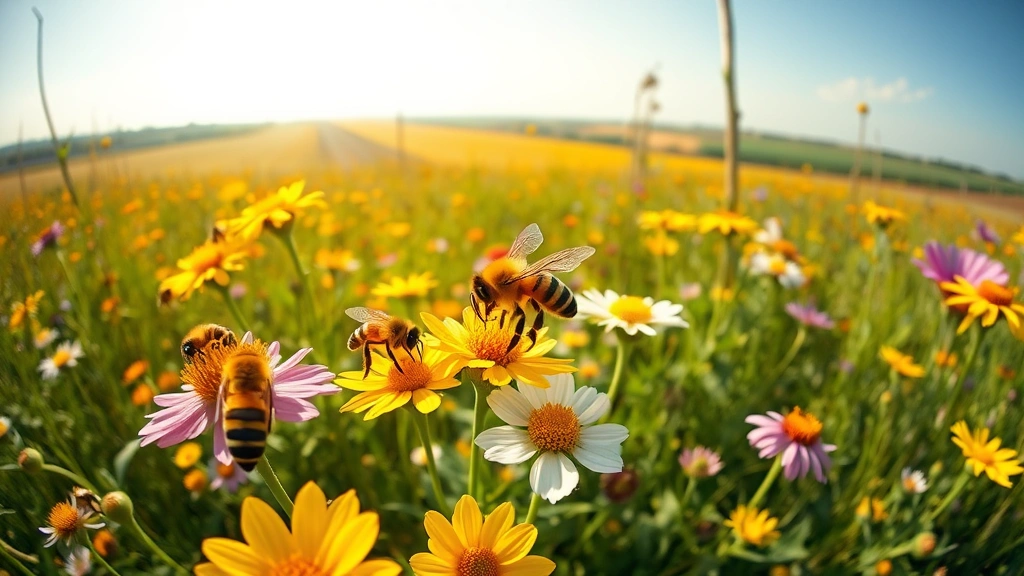
Pollination represents perhaps the most quantifiable biotic ecosystem service with direct economic value. Approximately 75% of global food crops depend partially or entirely on animal pollination, primarily by insects. Honeybees, wild bees, butterflies, moths, beetles, and hummingbirds collectively provide pollination services worth $15-20 billion annually in the United States alone. Global pollination services exceed $577 billion yearly, representing approximately 9.5% of global agricultural production value.
The economics of pollination become particularly acute when considering honeybee decline. Colony collapse disorder and habitat loss have reduced managed bee populations by 50% in some regions over the past two decades. This biotic factor loss forces farmers to supplement pollination through hand-pollination—an extremely labor-intensive and expensive process. In some Chinese apple orchards, labor costs for hand-pollination exceed $1,000 per hectare, compared to natural pollination costs approaching zero.
Wild pollinator populations provide crucial economic insurance against managed pollinator failures. Yet land-use intensification and pesticide application systematically eliminate these biotic safety nets. Economic analyses demonstrate that protecting wild pollinator habitats through conservation provides returns exceeding 100:1 compared to costs. The market failure inherent in pollination services—where ecosystem service providers receive no compensation while beneficiaries capture full value—creates perverse incentives for ecosystem degradation.
Emerging payment for ecosystem services (PES) programs attempt to correct this market failure by compensating landowners for maintaining pollinator habitat. These programs generate economic value for rural communities while sustaining agricultural productivity. Research indicates that PES programs maintaining biotic pollinator communities reduce agricultural economic volatility while providing ancillary benefits including carbon sequestration and water purification.
Biodiversity as Economic Capital
Biodiversity represents a form of natural capital with measurable economic value, yet conventional accounting systems treat it as a free, infinite resource. This accounting error creates systematic incentives for biotic asset depletion. Economic theory recognizes several categories of biodiversity value: use value (direct economic benefits from harvesting), option value (future use potential), existence value (intrinsic worth independent of human use), and ecosystem service value (indirect benefits from ecosystem functions).
Genetic diversity within biotic populations generates substantial pharmaceutical and agricultural value. Approximately 25% of pharmaceutical drugs contain compounds derived from plants, representing an estimated market value exceeding $100 billion annually. Yet pharmaceutical companies invest minimally in biodiversity conservation, creating another market failure where value extraction occurs without compensation to biodiversity stewards. Indigenous communities in biodiverse regions often possess detailed knowledge of medicinal biotic species, yet receive minimal compensation when these organisms enter pharmaceutical development pipelines.
Agricultural crop diversity demonstrates direct economic value through reduced production risk. Farming systems incorporating diverse crop biota experience lower variance in yields across seasons and years. This risk reduction translates to lower capital costs for farmers and reduced economic volatility in food supply chains. Crop insurance premiums in biodiversity-rich agricultural systems run 15-25% lower than in monoculture systems with equivalent production volumes.
Forest biodiversity supports economic activities spanning timber production, non-timber forest products, ecotourism, and carbon sequestration. Tropical forests containing the highest biotic diversity generate more total economic value through sustainable harvesting and conservation than through clear-cutting for short-term timber revenue. Economic analyses from the World Bank demonstrate that forest conservation strategies generate cumulative economic returns 3-5 times higher than conversion to agriculture or extractive industries over 50-year time horizons.
Ecosystem Services and GDP Integration
Ecosystem services provided by biotic factors include provisioning services (food, water, materials), regulating services (climate regulation, water purification, disease control), supporting services (nutrient cycling, soil formation), and cultural services (recreation, spiritual value, aesthetic appreciation). Traditional GDP accounting excludes these services entirely, creating systematic undervaluation of natural capital depletion.
Water purification by biotic communities represents a substantial economic service. Wetland biota—aquatic plants, invertebrates, and microorganisms—purify water through bioaccumulation and metabolic processes. Cities depending on natural water purification systems avoid construction and operating costs of artificial treatment facilities. Natural water purification costs approximately $0.10-$1.00 per cubic meter, compared to $0.50-$3.00 for artificial treatment. When biotic communities degrade, municipalities must invest billions in treatment infrastructure.
Climate regulation by biotic factors generates global economic value exceeding $2 trillion annually through carbon sequestration alone. Forest biota, soil microorganisms, and ocean phytoplankton collectively remove approximately 50% of anthropogenic carbon dioxide from the atmosphere. This biotic climate service prevents economic damages estimated at $4-8 trillion annually through avoided climate change impacts. Yet carbon markets systematically undervalue this service, offering prices typically $10-50 per ton of CO2, far below the economic damage avoided.
Disease regulation by biotic communities provides another substantial but undervalued service. Predatory arthropods controlling disease vectors, competitive exclusion of pathogens by non-harmful microorganisms, and immune stimulation by environmental biota reduce disease transmission and healthcare costs. Economic analyses indicate that biotic disease regulation prevents healthcare expenditures exceeding $10 billion annually in developed economies alone.
The integration of ecosystem service valuation into national accounting systems remains incomplete, though progress accelerates. Several nations now employ natural capital accounting frameworks incorporating biotic factor values into official statistics. This accounting reformation fundamentally changes economic policy signals, revealing that many activities generating GDP growth simultaneously deplete natural capital, creating illusory economic progress.
Aquatic Biotic Resources and Blue Economy
Marine and freshwater biotic resources support economic activities generating $2.5 trillion annually globally, representing the “blue economy.” Fish populations provide primary protein for over 3 billion people and support commercial fisheries generating $150 billion yearly. Yet overharvesting has depleted 90% of large predatory fish populations, creating economic externalities including reduced future catches, ecosystem collapse risks, and food security threats.
The economic tragedy of open-access fisheries illustrates how biotic resource economics creates perverse incentives. Individual fishermen maximize short-term catches without bearing costs of population depletion, leading to systematic overharvesting. This biotic factor mismanagement has economically devastated fishing communities worldwide. The Atlantic cod fishery collapse cost Canada’s economy $2 billion in direct losses and 30,000 jobs, demonstrating how biotic asset depletion generates severe economic consequences.
Aquaculture represents an alternative biotic economic pathway, yet introduces new environmental-economic tradeoffs. Intensive fish farming can degrade surrounding ecosystems through biotic waste accumulation, pathogen transmission to wild populations, and genetic contamination. Economic analyses comparing intensive aquaculture to sustainable practices reveal that sustainable approaches generate 10-15% lower production volumes but 30-40% higher profit margins through reduced disease losses, avoided environmental remediation costs, and premium market pricing.
Coral reef biota supports $375 billion in annual ecosystem services while generating $36 billion in direct economic benefits through tourism, fisheries, and pharmaceutical development. Yet 50% of coral reefs have degraded due to climate change, pollution, and biotic overharvesting. This biotic asset loss represents economic damages exceeding $1 trillion globally. Coral reef protection through marine reserve networks generates economic returns through enhanced fishery productivity and tourism revenue exceeding protection costs by factors of 5-15.
Biotic Threats to Economic Systems
Biotic factors simultaneously present economic risks requiring mitigation. Pathogenic biota cause disease epidemics generating enormous economic losses. The COVID-19 pandemic, originating from zoonotic viral transmission, cost the global economy an estimated $28 trillion through direct healthcare costs, productivity losses, and economic disruption. Agricultural crop diseases caused by fungal, bacterial, and viral biota destroy 20-40% of global food production annually, representing economic losses exceeding $400 billion.
Invasive species represent another biotic threat with substantial economic consequences. Non-native organisms introduced to new environments often lack natural predators, enabling explosive population growth that displaces native biota and degrades ecosystem function. Invasive species cause global economic damages exceeding $423 billion annually through agricultural crop losses, forestry impacts, infrastructure damage, and healthcare costs. The zebra mussel invasion of North American freshwater systems costs $500 million yearly in water treatment facility damage alone.
Pest outbreaks driven by biotic population dynamics create agricultural economic shocks. Climate change enables pests to expand geographic ranges and increase generation frequencies, intensifying economic losses. The fall armyworm invasion of African agriculture demonstrates how biotic dynamics create rapid economic disruption, destroying 21 million hectares of crops and threatening food security for 400 million people across 44 nations.
Understanding carbon footprint reduction requires recognizing that biotic threats including ecosystem collapse create cascading economic risks. Degraded ecosystems lose capacity to regulate pests, diseases, and climate, increasing economic vulnerability. This risk amplification creates financial incentives for ecosystem protection that transcend traditional conservation arguments.
Policy Frameworks for Biotic Asset Protection
Effective biotic factor management requires policy frameworks internalizing ecosystem service values into economic decision-making. Payment for ecosystem services programs compensate landowners for maintaining biotic communities providing public benefits. These programs have expanded globally, with over 550 active PES initiatives covering 500 million hectares and generating $40 billion in annual payments.
Biodiversity offset policies mandate that development activities generating biotic habitat loss must fund equivalent habitat restoration or protection elsewhere. While imperfect, these policies create financial incentives for biotic preservation and restoration. Successful implementation requires rigorous biotic monitoring to ensure offset effectiveness and prevent systemic habitat loss accumulation.
Agricultural subsidy reform represents a critical policy frontier. Current subsidy structures averaging $700 billion annually in developed economies incentivize biotic-degrading practices including monoculture, pesticide use, and habitat conversion. Redirecting subsidies toward biotic-enhancing practices including crop diversity, integrated pest management, and agroforestry would simultaneously reduce environmental degradation, improve farmer incomes, and enhance food security.
Intellectual property frameworks governing biotic genetic resources require reform to ensure equitable benefit-sharing. The Nagoya Protocol represents progress toward compensating biodiversity-rich nations for genetic resources accessed by pharmaceutical and agricultural biotechnology companies, yet implementation remains incomplete and benefit flows remain minimal relative to commercial values generated.
Carbon pricing mechanisms increasingly incorporate biotic factor value through forest carbon credits and soil carbon sequestration programs. These policies create financial incentives for maintaining biotic communities providing climate regulation services. Yet carbon pricing remains insufficient relative to climate damages, limiting economic incentives for optimal biotic protection.
Trade policy integration of biotic sustainability standards represents an emerging framework. Market access conditions increasingly require ecosystem sustainability certification, creating economic incentives for biotic preservation in export-oriented industries. This approach leverages market mechanisms to internalize environmental values, though concerns regarding protectionism and equity require careful policy design.
FAQ
What are the primary biotic environment examples affecting economic systems?
Primary biotic environment examples include soil microorganisms regulating nutrient cycles, pollinating insects supporting agriculture, forest biota providing timber and carbon sequestration, marine fish populations supporting fisheries, and pathogenic organisms creating disease-related economic costs. These biotic factors generate trillions in annual economic value while simultaneously presenting risks through pest outbreaks and invasive species.
How do biotic factors influence agricultural productivity and profitability?
Biotic factors influence agriculture through soil organism communities regulating nutrient availability, predatory arthropods controlling pests, pollinating insects enabling crop reproduction, and crop genetic diversity reducing production risk. Maintaining biotic integrity reduces chemical input costs, enhances yield stability, and enables premium market positioning for sustainable products.
What economic value do pollination services provide?
Global pollination services exceed $577 billion annually, representing 9.5% of agricultural production value. Approximately 75% of food crops depend partially or entirely on animal pollination. When managed pollinator populations decline, farmers must supplement through expensive hand-pollination or accept yield reductions, directly impacting farm profitability and food prices.
How can biodiversity be economically valued and protected?
Biodiversity economic valuation employs ecosystem service accounting, contingent valuation, and market-based mechanisms including payment for ecosystem services and carbon credits. Protection strategies include habitat conservation, sustainable harvesting practices, invasive species management, and policy frameworks internalizing biotic asset values into economic decision-making.
What role do biotic factors play in climate regulation and carbon sequestration?
Biotic factors including forests, soil organisms, and ocean phytoplankton sequester approximately 50% of anthropogenic carbon dioxide annually, providing climate regulation services worth over $2 trillion. Forest biota alone stores 861 gigatons of carbon. Protecting and restoring biotic communities represents a critical climate change mitigation strategy with co-benefits including biodiversity preservation and economic development.
How do invasive species create economic losses?
Invasive species cause global economic damages exceeding $423 billion annually through agricultural crop destruction, forestry damage, infrastructure harm, and increased disease transmission. Non-native organisms lacking natural predators degrade native biotic communities, reducing ecosystem function and generating cascading economic costs through reduced pollination, increased pest pressure, and altered water quality.


