Green Jobs: Boosting Economy & Ecosystems Alike
The global economy stands at a critical inflection point. As climate change accelerates and biodiversity collapses, the traditional employment landscape—built on extractive industries and resource depletion—faces inevitable transformation. Yet this challenge presents an extraordinary opportunity: the emergence of green jobs that simultaneously strengthen economies and restore ecosystems. The transition toward sustainable employment represents not merely an environmental imperative but an economic necessity that generates measurable returns across multiple sectors.
Green employment spans renewable energy installation, ecosystem restoration, sustainable agriculture, environmental consulting, and circular economy manufacturing. These careers that help environment create lasting value while addressing planetary boundaries. Research from the International Labour Organization indicates that renewable energy jobs already outnumber fossil fuel positions globally, signaling a fundamental economic shift. Understanding this transition requires examining how environmental employment drives both ecological regeneration and economic resilience.
The Economic Case for Green Employment
The economic argument for green jobs extends beyond environmental ethics into hard financial analysis. A comprehensive World Bank assessment demonstrates that every dollar invested in renewable energy generates $3-4 in economic returns through job creation, infrastructure development, and avoided climate damages. This multiplier effect far exceeds traditional energy sector investments, which concentrate wealth while externalizing environmental costs.
Green employment creates more jobs per unit of energy produced than fossil fuel industries. Solar installation requires approximately 5-10 times more labor hours than coal power generation at equivalent capacity. Wind energy demonstrates similar labor intensity advantages. These ratios translate into substantial employment opportunities across manufacturing, installation, maintenance, and supply chain management. Beyond energy, ecosystem restoration projects employ thousands in habitat protection, wetland management, and forest conservation—work that simultaneously increases carbon sequestration and biodiversity.
The economic multiplier of green jobs reflects their local nature. Unlike multinational extractive industries that export profits, environmental employment typically remains within communities. A solar technician spends wages locally; ecosystem restoration workers purchase from regional suppliers. This economic circulation strengthens local resilience while reducing dependency on volatile commodity markets. Indigenous communities practicing sustainable forestry and conservation agriculture demonstrate how environmental employment can preserve cultural heritage while generating income.
Moreover, green employment reduces healthcare costs associated with pollution. Air quality improvements from transitioning away from fossil fuels prevent respiratory diseases, reducing healthcare expenditures by billions annually. Cleaner water from agricultural sustainability practices decreases treatment costs and waterborne illness. These avoided expenses represent genuine economic gains that traditional employment accounting often ignores.

Major Sectors Creating Environmental Careers
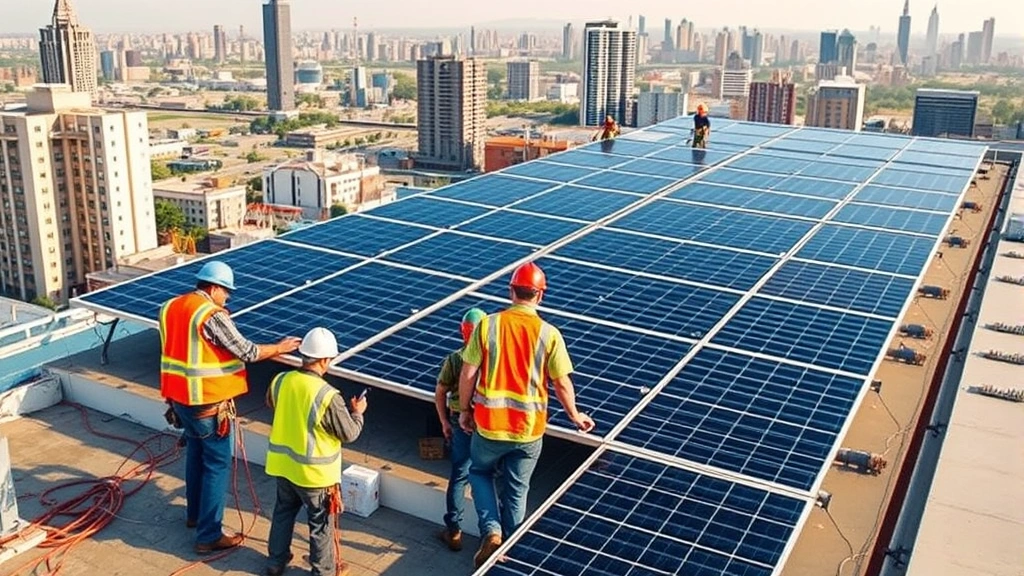
Renewable Energy Installation and Maintenance: The renewable energy sector has become the fastest-growing employment category globally. Solar photovoltaic installation alone employed over 4 million workers in 2023, with wind energy adding another 1.3 million positions. These roles encompass electricians, engineers, project managers, and supply chain specialists. Unlike fossil fuel extraction that depletes resources, renewable energy infrastructure generates perpetual employment through maintenance, upgrades, and system optimization. Battery technology advancement creates additional manufacturing and recycling positions as the transition accelerates.
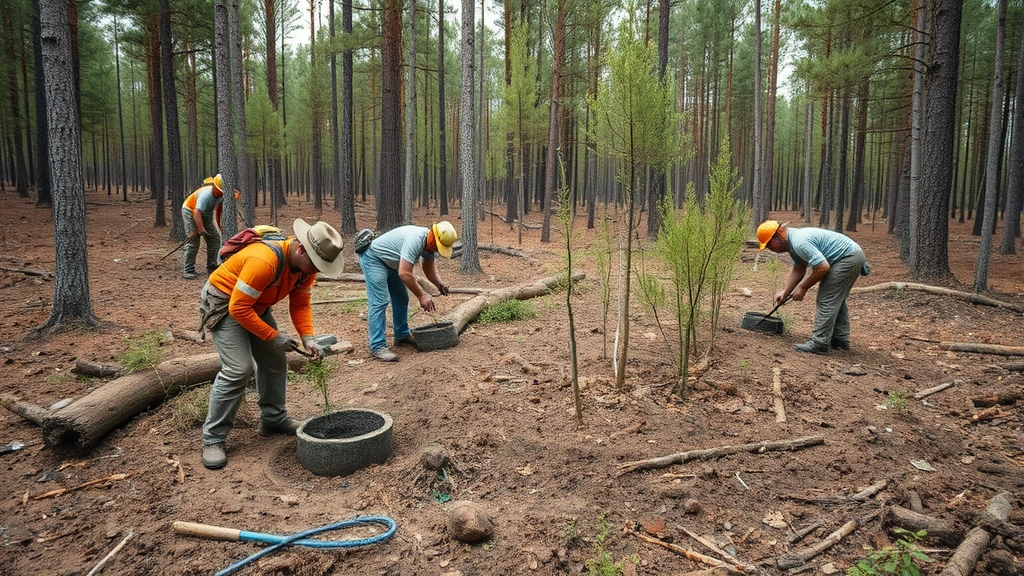
Ecosystem and Environmental Restoration: Habitat restoration, wetland creation, and forest management represent labor-intensive environmental work with significant ecological returns. A single large-scale wetland restoration project can employ hundreds of workers while sequestering carbon, improving water quality, and restoring biodiversity. Ways to protect the environment increasingly involve restoration employment rather than purely regulatory approaches. Native plant nurseries, invasive species removal, and watershed management create diverse career pathways.
Sustainable Agriculture and Food Systems: Regenerative agriculture, organic farming, and agroforestry employ millions while restoring soil health and sequestering atmospheric carbon. These systems require more labor than industrial monoculture but generate premium products and enhanced ecosystem services. Farmer training programs, soil testing services, and sustainable supply chain management create professional positions. Urban agriculture and vertical farming represent emerging sectors with significant employment potential in food-insecure regions.
Green Building and Retrofitting: Construction represents 11% of global employment. Transitioning this sector toward sustainable building dramatically increases labor requirements. Energy efficiency retrofitting of existing structures employs specialists in insulation, HVAC systems, and renewable energy integration. Green building certification creates consulting positions. Sustainable materials sourcing and waste management in construction generate additional employment across supply chains.
Environmental Consulting and Policy Development: Climate adaptation planning, environmental impact assessment, and sustainability strategy consulting employ thousands of professionals. Corporate sustainability officers, carbon accounting specialists, and environmental compliance managers represent growing professional categories. Policy research institutions employ economists, scientists, and analysts focused on ecological economics and environmental regulation.
Circular Economy Manufacturing: Product redesign for durability, repairability, and recyclability creates manufacturing positions distinct from linear production models. Repair services, refurbishment facilities, and recycling technology development employ growing workforces. Electronics recycling alone generates thousands of positions while recovering valuable materials and preventing environmental contamination.
Skills Development and Workforce Transition
The transition to green employment requires deliberate workforce development. Workers displaced from fossil fuel industries possess valuable skills—electrical expertise, project management, heavy equipment operation—that transfer directly to renewable energy and restoration sectors. Strategic retraining programs in coal-dependent regions have demonstrated 85%+ job placement rates when combined with wage guarantees during transition periods.
Educational pathways must expand beyond traditional four-year degrees. Apprenticeships in solar installation, wind turbine maintenance, and ecological restoration provide direct entry into employment while building competency. Community colleges increasingly offer green job certification programs aligned with employer requirements. Online education platforms democratize access to environmental career preparation, particularly benefiting rural and economically disadvantaged populations.
Technical Skills Priority: Renewable energy sectors require electricians, mechanical engineers, and software specialists. Ecosystem restoration demands ecological knowledge, GIS mapping expertise, and project management. Sustainable agriculture needs soil scientists, agricultural engineers, and supply chain specialists. These technical requirements create premium employment opportunities for workers with specialized training.
Soft Skills and Systems Thinking: Environmental employment increasingly demands interdisciplinary capability. Understanding human environment interaction requires communicating across scientific, economic, and social domains. Project managers in green sectors coordinate between engineers, ecologists, communities, and regulators. This integrative work commands premium compensation while addressing complex sustainability challenges.
Youth engagement proves critical for long-term green employment growth. Programs connecting students with environmental careers during secondary education increase sector participation. University environmental science programs report 95%+ employment rates, reflecting strong market demand. Internships with environmental organizations provide experience while building professional networks.
Global Investment Trends in Sustainable Jobs
Global investment in green economy sectors exceeded $2 trillion in 2023, with projections reaching $3 trillion annually by 2030. This capital flows toward renewable energy infrastructure, sustainable agriculture development, and ecosystem restoration. Investment concentration varies regionally: China leads in renewable manufacturing and installation; European nations emphasize retrofitting and circular economy; developing economies focus on agricultural sustainability and biodiversity conservation.
Public investment proves essential for green job creation, particularly in regions with limited private capital. Government-backed renewable energy projects in India, Brazil, and Kenya generate millions of positions while building energy independence. Environmental bond markets channel institutional capital toward restoration and conservation employment. Carbon credit mechanisms create financial incentives for forest protection employment in tropical regions.
Corporate sustainability commitments drive employment growth. Companies pledging carbon neutrality by 2030-2050 require thousands of environmental specialists, engineers, and sustainability managers. Supply chain transparency demands create positions in environmental monitoring and verification. Consumer preference for sustainable products incentivizes green manufacturing employment.
International development institutions increasingly prioritize green employment in poverty reduction strategies. The United Nations Environment Programme estimates that green economy transition could create 60 million additional jobs globally while reducing poverty. This employment growth concentrates in developing nations where labor costs remain lower and ecological restoration needs greatest.
Barriers to Green Job Growth
Despite enormous potential, green employment faces systemic obstacles. Fossil fuel subsidies—exceeding $7 trillion annually when accounting for environmental externalities—artificially depress renewable energy competitiveness. Policy uncertainty creates investment hesitation; renewable energy projects require long-term certainty for financing. Some regions maintain regulatory frameworks favoring extractive industries while impeding environmental sector development.
Infrastructure limitations constrain renewable energy employment. Grid modernization requires massive investment; transmission bottlenecks prevent renewable energy deployment in regions with outdated electrical systems. Developing nations often lack capital for renewable infrastructure that would generate local employment.
Skills gaps persist despite growing training programs. Rural regions struggle recruiting specialized workers; brain drain toward urban centers concentrates environmental employment geographically. Some fossil fuel workers possess skills requiring significant retraining; inadequate wage replacement during transition creates political resistance.
Capital access disparities limit green employment in developing economies. International finance mechanisms often require collateral and credit histories that small farmers and entrepreneurs lack. Microfinance innovations gradually address this barrier, but scaling remains inadequate for meeting employment potential.
Regional Opportunities and Economic Models
Diverse economic models demonstrate green employment’s viability across contexts. Germany’s Energiewende (energy transition) created over 300,000 renewable energy jobs through deliberate policy support and workforce development. Costa Rica generates 99% of electricity from renewable sources, establishing environmental employment as economic foundation. Bangladesh’s microfinance-supported solar home system distribution employs hundreds of thousands in rural electrification.
Indigenous-led conservation demonstrates how traditional ecological knowledge combines with modern employment. Indigenous land management across South America, Africa, and Southeast Asia protects biodiversity while generating income through sustainable resource management, ecotourism, and conservation payments. These models preserve cultural practices while creating economic opportunity.
Urban green employment concentrates in renewable energy installation, green building retrofitting, and environmental services. Cities increasingly employ thousands in urban forestry, park restoration, and green infrastructure maintenance. Green roofs and living walls create specialized installation and maintenance positions. Urban agriculture supports food system employment while enhancing food security.
Agricultural transition offers enormous rural employment potential. Regenerative agriculture requires more labor than industrial monoculture; organic certification creates consulting positions; farmer cooperatives generate processing and marketing employment. Agroforestry systems combining timber, food, and ecosystem services provide diversified income while restoring landscapes.
Coastal regions increasingly emphasize marine conservation employment: sustainable fisheries management, coral restoration, and seagrass restoration employ growing workforces while protecting critical ecosystems. Mangrove restoration projects in Southeast Asia and Africa combine poverty reduction with climate adaptation and biodiversity protection.
The transition to green employment represents economic opportunity rather than sacrifice. Positive human impact on environment increasingly derives from employment sectors that regenerate rather than degrade ecosystems. Understanding how humans affect environment reveals that employment choices profoundly shape ecological outcomes. Strategic investment in green job development accelerates this positive transformation.
FAQ
What qualifications do green jobs require?
Green job requirements vary by sector. Renewable energy installation typically requires apprenticeships or technical certifications (12-24 months). Environmental consulting often demands bachelor’s degrees in environmental science, ecology, or economics. Ecosystem restoration may require field experience and ecological knowledge. Many positions offer on-the-job training for motivated workers without formal credentials. Technical skills in electrical work, mechanical systems, and software prove highly valuable across green sectors.
How much do green jobs pay compared to traditional employment?
Green job compensation varies significantly by position and region. Solar electricians earn $50,000-$80,000+ annually in developed nations, matching or exceeding fossil fuel equivalents. Environmental consultants command $60,000-$150,000+ depending on expertise. Entry-level restoration positions may pay $30,000-$40,000 but offer career progression. Overall, green employment compensation increasingly matches or exceeds traditional sectors while offering superior job security and advancement potential.
Are green jobs only available in wealthy nations?
Developing nations increasingly lead green employment growth. India employs over 1 million renewable energy workers; Kenya’s geothermal sector generates thousands of positions; Bangladesh’s solar sector employs hundreds of thousands. Green employment often provides greatest economic opportunity in developing regions where traditional employment remains limited and ecological restoration needs most urgent. International development finance increasingly supports green job creation in lower-income nations.
How can workers transition from fossil fuel industries to green sectors?
Successful transitions combine wage guarantees, targeted retraining, and community investment. Programs in coal-dependent regions have achieved 85%+ placement rates by matching worker skills to renewable energy positions, providing 6-12 month training, and guaranteeing comparable wages during transition. Early retirement options for older workers reduce competition for positions. Community investment in diverse economic development prevents single-sector dependence.
What is the job growth projection for green employment?
International Labour Organization projections indicate renewable energy sectors will employ 38-42 million workers by 2030, compared to 12 million in 2020. Ecosystem restoration, sustainable agriculture, and green building sectors will generate millions of additional positions. Total green economy employment could reach 100+ million globally by 2030, representing 3-4% of global workforce. Growth rates exceed traditional sectors by 2-3 times, reflecting accelerating transition.
Do green jobs provide stable long-term careers?
Green employment offers superior stability compared to fossil fuel sectors. Renewable energy infrastructure requires perpetual maintenance and upgrades; ecosystem restoration is continuous work; sustainable agriculture represents permanent land management. Unlike extractive industries vulnerable to resource depletion and commodity price volatility, green employment depends on perpetual ecological needs and energy demand. Career advancement opportunities span technical specialization, management, and entrepreneurship.


