
Eco-Friendly Careers: Boosting the Green Economy
The global economy stands at a critical inflection point. As climate change accelerates and resource depletion threatens supply chains, organizations worldwide are racing to transition toward sustainable business models. This shift creates unprecedented opportunities for professionals seeking careers that help the environment while building meaningful livelihoods. The green economy—valued at over $2 trillion annually—represents one of the fastest-growing sectors globally, with job creation rates consistently outpacing traditional industries.
Environmental careers span diverse disciplines, from renewable energy engineering to ecological restoration, conservation finance to sustainable agriculture. What unites these professions is their fundamental contribution to reducing humanity’s ecological footprint while generating economic value. Understanding this landscape helps individuals align their professional aspirations with planetary health.
Renewable Energy Professionals
The renewable energy sector has become the world’s largest source of new electricity generation capacity. Solar photovoltaic installations, wind turbines, and hydroelectric systems require specialized expertise across multiple career paths. Solar engineers design and optimize photovoltaic systems, calculating efficiency metrics and managing installations from residential rooftops to utility-scale solar farms. Wind energy technicians maintain turbines reaching heights of 300 feet, performing preventative maintenance and troubleshooting mechanical failures that could compromise power generation. Energy storage specialists work with battery technologies and grid-level storage solutions, addressing intermittency challenges that plagued earlier renewable deployments.
These positions command competitive salaries—solar installers earn median wages of $48,000 annually with growth projections exceeding 15% through 2032. Wind turbine technicians average $56,000, with demand concentrated in wind-rich regions like Texas, Iowa, and coastal areas. Hydroelectric engineers manage water resources while generating clean electricity, balancing ecological preservation with power production. The sector’s expansion directly correlates with declining fossil fuel infrastructure, making renewable energy careers increasingly recession-resistant as global energy policy shifts toward decarbonization.
Conservation and Environmental Management
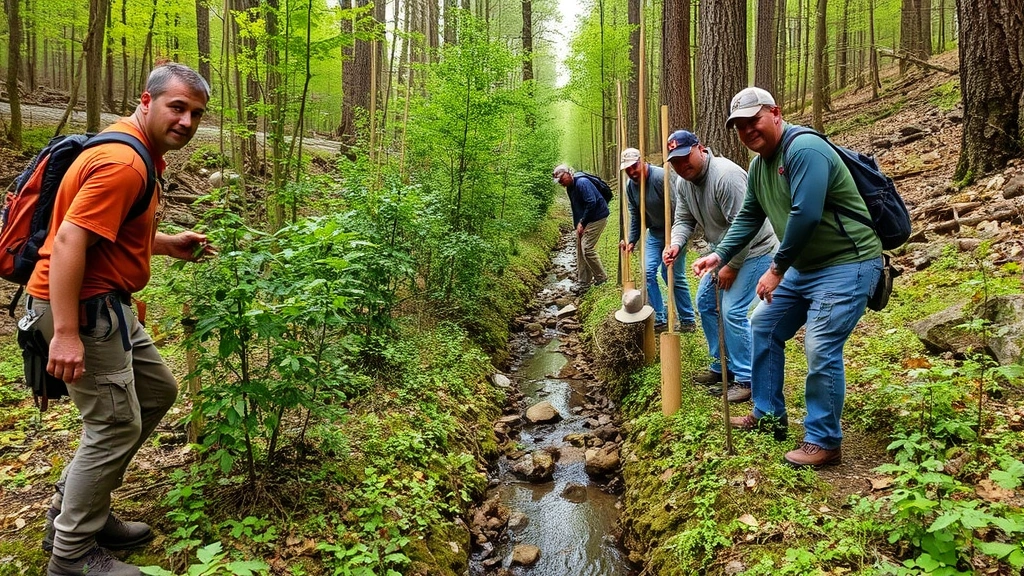
Conservation professionals work at the intersection of human environment interaction and ecosystem preservation. Conservation scientists manage forests, wetlands, and wildlife habitats, implementing sustainable practices that maintain biodiversity while allowing resource extraction. They conduct environmental impact assessments, design habitat restoration projects, and monitor species populations using advanced monitoring technologies. Park rangers protect public lands, educate visitors, and enforce environmental regulations protecting fragile ecosystems from overuse.
Wildlife biologists study animal populations and behavior patterns, generating data that informs conservation policy. Their research on migration corridors, breeding patterns, and human-wildlife conflict mitigation proves invaluable as urbanization encroaches on natural habitats. Environmental compliance officers ensure organizations meet regulatory requirements, conducting audits and developing remediation strategies when violations occur. Restoration ecologists actively restore degraded ecosystems—replanting native species, removing invasive plants, and reestablishing ecological processes that support biodiversity recovery. According to the Bureau of Labor Statistics, conservation scientist positions are projected to grow 5% through 2032, with median salaries near $65,000.
Sustainable Business and Green Finance
The business sector increasingly recognizes that environmental stewardship and profitability align strategically. Sustainability consultants help corporations reduce emissions, waste, and resource consumption while identifying cost-saving opportunities. They conduct carbon audits, design circular economy initiatives, and develop sustainability reporting frameworks aligned with ESG (Environmental, Social, Governance) standards. Green building architects design structures that minimize operational energy consumption through passive design, renewable energy integration, and water conservation systems. LEED certification—the predominant green building standard—now covers millions of square feet globally.
Environmental economists analyze the economic implications of ecological degradation, quantifying ecosystem service values and calculating optimal resource allocation. Their work informs policy decisions affecting industries and communities. Corporate social responsibility managers develop environmental initiatives that enhance brand reputation while generating measurable environmental benefits. Supply chain sustainability specialists audit supplier operations, reducing emissions across product lifecycles and ensuring ethical sourcing practices.
Green finance represents perhaps the sector’s fastest-growing segment. ESG analysts evaluate companies’ environmental performance for investment decisions, driving capital toward sustainable enterprises. Climate finance specialists structure funding mechanisms for renewable energy projects and climate adaptation initiatives in developing nations. The World Bank mobilizes billions annually for climate-related projects, creating demand for professionals fluent in both environmental science and financial engineering. Green bonds—debt instruments funding environmental projects—exceeded $500 billion in issuance in 2021, reflecting institutional investor appetite for sustainable investments.
Environmental Science and Research
Environmental scientists investigate complex ecological relationships and human-caused degradation, generating evidence for policy and management decisions. Air quality specialists monitor atmospheric pollution, identifying sources and modeling health impacts. Water quality engineers manage treatment systems, conduct contamination assessments, and design remediation technologies addressing industrial pollution and agricultural runoff. Soil scientists study soil health, nutrient cycling, and contamination patterns, essential for sustainable agriculture and land restoration.
Climate scientists model future climate scenarios, analyze paleoclimate data, and quantify human contributions to warming. Their research underpins Intergovernmental Panel on Climate Change assessments that guide international climate policy. Environmental toxicologists assess chemical hazards, determining safe exposure thresholds and identifying emerging contaminants threatening ecosystems and human health. Marine biologists study ocean ecosystems, addressing overfishing, coral bleaching, and plastic pollution.
Research positions typically require advanced degrees (master’s or PhD) but offer intellectual engagement with Earth’s most pressing challenges. Academic institutions, government agencies (EPA, USGS, NOAA), and private research firms employ environmental scientists. Salaries average $68,000 for entry-level positions, with senior researchers earning $120,000+. Research grants and consulting opportunities provide additional income for established scientists.
Climate Solutions and Policy
Climate policy represents a critical career domain where environmental expertise directly influences governmental and international decision-making. Climate policy analysts evaluate proposed regulations, model economic impacts, and recommend evidence-based approaches to emissions reduction. Environmental lawyers navigate complex regulatory frameworks, represent environmental organizations, and challenge polluters through litigation. Policy advocates mobilize constituencies, lobby legislators, and build coalitions supporting environmental protection.
Understanding environment and society relationships proves essential for crafting effective policy. Environmental justice specialists address disproportionate pollution burdens affecting low-income and minority communities, ensuring equitable climate solutions. International climate negotiators participate in global climate conferences, developing agreements like the Paris Accord that commit nations to emissions reductions.
Carbon accounting specialists quantify organizational and national emissions using standardized methodologies, essential for tracking progress toward climate targets. Just transition coordinators help workers and communities dependent on fossil fuel industries adapt to economic restructuring, ensuring climate action doesn’t exacerbate inequality. The United Nations Environment Programme coordinates global environmental initiatives, employing hundreds of professionals in policy roles.
Environmental Education and Advocacy
Behavioral and cultural change underpins sustainable transitions. Environmental educators teach K-12 students and adult learners about ecological systems, climate science, and sustainable practices, building environmental literacy that shapes future decision-makers. Nature interpreters guide visitors through parks and natural areas, fostering connection to ecosystems and motivating conservation support. Science communicators translate complex environmental research for public audiences, combating misinformation and building support for climate action.
Community organizers mobilize grassroots movements opposing polluting industries and advocating for environmental protection. Corporate environmentalists work within companies to drive sustainable practices, leveraging insider knowledge to challenge destructive processes. Nonprofit executives lead conservation organizations, managing budgets, fundraising, and strategic initiatives protecting threatened ecosystems and species.
These positions frequently offer meaningful work and strong organizational culture despite sometimes modest compensation. Nonprofit salaries average 10-20% below corporate equivalents, but mission-driven work and community impact attract passionate professionals. Grant funding, individual donations, and corporate partnerships sustain these organizations, creating diverse employment opportunities.

Emerging Green Career Pathways
Technological innovation and ecological crisis create novel career opportunities barely existing a decade ago. Circular economy designers reimagine product lifecycles, eliminating waste through design strategies enabling material recovery and reuse. Regenerative agriculture specialists help farmers transition toward practices building soil health, sequestering carbon, and enhancing biodiversity—reversing conventional agriculture’s degradative impacts. Rewilding coordinators manage large-scale ecosystem restoration projects, reintroducing species and restoring ecological processes across landscape scales.
Urban farming specialists design and manage rooftop gardens, vertical farms, and community gardens, bringing food production into cities while reducing transportation emissions and building local resilience. Biodiversity accountants quantify natural capital—ecosystem services like pollination, water filtration, and climate regulation—enabling incorporation of ecological value into economic accounting. Climate adaptation planners help communities prepare for climate impacts, designing infrastructure and social systems resilient to future conditions.
Sustainable materials scientists develop alternatives to carbon-intensive materials—bio-based plastics, low-carbon concrete, recycled composites—enabling circular material flows. Decarbonization engineers help industrial facilities eliminate emissions through electrification, hydrogen adoption, and process innovation. Ecosystem services brokers connect landowners implementing conservation practices with corporations seeking to offset environmental impacts, creating financial mechanisms rewarding stewardship.
These emerging roles often command premium compensation reflecting specialized expertise and market demand. Early career professionals in regenerative agriculture, climate adaptation, and circular economy design frequently earn $70,000-$90,000+ with growth potential as these fields mature.
FAQ
What education do green economy careers require?
Requirements vary significantly. Renewable energy technician roles typically need trade certifications or associate degrees, while environmental scientist positions require bachelor’s degrees and often advanced degrees. Sustainability consultants frequently transition from business backgrounds, while policy roles benefit from law, public administration, or environmental science training. Many professionals retrain midcareer, leveraging existing expertise while developing environmental specialization through targeted coursework and certifications.
How quickly is the green economy growing?
The International Labour Organization projects the green economy will generate 24 million new jobs by 2030. Renewable energy employment grows 2-3x faster than overall job creation. However, growth rates vary geographically—developed nations experiencing mature renewable markets show slower growth than developing nations rapidly expanding clean energy infrastructure. Career prospects remain strongest in regions prioritizing climate action and clean energy transition.
Can I transition to environmental careers from unrelated fields?
Absolutely. Many green economy positions value transferable skills—project management, financial analysis, communication, technical expertise—alongside environmental knowledge. Career transitions often involve targeted education (graduate programs, certifications, online courses), volunteer experience demonstrating commitment, and networking within environmental sectors. Consulting firms actively recruit from diverse backgrounds, valuing fresh perspectives and diverse expertise applied to sustainability challenges.
What salary ranges do environmental careers offer?
Compensation varies widely. Entry-level positions in nonprofit conservation average $35,000-$45,000, while renewable energy technicians earn $45,000-$60,000. Sustainability consultants and environmental engineers typically earn $60,000-$90,000+. Senior positions—directors, senior scientists, policy leaders—frequently exceed $100,000. Geographic location, organization type (nonprofit vs. corporate), and specialization significantly influence compensation.
How does understanding positive impacts on the environment by humans inform career strategy?
Recognizing humanity’s capacity for positive environmental change motivates careers in regenerative agriculture, restoration ecology, renewable energy, and sustainable business. Rather than focusing exclusively on negative effects humans have on the environment, many professionals build careers creating solutions and opportunities for restoration. Understanding how humans affect the environment comprehensively—both destructively and constructively—enables strategic career positioning addressing systemic challenges while leveraging human ingenuity and institutional capacity.
What professional organizations support environmental careers?
Major organizations include the Ecological Society of America, American Society of Civil Engineers’ Sustainable Infrastructure Group, Environmental Law Institute, and numerous sector-specific associations (American Wind Energy Association, Solar Energy Industries Association, Society for Conservation Biology). These organizations offer networking, professional development, job boards, and advocacy opportunities.
How will environmental careers evolve in coming decades?
As climate change accelerates and resource constraints intensify, environmental career importance will increase correspondingly. Emerging technologies (carbon capture, advanced battery storage, synthetic biology) will create specialized roles. Policy-focused careers will expand as governments implement climate action. Simultaneously, environmental knowledge will integrate across all sectors—every organization will employ sustainability professionals. Career flexibility and continuous learning become essential as the green economy evolves.


