
California’s Ecosystem Services: Economic Impact and Valuation
California’s natural ecosystems generate substantial economic value through services that support agriculture, tourism, water security, and climate stability. These ecosystem services—ranging from pollination and carbon sequestration to flood mitigation and recreational opportunities—represent a critical but often undervalued component of the state’s economy. Understanding their monetary worth is essential for informed policy decisions and sustainable resource management.
The state’s diverse landscapes, from coastal wetlands and redwood forests to Sierra Nevada watersheds and desert ecosystems, collectively provide services worth hundreds of billions of dollars annually. Yet this value remains largely invisible in traditional economic accounting, leading to underinvestment in conservation and ecosystem restoration. This article examines California’s ecosystem services through an economic lens, exploring their quantifiable contributions to human well-being and the state’s broader economic resilience.

Understanding Ecosystem Services and Economic Valuation
Ecosystem services represent the direct and indirect contributions of ecosystems to human well-being, encompassing provisioning services (food, water, materials), regulating services (climate, water purification, pollination), supporting services (nutrient cycling, habitat provision), and cultural services (recreation, spiritual value, aesthetic appreciation). The economic valuation of these services emerged as a critical field within business of environment discourse during the 1990s, fundamentally challenging how societies account for natural capital.
Traditional gross domestic product measurements exclude ecosystem service contributions, creating a significant accounting gap. When a forest is harvested, GDP increases through timber sales, but the loss of carbon sequestration, water filtration, and habitat provision registers as zero economic impact. This perverse accounting has driven decisions that deplete natural capital while appearing economically beneficial. California’s experience exemplifies this dynamic, where decades of water extraction, agricultural expansion, and urban development generated measurable economic growth while degrading foundational ecosystem services.
The methodology for valuing ecosystem services involves multiple approaches: market-based valuation (using actual market prices for traded goods), replacement cost methods (calculating costs to replace services through technological means), hedonic pricing (inferring value from property price variations), and contingent valuation (surveying willingness-to-pay for ecosystem benefits). Each approach offers insights while carrying methodological limitations, yet convergent evidence across multiple methods strengthens confidence in valuations.
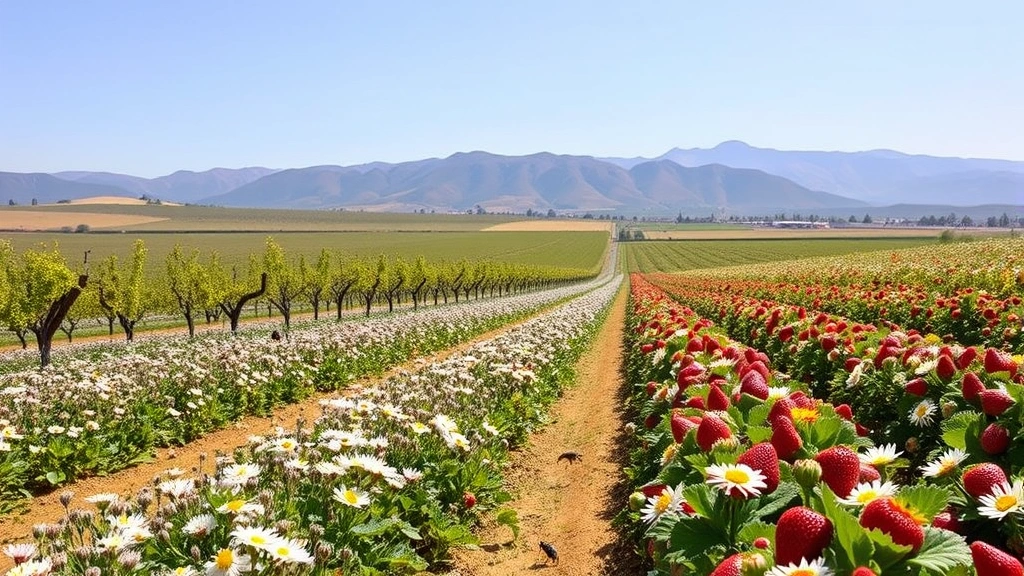
California’s Major Ecosystem Services
California’s geographic and climatic diversity generates an exceptional array of ecosystem services. The state encompasses Mediterranean shrublands, temperate rainforests, alpine meadows, desert ecosystems, extensive coastlines, and freshwater systems—each providing distinct services. This ecological complexity supports a state economy of nearly $3.6 trillion (as of 2023), with ecosystem services embedded throughout agricultural production, tourism, and energy sectors.
The Sierra Nevada and Cascade ranges provide critical water regulation and storage services, with mountain snowpack functioning as a natural reservoir system. Coastal ecosystems including kelp forests, salt marshes, and mangrove stands offer fisheries support, carbon sequestration, and storm surge protection. Agricultural regions depend on pollination services from native bee populations and other insects, while forests provide timber, wildlife habitat, and air quality regulation through particulate filtration. Understanding human environment interaction patterns reveals how these services face mounting pressure from competing land uses.
California’s biodiversity represents another significant ecosystem service—the state contains approximately 15% of all plant species in North America despite comprising only 4% of the continental land area. This genetic and species diversity supports pharmaceutical development, agricultural breeding programs, and resilience to environmental change. Coastal fisheries depend on marine ecosystem health, generating approximately $1.5 billion in commercial seafood landings annually, while recreational fishing and diving contribute additional economic value.
Quantifying Economic Value
Researchers have attempted comprehensive ecosystem service valuations for California, with estimates varying based on methodology and service scope. A landmark 2017 study by scientists at UC Davis and Stanford University estimated California’s annual ecosystem service value at approximately $2.7 trillion, representing roughly 75% of the state’s annual economic output. This figure included water supply regulation, carbon sequestration, pollination, nutrient cycling, and pest control services.
Breaking this valuation into component services reveals concentration of value: water-related services (supply, purification, flood regulation) account for approximately $1.4 trillion annually; climate regulation through carbon sequestration and storage contributes roughly $700 billion; pollination services support approximately $350 billion in agricultural production; and recreational and cultural services generate $200-300 billion in direct and indirect economic benefits. These figures represent stock values and annual flow values, requiring careful methodological distinction.
The World Bank’s Inclusive Wealth Reports have highlighted California’s natural capital as a critical economic foundation, noting that ecosystem service degradation represents a form of capital depletion equivalent to resource extraction in developing economies. When adjusted for ecosystem service losses, California’s economic growth appears substantially slower than conventional GDP accounting suggests, raising questions about long-term sustainability and intergenerational equity.
Uncertainty surrounds these valuations due to complex ecological relationships, spatial heterogeneity, and dynamic responses to environmental change. A forest providing $50,000 per hectare annually in water filtration services may provide substantially different value if downstream conditions change, agricultural practices shift, or climate patterns alter precipitation regimes. Sensitivity analyses suggest ecosystem service values could vary by 30-50% depending on methodological choices, yet even conservative estimates establish services as economically significant.
Water Resources and Watershed Services
California’s water systems represent the state’s most economically valuable ecosystem service, supporting agriculture, municipal consumption, hydroelectric generation, and aquatic ecosystems. The state’s watersheds—particularly the Sierra Nevada snowmelt system—provide natural water storage, purification, and distribution services worth an estimated $1.2-1.5 trillion annually. This value encompasses both the commodity value of water and the avoided costs of technological alternatives.
The Central Valley aquifer system, fed by Sierra Nevada and coastal mountain precipitation, supplies water to one of the world’s most productive agricultural regions. This watershed service enables approximately $50 billion in annual agricultural production, supporting 8% of U.S. agricultural output and 25% of vegetable production. The economic value of this service derives from both the water itself and the natural filtration processes that reduce purification costs. Municipal water systems in Los Angeles, San Francisco, and San Diego depend substantially on gravity-fed systems from mountain watersheds, avoiding pumping and treatment costs that would otherwise reach billions of dollars annually.
Wetland ecosystems, including vernal pools, marshes, and riparian zones, provide critical water filtration services, removing excess nitrogen and phosphorus that would otherwise degrade water quality. These systems filter approximately 400,000 acre-feet of water annually through biogeochemical processes, providing purification services that would cost $2-5 billion if supplied through technological treatment systems. Coastal lagoons and estuaries support water quality regulation while providing nursery habitat for commercially important fish species.
Water availability challenges stemming from drought, groundwater depletion, and climate change have intensified recognition of watershed service values. Recent drought periods (2012-2016, 2020-2023) demonstrated the economic consequences of water scarcity, with agricultural losses exceeding $2 billion and municipal restrictions imposing substantial costs on urban economies. These experiences have catalyzed increased investment in watershed restoration, riparian buffer protection, and water infrastructure that enhances ecosystem service provision rather than replacing natural systems.
Carbon Sequestration and Climate Mitigation
California’s forests, wetlands, and agricultural soils sequester approximately 160-180 million metric tons of carbon dioxide equivalent annually, providing climate regulation services valued at $600-800 billion based on social cost of carbon estimates. This service becomes increasingly valuable as climate policy frameworks establish carbon pricing mechanisms and emissions reduction targets. The state’s forests alone store approximately 3.2 billion metric tons of carbon, representing a carbon sink that stabilizes atmospheric greenhouse gas concentrations.
Forest ecosystems provide the largest carbon sequestration services, with old-growth redwood and Douglas-fir forests sequestering 5-10 metric tons of carbon per hectare annually. Younger, actively growing forests sequester even more carbon per unit area, though total storage remains lower. California’s approximately 33 million acres of forest represent a critical natural climate solution, with economic value that extends beyond timber production. Recent forest management policies increasingly recognize carbon sequestration as a primary ecosystem service, shifting from timber maximization toward carbon stock preservation.
Coastal blue carbon ecosystems—salt marshes, seagrass beds, and mangrove stands—provide particularly efficient carbon sequestration, storing carbon in soils at rates 10-40 times higher than terrestrial forests. California’s coastal wetlands store approximately 20 million metric tons of carbon, with annual sequestration rates of 1-2 metric tons per hectare. The economic value of these services reaches $50-100 billion, yet coastal development has eliminated approximately 90% of California’s historical salt marsh habitat, representing a massive loss of climate mitigation capacity.
Soil carbon in agricultural and grassland ecosystems contributes substantially to California’s carbon sequestration services. Sustainable agricultural practices including cover cropping, reduced tillage, and rotational grazing can enhance soil carbon stocks by 0.5-1.5 metric tons per hectare annually. With California’s approximately 25 million acres of agricultural land, optimizing soil carbon sequestration could increase climate mitigation services by $50-150 billion annually. However, conventional agricultural practices have historically depleted soil carbon, representing both lost ecosystem service value and reduced agricultural resilience.
Agricultural Pollination and Food Security
California’s agricultural sector depends critically on pollination services provided by native bees, managed honeybees, and other insects. The state produces approximately 99% of U.S. almonds, 80% of walnuts, 90% of strawberries, and substantial portions of numerous other crops requiring insect pollination. The economic value of pollination services to California agriculture reaches approximately $3-5 billion annually, representing 15-20% of total crop value in pollinator-dependent sectors.
Native pollinator populations, including bumblebees, carpenter bees, and numerous solitary bee species, provide these services without direct human management. However, habitat loss, pesticide exposure, and monoculture agriculture have substantially reduced native pollinator populations across California. This decline has increased dependence on managed honeybees, with beekeepers transporting approximately 1.6 million hives into California annually for almond pollination alone. This system remains economically viable but creates vulnerability to colony collapse disorder and other bee health challenges.
The economic value of pollination services extends beyond direct crop value, encompassing genetic diversity maintenance, ecosystem resilience, and reduced agricultural vulnerability to environmental shocks. Regions with higher native pollinator abundance demonstrate more stable crop yields and reduced dependence on external inputs. Restoration of habitat corridors supporting native pollinators can enhance agricultural productivity while reducing input costs, creating win-win scenarios for both ecosystem health and farm economics.
Pesticide use represents a critical threat to pollination services, with systemic insecticides causing sublethal effects on bee behavior, navigation, and reproduction. The economic costs of pesticide-related pollinator decline—measured through reduced pollination efficiency, increased beekeeping costs, and crop yield variability—likely exceed the economic benefits of pesticide use in many agricultural systems. This represents a classic example of ecosystem service externalities, where environmental costs remain unpriced while private benefits accrue to pesticide users.
Tourism and Recreation Economics
California’s natural ecosystems support a substantial tourism and recreation industry, with ecosystem-dependent activities generating approximately $150-200 billion in direct economic activity annually. National parks, state parks, and protected natural areas attract approximately 300 million visitor days annually, supporting hospitality, transportation, and retail sectors throughout the state. This economic activity depends fundamentally on ecosystem health and scenic quality, creating direct economic incentives for conservation.
Coastal recreation, including surfing, diving, and beach visitation, generates approximately $40 billion annually and depends on marine ecosystem health. Kelp forest ecosystems support recreational diving and sport fishing worth $500 million annually, while providing commercial fisheries value of similar magnitude. Mountain recreation, including hiking, skiing, and backcountry activities, generates $30-50 billion annually and depends on forest health, watershed function, and wildlife populations. Desert recreation, including off-road activities and nature tourism, generates $10-15 billion annually and depends on ecosystem integrity and scenic quality.
The relationship between ecosystem health and tourism value operates through both direct and indirect pathways. Degraded ecosystems suffer direct losses through reduced visitation and spending, while also experiencing reduced ability to support future recreation through ecosystem service degradation. Wildfire impacts on forest ecosystems illustrate this dynamic—large fires reduce immediate recreation opportunities, impair water quality and supply, degrade air quality, and reduce wildlife habitat, creating cascading economic losses that extend years beyond the fire event.
Cultural ecosystem services, including spiritual and aesthetic values, contribute substantially to tourism economics while remaining difficult to quantify. California’s iconic landscapes—Yosemite’s granite cliffs, Big Sur’s coastal vistas, Lake Tahoe’s alpine clarity—generate economic value through their cultural and aesthetic significance. These services support both direct tourism spending and indirect benefits through property value appreciation in scenic regions, though this property value mechanism also drives development pressure that threatens the ecosystem services underlying scenic quality.
Biodiversity and Genetic Resources
California’s exceptional biodiversity represents an ecosystem service with substantial economic value through genetic resources, pharmaceutical potential, and agricultural breeding material. The state’s endemic species—those found nowhere else on Earth—include approximately 2,500 plant species, 200 vertebrate species, and numerous invertebrates. This genetic diversity has already yielded valuable pharmaceutical compounds, with several drugs derived from California plants and animals currently in clinical use.
The economic value of California’s genetic resources extends into future pharmaceutical development, with estimates suggesting that each plant species has a 0.1% probability of yielding a commercially valuable pharmaceutical compound. For a state with 6,000+ plant species, this translates to expected pharmaceutical value of $50-500 billion, depending on discount rates and probability assumptions. While speculative, these estimates establish biodiversity as a significant economic asset, particularly when considering the state’s role in global pharmaceutical innovation.
Agricultural genetic diversity, including wild relatives of cultivated crops, provides breeding material for disease resistance, climate adaptation, and yield improvement. California’s Mediterranean climate has produced wild relatives of wheat, barley, and numerous vegetables valuable for breeding programs. The economic value of this genetic material reaches billions of dollars annually through improved crop varieties that incorporate wild genetic material. Recent climate change has intensified interest in wild crop relatives from regions with similar projected future climates, increasing California’s genetic resource value.
Habitat connectivity and ecosystem resilience depend on maintaining biodiversity across trophic levels and functional groups. Pollinators, pest predators, nutrient cyclers, and seed dispersers all contribute essential services that depend on specific biodiversity levels. Biodiversity loss below critical thresholds can trigger ecosystem state changes with massive economic consequences, such as pollinator population collapse or forest pest outbreaks. From this perspective, biodiversity represents insurance value against ecosystem service disruption, with economic significance extending far beyond direct use values.
Policy Implications and Conservation Investment
The economic valuation of ecosystem services has profound implications for California policy and resource allocation. If ecosystem services represent $2-3 trillion in annual value, conservation investments generating even modest percentage improvements in service provision generate substantial returns on investment. A conservation program costing $100 million annually that improves ecosystem service provision by 1% would generate $20-30 billion in annual benefits, representing 200-300% returns on investment.
Current conservation spending in California reaches approximately $3-5 billion annually through state, federal, and private sources—less than 0.2% of ecosystem service values. This massive underinvestment suggests that substantial economic opportunities exist for increased conservation spending. Ecosystem restoration projects, habitat connectivity initiatives, and sustainable land management practices represent high-return investments from an ecosystem service perspective, though they often require upfront capital costs and face political resistance.
The concept of natural capital accounting offers a framework for incorporating ecosystem services into economic policy. Several California agencies have begun developing natural capital accounts that track ecosystem service provision alongside traditional economic indicators. These accounts reveal that California’s natural capital has declined substantially over the past century, with water purification services reduced by dam construction, carbon sequestration reduced by forest management and development, and recreational services reduced by habitat loss. Reversing these trends requires policy frameworks that assign economic value to ecosystem services and create incentives for their provision.
Payment for ecosystem services programs represent one policy mechanism for aligning private incentives with ecosystem service provision. California’s groundwater sustainability programs increasingly incorporate ecosystem service considerations, as do agricultural conservation programs. Water markets that include environmental flows and ecosystem service values have emerged in some regions, though expansion faces institutional and political barriers. Carbon markets, if designed appropriately, could incentivize forest conservation and sustainable agriculture while generating revenue for landowners.
The relationship between ecosystem services and environment and society interactions reveals how environmental policy shapes both ecological and economic outcomes. Policies that improve ecosystem service provision often generate co-benefits including improved public health, enhanced community resilience, and more equitable distribution of environmental benefits. Conversely, policies that degrade ecosystem services impose costs on vulnerable populations who depend most heavily on these services, including low-income communities, rural populations, and indigenous peoples whose traditional territories often contain high-value ecosystem services.
Climate change represents an overarching threat to California’s ecosystem services, with warming temperatures, altered precipitation patterns, and increased wildfire frequency degrading multiple service categories simultaneously. Water supply services face pressure from reduced snowpack and earlier snowmelt, carbon sequestration services face threats from increased forest mortality and wildfire, and agricultural productivity faces challenges from changing pest regimes and precipitation variability. Adaptation strategies must incorporate ecosystem service considerations, recognizing that nature-based solutions often provide multiple co-benefits while reducing costs compared to technological alternatives.
The concept of ecological limits to economic growth emerges directly from ecosystem service analysis. California’s economy cannot expand indefinitely if expansion requires ecosystem service degradation that undermines foundational economic sectors. Achieving sustainable prosperity requires decoupling economic growth from ecosystem service degradation through technological innovation, efficiency improvements, and potentially reduced material consumption. Understanding how humans affect the environment economically provides essential information for designing this transition.
Research institutions including UC Davis, UC Berkeley, and the Nature Conservancy continue developing ecosystem service valuation methodologies and conducting state-level assessments. The United Nations Environment Programme has supported ecosystem service assessments across multiple regions, providing methodological guidance and comparative analysis. Continued investment in ecosystem service research and monitoring provides essential information for policy decisions, even as methodological refinements continue to improve valuation accuracy and scope.
FAQ
What is the total economic value of California’s ecosystem services?
Comprehensive estimates range from $2.0 to $3.0 trillion annually, with variations depending on valuation methodology and service scope. Water-related services represent the largest component at $1.2-1.5 trillion, followed by climate regulation at $600-800 billion. These figures represent approximately 55-85% of California’s annual economic output, illustrating the foundational importance of ecosystem services to the state economy.
How do ecosystem services differ from natural resources?
Natural resources (timber, minerals, water) represent stocks that can be harvested and depleted, while ecosystem services represent flows of benefits that depend on maintaining ecosystem function. A forest represents a natural resource that generates timber and a natural capital stock that provides ecosystem services including carbon sequestration, water filtration, and habitat provision. This distinction matters because extracting natural resources can degrade ecosystem services, creating hidden economic costs not reflected in resource prices.
Why are ecosystem services undervalued in economic decision-making?
Ecosystem services are public goods without clear market prices, so benefits accrue broadly to society rather than to specific decision-makers. Timber harvesters capture timber value directly but don’t capture water purification or carbon sequestration values, creating incentive misalignment. Additionally, ecosystem service values often remain invisible in conventional economic accounting, allowing decision-makers to ignore them. Addressing this requires either creating markets for ecosystem services or incorporating ecosystem values into policy frameworks through regulation or subsidy.
How do climate change and ecosystem services interact?
Climate change threatens multiple ecosystem services simultaneously through warming temperatures, precipitation changes, wildfire increases, and pest regime shifts. Water supply services face pressure from altered snowpack, carbon sequestration services face threats from forest mortality, and agricultural services face challenges from changing pest pressure. Simultaneously, healthy ecosystems provide climate adaptation benefits through water storage capacity, cooling effects, and resilience to extreme events. Ecosystem-based adaptation represents a cost-effective approach to building climate resilience while maintaining ecosystem service provision.
What role do indigenous lands play in ecosystem service provision?
Indigenous-managed lands in California, including tribal territories, often maintain higher ecosystem service provision than other land categories due to sustainable management practices developed over millennia. These lands support disproportionate biodiversity, higher carbon stocks, and greater water security relative to area. Recognizing indigenous land rights and incorporating traditional ecological knowledge into management frameworks represents both a justice imperative and an economically rational approach to ecosystem service maximization. Research indicates that ecosystem service values increase substantially when indigenous peoples maintain management authority.
How can individuals contribute to ecosystem service preservation?
Individual actions contributing to ecosystem service preservation include supporting conservation organizations, engaging in habitat restoration, adopting sustainable consumption patterns, and advocating for ecosystem-friendly policies. Property owners can enhance ecosystem services through native plant landscaping, water conservation, and wildlife habitat provision. Consumer choices regarding food sourcing, water use, and carbon footprint directly influence ecosystem service demand. Collectively, individual actions that reduce ecosystem service demands and support restoration create substantial impacts on ecosystem health and economic sustainability.
What is the relationship between ecosystem services and the definition of environment science?
Environmental science provides the disciplinary foundation for understanding ecosystem services through ecology, biogeochemistry, hydrology, and atmospheric science. Ecosystem service valuation represents an application of environmental science to economic decision-making, translating ecological understanding into economic metrics. This interdisciplinary approach requires both environmental science expertise and economic methodology, creating opportunities for collaborative research addressing practical policy questions about resource allocation and sustainability.


