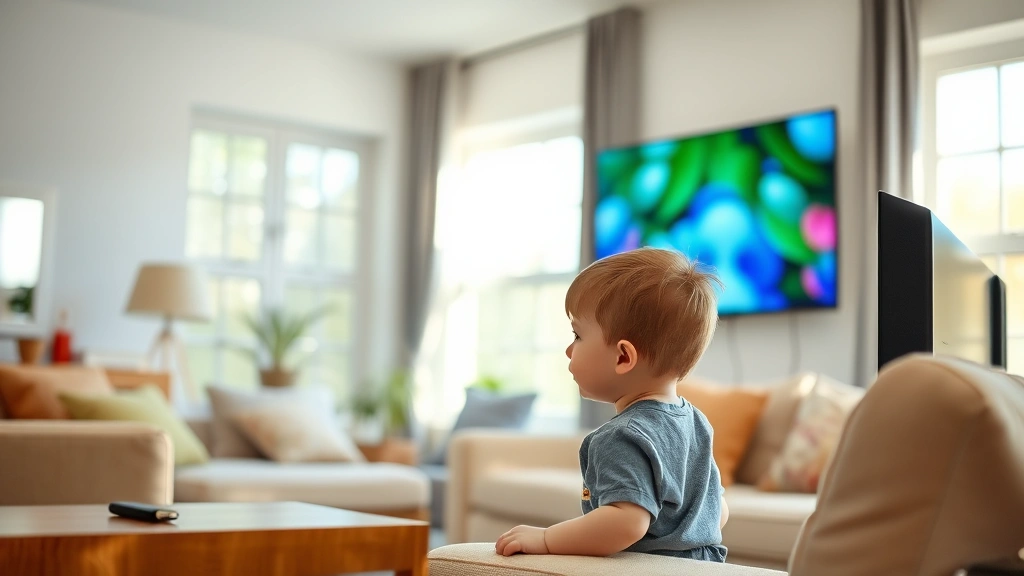
Blue’s Clues: Eco Lessons for Kids and Expert Insights on Environmental Education
For over two decades, Blue’s Clues has captivated young audiences while subtly embedding environmental awareness into its narrative fabric. The show’s deliberate use of diverse environmental settings serves as a pedagogical framework that introduces children to ecological concepts without didacticism. Each episode’s environment—whether a suburban home, a garden, or a fantastical landscape—functions as a character itself, teaching children about spatial relationships, resource management, and human-environment dynamics.
Beyond entertainment, Blue’s Clues represents a sophisticated approach to environmental education grounded in constructivist learning theory. The show’s problem-solving methodology mirrors ecological inquiry, encouraging viewers to observe, hypothesize, and draw conclusions about the natural and built worlds around them. Environmental economists and education researchers increasingly recognize that early exposure to human-environment interaction through media significantly influences lifelong environmental behavior and decision-making patterns.
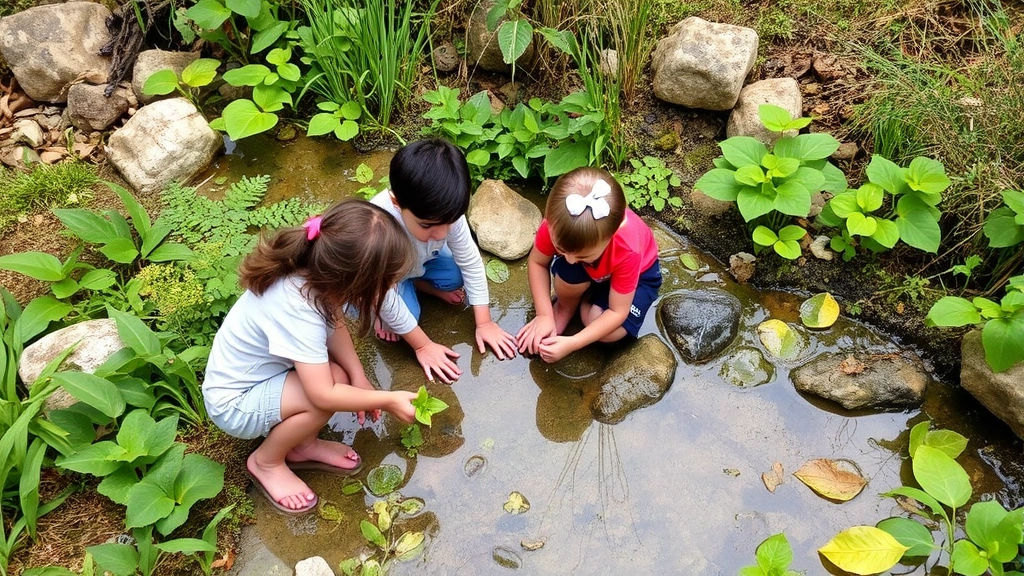
Environmental Pedagogy in Blue’s Clues: A Framework for Understanding Ecosystems
Blue’s Clues employs what educational theorists call “environmental scaffolding”—structuring learning experiences so that children gradually build understanding of complex ecological systems. The show’s primary protagonist, Blue, exists within specific environments that are neither overly simplified nor unnecessarily complex. This balance aligns with human-environment interaction principles that emphasize how organisms adapt to and modify their surroundings.
Each episode presents environmental challenges that require observation and logical reasoning. When Blue leaves paw prints leading to a specific location, children learn about evidence-based investigation—a cornerstone of environmental science. The show demonstrates that understanding one’s environment requires attention to detail: noticing which plants thrive in sunlight, recognizing animal behavior patterns, and understanding how different spaces serve different functions. This mirrors the scientific method that environmental economists employ when analyzing ecosystem services and natural resource valuation.
The show’s various settings serve distinct pedagogical purposes. The living room teaches about domestic resource use and family dynamics within shared spaces. The garden introduces biodiversity, seasonal changes, and plant lifecycles. Fantastical locations like the Blue’s Clues house itself becomes a character that demonstrates architectural adaptation to environmental needs. Research from the World Bank on environmental education indicates that children who engage with diverse environmental contexts develop more sophisticated understanding of human-environment relationships than those exposed to single-setting narratives.
The show’s commitment to environmental realism—even within whimsical contexts—establishes foundational ecological literacy. Characters don’t magically create resources; they find, share, and sometimes repurpose existing materials. This implicit lesson about resource scarcity resonates with environmental economics principles. Children internalize that resources have limits and that choices about consumption have consequences, even if the show never explicitly articulates these concepts.
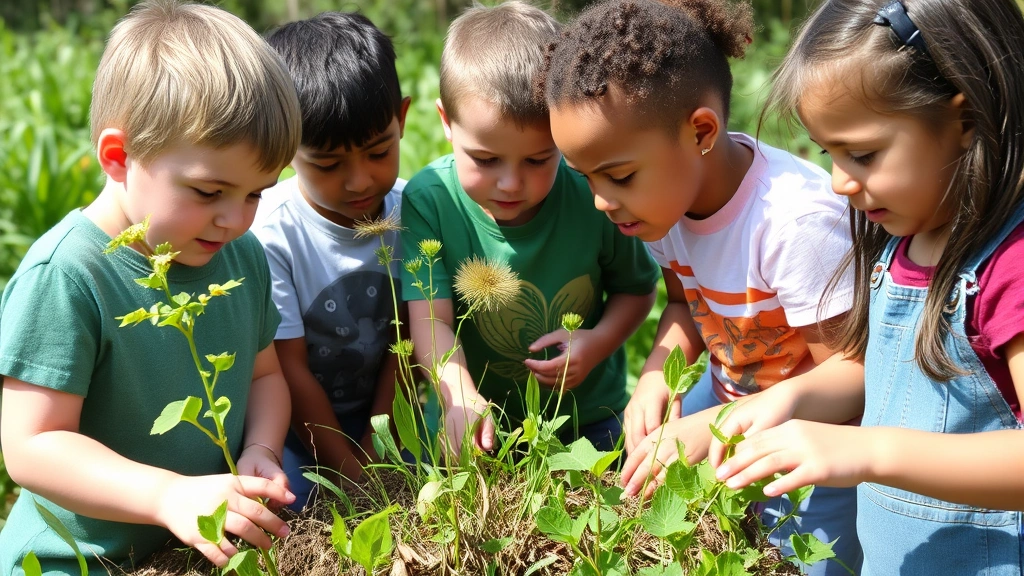
Spatial Learning and Ecological Awareness in Childhood Development
Cognitive development research demonstrates that spatial reasoning—the ability to mentally manipulate and understand three-dimensional space—directly correlates with later success in science, technology, engineering, and mathematics (STEM) fields. Blue’s Clues systematically develops this capacity through its environmental exploration mechanics. Each clue hunt requires children to mentally map spaces, anticipate where Blue might travel, and understand how different areas interconnect.
This spatial learning has profound implications for environmental awareness. Children who develop sophisticated mental maps of their environments become more observant about ecological patterns. They notice how sunlight affects different areas throughout the day, how water flows through landscapes, and how organisms utilize space for survival. These observations form the foundation for understanding how humans affect the environment through land use decisions, infrastructure development, and resource extraction.
Environmental psychologists have documented that children who explore diverse environments develop stronger environmental stewardship values. Blue’s Clues exposes viewers to varied ecosystems and built environments, creating what researchers call “place attachment”—emotional connections to specific locations that motivate protective behaviors. When children feel affection for Blue’s world, they’re more likely to care about similar real-world spaces.
The show’s visual design emphasizes environmental features that children might overlook in everyday life. A simple houseplant becomes a character worthy of attention. A backyard becomes an adventure landscape. This reframing—what environmental educators call “wonder cultivation”—teaches children to recognize intrinsic value in natural and semi-natural spaces. Research from ecological economics demonstrates that individuals who develop this perceptual sensitivity in childhood maintain higher environmental concern throughout their lives.
Resource Management and Economic Principles in the Show’s Narrative
While Blue’s Clues never explicitly discusses economics, the show consistently demonstrates resource management principles that align with environmental economics frameworks. Characters face situations where they must allocate limited resources, choose between competing uses, and consider the impacts of their consumption decisions. These narratives teach young viewers about scarcity—the fundamental economic concept underlying all resource allocation.
Consider episodes where characters plan activities requiring specific materials. They must gather supplies, organize them efficiently, and ensure equitable distribution among participants. These scenarios mirror real-world environmental challenges: how do communities manage limited freshwater? How should agricultural land be allocated between food production and conservation? How can energy resources be distributed to meet human needs while minimizing ecological damage?
The show’s characters demonstrate what economists call “sustainable consumption patterns.” They reuse materials, share resources, and avoid wasteful practices—not because environmental doctrine demands it, but because it’s practical and socially valued. This normalization of sustainable behavior in childhood creates what behavioral economists term “preference formation,” where early exposure to certain practices shapes lifelong consumer behavior.
Environmental economists increasingly recognize that values formed during childhood significantly influence adult willingness to pay for environmental goods and support conservation policies. A child who watches characters value resource efficiency may grow into an adult more willing to support carbon pricing, sustainable agriculture subsidies, or protected area funding. The show’s implicit economic lessons may have profound real-world consequences for environmental policy support.
Additionally, Blue’s Clues demonstrates what environmental economists call “ecosystem services valuation” through narrative means. When characters benefit from a healthy garden or clean water source, the show illustrates that nature provides valuable services beyond commodified goods. Children learn that ecosystems have worth independent of market prices—a perspective essential for comprehensive environmental protection.
How Media Shapes Environmental Behavior and Values
Media ecology research demonstrates that children’s programming significantly influences environmental attitudes and behaviors. Studies tracking viewers of environmentally-conscious children’s shows reveal measurable increases in pro-environmental behaviors, conservation awareness, and ecological knowledge compared to control groups. Blue’s Clues, despite not being explicitly environmental programming, achieves similar outcomes through subtle narrative integration.
The show’s influence operates through several psychological mechanisms. First, parasocial relationships—the one-way bonds children form with media characters—create emotional investment in Blue’s wellbeing. When children care about Blue, they extend that care to Blue’s environment. They want Blue’s world to remain safe and healthy, which translates into concern for similar real-world spaces.
Second, the show demonstrates that problem-solving and environmental stewardship are achievable and worthwhile. Characters successfully navigate environmental challenges through observation, collaboration, and creative thinking. This sense of agency—the belief that one’s actions matter—proves crucial for motivating environmental behavior. Children who feel helpless about environmental problems are less likely to engage in conservation efforts, while those who experience successful problem-solving become more environmentally active.
Third, Blue’s Clues normalizes environmental concern as part of everyday life rather than presenting it as a specialized interest. The characters don’t treat environmental issues as extraordinary or overwhelming; they simply live thoughtfully within their environments. This normalization reduces the psychological resistance that can accompany explicit environmental messaging, making conservation seem like natural behavior rather than sacrifice.
Research from UNEP (United Nations Environment Programme) indicates that media representations of environmental issues significantly influence public support for environmental policies. Shows that present environmental challenges as solvable through cooperation and creative thinking generate more policy support than those emphasizing doom and hopelessness. Blue’s Clues‘s optimistic, solution-oriented approach aligns with this research.
Integrating Blue’s Clues Lessons into Environmental Education Curricula
Educators increasingly recognize that Blue’s Clues episodes provide rich material for formal environmental education. Teachers use the show to introduce concepts like environment science definitions, ecosystem dynamics, and human-environment relationships. The show’s problem-solving structure mirrors inquiry-based learning approaches that research shows enhance environmental literacy.
One effective pedagogical strategy involves using Blue’s Clues episodes as launching points for deeper environmental investigation. After watching an episode, teachers can ask students to identify the environmental features depicted, analyze how characters interact with their surroundings, and consider how similar environments function in the real world. This bridges media literacy with environmental science education.
Another approach involves having students design their own “clue hunts” within real or imagined environments. Students must consider what environmental features would logically exist in their chosen setting, how those features would interact, and what clues might naturally occur within that ecosystem. This creative exercise develops sophisticated environmental thinking while maintaining the engaging gameplay mechanics that make Blue’s Clues successful.
Environmental educators also use the show to discuss practical environmental protection strategies. How do the characters in Blue’s world protect their environment? What conservation practices do they demonstrate? How could their approaches apply to students’ own communities? These discussions connect media content to actionable environmental behaviors.
The show’s emphasis on observation and evidence-based reasoning provides an excellent foundation for teaching environmental science methodology. Students can learn to notice environmental details the way Blue does, develop hypotheses about ecological relationships, and test those hypotheses through observation and experimentation. This mirrors how environmental scientists actually conduct research.
Expert Perspectives on Early Environmental Literacy
Environmental education researchers consistently emphasize that early childhood represents a critical period for developing environmental values and ecological literacy. Experts point out that children who develop positive environmental attitudes and knowledge before age twelve are significantly more likely to maintain environmental concern throughout their lives. Media like Blue’s Clues plays a crucial role in this foundational period.
Dr. Robin C. Moore and other environmental psychology researchers have documented what they call “biophilia”—an innate human tendency to connect with nature. However, this tendency requires nurturing through exposure and positive experiences. Blue’s Clues provides these positive experiences vicariously, helping children develop comfort with and appreciation for environmental observation and exploration.
Environmental economists studying the economic value of environmental education note that early environmental literacy generates substantial returns on investment. Children who develop environmental awareness and concern are more likely to support environmental policies, make sustainable consumption choices, and pursue environmental careers. The economic benefits of environmental stewardship—through avoided pollution costs, sustainable resource management, and ecosystem preservation—far exceed educational investments.
Experts from institutions like the Resources for the Future emphasize that environmental education must occur across multiple contexts and through various media. Blue’s Clues represents one important component of a comprehensive environmental education ecosystem that includes formal schooling, family experiences, and community engagement.
Child development specialists note that Blue’s Clues‘s interactive format—encouraging children to solve problems alongside Blue—creates what cognitive scientists call “active learning.” Rather than passively receiving environmental information, children engage in environmental reasoning. This active engagement produces deeper learning and stronger memory retention compared to passive observation.
Furthermore, experts recognize that Blue’s Clues succeeds in making environmental learning accessible to diverse learners. The show accommodates different learning styles, language backgrounds, and developmental levels. This universality proves crucial for environmental education, which must reach all children to achieve significant societal environmental behavior change.
Research from the American Psychological Association on media and environmental behavior demonstrates that entertainment media can produce measurable environmental attitude and behavior changes. Blue’s Clues‘s integration of environmental themes into compelling narratives exemplifies this potential.
FAQ
How does Blue’s Clues teach environmental concepts to young children?
Blue’s Clues teaches environmental concepts through spatial exploration, observation-based problem-solving, and narrative integration of resource management principles. Rather than explicit instruction, the show demonstrates environmental thinking through character modeling and requires children to engage in environmental reasoning as they solve mysteries. This indirect approach proves more effective for young learners than didactic environmental lessons.
What environmental economics principles appear in Blue’s Clues episodes?
The show demonstrates resource scarcity, allocation decisions, sustainable consumption, ecosystem services valuation, and cooperative resource management. Characters face practical constraints, must make choices about resource use, and benefit from healthy environments. These narratives illustrate fundamental economic concepts while remaining age-appropriate and engaging.
Can teachers use Blue’s Clues in formal environmental education?
Yes, educators extensively use Blue’s Clues episodes as launching points for environmental science lessons. Teachers can analyze environmental features in episodes, design clue hunts in real environments, discuss environmental protection strategies demonstrated by characters, and use the show’s problem-solving structure to teach scientific inquiry methods. The show’s content aligns well with environmental education standards.
How does early childhood environmental media exposure affect later environmental behavior?
Research demonstrates that children exposed to environmental content in media like Blue’s Clues develop stronger environmental values, greater ecological literacy, and higher likelihood of engaging in pro-environmental behaviors as adults. Early environmental attitude formation proves remarkably persistent, with childhood environmental concern predicting adult environmental activism and policy support.
What makes Blue’s Clues effective for environmental education compared to explicitly environmental programming?
Blue’s Clues succeeds partly because it integrates environmental themes into compelling entertainment rather than presenting environmental content as separate from regular life. This normalization makes environmental concern seem natural and achievable. Additionally, the show’s focus on problem-solving and observation develops environmental thinking skills rather than simply conveying environmental facts.
How do the different environments in Blue’s Clues teach ecological concepts?
Each setting—home, garden, fantasy locations—demonstrates different ecological principles and human-environment relationships. The home teaches about domestic resource use and family systems. The garden introduces biodiversity and seasonal cycles. Varied locations develop children’s understanding that diverse environments exist with different characteristics and inhabitants. This spatial and ecological diversity builds sophisticated environmental understanding.


