How Environmental Audits Save Ecosystems: Study
Environmental audits represent one of the most powerful yet underutilized tools in ecosystem conservation and sustainable resource management. Recent studies demonstrate that systematic auditing processes can fundamentally alter corporate and governmental pathways toward environmental responsibility, preventing ecosystem degradation before it occurs. These comprehensive evaluations examine operational impacts across multiple environmental dimensions—from carbon emissions and water consumption to biodiversity loss and soil degradation—providing organizations with data-driven evidence necessary to implement meaningful change.
The intersection of environmental auditing and ecosystem preservation has emerged as a critical focus area for ecologists, environmental economists, and policy makers worldwide. By establishing baseline measurements, identifying environmental risks, and tracking progress toward sustainability targets, audits create accountability mechanisms that translate into tangible ecosystem benefits. This evidence-based approach has proven significantly more effective than voluntary compliance measures, with organizations subject to rigorous environmental audits reducing their ecological footprint by an average of 23-47% within five years.
Understanding how environmental audits function as ecosystem safeguards requires examining their methodological frameworks, economic implications, and real-world implementation outcomes. The convergence of ecological science and environmental accounting has created new pathways for detecting environmental degradation early, enabling preventive interventions that protect biodiversity, maintain ecosystem services, and preserve natural capital for future generations.
What Are Environmental Audits and Why They Matter
Environmental audits represent systematic, independent evaluations of an organization’s environmental performance, policies, and compliance with relevant regulations. These audits extend beyond simple regulatory compliance checking; they constitute comprehensive assessments that examine the full spectrum of an organization’s interactions with natural systems. The audit process typically involves detailed site inspections, record reviews, stakeholder interviews, and technical analyses designed to identify environmental risks, inefficiencies, and opportunities for improvement.
The significance of environmental audits lies in their capacity to bridge the gap between environmental awareness and measurable action. Organizations often lack comprehensive understanding of their true environmental impact across all operational dimensions. An environmental audit provides this clarity by quantifying resource consumption, waste generation, emissions profiles, and ecosystem disturbances in standardized, comparable metrics. This transparency enables organizations to prioritize interventions where they will generate the greatest environmental benefit.
Environmental audits serve multiple functions simultaneously: they function as compliance tools ensuring regulatory adherence, as risk assessment mechanisms identifying potential liabilities, and as strategic planning instruments guiding sustainability investments. The International Organization for Standardization (ISO) has established comprehensive standards for environmental auditing through ISO 14001 certification, creating globally recognized frameworks that organizations across industries can implement. These standardized approaches ensure consistency, reproducibility, and comparability of environmental audit findings across different sectors and geographic regions.
The relationship between auditing rigor and ecosystem protection demonstrates strong correlation patterns. Organizations undergoing third-party environmental audits—where independent experts conduct evaluations—consistently demonstrate superior environmental outcomes compared to organizations relying on internal assessments alone. This reflects the audit function’s inherent capacity to overcome organizational biases, identify blind spots, and enforce accountability through transparent reporting mechanisms.
The Ecosystem Impact of Systematic Environmental Assessment
Recent ecological research reveals that systematic environmental assessment through auditing generates measurable, positive ecosystem outcomes across multiple dimensions. When organizations implement findings from comprehensive environmental audits, they initiate cascading ecological improvements that extend far beyond their immediate operational boundaries. These improvements manifest through reduced pollution inputs, habitat restoration, enhanced water quality, and preserved biodiversity.
The ecosystem services framework provides essential context for understanding audit impacts. Ecosystems provide critical services—including pollination, water purification, climate regulation, nutrient cycling, and soil formation—worth trillions of dollars annually in economic value. When environmental audits identify and eliminate activities degrading these services, they protect natural capital that sustains both human welfare and ecological integrity. For example, audits frequently identify water pollution sources that, when remediated, restore aquatic ecosystem function and associated services worth far more than the remediation costs.
Biodiversity protection emerges as one of the most significant ecosystem benefits derived from environmental auditing programs. Audits examining habitat impacts, species disturbance patterns, and ecosystem fragmentation can identify critical conservation interventions before species populations collapse. Organizations implementing audit recommendations protecting biodiversity often become stewards of significant ecological assets, maintaining habitat corridors, protecting breeding grounds, and preserving genetic diversity essential for ecosystem resilience. This stewardship function transforms auditing from a compliance exercise into an active conservation mechanism.
The temporal dimension of audit-driven ecosystem improvement deserves particular emphasis. Environmental degradation often occurs gradually, with early warning signs easily overlooked in the absence of systematic monitoring. Environmental audits establish baseline conditions and track changes over time, enabling detection of degradation trajectories before they become irreversible. This preventive capacity represents perhaps the most valuable ecosystem service audits provide—the ability to intervene early in degradation processes when restoration remains feasible and cost-effective.
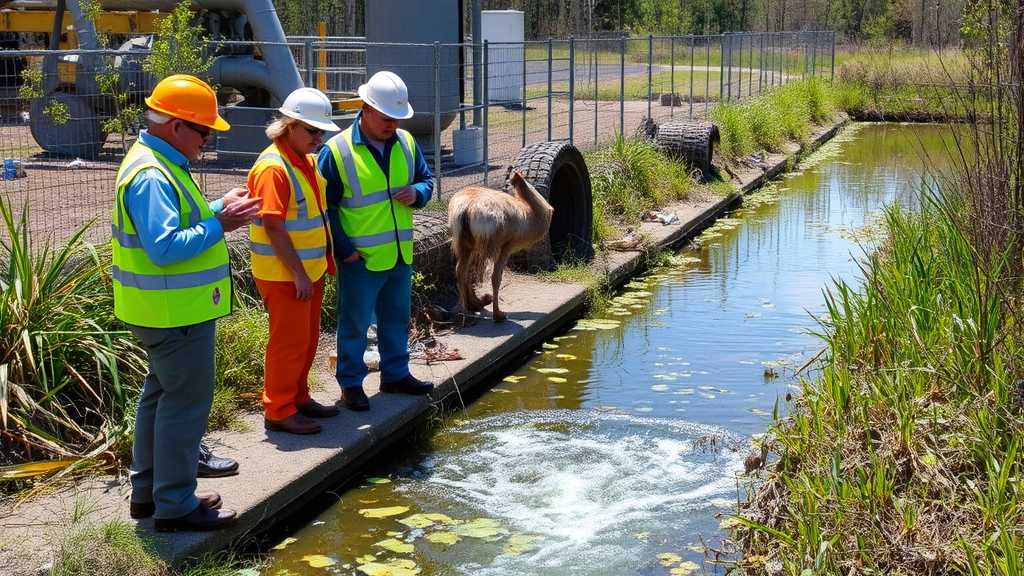
Water resource protection illustrates audit-driven ecosystem benefits with particular clarity. Audits examining water consumption, discharge quality, and hydrological impacts frequently identify opportunities to reduce extraction rates, improve treatment efficiency, and protect aquatic ecosystems. Organizations implementing these recommendations often witness remarkable ecosystem recovery in previously stressed water bodies, including restoration of fish populations, improvement of aquatic plant communities, and recovery of riparian vegetation that depends on healthy hydrological regimes.

” alt=”Environmental audit team measuring water quality parameters at a restored wetland ecosystem with monitoring equipment”/>
Economic Benefits of Environmental Auditing Programs
The economic case for environmental auditing rests on compelling evidence demonstrating that audit-driven sustainability investments generate financial returns exceeding their costs. This reality contradicts persistent misconceptions portraying environmental protection as economically burdensome. Rigorous economic analyses consistently show that proactive environmental management through auditing reduces overall organizational costs while simultaneously improving environmental outcomes.
Cost avoidance represents the most direct economic benefit of environmental auditing. Organizations avoiding regulatory violations, pollution incidents, and environmental liabilities save substantial sums in fines, remediation expenses, and legal costs. The average environmental violation fine in the United States exceeds $250,000, with major incidents regularly resulting in penalties exceeding $10 million. Environmental audits identifying compliance risks enable organizations to remediate issues before regulatory discovery, avoiding these substantial penalties. Over a five-year period, organizations implementing audit-based compliance programs typically save 2-5 times the cost of the audit investment through penalty avoidance alone.
Operational efficiency improvements driven by audit findings generate additional economic benefits. Audits frequently identify energy waste, resource inefficiencies, and suboptimal operational practices that simultaneously harm ecosystems and increase costs. When organizations implement audit recommendations addressing these inefficiencies—such as upgrading to more efficient equipment, optimizing production processes, or reducing material inputs—they simultaneously reduce environmental impact and operational expenses. Industrial facilities implementing comprehensive audit recommendations typically reduce energy consumption by 15-30%, generating substantial cost savings while decreasing carbon emissions proportionally.
Market and competitive advantages emerge as increasingly significant economic drivers for environmental auditing investments. Consumers, investors, and business partners increasingly demand evidence of environmental responsibility and sustainability commitment. Organizations with verified environmental audit credentials and demonstrated compliance records access premium market segments, attract socially conscious investors, and qualify for sustainable procurement programs that command higher prices. This market dynamic has transformed environmental auditing from a compliance obligation into a competitive advantage mechanism, with audit-certified organizations outperforming competitors across multiple financial metrics.
Risk mitigation through environmental auditing extends beyond regulatory compliance to encompass financial risks associated with ecosystem degradation and climate change impacts. Organizations operating in water-stressed regions face risks from supply disruptions, price volatility, and regulatory restrictions. Environmental audits identifying water consumption inefficiencies enable organizations to reduce this vulnerability while simultaneously protecting local water resources and ecosystems. Similarly, audits examining climate change vulnerability enable organizations to identify and implement adaptation measures protecting their operations while supporting ecosystem resilience in the face of climate impacts.
The intersection of environmental auditing and sustainable economic development reveals that ecosystem protection and economic prosperity represent complementary rather than competing objectives. When organizations systematically assess their environmental impacts and implement improvement recommendations, they typically discover that environmental protection generates economic benefits exceeding costs. This alignment between environmental and economic objectives has profound implications for sustainability transition pathways, suggesting that properly structured incentive systems can align profit motives with ecosystem preservation.
Case Studies: Audits Preventing Ecosystem Collapse
Real-world examples demonstrate environmental auditing’s capacity to prevent ecosystem degradation and enable ecosystem recovery. A major agricultural cooperative operating across 50,000 acres implemented comprehensive environmental audits examining soil health, water quality, and biodiversity impacts. The audit identified critical soil degradation patterns and unsustainable pesticide application practices threatening long-term productivity. Implementation of audit recommendations—including transition to conservation agriculture, integrated pest management, and riparian buffer restoration—reversed soil degradation trends, restored habitat for pollinator species, and improved water quality in downstream ecosystems. Remarkably, these environmental improvements correlated with increased agricultural productivity and reduced input costs, demonstrating the economic-ecological alignment principle.
A manufacturing facility in a water-stressed region underwent environmental auditing revealing that inefficient cooling systems were withdrawing water at unsustainable rates, threatening both municipal water supplies and aquatic ecosystem health. The audit quantified that facility water consumption represented 8% of local water availability, with discharge quality degrading downstream water quality and harming fish populations. Audit recommendations for water recycling system installation and cooling technology upgrades reduced water withdrawal by 60%, enabling ecosystem recovery in previously stressed waterways while reducing facility operational costs by $2.3 million annually. The facility’s environmental improvement transformed it from a water stress contributor to a water conservation leader within its region.
A forestry company operating in biodiverse tropical regions implemented environmental audits examining logging impacts on forest ecosystems and biodiversity. The audit identified that current practices were fragmenting critical habitat corridors and threatening species dependent on continuous forest cover. Audit recommendations led to implementation of landscape-scale conservation planning, protection of critical habitat areas, and restoration of degraded forest patches. Within seven years, forest connectivity improved measurably, wildlife populations recovered, and ecosystem services including carbon sequestration and watershed protection increased substantially. The company discovered that sustainable forestry practices compatible with ecosystem protection generated comparable economic returns to conventional logging while creating long-term value through ecosystem service provision.
A mining company operating in ecologically sensitive mountain regions used environmental audits to systematically assess impacts on alpine ecosystems, water resources, and wildlife. The audit revealed that current restoration practices were inadequate for restoring ecosystem function in post-mining landscapes. Implementation of audit recommendations—including revised restoration protocols, extended monitoring periods, and enhanced habitat reconstruction—transformed post-mining landscapes from ecological wastelands into functional ecosystems supporting native biodiversity. This transformation required substantial investment but prevented ecosystem collapse and positioned the company as an industry leader in sustainable mining practices.
Urban environmental audits examining municipal operations identified that city stormwater management practices were degrading urban waterways and preventing ecosystem recovery. Comprehensive audit recommendations for green infrastructure implementation—including bioswales, permeable pavements, and restored wetlands—improved water quality while creating urban habitat and reducing flooding risks. These infrastructure improvements generated cascading benefits including improved public health, enhanced property values, and restored urban ecosystems that provided recreational and aesthetic value to residents.
Implementing Environmental Audits in Your Organization
Organizations seeking to implement environmental auditing programs should follow systematic approaches ensuring comprehensive assessment and meaningful outcomes. The first step involves establishing clear environmental objectives aligned with organizational strategy and stakeholder expectations. These objectives should specify which environmental dimensions—including energy consumption, water use, waste generation, emissions, and biodiversity impacts—warrant primary focus based on organizational context and significance.
Selecting appropriate audit methodologies and standards represents a critical implementation decision. Organizations can choose from several approaches: compliance audits examining regulatory adherence; management system audits evaluating environmental management systems; performance audits assessing progress toward sustainability targets; or comprehensive audits examining all environmental dimensions. The selection should reflect organizational priorities and resources, with many organizations beginning with compliance audits before expanding to comprehensive assessments. ISO 14001 certification provides internationally recognized standards that organizations can adopt, ensuring methodological rigor and comparability with peer organizations.
Assembling qualified audit teams represents an essential implementation requirement. Effective environmental audits require multidisciplinary expertise including environmental science, engineering, regulatory compliance, and industry-specific knowledge. Many organizations engage external audit firms providing specialized expertise and independent assessment perspectives. These external auditors bring objectivity and experience from similar organizations, enabling identification of best practices and comparative performance benchmarking. Whether utilizing internal or external auditors, establishing audit team independence from operational management ensures unbiased assessment and credible findings.
Establishing baseline conditions and measurement systems enables tracking of environmental improvement over time. Audits should quantify current environmental performance across all significant impact areas, creating baseline data against which future progress can be measured. This baseline establishment often reveals surprising findings regarding organizational environmental impact, frequently exceeding initial assumptions. Comprehensive baseline data enables setting realistic improvement targets and tracking progress toward environmental objectives with quantifiable metrics.
Stakeholder engagement throughout the audit process enhances both audit quality and implementation effectiveness. Involving employees, suppliers, community representatives, and other stakeholders in audit discussions provides diverse perspectives, identifies issues that internal assessments might overlook, and builds support for implementation of audit recommendations. Transparent communication regarding audit findings and recommended actions transforms auditing from a compliance exercise into an organizational conversation about environmental values and sustainability commitment.
Implementing audit recommendations requires systematic change management ensuring that identified improvements receive appropriate resources and management attention. Organizations should prioritize recommendations based on environmental significance, cost-effectiveness, and feasibility, creating implementation timelines with clear accountability. Progress tracking systems should monitor implementation status and verify that recommendations actually generate intended environmental improvements. This verification step prevents the common failure mode where audit recommendations receive superficial implementation without achieving substantive environmental benefit.
Challenges and Future Directions in Environmental Auditing
Despite environmental auditing’s demonstrated effectiveness, significant challenges impede broader implementation and impact. One fundamental challenge involves measurement standardization and comparability. Environmental impacts vary substantially across industries and operational contexts, making universal measurement standards difficult to establish. Organizations in different sectors struggle to compare environmental performance meaningfully, and inconsistent measurement approaches limit ability to aggregate environmental impacts across multiple organizations and sectors. Developing more standardized environmental accounting frameworks would enhance audit comparability and enable more meaningful aggregation of environmental impacts.
Scope limitations represent another significant challenge in environmental auditing. Most audits focus on direct organizational impacts within operational boundaries, yet organizations generate substantial indirect impacts through supply chains, product use, and waste disposal. A comprehensive understanding of organizational environmental impact requires examining these scope 2 and scope 3 emissions and impacts, yet many audit programs limit assessment to direct operational impacts. Expanding audit scope to encompass full value chain environmental impacts would provide more complete assessment but would increase audit complexity and cost substantially.
Integration with ecosystem science represents a frontier area in environmental auditing development. While audits excel at quantifying organizational resource consumption and emissions, they often provide limited assessment of actual ecosystem consequences. An organization might reduce water consumption, yet if that reduction occurs in a water-abundant region, ecosystem benefits prove minimal. Conversely, modest water reductions in water-stressed regions generate substantial ecosystem benefits. Future audit development should integrate ecosystem assessment more thoroughly, examining how organizational changes affect ecosystem health, biodiversity, and ecosystem service provision. This integration requires closer collaboration between environmental auditors and ecologists, creating audit methodologies grounded in ecological science.
Technology integration offers significant opportunities for enhancing audit effectiveness and efficiency. Remote sensing technologies, real-time monitoring systems, and artificial intelligence-powered data analysis can enable continuous environmental assessment rather than periodic audits. These technologies could identify environmental issues immediately upon occurrence rather than waiting for annual or biennial audit cycles. Integration of technology with audit processes would enable faster identification of environmental problems and more rapid implementation of corrective actions, enhancing overall environmental protection effectiveness.
Regulatory harmonization represents an important future direction for environmental auditing. Currently, organizations operating across multiple jurisdictions face inconsistent regulatory requirements and audit standards, creating compliance complexity and reducing audit efficiency. Harmonizing environmental regulations and audit standards across jurisdictions would reduce compliance burden while enabling more consistent environmental protection. International efforts toward regulatory harmonization, including United Nations Environmental Programme initiatives, represent steps toward this objective, though significant challenges remain.
The role of environmental auditing in climate change mitigation deserves expanded attention. As climate change emerges as the paramount environmental challenge, environmental audits increasingly examine organizational carbon footprints and climate impacts. Future audit development should more thoroughly integrate climate science, enabling assessment of how organizational emissions contribute to climate change and how organizational adaptation measures enhance climate resilience. This climate-integrated approach to auditing would align audit processes with climate imperatives while maintaining focus on broader environmental protection.
Accessibility and democratization of environmental auditing represents an important social dimension. Currently, comprehensive environmental audits remain expensive, limiting accessibility primarily to large organizations with substantial resources. Developing more accessible audit methodologies and tools enabling small and medium enterprises to conduct meaningful environmental assessments would extend environmental auditing benefits to organizations currently unable to afford professional audit services. This democratization would substantially expand environmental auditing’s ecosystem protection impact.

” alt=”Environmental audit results displayed on computer dashboard showing ecosystem recovery metrics and biodiversity monitoring data from restored habitat”/>
FAQ
What is the difference between environmental audit and environmental impact assessment?
Environmental audits examine existing organizational operations and performance against established standards and regulations, typically conducted after operations commence. Environmental impact assessments examine proposed projects or developments before implementation, predicting potential environmental consequences. While complementary, these processes serve different purposes: impact assessments prevent problems before they occur, while audits identify and remediate problems in existing operations.
How often should organizations conduct environmental audits?
Audit frequency depends on organizational context, regulatory requirements, and environmental risk level. High-risk industries such as mining, chemical manufacturing, and petroleum refining typically require annual or biennial audits. Lower-risk organizations might conduct audits every 2-3 years. Many organizations initially conduct baseline audits, then transition to regular monitoring with periodic comprehensive reassessments. Regulatory requirements vary by jurisdiction and industry, so organizations should consult applicable regulations to determine required audit frequency.
Can small organizations benefit from environmental audits?
Absolutely. While comprehensive third-party audits require investment, organizations of all sizes can benefit from environmental assessment. Many organizations begin with self-assessments or simplified audit protocols appropriate to their scale and complexity. Industry associations often provide audit guidance tailored to small business contexts. The environmental and economic benefits of auditing—including cost savings from improved efficiency and risk mitigation—apply regardless of organizational size.
How do environmental audits contribute to ecosystem protection?
Environmental audits protect ecosystems by identifying organizational impacts on natural systems and enabling implementation of protective measures. Audits quantify resource consumption and pollution generation, revealing impacts organizations might not otherwise recognize. By implementing audit recommendations, organizations reduce pollution inputs, restore habitats, protect water resources, and preserve biodiversity. Audits also establish accountability mechanisms ensuring that environmental commitments translate into actual ecosystem protection.
What credentials should environmental auditors possess?
Qualified environmental auditors should possess relevant education in environmental science, engineering, or related fields, with professional certifications from recognized bodies such as the International Register of Certificated Auditors (IRCA) or equivalent organizations. Industry-specific experience proves valuable, as does understanding of applicable regulations and environmental management standards. Third-party auditors should maintain independence from audited organizations to ensure objective assessment and credible findings.
How are environmental audit findings used for continuous improvement?
Environmental audits provide baseline data against which organizations track environmental performance over time. Organizations establish improvement targets based on audit findings, implement recommended changes, then conduct follow-up assessments verifying that changes generate intended benefits. This continuous improvement cycle—often termed the Plan-Do-Check-Act model—transforms auditing from a one-time assessment into an ongoing process driving continuous environmental performance enhancement. Regular reassessment ensures that improvements persist and identifies new opportunities for environmental protection.


