Are Almonds Eco-Friendly? Study Insights on Environmental Impact
Almonds have become a staple in modern diets, celebrated for their nutritional benefits and versatility. However, beneath the surface of this seemingly innocent superfood lies a complex environmental story that challenges our assumptions about sustainable agriculture. Recent scientific studies reveal that almond production carries substantial ecological costs, particularly regarding water consumption, pesticide use, and habitat destruction. Understanding these impacts requires examining the intersection of agricultural economics, ecosystem health, and consumer behavior—areas where how humans affect the environment becomes strikingly evident.
The United States produces approximately 80% of the world’s commercial almonds, with California accounting for nearly all domestic production. This geographic concentration creates significant environmental vulnerability and intensified ecological pressures within a single region. The almond industry represents a critical case study in understanding the paradox of healthy foods with unhealthy environmental footprints—a phenomenon that demands rigorous analysis through the lens of ecological economics and sustainable agriculture policy.
This comprehensive examination explores the multifaceted environmental implications of almond cultivation, synthesizing recent research with economic data to provide evidence-based insights into whether almonds can truly be considered eco-friendly.

Water Consumption and Drought Impact
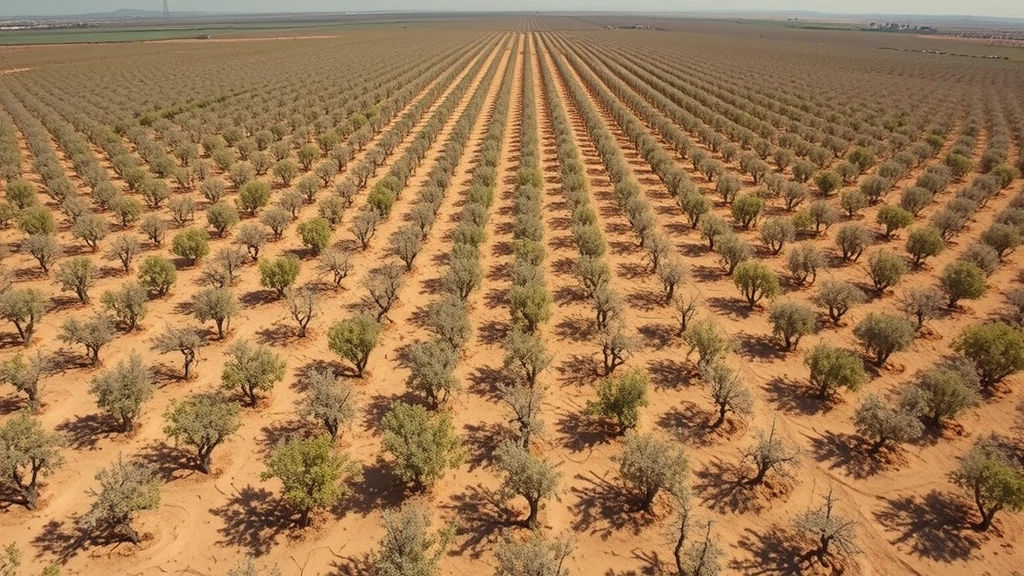
The water footprint of almond production stands as perhaps the most compelling environmental concern. Producing a single kilogram of almonds requires approximately 15,000 liters of water—a staggering figure when contextualized against California’s recurring drought cycles. The state’s Central Valley, where 99% of U.S. almonds grow, faces chronic water stress, yet almond orchards consume roughly 10% of the state’s total water supply annually.
Recent research published through the World Bank’s agricultural water management initiatives demonstrates that irrigated almond production in semi-arid regions creates unsustainable groundwater depletion patterns. The Tulare County region, epicenter of almond cultivation, has experienced dramatic aquifer depletion, with groundwater levels declining by over 100 feet in some areas since 2000. This represents not merely a local concern but a critical issue within broader discussions of human-environment interaction and resource management.
The economic pressure to maintain almond production during drought periods intensifies this environmental degradation. Farmers increasingly resort to pumping deeper groundwater reserves, essentially mining non-renewable resources. Economic analyses reveal that the short-term profitability of almond cultivation—commanding premium prices globally—directly conflicts with long-term water sustainability. This represents a fundamental failure of market mechanisms to account for ecological externalities, a core concern in ecological economics frameworks.
- Annual water consumption: 1.4 trillion gallons in California
- Groundwater depletion rate: 4.7 billion gallons annually (net deficit)
- Cost of alternative water infrastructure: $500+ million statewide
- Projected aquifer exhaustion timeline: 50-100 years at current rates
Pesticide Use and Chemical Pollution
Almond orchards represent intensive monoculture systems requiring substantial chemical interventions. California almond growers apply approximately 5,600 metric tons of pesticides annually, including insecticides, fungicides, and herbicides. This chemical intensity stems from the ecological vulnerability inherent in monoculture farming, where reduced biodiversity creates ideal conditions for pest proliferation.
The primary pest affecting almonds, the navel orangeworm, drives heavy pesticide application cycles. Research from the United Nations Environment Programme’s pesticide assessment reports documents that almond production uses disproportionately high quantities of certain chemicals relative to agricultural output. These pesticides contaminate groundwater, surface water, and soil systems, with documented impacts on non-target organisms and potential human health implications.
Specific pesticides employed in almond cultivation raise particular concerns. Neonicotinoid insecticides, while effective against targeted pests, persist in soil and water systems, accumulating in non-target insect populations. Studies demonstrate significant correlations between neonicotinoid application in agricultural regions and pollinator population declines—a critical concern given that almond production itself depends on honeybee pollination services. This creates an ecological paradox: the chemical inputs necessary to protect almond crops undermine the very ecosystem services required for reproduction.
The economic calculus underlying pesticide use reveals market failure dynamics. Individual farmers, responding to profit maximization incentives, apply chemicals at levels that generate negative externalities exceeding their private benefits. Water contamination costs, ecosystem service degradation, and potential health impacts remain unpriced in agricultural markets, creating systematic incentives for overuse.
Biodiversity Loss and Habitat Destruction
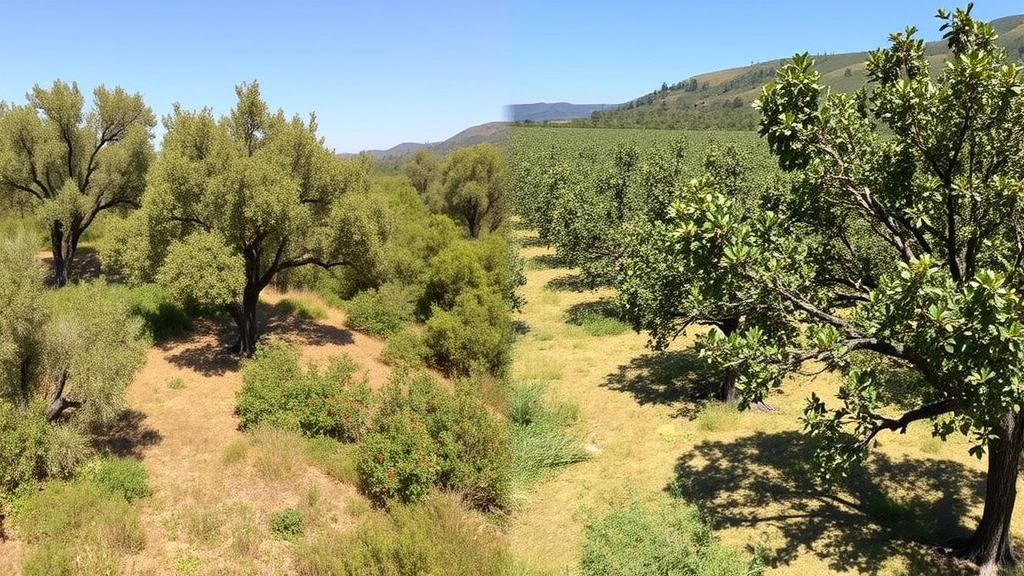
Almond cultivation in California’s Central Valley has fundamentally transformed landscape ecology. Historic native vegetation—including valley oak savanna, riparian forests, and grasslands—has been replaced by homogeneous almond monocultures across approximately 1.6 million acres. This represents one of North America’s most significant habitat conversions, with cascading biodiversity consequences.
The biodiversity impacts extend across multiple taxonomic groups. Native bird populations, particularly grassland specialists and migratory species, have experienced dramatic population declines correlated with almond expansion. The California quail, loggerhead shrike, and numerous songbird species have lost critical habitat. Mammalian populations, including kit foxes and San Joaquin Valley kangaroo rats, face habitat fragmentation and reduced population viability.
Pollinator diversity presents a particularly complex concern. While honeybees receive attention as managed pollinators essential for almond reproduction, wild pollinator populations—including native bees, beetles, and butterflies—have declined substantially. Pesticide exposure, habitat loss, and monoculture structure all contribute to wild pollinator suppression. Paradoxically, almond production requires pollination services that its own agricultural practices undermine.
The economic dimensions of biodiversity loss remain largely external to almond market pricing. Ecosystem services provided by native vegetation—pollination, pest control, water filtration, carbon sequestration—are not compensated when converted to almond production. This represents a fundamental economic distortion where land use changes that degrade ecosystem services appear profitable at individual farm scales while generating net economic losses at regional and global scales.
Carbon Footprint and Climate Considerations
Almond production’s climate impact encompasses multiple emission sources across the agricultural supply chain. Direct emissions from field operations, including diesel fuel combustion for irrigation pumps and mechanical harvesting, contribute substantially. Indirect emissions from fertilizer production, pesticide synthesis, and transportation add further climate costs.
Life cycle assessment studies estimate that producing one kilogram of almonds generates approximately 0.9-1.2 kilograms of carbon dioxide equivalent. While this carbon intensity remains lower than animal-based proteins, the magnitude of almond production—global consumption exceeds 3 million metric tons annually—creates significant aggregate climate impacts. Transportation from California to global markets adds additional emissions, particularly for air-freighted products.
The interaction between water stress and climate change creates compounding challenges. California’s almond-growing regions face projected precipitation declines and temperature increases under climate change scenarios. These climatic shifts will intensify irrigation demands precisely when water availability declines—a trajectory toward unsustainable production conditions. The economic costs of adaptation, including investment in more efficient irrigation infrastructure, will likely increase substantially.
Carbon sequestration potential represents a counterargument occasionally raised by industry advocates. Almond trees do sequester carbon during growth phases, and some analyses suggest mature orchards function as minor carbon sinks. However, this sequestration benefit proves insufficient to offset direct and indirect emissions from production systems, particularly when considering the opportunity costs of alternative land uses with potentially superior climate outcomes.
Economic Pressures and Agricultural Intensification
Understanding almond production’s environmental trajectory requires examining economic structures driving agricultural intensification. Global almond demand has increased exponentially, driven by rising consumption in Asia, changing dietary preferences favoring plant-based proteins, and expanding industrial applications. This demand growth creates powerful economic incentives for production expansion and yield intensification.
California farmers respond to these market signals through several intensification mechanisms. Expansion into marginal lands unsuitable for sustainable long-term cultivation occurs as prime agricultural land becomes saturated. Increased chemical inputs aim to maximize yields per acre, offsetting rising input costs through productivity gains. Groundwater mining substitutes for surface water when surface supplies become inadequate, deferring costs to future periods.
These economic dynamics reflect broader agricultural economics principles where market prices fail to internalize environmental costs. Water extraction costs, measured only in pumping expenses, ignore depletion of non-renewable aquifer resources. Pesticide costs exclude pollution externalities. Land conversion costs omit ecosystem service losses. This systematic underpricing of environmental inputs creates systematic overproduction relative to ecologically sustainable levels.
The economic concentration of almond production in California amplifies these dynamics. Limited geographic production means supply disruptions—whether from drought, disease, or policy changes—create price volatility. This volatility incentivizes farmers to maximize short-term production regardless of long-term sustainability implications, a classic tragedy-of-the-commons dynamic. Individual rational economic decisions aggregate into collectively irrational environmental outcomes.
Certification Systems and Greenwashing Concerns
Various certification systems attempt to differentiate sustainably-produced almonds from conventional production. Programs including Almond Board of California sustainability initiatives, organic certification, and third-party environmental certifications purport to identify eco-friendly products. However, critical analysis reveals significant limitations and potential greenwashing concerns.
Organic almond certification, while eliminating synthetic pesticides, fails to address water consumption—arguably the most critical environmental concern. Organic almonds still require intensive irrigation in California’s semi-arid environment, generating identical water stress impacts as conventional production. This represents a classic greenwashing dynamic where addressing one environmental dimension creates misleading impressions of overall sustainability.
Third-party certification programs vary substantially in rigor and comprehensiveness. Some focus narrowly on pesticide reduction, others on water efficiency metrics, while few address the full constellation of environmental concerns. The absence of comprehensive, binding sustainability standards allows producers to cherry-pick favorable metrics while ignoring problematic dimensions.
Economic incentives underlying certification systems merit scrutiny. Premium prices for certified almonds create producer incentives to achieve certification regardless of substantive environmental improvement. Certification bodies, operating within competitive markets, face pressure to minimize demands on producers to maintain market share. These dynamics can result in certifications that provide marketing benefits exceeding genuine environmental improvements.
Sustainable Alternatives and Solutions
Addressing almond production’s environmental challenges requires multifaceted approaches operating at production, consumption, and policy levels. Technological innovations offer partial solutions, though systemic changes prove necessary for genuine sustainability.
Production-level interventions include transitioning toward more efficient irrigation technologies. Drip irrigation systems, soil moisture monitoring, and precision irrigation scheduling can reduce water consumption by 20-40% relative to flood irrigation methods. However, even optimized conventional production remains water-intensive within California’s arid environment. Genetic development of drought-tolerant almond varieties represents longer-term potential, though breeding timelines extend across decades.
Integrated pest management (IPM) approaches reduce pesticide dependence through biological control, habitat modification, and targeted chemical application. Promoting beneficial insect populations through hedgerow establishment and reduced tillage creates natural pest suppression mechanisms. While IPM cannot eliminate pesticide use in commercial almond production, evidence suggests 30-50% reductions in chemical inputs remain achievable without yield penalties.
Biodiversity restoration within agricultural landscapes offers ecosystem service benefits. Establishing native vegetation corridors, riparian buffers, and wildlife habitat patches within and adjacent to almond orchards supports pollinator populations, pest predators, and broader ecosystem function. These landscape modifications generate external benefits exceeding private farm profitability, justifying policy support and economic incentives.
Consumption-level responses involve reducing almond demand, particularly in water-stressed regions. Dietary shifts emphasizing locally-adapted nuts and seeds—such as walnuts in regions with adequate precipitation—redistribute production to more suitable environments. Consumer awareness of almond production’s environmental costs can drive market demand shifts toward alternatives.
Policy interventions prove essential for addressing systematic market failures. Water pricing reforms that reflect true scarcity costs would reduce overconsumption and incentivize efficiency. Pesticide taxes internalizing pollution costs would reduce chemical intensity. Land use regulations restricting agricultural expansion into critical habitats would preserve biodiversity. These policy mechanisms align private incentives with ecological sustainability.
The positive human impact on the environment requires deliberate policy design and economic restructuring. Current almond production systems, while generating private profits and consumer benefits, impose substantial uncompensated costs on ecosystems and future generations. Transitioning toward sustainable production requires mechanisms that internalize these externalities within economic decision-making.
Research from ecological economics institutions emphasizes that genuine sustainability requires comprehensive accounting of environmental costs. The Natural Capital Project provides frameworks for quantifying ecosystem service values, enabling more accurate cost-benefit analyses of agricultural systems. Implementing such comprehensive accounting would likely reveal that current almond production levels exceed ecologically sustainable thresholds in California.
International cooperation proves necessary given global almond trade networks. Almond production expansion in other regions—including Australia, Mediterranean countries, and parts of Asia—risks replicating California’s environmental trajectory. Establishing international sustainability standards and sharing best practices could prevent ecosystem degradation in emerging production regions.
FAQ
Are almonds bad for the environment?
Almonds present significant environmental challenges in California, particularly regarding water consumption, pesticide use, and habitat destruction. While individual almonds are not inherently problematic, the scale and intensity of commercial production in water-stressed regions creates substantial ecological costs. Environmental impacts vary based on production methods, with sustainable practices reducing but not eliminating concerns.
How much water do almonds really need?
Producing one kilogram of almonds requires approximately 15,000 liters of water through the complete growth cycle. California almond orchards consume roughly 10% of the state’s total annual water supply, representing approximately 1.4 trillion gallons annually. This water intensity proves particularly problematic in semi-arid regions facing chronic drought stress and groundwater depletion.
What are better alternatives to almonds?
Regionally-adapted nuts and seeds offer sustainability advantages. Walnuts, which require less water and pesticides in their native growing regions, represent viable alternatives. Seeds including sunflower, pumpkin, and hemp provide nutritional profiles comparable to almonds with potentially lower environmental footprints. Legumes such as peanuts and chickpeas offer protein-rich alternatives suitable for specific regional climates.
Can almonds ever be truly sustainable?
Sustainable almond production in California’s current context appears unlikely at present production scales. However, reduced-scale production with intensive management practices—drip irrigation, integrated pest management, habitat restoration, and water-efficient processing—could approach sustainability. Alternatively, shifting almond production to regions with adequate precipitation and lower water stress could enable more sustainable cultivation.
Do organic almonds solve the environmental problem?
Organic certification eliminates synthetic pesticides but fails to address water consumption, the primary environmental concern. Organic almonds still require intensive irrigation in California, generating identical water stress impacts as conventional production. While organic methods may provide modest environmental benefits through reduced chemical pollution, they do not fundamentally address almond production’s sustainability challenges.
What role do consumers play in almond sustainability?
Consumer choices directly influence almond production volumes and practices. Reducing almond consumption, particularly in water-stressed regions, decreases environmental pressure. Purchasing almonds from producers employing sustainable practices provides market incentives for environmental improvement. Supporting policy initiatives promoting water conservation and ecosystem protection creates political space for regulatory reforms necessary for genuine sustainability.
How does almond production affect California’s water crisis?
Almond production significantly exacerbates California’s water challenges. The 1.4 trillion gallons consumed annually represents water unavailable for urban consumption, environmental flows, and other agricultural uses. Groundwater mining to sustain almond production depletes non-renewable aquifer resources, creating long-term sustainability concerns. Policy interventions addressing agricultural water consumption prove essential for resolving California’s water security challenges.
What economic incentives drive unsustainable almond production?
Global almond demand creates powerful economic incentives for production expansion and intensification. Market prices fail to internalize environmental costs, making unsustainable production economically rational at individual farm scales. Water underpricing, pesticide externalities, and ecosystem service losses remain uncompensated, systematically incentivizing overproduction relative to ecological sustainability thresholds. Policy reforms internalizing environmental costs prove necessary for aligning economic incentives with sustainability.
Understanding what is the built environment includes recognizing how agricultural systems reshape landscapes and ecosystems, with almonds exemplifying these transformation dynamics. For broader context on environmental impacts, explore EcORise Daily Blog for comprehensive sustainability analysis. Interested in solutions? Review 10 ways to protect the environment for actionable strategies addressing agricultural sustainability challenges.


