Combat’s Impact on Economy: A Military Analyst’s View
Armed conflict represents one of the most destructive forces on global economic systems, yet its mechanisms remain underexamined in mainstream economic discourse. When examining an advanced combat environment, we must consider not merely the direct costs of military operations, but the cascading economic disruptions that ripple through supply chains, labor markets, and institutional frameworks. This analysis bridges military strategy with ecological economics to reveal how warfare fundamentally destabilizes both human economies and natural systems that underpin long-term prosperity.
The relationship between combat and economic performance defies simple causality. While some economies historically mobilized military production to escape depression, sustained conflict invariably corrodes productive capacity, diverts human capital from innovation, and generates negative externalities that economists struggle to quantify. Understanding these dynamics requires examining infrastructure destruction, human capital flight, market uncertainty, and the opportunity costs of military spending—particularly when considering alternative investments in sustainable development and ecological restoration.
Direct Economic Costs of Combat Operations
The immediate financial expenditure of armed conflict constitutes only the visible portion of economic damage. A single advanced combat environment can consume billions in military hardware, ammunition, logistics, and personnel costs within months. According to World Bank analyses, direct military spending in conflict zones frequently exceeds 10-15% of government budgets, crowding out investments in education, healthcare, and infrastructure maintenance.
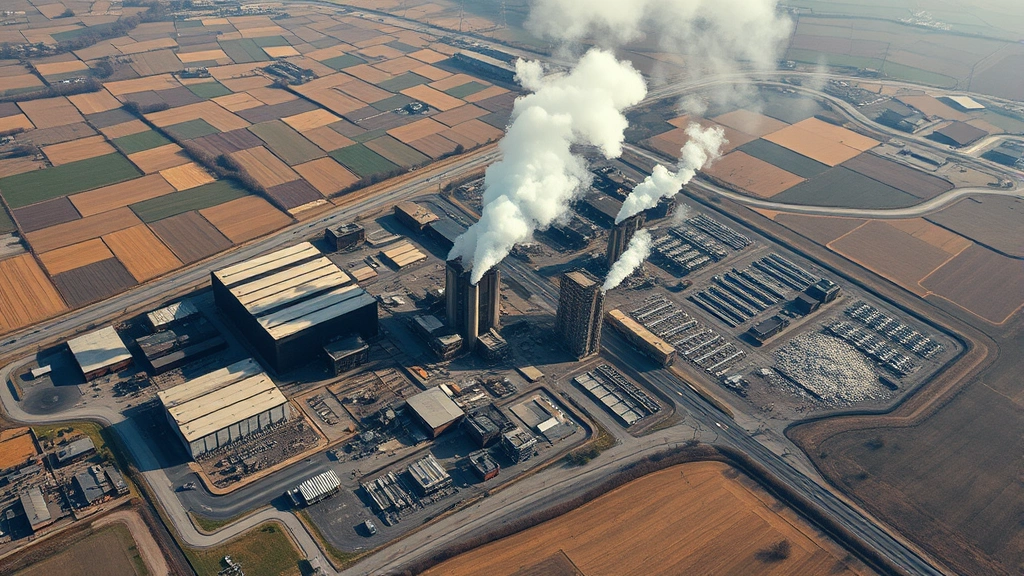
Consider the material destruction alone: precision-guided munitions targeting industrial facilities, transportation networks, and energy infrastructure create immediate loss of productive assets. A manufacturing facility destroyed requires not just replacement capital but also the institutional knowledge and supply relationships that made it functional. These assets typically cannot be instantly reconstructed, creating production gaps that competitors exploit. When examining environment and society intersections, we must account for how destroyed industrial capacity forces alternative production in unregulated regions, often externalizing environmental costs.
Personnel costs escalate dramatically during combat operations. Military personnel require higher compensation, hazard pay, and medical benefits. Recruitment intensifies as casualties mount, potentially creating labor shortages in civilian sectors. The United Nations estimates that conflict-affected regions experience wage increases of 20-40% in security-related employment, pulling talent from productive economic sectors and creating inflationary pressure on remaining civilian industries.

Supply Chain Disruption and Inflation
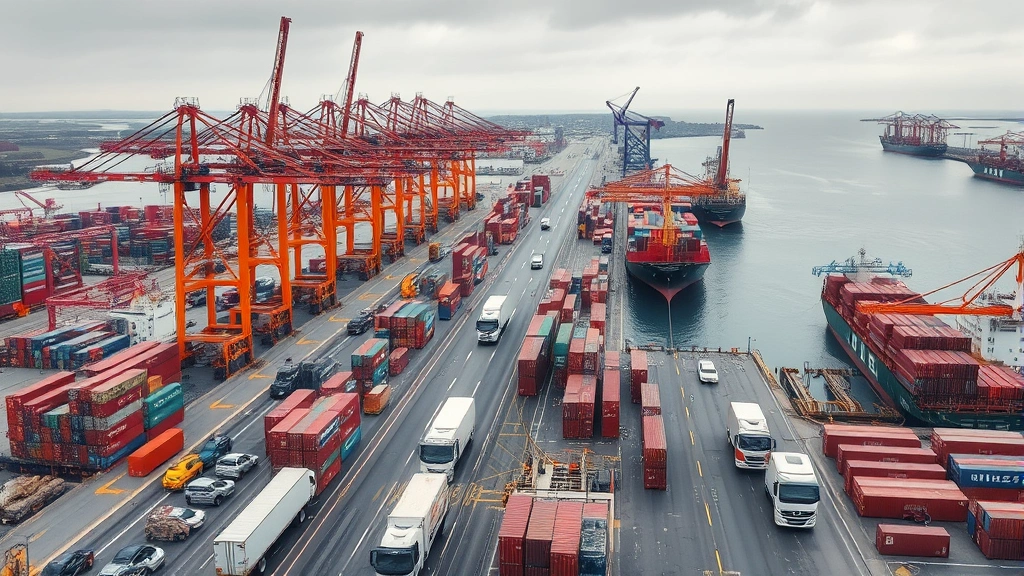
Advanced combat environments systematically disrupt the just-in-time supply networks that modern economies depend upon. When conflict affects transportation corridors—ports, railways, highways—goods cannot flow efficiently, creating bottlenecks that propagate throughout interconnected global markets. A single disrupted supply route can cascade through thousands of dependent industries within weeks.
The inflationary consequences prove particularly severe in developing economies lacking supply chain redundancy. When conflict disrupts agricultural regions, food prices spike globally. When mineral-rich areas become inaccessible due to combat, manufacturing costs increase worldwide. This phenomenon demonstrates how localized conflict creates diffuse economic harm, violating traditional assumptions that regional conflicts remain economically contained. Research from ecological economics journals increasingly emphasizes these network effects, showing how natural resource disruptions trigger cascading economic failures across seemingly unrelated sectors.
Price volatility itself becomes economically damaging independent of underlying scarcity. Businesses cannot plan investments when input costs fluctuate unpredictably. Insurance and hedging costs rise exponentially. Smaller enterprises lacking financial sophistication exit markets, reducing competition and innovation. The IMF has documented that conflict-induced supply chain disruptions reduce global GDP growth by 0.1-0.3 percentage points annually, suggesting that even geographically distant conflicts impose measurable economic costs on neutral nations.
Currency instability accompanies supply chain breakdown. Governments financing military operations through deficit spending face currency depreciation, making imports more expensive and creating additional inflationary pressure. Capital flight accelerates as investors seek stable jurisdictions, drying up investment capital for productive enterprises. This dynamic particularly harms developing economies where conflict-driven capital flight can eliminate years of accumulated savings in weeks.
Human Capital Flight and Labor Market Collapse
Perhaps the most economically consequential impact of combat environments involves human capital destruction and displacement. When conflict threatens civilian populations, educated professionals—doctors, engineers, entrepreneurs, researchers—flee to safer jurisdictions. This brain drain permanently reduces the economy’s productive capacity because expertise cannot be instantly replaced through training programs.
Displacement creates massive humanitarian costs that economic statistics often undercount. The UN estimates 120 million internally displaced persons and refugees globally, representing unprecedented human capital loss concentrated in conflict-affected regions. Each displaced professional represents decades of educational investment by their origin country, effectively transferring human capital wealth to destination countries. For origin economies, this represents both immediate labor shortage and long-term competitive disadvantage.
Labor market disruption extends beyond professional flight. Combat directly kills working-age adults, reducing labor supply. Survivors often sustain injuries limiting future productivity. Psychological trauma from combat exposure increases healthcare costs and reduces work motivation. Schools close during conflict, creating a generation gap in education that persists for decades. The World Health Organization documents that conflict-affected populations experience 50% higher rates of mental health conditions, reducing workforce productivity for 10-20 years post-conflict.
Informal economic activity—small businesses, artisanal production, local trade—collapses during combat as security uncertainty makes transactions impossible. Trust networks that enable informal credit and commerce dissolve. Rebuilding these networks after conflict ends requires years, even after security stabilizes. This explains why post-conflict economies frequently stagnate despite peace agreements, as the social infrastructure enabling economic activity requires time to reconstruct.
Institutional Degradation and Market Failure
Sustained combat degrades the institutional frameworks that enable market economies to function. Legal systems collapse when courts close and judges flee. Property rights become unenforceable when government authority disintegrates. Financial institutions fail as asset quality deteriorates and depositors withdraw savings. Without institutional infrastructure, markets cannot function efficiently, and economies revert to barter and informal arrangements characterized by high transaction costs.
Institutional degradation creates path dependency that persists long after conflict ends. Once destroyed, rebuilding functioning courts, regulatory agencies, and financial systems requires enormous investment and takes decades. Interim periods of weak institutions enable corruption and predatory behavior that becomes institutionalized, creating governance structures resistant to reform. Studies of post-conflict economies show that institutional quality typically requires 15-30 years to recover to pre-conflict levels, even in successful reconstruction cases.
Business confidence collapses during combat, manifesting as reduced investment and entrepreneurship. Firms delay expansion plans, cancel research projects, and reduce hiring. This precaution proves economically rational given uncertainty but creates self-fulfilling prophecy dynamics where reduced investment perpetuates economic weakness. The contraction in business activity during combat typically exceeds the direct destruction caused by military operations, suggesting that psychological impacts on economic actors rival physical destruction in importance.
Government revenue collapse accompanies institutional degradation. Tax collection becomes impossible when administration disintegrates. Economic activity shrinks, reducing tax bases. Governments finance operations through deficit spending or asset seizure, creating additional economic distortion. The combination of reduced revenue and increased military spending creates fiscal crises that persist for years, limiting government capacity for productive investments in post-conflict reconstruction.
Environmental Degradation as Economic Loss
Combat inflicts severe environmental damage with substantial economic consequences often externalized from conflict accounting. Weapons deposition—depleted uranium, unexploded ordnance, toxic residue—contaminates soil and water for decades. Agricultural productivity declines as contaminated land becomes unusable. Healthcare costs increase as populations suffer exposure to toxic substances. These externalities represent genuine economic losses that standard conflict cost analyses omit.
Deforestation accelerates during conflict as armed groups harvest timber for funding and fuel. Wetlands get drained for military infrastructure. Biodiversity collapses as protected areas become battlegrounds. These environmental losses reduce ecosystem services—water purification, carbon sequestration, pollination, climate regulation—that economies depend upon. The economic value of lost ecosystem services frequently exceeds the direct cost of reconstruction, yet remains invisible in standard accounting frameworks.
Understanding human environment interaction during conflict reveals how warfare generates negative externalities affecting global commons. Atmospheric pollution from burning infrastructure affects air quality across regions. Greenhouse gas emissions from destruction and reconstruction accelerate climate change. Chemical contamination enters global water cycles. These transnational impacts impose costs on neutral nations, making conflict truly a global economic concern.
Climate change vulnerability increases in conflict-affected regions as environmental degradation reduces adaptive capacity. Degraded agricultural systems cannot respond to drought. Deforested watersheds cannot regulate water availability. Depleted fisheries cannot sustain food security. This creates vicious cycles where environmental degradation from conflict increases climate vulnerability, which increases climate-driven conflict risk, perpetuating cycles of instability and economic decline.
Long-Term Reconstruction Economics
Post-conflict reconstruction requires sustained investment spanning decades, yet most conflict-affected economies lack capital for rapid recovery. Reconstruction costs typically equal or exceed the GDP of affected nations, necessitating international assistance that often comes with conditionality limiting sovereignty. This dependency creates political complications that obstruct optimal reconstruction strategies.
Reconstruction follows predictable patterns: infrastructure rebuilding, institutional reformation, human capital development, and environmental remediation. Each phase requires distinct expertise and capital. Infrastructure reconstruction proves fastest and most visible, yet often receives disproportionate investment while institutional and environmental recovery lag. This imbalance creates incomplete recovery where physical infrastructure exists but institutional weakness prevents efficient utilization.
The opportunity cost of reconstruction deserves emphasis. Capital devoted to rebuilding destroyed infrastructure cannot simultaneously invest in new productive capacity or technological advancement. This explains why post-conflict economies frequently fall further behind peers, despite receiving substantial reconstruction assistance. The conflict-affected economy must simultaneously recover losses and maintain current production, creating unsustainable demands on capital and labor.
Reconstruction financing frequently imposes burdensome debt obligations that constrain future development. International loans for reconstruction carry interest costs that persist for decades. Countries emerging from conflict often face debt service equal to 20-40% of government revenue, limiting capacity for productive investment. This debt burden can perpetuate economic stagnation for a generation, even after security stabilizes.
Alternative Investment Pathways
The economic resources devoted to military conflict could instead develop sustainable economies generating long-term prosperity. Global military spending exceeds $2.4 trillion annually—capital that could instead fund renewable energy infrastructure, educational systems, healthcare, and ecological restoration. Examining alternative investment pathways reveals the profound opportunity costs of conflict.
Investment in renewable energy infrastructure could simultaneously address climate change and create millions of jobs. Rather than destructive military operations, equivalent capital could transform energy systems toward sustainability. These investments would generate returns through reduced energy costs, improved health outcomes from cleaner air, and enhanced ecological resilience. Unlike military spending that destroys value, energy investment creates productive assets generating returns indefinitely.
Educational investment represents another high-return alternative to military spending. Resources currently devoted to advanced combat environments could instead educate 750 million illiterate adults and 260 million out-of-school children. Education generates returns through increased productivity, reduced crime, improved health outcomes, and enhanced democratic participation. These returns compound across generations, creating exponential value creation contrasting sharply with military spending’s value destruction.
Ecological restoration funded through military budgets could regenerate degraded ecosystems, enhancing ecosystem services worth trillions in economic value. Wetland restoration improves water quality and reduces flood damage. Forest restoration sequesters carbon, reducing climate change costs. Coral reef restoration protects fisheries supporting millions. These investments generate measurable economic returns while improving resilience to climate change and natural disasters.
The World Bank estimates that redirecting 10% of global military spending to sustainable development could lift 300 million people from poverty while simultaneously addressing climate change and ecological degradation. This counterfactual demonstrates that conflict represents not merely humanitarian tragedy but profound economic waste, destroying resources that could instead generate sustainable prosperity.
FAQ
How do advanced combat environments differ economically from conventional conflicts?
Advanced combat environments employ sophisticated weaponry, surveillance systems, and precision targeting that increase per-unit destruction while potentially reducing civilian casualties. However, the economic impacts remain severe: infrastructure destruction intensifies, supply chain disruption becomes more comprehensive, and institutional damage proves equally profound. The technological sophistication may reduce some humanitarian costs but does not meaningfully reduce overall economic damage.
What time horizon should economists use when assessing combat’s economic impact?
Short-term analysis (1-5 years) captures immediate destruction and displacement costs. Medium-term analysis (5-20 years) reveals supply chain disruption, institutional degradation, and human capital flight impacts. Long-term analysis (20+ years) demonstrates that post-conflict economies typically underperform peers by 15-30% for decades, suggesting that conflict’s economic consequences persist far longer than security crises. Comprehensive assessment requires multi-decadal analysis.
How should economists account for environmental externalities from combat?
Standard economic accounting typically excludes environmental costs from conflict analyses, representing a significant analytical gap. Incorporating ecosystem service losses, toxic contamination costs, and climate change acceleration reveals that conflict’s true economic cost exceeds conventional estimates by 30-50%. Environmental economics frameworks provide methodologies for monetizing these externalities, enabling more comprehensive cost-benefit analysis.
Can military spending generate economic growth similar to other government spending?
While military procurement creates demand potentially stimulating short-term growth, the multiplier effects prove significantly lower than alternative investments. Military hardware typically involves imported components, limiting domestic economic stimulus. Military infrastructure generates no consumer benefits or productive services. Studies comparing military spending to infrastructure, education, or healthcare spending consistently show that non-military spending generates 2-3 times higher economic returns per dollar spent.
How do conflict-affected economies recover competitively?
Recovery requires simultaneous reconstruction, institutional reformation, and human capital development—a multifaceted challenge exceeding most developing economies’ capacity without international assistance. Successful recoveries typically involve sustained international investment, security guarantees enabling private sector confidence, and governance reforms establishing institutional credibility. Even with these conditions, recovery requires 20-30 years to approach peer economies, during which conflict-affected regions fall progressively further behind in technological advancement and human capital accumulation.
What role should ecological economics play in conflict analysis?
Ecological economics provides frameworks for understanding how environmental degradation from conflict reduces long-term economic capacity by diminishing ecosystem services and natural capital. This perspective reveals that conflict’s true cost includes not merely destroyed human infrastructure but also degraded natural systems supporting all economic activity. Incorporating ecological economics into conflict analysis reveals that environmental recovery represents the longest-term constraint on post-conflict development.
How do global supply chains amplify combat’s economic impacts?
Modern economies depend on fragmented global supply chains where single-point disruptions cascade through interconnected industries. Combat affecting resource-producing regions immediately increases costs for dependent industries worldwide. This network effect means that localized conflicts impose diffuse global costs, violating assumptions that regional conflicts remain economically contained. Understanding these network dynamics reveals why conflict prevention represents sound economic policy even for geographically distant nations.
What evidence exists regarding military spending’s opportunity costs?
Comparative analyses consistently show that equivalent capital invested in education, healthcare, infrastructure, or environmental restoration generates substantially higher economic returns and broader societal benefits. The United Nations Environment Programme documents that environmental investments generate 4-6 times higher returns than equivalent military spending. These findings suggest that reducing military spending represents economically rational policy independent of humanitarian considerations.


