
10 Ways to Protect the Environment: Expert Tips
Environmental protection has transitioned from a niche concern to a critical economic and ecological imperative. As ecosystems face unprecedented pressures from climate change, biodiversity loss, and resource depletion, understanding practical strategies becomes essential for individuals, businesses, and policymakers. The intersection of environmental stewardship and economic sustainability reveals that protecting nature isn’t merely an ethical obligation—it’s a sound economic investment with measurable returns in ecosystem services, public health, and long-term prosperity.
This comprehensive guide explores ten evidence-based approaches to environmental protection, grounded in ecological economics principles and supported by scientific research. Each strategy demonstrates how individual actions and systemic changes can collectively address environmental degradation while generating economic benefits. Whether you’re seeking to reduce your carbon footprint or influence organizational policy, these expert-recommended methods provide actionable pathways toward a more sustainable future.
1. Transition to Renewable Energy Sources
Renewable energy represents the cornerstone of environmental protection in the 21st century. The global energy sector accounts for approximately 73% of greenhouse gas emissions, making energy transition fundamentally critical to climate mitigation. Solar, wind, hydroelectric, and geothermal technologies have become economically competitive with fossil fuels in most markets, with levelized costs declining dramatically over the past decade.
Transitioning to renewable energy involves multiple pathways: installing solar panels on residential properties, supporting utility-scale wind projects, or advocating for grid modernization. The economic case strengthens continuously—renewable energy now creates more jobs per unit of energy than fossil fuels while reducing healthcare costs associated with air pollution. According to the World Bank, renewable energy investments generate approximately $2 in economic benefits for every dollar invested through reduced pollution costs and energy security improvements.
Organizations can implement renewable energy through power purchase agreements, on-site generation, or renewable energy credits. Understanding how environmental systems interact with energy production helps identify optimal solutions for specific contexts.
2. Adopt Circular Economy Principles
The circular economy model fundamentally challenges linear “take-make-dispose” consumption patterns by designing products for longevity, repairability, and material recovery. This systemic approach reduces resource extraction, minimizes waste, and creates economic value through material cycling. Companies implementing circular strategies often achieve 20-30% cost reductions while simultaneously reducing environmental impact.
Circular economy practices include designing products with modular components, establishing take-back programs, developing recycling infrastructure, and creating secondary material markets. The Ellen MacArthur Foundation’s research demonstrates that circular economy implementation could generate $4.5 trillion in economic benefits by 2030 while reducing material extraction by 28% and greenhouse gas emissions by 48%.
Consumers support circular principles by choosing repairable products, participating in sharing economies, and purchasing from companies with documented material recovery programs. Understanding human-environment interactions in consumption patterns reveals how individual choices aggregate into system-level impacts.
3. Support Sustainable Agriculture and Food Systems
Agriculture occupies 37% of global land area and generates 26% of anthropogenic greenhouse gas emissions while simultaneously providing livelihoods for 1 billion people. Transitioning toward sustainable food production addresses environmental degradation, food security, and rural economic development simultaneously.
Sustainable agricultural practices include regenerative farming, agroforestry, integrated pest management, and precision agriculture technologies. Regenerative agriculture specifically rebuilds soil carbon, increases biodiversity, and improves water retention while often reducing input costs. Supporting local food systems, reducing food waste, and shifting dietary patterns toward plant-based proteins substantially decrease environmental footprints—livestock production requires 77% of agricultural land but provides only 18% of global calories.
The United Nations Environment Programme emphasizes that sustainable food systems are essential for achieving climate and biodiversity targets while ensuring food security and farmer prosperity.
4. Protect and Restore Natural Habitats
Biodiversity loss accelerates at rates 100-1,000 times above natural background extinction rates, primarily driven by habitat destruction. Protected areas, habitat corridors, and restoration initiatives represent critical strategies for maintaining ecosystem integrity and the services they provide—from pollination and water purification to climate regulation and cultural values.
Conservation efforts span protected area management, wetland restoration, forest regeneration, and marine ecosystem protection. Research demonstrates that well-managed protected areas generate economic returns exceeding $100 for every $1 invested through tourism revenue, pharmaceutical discovery, and ecosystem service provision. Understanding positive human impacts on environments reveals how intentional conservation creates measurable ecological and economic benefits.
Individual contributions include supporting land trusts, volunteering for restoration projects, and advocating for habitat protection policies at local and national levels.

5. Reduce Consumption and Waste
Resource consumption in high-income nations far exceeds planetary boundaries, with individuals in wealthy countries requiring 5-10 Earth equivalents if consumption patterns generalized globally. Waste reduction represents both an environmental imperative and economic opportunity, as material efficiency reduces production costs and resource dependency.
Practical waste reduction strategies include adopting minimalist consumption patterns, choosing durable over disposable products, composting organic materials, and supporting zero-waste businesses. The waste hierarchy—reduce, reuse, recycle—prioritizes prevention as most environmentally and economically effective. Reducing consumption by 50% generates greater environmental benefits than recycling 100% of waste, while simultaneously decreasing household expenses.
Organizations implementing waste reduction programs achieve 15-40% cost savings while reducing environmental impacts across supply chains and operations.
6. Advocate for Environmental Policy
Individual behavioral changes, while necessary, cannot achieve environmental targets without systemic policy transformation. Carbon pricing, renewable energy mandates, environmental regulations, and international agreements create market conditions and legal frameworks enabling large-scale environmental protection.
Effective advocacy includes contacting elected representatives, supporting environmental organizations, participating in public comment periods, and voting for candidates prioritizing environmental protection. Policy mechanisms like carbon taxes, cap-and-trade systems, and environmental impact assessments have demonstrated effectiveness in reducing emissions and pollution while maintaining economic growth.
Understanding how institutional environments shape behavior reveals why policy change drives broader adoption of environmental practices across organizations and industries.
7. Invest in Green Technology
Green technology encompasses innovations reducing environmental impacts across energy, transportation, agriculture, and manufacturing sectors. Investment in clean technology accelerates innovation, reduces costs through scale economies, and creates employment in emerging industries.
Technologies prioritized by environmental economists include energy storage systems, carbon capture and utilization, sustainable aviation fuels, green hydrogen, and precision agriculture platforms. The global clean technology market exceeded $2 trillion in 2023 and continues expanding at 10-15% annually, outpacing overall economic growth.
Individual investment through green bonds, sustainable funds, or direct technology adoption supports market development while generating financial returns. Companies investing in green technology often achieve competitive advantages through cost reduction, risk mitigation, and customer preference.
8. Practice Responsible Water Management
Freshwater systems face unprecedented stress from overextraction, pollution, and climate change, with 2 billion people experiencing high water stress. Responsible water management addresses supply constraints while protecting aquatic ecosystems providing critical services and supporting biodiversity.
Water conservation practices include installing efficient fixtures, capturing rainwater, reducing lawn irrigation, and supporting agricultural water efficiency improvements. Industrial and agricultural water use accounts for 90% of freshwater consumption, making sectoral efficiency improvements particularly impactful. Protecting riparian zones and wetlands restores natural water purification and regulation functions while supporting biodiversity.
The World Bank estimates that water-related infrastructure investments could generate $7 in economic benefits per dollar invested through improved health, agricultural productivity, and industrial efficiency.
9. Promote Environmental Education
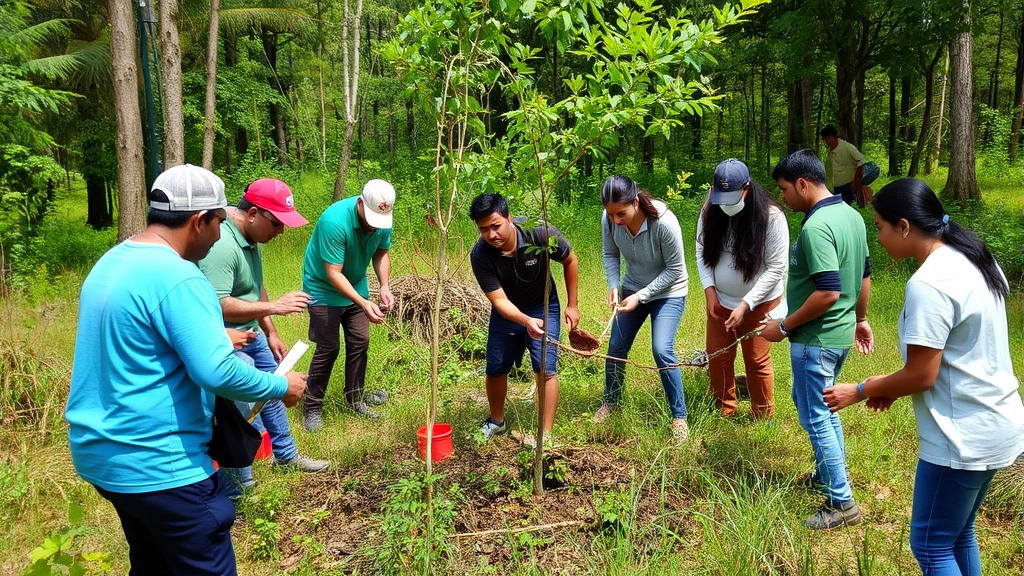
Environmental literacy—understanding ecological principles, environmental challenges, and solution pathways—enables informed decision-making and supports broader adoption of sustainable practices. Education initiatives spanning schools, universities, workplaces, and communities build capacity for environmental stewardship.
Effective environmental education integrates scientific knowledge with practical skills, emphasizing systems thinking and interdisciplinary perspectives. Research demonstrates that environmental education increases pro-environmental behavior, supports career development in sustainability fields, and enhances community resilience. Exploring work environment definitions and characteristics helps educators contextualize environmental protection within professional and institutional settings.
Supporting environmental education through donations, volunteering, curriculum advocacy, and personal learning investments multiplies individual impact across communities and generations.
10. Support Conservation Organizations
Established conservation organizations leverage scientific expertise, policy influence, and funding scale to achieve environmental protection at landscape and global levels. Supporting these organizations through donations, volunteering, and advocacy amplifies individual environmental commitment.
Leading organizations like The Nature Conservancy, World Wildlife Fund, and regional land trusts combine land acquisition, policy advocacy, community engagement, and scientific research. Research from UNEP indicates that well-funded conservation organizations achieve 50-80% greater conservation outcomes compared to underfunded alternatives.
Financial support, volunteer participation, and advocacy for organizational funding represent accessible pathways for individuals to contribute to large-scale environmental protection. Exploring environmental topics and ecosystem discussions on dedicated platforms helps identify organizations aligned with personal values and priorities.
FAQ
What’s the most impactful individual action for environmental protection?
Research suggests that reducing energy consumption and transportation emissions generates the greatest individual environmental impact, followed by dietary changes toward plant-based foods and advocating for policy changes. However, systemic transformation requires collective action—individual actions become most powerful when combined with advocacy for structural changes.
How can businesses implement these environmental protection strategies?
Businesses can adopt renewable energy, implement circular economy design principles, source sustainably, invest in green technology, reduce waste, and engage in environmental advocacy. Many companies discover that environmental investments reduce costs through efficiency gains while improving brand reputation and employee retention.
What resources help track environmental progress?
Organizations can measure environmental impact through life cycle assessment, carbon footprinting, and material flow analysis. Individual tracking tools include carbon calculators, water usage monitors, and waste audits. Regular measurement enables identification of high-impact improvement areas.
How do environmental protection and economic prosperity align?
Ecological economics demonstrates that environmental protection generates economic value through ecosystem service preservation, pollution cost reduction, green job creation, and innovation incentives. Sustainable practices often reduce costs while improving long-term financial stability and competitiveness.
Which environmental protection strategies offer quickest results?
Energy efficiency improvements, waste reduction, and renewable energy transition generate measurable results within months to years. Policy advocacy and habitat restoration require longer timeframes but achieve larger-scale impacts. Combined strategies accelerate progress toward environmental targets.


