
Built Environments Impact on Economy: A Study
Built environments—the human-made structures and infrastructure that shape our daily lives—represent one of the most significant economic forces of the modern era. From commercial skyscrapers to residential neighborhoods, transportation networks to public parks, these constructed landscapes generate trillions in economic activity while simultaneously influencing productivity, health outcomes, and resource consumption patterns across entire nations. Understanding what are built environments requires examining their multifaceted role as both economic drivers and environmental constraints, where investment decisions made today reverberate through decades of societal development.
The economic implications of built environments extend far beyond construction costs and property values. They fundamentally shape labor market dynamics, consumer behavior, real estate investment patterns, and municipal fiscal health. Simultaneously, the built environment sector accounts for approximately 40% of global carbon emissions and consumes vast quantities of raw materials, creating complex trade-offs between economic growth and ecological sustainability. This analysis explores how constructed infrastructure generates economic value, the mechanisms through which built environments influence broader economic outcomes, and the emerging frameworks for achieving economically viable while ecologically responsible development patterns.
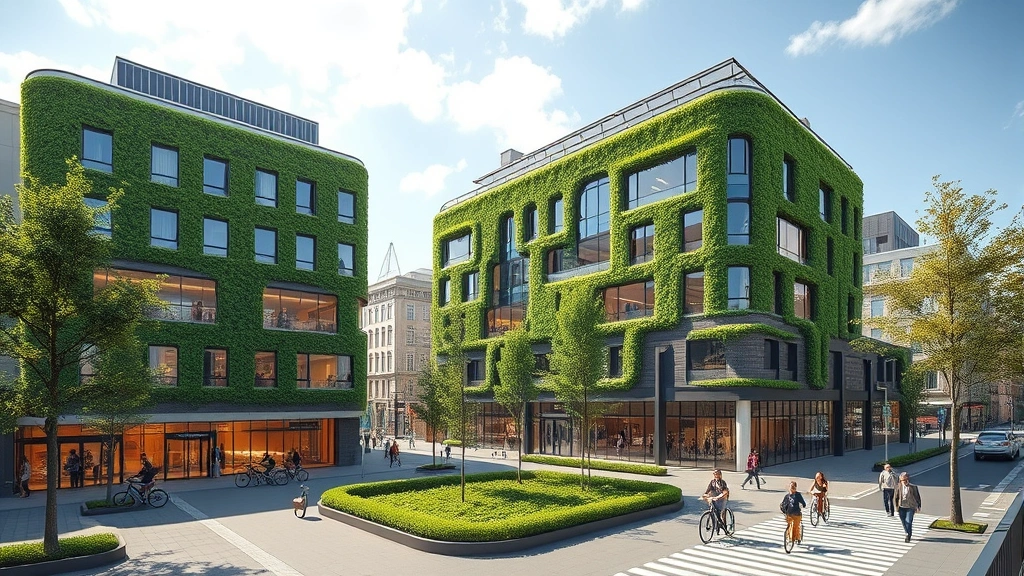
Defining Built Environments and Economic Significance
Built environments encompass all human-constructed physical spaces and infrastructure systems that comprise our urban, suburban, and rural landscapes. This includes residential buildings, commercial properties, industrial facilities, transportation networks, utilities infrastructure, public spaces, and institutional structures. The concept differs fundamentally from natural environments, though increasingly scholars recognize that built and natural systems exist in dynamic interdependence rather than separation. As explored in our comprehensive guide on human environment interaction, the relationship between constructed systems and ecological processes requires integrated analysis.
The economic scale of built environments is staggering. Real estate alone represents approximately 36% of global assets, with the construction industry employing over 300 million workers worldwide and contributing roughly 13% of global GDP. In developed economies, built environments account for even higher percentages of total wealth—in the United States, real estate comprises nearly 40% of all assets. Beyond direct construction and property transactions, built environments generate cascading economic effects through employment in property management, finance, retail, hospitality, and professional services sectors concentrated in urban centers.
The productivity premium associated with built environments, particularly dense urban centers, creates significant economic advantages. Firms locate in cities because agglomeration effects—the benefits of geographic concentration of economic activity—reduce transaction costs, facilitate knowledge spillovers, and create labor market pooling advantages. Research demonstrates that workers in major metropolitan areas earn 20-30% wage premiums compared to rural counterparts with identical qualifications, reflecting both higher productivity and cost-of-living adjustments. These urban economic advantages have driven persistent migration toward metropolitan areas, with over 56% of humanity now residing in urban settlements compared to 30% in 1950.
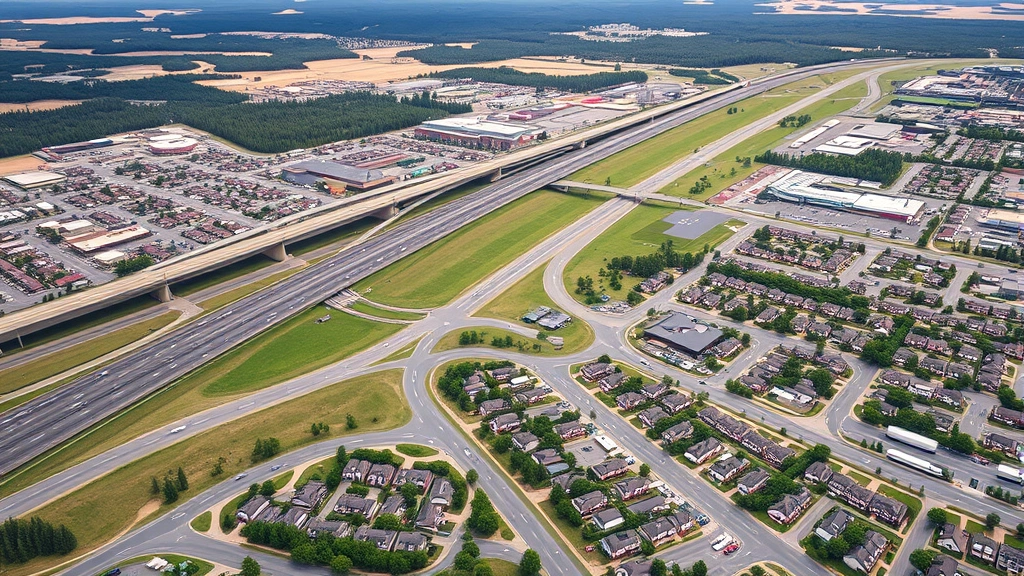
Real Estate Markets and Property Value Creation
Real estate markets represent the primary mechanism through which built environments generate economic value and wealth accumulation. Property values reflect capitalized expectations of future income streams, location advantages, and scarcity premiums associated with desirable geographic positions. In most developed economies, residential property ownership constitutes the largest single asset category for median households, making real estate central to household wealth and intergenerational wealth transfer patterns.
The relationship between built environment characteristics and property values demonstrates how physical infrastructure quality directly translates into economic returns. Properties with superior transportation access, proximity to employment centers, quality schools, and environmental amenities command substantial price premiums. A comprehensive analysis of environment and society interactions reveals how environmental quality factors—air quality, water access, green space availability—increasingly influence property valuations as consumer preferences evolve toward sustainability and health considerations.
Commercial real estate markets exhibit even more complex value dynamics. Office building location premiums can reach 300-400% based on proximity to central business districts and transportation nodes. Retail property values depend critically on foot traffic patterns determined by surrounding built environment density and connectivity. Industrial property valuations reflect accessibility to transportation networks and labor supply concentrations. These location-dependent value premiums create powerful incentives for concentrated development and geographic inequality, as investors rationally concentrate capital in locations demonstrating highest returns.
However, real estate markets frequently exhibit speculative dynamics that decouple property values from underlying economic fundamentals. Housing bubbles—periods of unsustainable property value appreciation followed by sharp corrections—have triggered major economic crises, most notably the 2008 global financial crisis where overvalued residential real estate formed the foundation of toxic mortgage securities. These episodes demonstrate how built environment investments, while economically significant, carry substantial systemic risk when financial markets misprice location value and construction quality.
Infrastructure Investment and Economic Multipliers
Infrastructure represents the foundational built environment category with the broadest economic impacts. Transportation networks, utilities systems, communication infrastructure, and public facilities generate economic returns extending far beyond initial construction investment through enhanced productivity, reduced transaction costs, and expanded market access. Economic research consistently identifies infrastructure as a crucial determinant of long-term growth trajectories, with elasticity studies suggesting that 1% increases in infrastructure capital stock generate 0.15-0.25% productivity improvements.
The multiplier effects of infrastructure investment operate through multiple channels. Direct effects include construction employment and material procurement. Indirect effects arise as construction firms purchase inputs from suppliers, generating secondary employment and income. Induced effects occur when workers and suppliers spend wages and profits throughout the economy, stimulating demand across sectors. Macroeconomic studies estimate multipliers ranging from 1.5 to 2.0 for infrastructure investment, meaning each dollar of infrastructure spending generates $1.50-$2.00 in total economic activity. These multipliers prove particularly large during economic downturns when excess capacity exists across the economy.
Transportation infrastructure exemplifies these multiplier dynamics. Road networks reduce shipping costs and delivery times, enabling supply chain efficiency improvements that benefit all downstream industries. Port and airport infrastructure extends market reach for tradable goods, directly supporting export competitiveness. Public transit systems reduce congestion externalities while enabling labor market access for lower-income workers, expanding effective labor supply and reducing skill mismatches. Studies of major transit investments find that metropolitan areas with superior public transportation systems experience 15-25% higher productivity growth compared to car-dependent regions with equivalent population density.
Utilities infrastructure—electricity grids, water systems, telecommunications networks—provides essential services enabling all other economic activity. The reliability and cost of electricity access fundamentally constrains industrial development potential, explaining why electricity infrastructure investment remains a development priority for low-income countries. Digital infrastructure investments have generated particularly large returns in recent decades, with broadband expansion enabling remote work, e-commerce, and digital service delivery that creates new economic opportunities in previously isolated regions. Our analysis of renewable energy for homes explores how infrastructure modernization toward sustainable systems creates economic opportunities while addressing environmental constraints.
Labor Markets and Urban Productivity
Built environments profoundly influence labor market outcomes through multiple mechanisms. Urban density creates agglomeration effects where geographic concentration of firms and workers generates positive externalities including knowledge spillovers, specialized service availability, and labor market thickness. The thickness of urban labor markets—the existence of many employers competing for workers with specific skills—reduces unemployment duration and improves job matching quality, increasing both worker productivity and earnings.
Knowledge spillovers represent perhaps the most important agglomeration benefit, though also the most difficult to quantify. Informal knowledge transfer through worker mobility, professional networks, and casual interactions facilitates innovation and skill development in ways that formal knowledge systems cannot replicate. Empirical research finds that innovation intensity (patents per capita) increases dramatically with urban density, with major metropolitan areas generating 10-15 times more patents per capita than rural regions. This innovation clustering reflects both the concentration of R&D investment in cities and the enhanced knowledge transfer facilitated by density.
Built environment design influences labor productivity through additional channels including commute times, workplace amenities, and social cohesion. Long commutes reduce worker productivity and increase health costs, creating economic costs that often exceed explicit transportation costs. Research finds that each additional hour of daily commuting reduces productivity by approximately 2-3%, translating into substantial aggregate productivity losses in sprawling metropolitan areas. Conversely, compact development patterns with short commutes and transit access demonstrate 15-20% productivity advantages compared to equivalent workers in dispersed locations.
The spatial mismatch problem—where housing affordability forces lower-income workers to live far from employment centers—creates particularly severe economic inefficiencies. Workers facing long commutes experience increased absenteeism, reduced focus, and elevated stress levels that impair performance. Employers face reduced applicant pools when qualified workers cannot afford housing near job centers. These dynamics contribute to persistent income inequality and productivity disparities across regions. Addressing spatial mismatch through affordable housing provision in accessible locations represents an economic investment generating returns through improved labor market efficiency, though requires policy interventions that market forces alone rarely produce.
Environmental Costs and Hidden Economic Externalities
The economic analysis of built environments must account for substantial environmental costs that conventional accounting systems systematically undervalue. The construction sector consumes approximately 40% of global raw materials and generates 35% of waste streams, while operating buildings account for roughly 30% of global energy consumption and 27% of building-related carbon dioxide emissions. These environmental impacts impose costs on society through climate change damages, resource depletion, ecosystem degradation, and health impacts that far exceed direct construction and operation expenses.
Environmental externalities—costs imposed on third parties without compensation—create fundamental market failures in real estate and construction markets. Developers lack financial incentives to minimize environmental impacts when they bear none of the resulting costs. Air pollution from vehicles concentrated in urban areas imposes health costs estimated at 4-6% of GDP in major metropolitan areas, yet property developers face no direct responsibility for these externality costs. Water consumption by buildings and surrounding landscapes creates scarcity externalities in arid regions, yet water pricing frequently fails to reflect actual scarcity value.
Carbon emissions from built environments represent the most economically significant externality, with construction sector emissions alone valued at $200-400 billion annually using standard carbon pricing methodologies. Embodied carbon in building materials—the emissions generated during manufacturing, transport, and installation—comprises 20-30% of total building-related emissions, yet receives minimal policy attention compared to operational carbon. Long-lived building stock means that construction decisions made today lock in emissions trajectories for 50-100 years, creating path dependency that makes emissions reduction increasingly difficult and costly.
Health externalities from built environment design create substantial hidden economic costs. Sedentary lifestyles induced by car-dependent development patterns contribute to obesity epidemics costing developed economies 5-10% of healthcare expenditure. Air pollution concentration in automobile-dependent regions generates respiratory disease, cardiovascular disease, and cognitive impairment costs estimated at 2-4% of GDP. Mental health impacts from social isolation in low-density development and stress from long commutes create additional unmeasured costs. These health externalities create perverse economic incentives where sprawling development appears profitable to developers while imposing massive health costs on society.
The how to reduce carbon footprint analysis reveals that built environment transformation represents one of the highest-leverage interventions for climate mitigation, yet requires addressing fundamental market failures through policy intervention. Carbon pricing, building performance standards, transit-oriented development incentives, and circular economy requirements for construction materials represent policy tools increasingly deployed to internalize environmental externalities.
Sustainable Development and Long-Term Economic Resilience
Emerging economic analysis increasingly recognizes that sustainable built environment development represents not merely an environmental imperative but an economic necessity for long-term growth and resilience. Traditional cost-benefit analysis comparing construction expenses against property values systematically undervalues sustainability investments by failing to account for avoided environmental damages, health benefits, and operational cost savings accruing over building lifespans extending 50-100 years.
Green building investments demonstrate economic returns through multiple channels. LEED-certified buildings command 3-5% rental premiums and achieve 20-30% operational cost reductions compared to conventional buildings, generating positive returns on sustainability investment within 5-10 year periods. Renewable energy integration reduces long-term energy cost exposure, providing protection against future fossil fuel price escalation. Water efficiency measures reduce both consumption costs and wastewater treatment expenses. These direct economic benefits increasingly drive green building adoption even absent environmental mandates.
Transit-oriented development—concentrated development centered on high-quality public transportation—demonstrates superior long-term economic performance compared to sprawling automobile-dependent development. Properties with excellent transit access appreciate faster, experience lower vacancy rates, and generate higher rental returns. Transit-oriented neighborhoods experience stronger economic resilience during economic downturns because lower transportation cost burdens preserve household purchasing power. Metropolitan areas with superior transit systems demonstrate superior long-term productivity growth, consistent with research showing that transportation infrastructure quality ranks among the strongest predictors of regional economic success.
Circular economy principles applied to construction—designing buildings for disassembly, material recovery, and component reuse—create new economic opportunities while reducing environmental impacts. Modular construction approaches reduce waste by 20-40% compared to conventional methods while improving quality and reducing schedule risk. Material reuse and recycling industries create employment while reducing virgin material extraction costs. Construction waste represents a major economic inefficiency, with 30-40% of materials discarded during typical projects, yet circular economy approaches demonstrate that waste reduction generates both environmental and economic benefits.
Climate adaptation in built environments creates substantial economic challenges as extreme weather events increase in frequency and intensity. Flood-resilient development, heat-resistant construction, and water-secure infrastructure require upfront investment but avoid catastrophic losses from climate-related disasters. Economic modeling demonstrates that climate adaptation investments costing 0.5-1.0% of property values prevent losses averaging 5-10% when major climate events occur, generating 5-20x returns on adaptation spending. However, adaptation costs distribute unequally across populations, creating equity challenges as wealthy communities can afford protective measures while vulnerable populations face elevated climate risks.
The intersection of built environment economics with sustainable development principles increasingly influences investment decisions. Major institutional investors, pension funds, and development finance institutions now integrate environmental, social, and governance (ESG) criteria into real estate investment decisions, reflecting recognition that environmental risks translate into financial risks. This capital reallocation toward sustainable built environment development accelerates transition toward economically viable low-carbon development pathways.
International development institutions including the World Bank increasingly emphasize sustainable urbanization as central to development strategy, recognizing that built environment quality fundamentally influences poverty reduction, health outcomes, and environmental sustainability. Research from the United Nations Environment Programme documents how resource-efficient built environments reduce material consumption while improving economic productivity, creating win-win outcomes unavailable through conventional development approaches.
FAQ
What exactly are built environments and why do they matter economically?
Built environments encompass all human-constructed physical infrastructure and structures—buildings, roads, utilities, public spaces—that comprise our landscapes. They matter economically because they represent 36% of global assets, employ hundreds of millions of workers, generate agglomeration benefits that drive innovation and productivity, and fundamentally shape labor market outcomes, consumer behavior, and investment patterns. Built environment quality directly influences regional economic competitiveness and long-term growth trajectories.
How do built environments create economic value beyond construction?
Built environments generate economic value through multiple mechanisms: real estate appreciation capturing location value premiums, infrastructure enabling commerce and reducing transaction costs, agglomeration effects facilitating knowledge spillovers and innovation, labor market productivity improvements from density and transit access, and service sector employment concentrated in urban centers. These effects compound over time as successful regions attract additional investment and talent.
What are the major economic costs of unsustainable built environments?
Unsustainable built environments impose substantial costs through climate change damages from carbon emissions, health costs from air pollution and sedentary lifestyles, resource depletion and waste management expenses, water scarcity in arid regions, and reduced productivity from long commutes and spatial mismatch. These externality costs often exceed 10-15% of regional GDP but remain invisible in conventional real estate markets, creating perverse incentives favoring unsustainable development.
Do sustainable buildings provide economic returns?
Yes, green buildings demonstrate strong economic returns through 20-30% operational cost reductions, 3-5% rental premiums, improved tenant retention, and long-term energy cost protection. Transit-oriented development achieves superior appreciation rates and rental returns compared to sprawling development. Life-cycle economic analysis accounting for 50-100 year building lifespans consistently shows that sustainability investments generate positive returns, typically recovering costs within 5-10 years through operational savings alone.
How do built environments influence income inequality?
Built environments influence inequality through multiple channels: agglomeration in major cities creates wage premiums unavailable in rural areas, housing affordability constraints force lower-income workers into distant locations creating commute burdens, spatial mismatch limits employment access for disadvantaged populations, and property ownership concentrates wealth in ways that reinforce intergenerational inequality. Addressing inequality requires policies ensuring affordable housing in accessible locations and equitable infrastructure investment.
What role do built environments play in climate change?
Built environments account for approximately 40% of global carbon emissions through construction, operations, and transportation enabled by development patterns. Construction sector emissions include both operational carbon from energy use and embodied carbon from material manufacturing. Long-lived building stock locks in emissions for 50-100 years, making built environment transformation essential for climate mitigation. Transitioning toward renewable energy, efficient buildings, and transit-oriented development represents one of the highest-leverage climate interventions available.


